May 22, 2026
Advanced Drilling Technology Transforms Regional Energy Infrastructure
Global energy infrastructure development increasingly hinges on sophisticated drilling capabilities that can unlock previously inaccessible hydrocarbon reserves. Modern extraction techniques have revolutionised how nations approach energy security, particularly in regions where geological complexity meets geopolitical significance. The convergence of cutting-edge technology with strategic resource development creates opportunities for countries to reshape their energy landscapes fundamentally.
Contemporary drilling operations employ multi-stage hydraulic fracturing, horizontal drilling technologies, and real-time geological monitoring systems that maximise extraction efficiency while minimising environmental impact. These technological advances enable operators to target specific geological formations with unprecedented precision, accessing reserves that remained economically unviable under traditional extraction methods. Furthermore, AI drilling innovations continue to enhance operational efficiency through predictive analytics and automated systems.
When big ASX news breaks, our subscribers know first
Strategic Resource Development in Complex Geological Environments
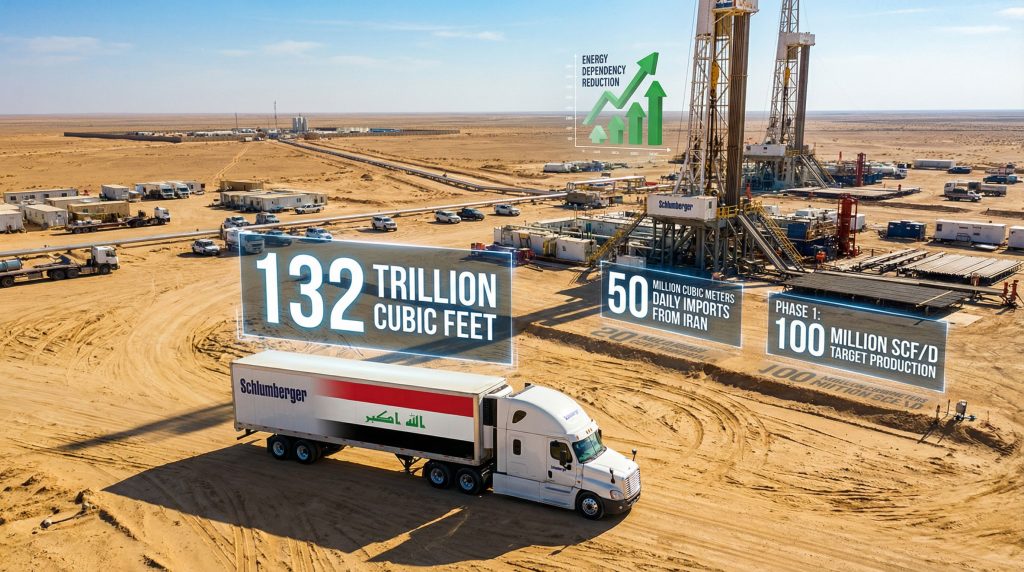
Iraq's natural gas sector demonstrates how technological advancement can transform national energy profiles. The country possesses approximately 132 trillion cubic feet of proven natural gas reserves, yet historically has struggled to monetise these resources effectively due to infrastructure limitations and security challenges.
Key Technical Specifications:
- Advanced drilling depth capabilities: Up to 4,500 metres
- Horizontal reach: Extended lateral drilling up to 3,000 metres
- Production optimisation: Real-time reservoir monitoring systems
- Environmental controls: Closed-loop drilling fluid systems
The Akkas gas field, with its 5.6 trillion cubic feet of proven reserves, represents a significant portion of Iraq's underdeveloped gas potential. Located in Anbar province near the Syrian border, this field requires sophisticated drilling techniques to navigate complex geological formations whilst maintaining operational security in a historically volatile region. Additionally, 3D geological modelling plays a crucial role in understanding subsurface structures before drilling commences.
U.S. Drilling at Akkas Gas Field: Technical Implementation
The commencement of advanced drilling operations at Iraq's Akkas gas field marks a pivotal moment in Middle Eastern energy infrastructure development. This project employs state-of-the-art extraction technologies designed to optimise production from challenging geological conditions whilst establishing new benchmarks for regional gas field development. In addition, these operations reflect broader industry innovation trends that emphasise technological integration.
Phase 1 Production Targets:
- Initial capacity: 100 million standard cubic feet per day (scf/d)
- Phase 2 expansion: 400 million scf/d target capacity
- Infrastructure integration: Direct connection to Anbar combined-cycle power plant
- Grid connectivity: National electricity network supply enhancement
The selection of American oilfield services technology for this strategically located field introduces advanced drilling methodologies previously unavailable in Iraq's energy sector. These include enhanced drilling fluid systems, sophisticated wellbore stability control, and integrated reservoir management platforms that optimise long-term production efficiency.
Geological Challenges and Technical Solutions
The Akkas field presents unique geological complexities that require specialised drilling approaches. Located approximately 30 kilometres from the Syrian border, the field's subsurface formations include multiple gas-bearing layers interspersed with challenging rock formations that demand precise drilling techniques.
Geological Characteristics:
- Multi-layered reservoir structure
- Variable rock hardness requiring adaptive drilling systems
- High-pressure formations necessitating advanced blowout prevention
- Corrosive gas composition requiring specialised completion materials
Modern drilling technology addresses these challenges through real-time geological steering systems that adjust drilling parameters continuously based on subsurface conditions. This approach minimises drilling risks whilst maximising reservoir contact and ultimate recovery factors.
Energy Independence Through Domestic Gas Production
Iraq's energy landscape reveals complex dependencies that have shaped its foreign policy for over a decade. Despite ranking as OPEC's second-largest oil producer, the nation imports approximately one-third of its electricity requirements from neighbouring Iran, creating strategic vulnerabilities and limiting policy flexibility. Conversely, the global energy sector faces challenges, as evidenced by the US oil production decline affecting international markets.
Current Energy Dependency Framework:
- Daily natural gas imports: 50 million cubic metres from Iran
- Daily electricity imports: 500 megawatts from Iran
- Total energy dependency: 33% of national electricity needs
- Strategic vulnerability: Critical infrastructure reliance on single supplier
The development of domestic gas resources through advanced drilling techniques offers Iraq a pathway toward energy sovereignty. Success at Akkas could serve as a template for developing similar fields across the country, potentially reducing import dependencies whilst generating additional revenue streams through export capabilities.
Infrastructure Integration and Grid Connectivity
The Akkas project's integration with Iraq's national power grid requires sophisticated infrastructure development beyond the immediate extraction capabilities. This includes high-capacity pipeline systems, gas processing facilities, and electrical generation equipment designed to convert raw gas production into reliable power supply. Moreover, implementing data-driven operations ensures optimal resource allocation and performance monitoring.
The strategic positioning of Akkas near existing power infrastructure reduces development costs whilst accelerating the timeline for achieving energy independence objectives.
Infrastructure Development Components:
- High-pressure gas gathering systems
- Processing facilities for gas purification
- Compression stations for pipeline transport
- Backup power systems for operational continuity
Geopolitical Implications of Technology Transfer
The choice of American partners for this strategically significant project reflects broader considerations beyond immediate technical capabilities. Technology transfer in energy infrastructure often serves as an indicator of longer-term geopolitical alignments and strategic partnerships, particularly in regions where energy resources intersect with security concerns. Notably, recent drilling operations have begun following agreements between Iraq and US companies.
International energy companies evaluate multiple factors when making substantial infrastructure investments, including political stability, regulatory frameworks, and strategic alignment with host country objectives. The partnership structure at Akkas suggests positive risk assessments regarding Iraq's investment climate and strategic direction.
Regional Power Balance Considerations
The Akkas field's proximity to the Syrian border places it at the intersection of several critical regional transit routes and influence spheres. This location has historically served as a conduit for various regional energy flows and strategic movements, making the choice of development partners particularly significant from a geopolitical perspective.
Strategic Location Analysis:
- Distance from Syrian border: Approximately 30 kilometres
- Provincial location: Anbar province (historically contested region)
- Transportation corridor significance: Key route for regional energy flows
- Security considerations: Previously affected by regional instability
The successful implementation of advanced drilling technology at this location could establish precedents for similar projects across the region, potentially influencing how other nations approach energy security and partnership selection in strategically sensitive areas.
Market Psychology and Investment Dynamics
Energy sector investments in politically complex regions require careful analysis of risk-return profiles and long-term strategic considerations. The decision to deploy advanced drilling technology at Akkas reflects sophisticated risk management approaches that balance technical requirements with geopolitical realities. According to industry analysts, integrated field development plans provide comprehensive frameworks for such projects.
Investment Risk Assessment Framework:
- Technical feasibility studies
- Political stability evaluations
- Regulatory compliance requirements
- Strategic alignment assessments
Market confidence in complex international projects often hinges on the credibility of technology providers and their track record in similar environments. The involvement of established American oilfield services companies provides institutional knowledge and operational expertise that reduces project execution risks whilst enhancing long-term success probability.
Capital Allocation and Strategic Signalling
Investment patterns in energy infrastructure frequently serve as indicators of broader strategic relationships and future cooperation frameworks. The substantial capital requirements for advanced drilling operations necessitate long-term commitments from all parties, creating incentives for sustained cooperation and mutual support.
Financial Investment Categories:
- Initial drilling and completion costs
- Infrastructure development expenditures
- Ongoing operational expenses
- Technology upgrade and maintenance investments
These financial commitments extend beyond immediate project returns to encompass broader strategic objectives, including technology transfer, capacity building, and long-term partnership development.
The next major ASX story will hit our subscribers first
Technical Challenges and Risk Management
Developing gas field infrastructure in previously underdeveloped regions requires comprehensive risk management approaches that address both technical and operational challenges. The Anbar province location presents ongoing security considerations that must be integrated into project design and execution strategies. However, the U.S. drilling at Akkas gas field demonstrates how advanced technology can mitigate various operational risks.
Operational Risk Categories:
- Security and personnel safety
- Equipment protection and maintenance
- Supply chain continuity
- Regulatory compliance
Advanced drilling technology incorporates multiple safety systems and redundancy measures designed to maintain operations under challenging conditions. These include automated shutdown systems, remote monitoring capabilities, and rapid response protocols that minimise operational disruptions.
Security Integration in Technical Operations
The integration of security considerations into technical drilling operations requires specialised expertise and adaptive management approaches. Modern drilling systems incorporate features that enable rapid shutdown and evacuation procedures whilst protecting critical equipment and infrastructure investments.
Security-Enhanced Technical Features:
- Remote operation capabilities
- Rapid shutdown systems
- Equipment protection protocols
- Emergency evacuation procedures
These technical adaptations ensure operational continuity whilst maintaining personnel safety standards that meet international industry requirements.
Long-Term Strategic Scenarios and Market Impact
The successful development of the Akkas gas field could catalyse broader transformations in Middle Eastern energy markets and regional strategic relationships. Multiple scenarios emerge from this development, each with distinct implications for energy security, regional cooperation, and geopolitical alignment.
Scenario Analysis: Energy Independence Acceleration
If the Akkas project achieves its production targets and serves as a model for similar developments, Iraq could significantly reduce its energy import dependencies within the next decade. This transformation would reshape regional energy trade flows and reduce leverage points for external influence.
Success Metrics for Energy Independence:
- Domestic gas production targets met or exceeded
- Import dependency reduction of 50% or greater
- Additional field developments using similar technology
- Export capability development for regional markets
Regional Energy Hub Development Potential
Long-term success could position Iraq as a regional energy supplier rather than merely achieving self-sufficiency. This transformation would fundamentally alter Middle Eastern energy geopolitics and create new opportunities for strategic partnerships and economic development.
Hub Development Indicators:
- Export infrastructure development
- Regional pipeline connectivity
- Strategic storage capabilities
- International market access
Investment Strategies and Market Opportunities
The successful implementation of advanced drilling technology at Akkas creates precedents for similar investments across Iraq's energy sector and potentially throughout the broader Middle Eastern region. Investment strategies must account for both immediate project returns and longer-term strategic positioning opportunities. Furthermore, the U.S. drilling at Akkas gas field represents a significant milestone in international energy cooperation.
Investment Strategy Components:
- Technology provider selection criteria
- Risk-adjusted return calculations
- Strategic partnership structures
- Long-term market positioning
Energy sector investments in emerging markets require sophisticated analysis of political risk, technological requirements, and market development potential. The Akkas project provides insights into how these factors interact in practice and influence investment decision-making processes.
Technology Adoption and Market Expansion
Demonstrated success with advanced drilling technology at Akkas could accelerate adoption across Iraq's broader energy sector, creating opportunities for technology providers, service companies, and financial institutions. This expansion potential influences investment strategies and partnership development approaches.
Market Expansion Factors:
- Technology transfer effectiveness
- Local capacity building success
- Regulatory framework development
- Financial market confidence
The development of local technical capabilities through international partnerships creates sustainable foundations for long-term sector growth and continued investment attraction. Consequently, the U.S. drilling at Akkas gas field may serve as a catalyst for broader regional energy development initiatives.
Disclaimer: This analysis is based on publicly available information and industry reports. Energy sector investments involve significant risks, and past performance does not guarantee future results. Readers should conduct their own due diligence before making investment decisions.
Want to Capitalise on Energy Sector Developments?
Discovery Alert's proprietary Discovery IQ model delivers real-time alerts on significant ASX energy and resource discoveries, instantly empowering subscribers to identify actionable investment opportunities ahead of the broader market. Begin your 30-day free trial today and secure your market-leading advantage in the rapidly evolving energy sector.