May 22, 2026
Advanced Separation Technologies Transform Europe's Critical Materials Landscape
The global transition toward electrification and renewable energy has created unprecedented demand for specialised materials that enable high-performance applications. Among these, heavy rare earth elements represent the most strategically valuable subset of critical minerals, distinguished by their unique magnetic and electronic properties that make them irreplaceable in cutting-edge technologies. While Asia has historically dominated the processing and separation of these materials, Europe's industrial capabilities are evolving to establish independent supply chains for strategic autonomy. Furthermore, the development of energy transition security has become paramount in ensuring stable access to these critical resources.
When big ASX news breaks, our subscribers know first
Estonia's Emergence as Europe's Heavy Rare Earth Processing Hub
Estonia has positioned itself at the forefront of European rare earth element processing, leveraging decades of chemical industry expertise and strategic geographic advantages. The country's industrial heritage in complex metallurgy creates unique opportunities for implementing sophisticated separation technologies capable of processing heavy rare earth elements at commercial scale. Moreover, this development aligns with broader industry evolution trends shaping the global critical materials landscape.
Key Industrial Advantages:
- Established chemical processing infrastructure with proven track record
- Skilled workforce experienced in advanced hydrometallurgical operations
- Strategic proximity to major European end-user markets
- Supportive regulatory framework for critical materials processing
- Integration opportunities with existing industrial ecosystems
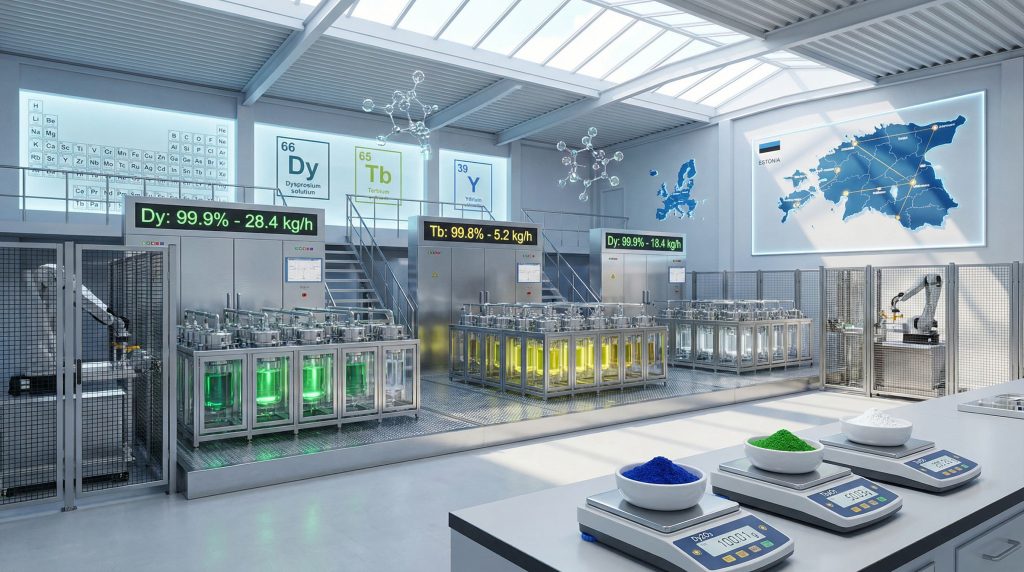
Recent developments have demonstrated the viability of commercial-scale heavy rare earth separation in Estonia. Neo Performance Materials successfully commissioned its HREE solvent extraction line at the Silmet facility, achieving nameplate capacity operations and producing initial terbium and dysprosium solutions from mixed rare earth carbonate feedstock. This milestone represents a critical advancement in European processing capabilities, with all operations completed within European borders to ensure supply chain traceability and security.
Understanding Heavy Rare Earth Elements and Their Strategic Importance
Heavy rare earth elements encompass the most strategically valuable portion of the rare earth family, characterised by their atomic numbers and unique physical properties. These elements possess extraordinary magnetic and electronic characteristics that make them essential components in high-performance applications across multiple industries experiencing rapid growth. Consequently, the establishment of a comprehensive critical minerals strategy becomes essential for securing access to these materials.
Critical HREE Applications by Sector:
| Element | Primary Applications | Key Industries |
|---|---|---|
| Dysprosium | High-performance permanent magnets | Electric vehicle motors, robotics, wind turbines |
| Terbium | Advanced phosphors, specialised magnets | LED systems, industrial automation, medical devices |
| Yttrium | Superconductor applications, ceramic components | Laser technologies, advanced materials |
| Holmium | Precision magnetic applications | Medical lasers, specialised electronics |
The strategic importance of these elements becomes evident when examining their irreplaceable role in enabling the energy transition. Dysprosium and terbium are particularly critical for high-performance permanent magnets used in electric vehicle motors, robotics, wind turbines, and industrial automation systems. The commissioning of commercial HREE separation capabilities in Estonia directly addresses the growing European demand for these materials, as evidenced by Neo Performance Materials' focus on producing dysprosium and terbium solutions to support their European permanent magnet manufacturing operations.
Market Demand Drivers:
- Accelerating electric vehicle adoption across European markets
- Expansion of offshore wind energy installations
- Growth in industrial automation and robotics applications
- Increasing demand for high-efficiency electronic systems
- Strategic push for supply chain independence in critical materials
Solvent Extraction Technology: The Foundation of HREE Separation
Solvent extraction represents the most sophisticated and widely adopted method for separating individual heavy rare earth elements from mixed concentrates. This technology exploits minute differences in chemical behaviour between elements that are otherwise nearly identical in their fundamental properties, requiring precise control of multiple process parameters to achieve commercial-grade separation efficiency. In addition, the implementation of such technologies contributes significantly to decarbonisation benefits across the mining and processing sectors.
Core Process Engineering Principles:
- Feedstock Preparation: Mixed rare earth carbonates undergo dissolution in carefully controlled acidic environments
- Chemical Equilibrium Management: Precise pH and temperature control optimises selective extraction efficiency
- Organic Extractant Selection: Specialised chemical compounds designed to selectively bind target elements
- Multi-Stage Separation: Counter-current flow systems employing multiple extraction and stripping stages
- Product Recovery: Conversion of separated elements to commercial oxide or metal forms
- Quality Assurance: Continuous monitoring ensures product purity specifications
The successful implementation of solvent extraction technology at Estonia's Silmet facility demonstrates the practical viability of these complex processes under continuous commercial conditions. Neo Performance Materials confirmed that their HREE extraction line operates at nameplate capacity while maintaining focus on stable product purity as a foundation for standard production operations.
Technical Implementation Challenges:
- Managing extremely similar ionic radii requiring hundreds of separation stages
- Maintaining precise environmental controls across multiple process circuits
- Addressing naturally occurring radioactive material handling requirements
- Optimising organic solvent recovery and minimising environmental impact
- Ensuring consistent product quality for demanding industrial applications
"The integration of advanced process control systems with traditional solvent extraction methodology enables European facilities to compete with established Asian operations while maintaining superior quality standards and supply chain transparency."
Silmet Facility: Europe's Advanced HREE Processing Capability
The Silmet facility in Estonia represents Europe's most sophisticated heavy rare earth separation infrastructure, combining decades of chemical processing experience with modern separation technologies. This installation demonstrates how legacy industrial capabilities can be successfully adapted and upgraded for critical materials processing to meet contemporary strategic requirements. Furthermore, this development supports the establishment of a European CRM facility network capable of ensuring supply chain resilience.
Operational Capabilities and Infrastructure:
- Multi-stage solvent extraction circuits specifically designed for HREE separation
- Continuous processing capabilities operating at nameplate capacity
- Integrated feedstock handling systems for mixed rare earth carbonates
- Quality control protocols ensuring stable product purity standards
- Environmental management systems for responsible processing operations
Neo Performance Materials president and CEO Rahim Suleman emphasised the strategic importance of this achievement, stating that the successful launch of heavy rare earth separation in Estonia represents a critical step in building the most vertically integrated rare earth magnetics value chain in Europe. The company's rare earth value chain now spans both light and heavy rare earth processing, enabling separation and finishing of select elements into value-added, engineered end-use applications.
Vertical Integration Benefits
The Silmet facility's operational success enables Neo to provide secure, traceable, and high-quality heavy rare earth materials to their European permanent magnet facility, also located in Estonia. This integrated approach supports customers' most demanding applications while ensuring supply chain security and product traceability throughout the processing sequence.
Processing Integration Advantages:
| Benefit Category | Specific Advantages |
|---|---|
| Supply Security | Direct control over entire processing chain |
| Quality Control | Integrated quality assurance across all stages |
| Cost Optimisation | Elimination of intermediate handling and shipping |
| Environmental Management | Consolidated waste treatment and monitoring |
| Customer Service | Rapid response to specification changes |
Economic Factors Driving HREE Processing Viability
Heavy rare earth separation economics differ fundamentally from conventional mineral processing due to the combination of lower volumes, higher technical complexity, and premium pricing structures characteristic of these strategic materials. Understanding these economic dynamics is essential for evaluating long-term project viability and investment attractiveness.
The commissioning of commercial-scale HREE processing at Silmet, combined with Neo Performance Materials' plans to ramp up magnet production in 2026, demonstrates positive economic assessment of integrated rare earth value chain operations. This timeline suggests strong market demand validation and favourable unit economics for European processing operations.
Value Chain Optimisation Strategies:
- Vertical integration from element separation through magnet manufacturing
- Focus on high-purity specifications commanding premium pricing
- Emphasis on supply chain security and traceability for European customers
- Strategic positioning for long-term supply agreements with end users
- Geographic proximity advantages reducing logistics costs and delivery times
Market Positioning Factors
The successful implementation of heavy rare earth separation in Estonia positions European operations to capture value through several competitive advantages. Product quality specifications, customer qualification requirements, and supply chain reliability create opportunities for premium pricing relative to commodity-grade materials. Additionally, the strategic importance of supply chain independence in critical materials provides additional market support for European processing capabilities.
Revenue Optimisation Opportunities:
- Premium pricing for European-processed materials with verified traceability
- Long-term supply contracts providing revenue stability and customer commitment
- Customised product specifications for specialised industrial applications
- Integration benefits reducing costs while improving margins
- Strategic partnerships with downstream manufacturers and end users
The next major ASX story will hit our subscribers first
Environmental Management and Regulatory Framework
Heavy rare earth separation involves handling naturally occurring radioactive materials and complex chemical processes, requiring comprehensive environmental management and regulatory compliance protocols. Estonia's regulatory framework provides clear pathways for responsible HREE processing while maintaining high environmental and safety standards.
The successful commissioning and operation of commercial-scale HREE processing at Silmet demonstrates effective compliance with existing regulatory requirements. Neo Performance Materials' achievement of continuous operations while maintaining product quality standards confirms that European regulatory frameworks support responsible rare earth processing activities.
Environmental Management Requirements:
- Comprehensive radioactive material characterisation and disposal protocols
- Continuous air emissions monitoring for particulates and organic vapours
- Advanced wastewater treatment systems for heavy metals and process chemicals
- Soil and groundwater monitoring programmes protecting local environmental resources
- Worker safety protocols specific to radioactive material handling
Regulatory Compliance Framework
European operations must navigate multiple regulatory jurisdictions while maintaining compliance with environmental, nuclear safety, and industrial standards. The successful operation of HREE processing facilities demonstrates the practical feasibility of meeting these requirements while maintaining commercial viability.
Key Compliance Areas:
| Regulatory Domain | Specific Requirements |
|---|---|
| Nuclear Safety | Radioactive material licensing and monitoring |
| Environmental Protection | Emissions permits and waste disposal authorisation |
| Industrial Safety | Occupational health protocols and emergency procedures |
| Product Quality | Chemical handling and storage requirements |
| International Trade | Export/import licensing for strategic materials |
European HREE Processing in Global Context
Estonia's heavy rare earth processing capabilities must be evaluated within the broader context of global capacity distribution and competitive dynamics. While Asia continues to dominate overall rare earth processing, European operations are establishing strategic niches focused on quality, security, and specialised applications.
The commissioning of commercial HREE separation at Silmet represents a significant milestone in European efforts to establish independent critical materials processing capabilities. This development confirms the technical and economic viability of competing with established Asian operations while providing strategic supply chain alternatives for European industrial customers.
Competitive Positioning Strategy:
European HREE processing operations differentiate themselves through several key value propositions:
- Supply Chain Security: Reduced geopolitical risk and enhanced supply reliability
- Quality Assurance: Superior product consistency and traceability standards
- Customer Proximity: Reduced transportation costs and delivery times
- Regulatory Compliance: Alignment with European environmental and safety standards
- Customisation Capability: Flexible operations supporting specialised customer requirements
Strategic Market Advantages
The geographic proximity of Estonian processing facilities to major European industrial centres provides significant logistical and strategic advantages. Neo Performance Materials' integrated approach, spanning HREE separation through permanent magnet manufacturing, demonstrates how European operations can capture additional value through vertical integration strategies not easily replicated by distant competitors.
Technology Development and Innovation Pathways
The future evolution of heavy rare earth separation in Estonia depends on continued technological advancement, market development, and strategic investment in processing capabilities. Several key trends will influence the sector's trajectory over the coming decade, driven by increasing demand for critical materials and advancing separation technologies.
Emerging Technology Priorities:
- Advanced separation techniques reducing stage requirements and processing complexity
- Automated process control systems optimising efficiency and product consistency
- Enhanced waste minimisation and recycling technologies reducing environmental impact
- Integration with renewable energy systems improving sustainability profiles
- Real-time quality monitoring and process optimisation capabilities
Market Growth Catalysts
The expanding European electric vehicle market, accelerating offshore wind development, and growing industrial automation adoption create strong demand foundations for HREE processing capabilities. Neo Performance Materials' integration strategy, connecting element separation with magnet manufacturing, positions the company to capture value across multiple growth vectors.
Strategic Development Opportunities:
| Growth Vector | Market Drivers | Timeline |
|---|---|---|
| Electric Vehicle Market | EU emissions regulations, consumer adoption | 2026-2030 |
| Renewable Energy | Offshore wind expansion, grid modernisation | 2026-2035 |
| Industrial Automation | Manufacturing digitalisation, robotics growth | 2026-2032 |
| Defence Applications | Strategic autonomy requirements, technology advancement | 2026-2040 |
Neo's establishment of operational HREE separation capabilities, combined with planned magnet production ramp-up in 2026, demonstrates confidence in market growth projections and establishes a foundation for expanded European processing capabilities.
Future Developments Shaping Estonian HREE Operations
The trajectory of heavy rare earth separation in Estonia will be influenced by technological innovation, market evolution, and policy developments supporting strategic materials independence. The successful commissioning of commercial operations at Silmet provides a platform for continued expansion and capability enhancement.
Technology Evolution Pathway
Continued advancement in separation technologies, process automation, and environmental management will enhance the competitiveness of Estonian operations. Integration opportunities with downstream manufacturing, exemplified by Neo's permanent magnet facility, create additional value capture possibilities and market differentiation strategies.
Policy Support Framework
European Union initiatives supporting critical materials independence, including the Critical Raw Materials Act and strategic autonomy programmes, provide favourable policy environments for continued investment in HREE processing capabilities. These frameworks recognise the strategic importance of domestic processing capabilities for economic security and industrial competitiveness.
Investment and Partnership Opportunities
The success of HREE separation operations in Estonia creates demonstration effects encouraging additional investment in European critical materials processing. Strategic partnerships between processing facilities, downstream manufacturers, and end users will support continued sector development and market expansion.
Strategic Implications for European Critical Materials Independence
Heavy rare earth separation in Estonia represents more than technological achievement; it demonstrates the practical viability of establishing competitive processing capabilities outside traditional Asian supply chains. The successful implementation of commercial-scale operations at Silmet confirms that European industrial capabilities can effectively serve strategic materials requirements while maintaining quality and cost competitiveness.
Neo Performance Materials' integrated approach, spanning element separation through magnet manufacturing, illustrates how vertical integration strategies can create sustainable competitive advantages in critical materials sectors. This model provides a template for additional European critical materials processing investments and strategic supply chain development.
Long-term Strategic Value
As demand for heavy rare earth elements continues expanding with energy transition acceleration and industrial digitalisation, Estonian processing infrastructure will play an increasingly important role in European industrial competitiveness and strategic autonomy. The establishment of reliable, high-quality processing capabilities creates foundation for continued market development and technological innovation.
The successful commissioning of HREE separation capabilities in Estonia validates the potential for European leadership in advanced materials processing, demonstrating that strategic investment in critical technologies can achieve both commercial success and strategic objectives simultaneously.
Disclaimer: This analysis is based on publicly available information and should not be considered as investment advice. Market conditions, technological developments, and regulatory frameworks may change, affecting the prospects for heavy rare earth processing operations. Readers should conduct independent research and consult with qualified professionals before making investment or business decisions related to rare earth element processing or related industries.
Looking to Capitalise on Europe's Evolving Critical Materials Market?
Discovery Alert's proprietary Discovery IQ model delivers real-time alerts on significant ASX mineral discoveries, instantly empowering subscribers to identify actionable opportunities in critical minerals and rare earth elements ahead of the broader market. Begin your 14-day free trial today and secure your market-leading advantage.