
May 22, 2026
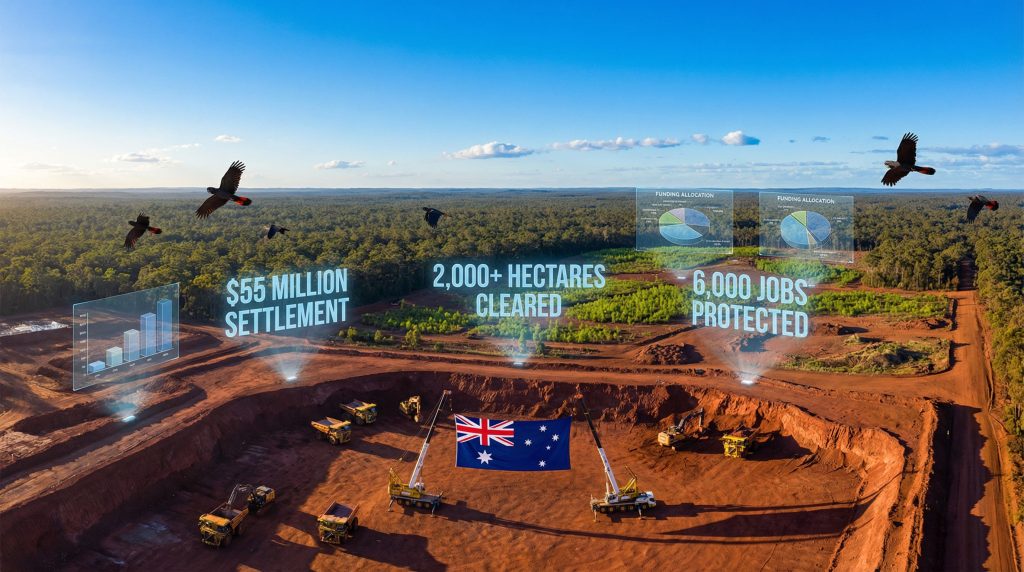
Modern mining operations navigate increasingly sophisticated environmental compliance structures that balance resource extraction needs with ecological protection requirements. These regulatory frameworks have evolved significantly over recent decades, particularly in jurisdictions like Australia where critical minerals security intersects with biodiversity conservation priorities. The recent Alcoa land clearing penalty Western Australia case demonstrates the complex intersection of environmental law, resource extraction, and economic considerations that define contemporary mining regulation.
What Led to Australia's Largest Mining Environmental Penalty in 2026?
The unprecedented scale of environmental violations discovered in Western Australia's Northern Jarrah Forest represents a watershed moment for mining compliance enforcement. The severity of this case stems from multiple systemic failures that accumulated over an extended operational period.
The Scale of Unlawful Land Clearing Operations
Between 2019 and 2025, unauthorized clearing activities affected over 2,000 hectares of protected habitat without federal environmental approvals. This represents one of the most extensive unauthorized land clearing cases documented under Australia's Environment Protection and Biodiversity Conservation Act.
The geographic scope of these operations significantly impacted the Northern Jarrah Forest ecosystem, a unique ecological zone characterized by:
- Endemic species diversity: Home to multiple threatened wildlife populations
- Complex soil structures: Jarrah forest soils require decades to regenerate properly
- Interconnected habitat corridors: Critical for species migration and genetic diversity
- Water catchment functions: Essential for regional hydrological systems
Federal Environmental Law Breach Under EPBC Act
The violations occurred under Australia's primary environmental protection legislation, which requires federal approval for any activity likely to significantly impact matters of national environmental significance. Understanding these mining permitting basics becomes crucial when examining this case.
Legal Framework Gaps:
- Insufficient real-time monitoring capabilities
- Limited enforcement resources for remote mining sites
- Complex jurisdictional boundaries between federal and state authorities
- Inadequate penalties to deter non-compliance
Furthermore, historical analysis reveals this penalty exceeds previous Australian mining environmental fines by a substantial margin, establishing new precedent for enforcement actions in the resources sector.
When big ASX news breaks, our subscribers know first
How Does Alcoa's $55 Million Settlement Break Down?
The comprehensive settlement structure demonstrates evolved approaches to environmental remediation that extend beyond traditional penalty models toward ecosystem restoration outcomes. This represents a significant shift in how the Alcoa land clearing penalty Western Australia was structured.
Environmental Offset Requirements and Funding Allocation
| Funding Category | Amount (AUD) | Purpose |
|---|---|---|
| Ecological Offsets | $28 million | Permanent habitat compensation |
| Wildlife Conservation | $3.5 million | Australian Wildlife Conservancy programs |
| Invasive Species Control | $4.2 million | State government initiatives |
| Research Funding | $2.8 million | University of Western Australia fauna studies |
The $28 million ecological offset component represents the largest single conservation investment in Australian mining penalty history. These funds will establish permanent habitat protection areas designed to compensate for damaged ecosystems through like-for-like habitat preservation.
Research funding allocation specifically targets invasive fauna studies, addressing a critical knowledge gap in forest ecosystem management. This investment recognises that successful rehabilitation requires deep understanding of complex ecological interactions.
Rehabilitation Commitments and Performance Targets
The settlement includes binding operational constraints designed to prevent future violations:
- Annual clearing limitations: Maximum 800 hectares per year
- Accelerated rehabilitation: 1,000 hectares annually by 2027
- Performance monitoring: Independent ecological assessments
- Compliance reporting: Quarterly progress updates to federal authorities
These targets represent a fundamental shift from reactive penalty payments toward proactive environmental stewardship integrated into operational planning.
Why Did the Federal Government Grant a National Interest Exemption?
The decision to allow continued operations through a national interest exemption reflects complex geopolitical and economic considerations that extend far beyond local environmental concerns. However, this approach to the Alcoa land clearing penalty Western Australia has generated significant controversy.
Critical Mineral Security Considerations
Australia's bauxite reserves play a strategic role in global aluminium supply chains, but the secondary mineral extraction adds another dimension of national importance. The bauxite project benefits extend beyond immediate extraction activities.
Gallium production from bauxite processing represents a critical component of renewable energy infrastructure development, with applications in solar panels and wind turbine electronics essential for net-zero transition goals.
The strategic mineral dependency analysis considers:
- Global supply concentration: Limited alternative sources for gallium
- Technology transition requirements: Expanding renewable energy deployment
- Defence industry applications: Advanced electronics and satellite systems
- Economic multiplier effects: Downstream processing and manufacturing jobs
Employment and Regional Economic Impact Analysis
The 6,000 direct employment positions supported by these operations represent significant regional economic activity in Western Australia. Economic impact modelling reveals:
- Indirect employment: Estimated 15,000 additional jobs in support industries
- Regional GDP contribution: Approximately $2.8 billion annually
- Government revenue: $450 million in annual royalties and taxes
- Community infrastructure: Healthcare, education, and transportation systems
Precedent Analysis of National Interest Exemptions
Historical examination of national interest exemption usage reveals this represents unprecedented commercial application of emergency regulatory provisions. Previous exemptions primarily addressed:
- Natural disaster response: Flood and fire recovery operations
- Defence infrastructure: Military facility development
- Critical supply shortages: Medical equipment during health emergencies
Consequently, this commercial application establishes concerning precedent for future mining approvals, potentially undermining environmental protection frameworks through economic justification.
What Are the Environmental Implications for Northern Jarrah Forest?
The ecological consequences extend beyond immediate habitat loss to encompass long-term ecosystem functionality and species viability concerns that may persist for decades. Modern mine reclamation insights become essential when evaluating these impacts.
Endangered Species Habitat Assessment
The Northern Jarrah Forest provides critical habitat for multiple threatened species, with Carnaby's and Baudin's black cockatoos representing flagship conservation concerns. These species face particular vulnerability due to:
- Specialised nesting requirements: Large hollow-bearing trees taking 100+ years to develop
- Limited alternative habitats: Restricted to southwestern Australian ecosystems
- Breeding cycle disruption: Sensitive to habitat fragmentation during nesting seasons
- Food source dependency: Specific native plant species for foraging
Population assessments indicate both cockatoo species have declined by over 60% in recent decades, making habitat protection essential for species survival.
Forest Restoration Success Rates and Challenges
Jarrah forest rehabilitation presents significant technical challenges that limit long-term restoration success. Historical performance data reveals concerning patterns:
Rehabilitation Challenges:
- Soil structure restoration: Requires 20-30 years for basic functionality
- Native species establishment: Less than 40% success rate for key tree species
- Ecosystem complexity: Mycorrhizal networks essential for plant health
- Invasive species pressure: Ongoing management requirements
After 35 years of rehabilitation efforts, industry-wide success rates achieve only limited ecological functionality compared to original forest ecosystems, highlighting the irreversible nature of many environmental impacts.
How Are Environmental Groups and Critics Responding?
The regulatory response has generated significant controversy among environmental organisations and legal experts who view the precedent as fundamentally undermining environmental protection principles.
Legal and Policy Criticism Analysis
Environmental law specialists have raised serious concerns about the national interest exemption application. The Environmental Defenders Office has highlighted several problematic aspects:
- Legal precedent erosion: Commercial interests overriding environmental protection
- Regulatory capture concerns: Industry influence on government decision-making
- Inadequate penalty structures: Fines insufficient to deter future violations
- Compliance monitoring failures: Systemic oversight deficiencies
The Biodiversity Council expressed particular concern about the precedent this sets for other major resource projects currently under assessment.
Alternative Policy Approaches and Recommendations
Reform advocates propose several enhanced regulatory mechanisms:
- Real-time monitoring systems: Satellite-based compliance tracking
- Escalating penalty structures: Exponential fines for repeat violations
- Independent oversight bodies: Arms-length environmental compliance monitoring
- Preventative assessment protocols: Enhanced pre-approval environmental impact modelling
Public consultation processes documented over 59,000 objections to state-level mining expansion proposals, indicating significant community concern about environmental protection adequacy.
What Does This Mean for Future Mining Regulation in Australia?
The implications extend far beyond this individual case to encompass fundamental questions about how Australia balances resource development with environmental protection in an era of climate change and biodiversity crisis. The broader mining industry evolution must address these challenges.
Strategic Assessment Process for 2045 Expansion Plans
The 18-month exemption period provides time for comprehensive strategic assessment of proposed mining expansion through 2045. This process will evaluate:
- Cumulative environmental impacts: Long-term ecosystem degradation assessment
- Alternative extraction methods: Lower-impact mining technologies
- Offset effectiveness: Real-world habitat compensation success rates
- Climate change interactions: Ecosystem resilience under changing conditions
Industry-Wide Implications for Mining Compliance
Other major resource companies are closely monitoring this case for guidance on environmental compliance strategies. Key considerations include:
Proactive Compliance Investment:
- Enhanced environmental monitoring systems
- Preventative habitat protection measures
- Community engagement and consultation processes
- Independent environmental auditing protocols
Cost-Benefit Analysis: Companies must now factor substantial penalty risks into project economics, potentially altering the financial viability of marginal mining operations.
Policy Evolution Under Revised Environmental Laws
Recent EPBC Act reforms introduce stronger enforcement mechanisms, but implementation timeline and effectiveness remain uncertain. Key reform elements include:
- Independent environmental regulator: Arms-length compliance monitoring
- Enhanced penalty structures: Increased maximum fines for violations
- Mandatory biodiversity standards: Quantitative ecosystem protection requirements
- Federal-state coordination improvements: Streamlined approval processes
The next major ASX story will hit our subscribers first
Frequently Asked Questions About the Alcoa Penalty
Why wasn't Alcoa's mining licence revoked entirely?
Licence revocation would have eliminated 6,000 direct jobs and disrupted critical mineral supply chains essential for renewable energy infrastructure development. The government balanced economic impacts against environmental violations through the penalty and remediation structure.
How will the ecological offset funding be monitored for effectiveness?
Independent ecological consultants will conduct quarterly assessments using standardised biodiversity metrics. The University of Western Australia will provide scientific oversight through the dedicated research funding component of the settlement.
What happens if Alcoa fails to meet its rehabilitation targets?
The settlement includes escalating penalty clauses and potential operational restrictions for non-compliance with rehabilitation commitments. Continued violations could trigger licence review processes under enhanced EPBC Act provisions.
Will this penalty influence other pending mining approvals in Western Australia?
The precedent establishes enhanced due diligence requirements for environmental impact assessments. In addition, future mining approvals will likely face more stringent compliance monitoring and larger offset obligations to address cumulative ecosystem impacts.
This case demonstrates the evolving complexity of environmental regulation in the mining sector, where traditional penalty models are being replaced by comprehensive ecosystem restoration approaches. The Alcoa land clearing penalty Western Australia represents a watershed moment that attempts to balance resource development with long-term environmental sustainability. The effectiveness of these new regulatory frameworks will be tested over the coming decades as rehabilitation efforts proceed and mining operations continue under enhanced oversight.
Ready to Capitalise on Australia's Critical Minerals Boom?
Discovery Alert's proprietary Discovery IQ model delivers real-time notifications on significant ASX mineral discoveries, including critical materials essential for renewable energy infrastructure and defence applications. With major mining operations like Alcoa's ongoing expansion highlighting Australia's strategic mineral importance, subscribers receive actionable insights to identify emerging opportunities ahead of the broader market and begin their 14-day free trial today.