
May 23, 2026
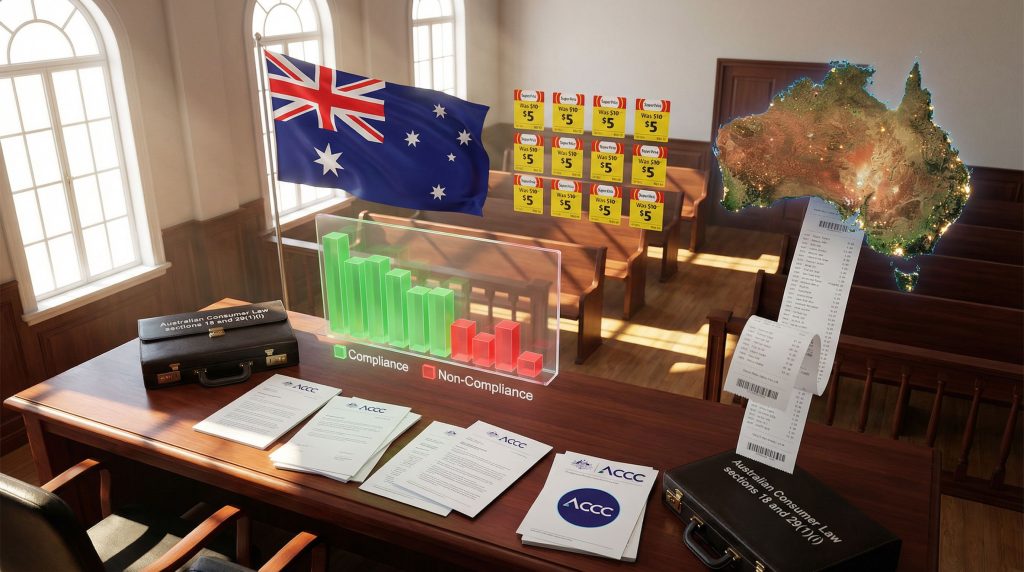
The Evolution of Australia's Consumer Protection Landscape in the Digital Age
Modern retail environments have fundamentally transformed how consumers interact with pricing information, creating unprecedented challenges for regulatory frameworks designed in simpler commercial times. The intersection of sophisticated data analytics, behavioural economics research, and traditional consumer protection laws now forms the battleground where Australia's commercial future will be decided. Furthermore, this transformation reflects broader patterns in mining industry evolution and industrial modernisation.
The Federal Court proceedings that commenced on February 16, 2026, represent more than a regulatory enforcement action against promotional pricing practices. This litigation establishes critical precedents for how consumer protection laws apply to data-driven retail strategies, with implications extending across Australia's entire commercial landscape. Additionally, the case demonstrates how 'case of the century' ACCC vs Coles challenges traditional regulatory approaches.
Understanding the regulatory framework requires examining how Australian Consumer Law sections 18 and 29(1)(i) interact with modern promotional marketing. Reference price benchmarking standards under competition law have evolved beyond simple disclosure requirements, now encompassing sophisticated analysis of consumer decision-making patterns and information processing capabilities.
When big ASX news breaks, our subscribers know first
How Modern Promotional Pricing Regulations Function in Digital Retail Environments
The mechanics of promotional pricing regulation in Australia reveal the complexity of enforcing consumer protection in an era of dynamic pricing algorithms and real-time promotional adjustments. Current regulatory standards demand more than simple price disclosure, requiring retailers to maintain transparent baseline pricing methodologies. Similarly, data‐driven operations across industries face comparable transparency requirements.
Reference price requirements establish legitimate baseline pricing through temporal benchmarking, typically requiring products to be sold at regular prices for substantial periods before promotional claims can be made. The Australian Competition and Consumer Commission has historically expected approximately 50% or more of preceding periods to demonstrate genuine regular pricing, though specific temporal requirements vary by product category and market conditions.
Disclosure obligations extend beyond simple price comparisons, encompassing transparency standards that enable consumers to make informed purchasing decisions. Cross-industry applications of these standards affect not only supermarkets but electronics retailers, fashion outlets, and automotive dealerships, creating sector-wide compliance challenges.
Investigation Triggers and Evidence Gathering
ACCC enforcement actions typically originate through multiple channels:
- Consumer complaints lodged directly with regulatory authorities
- Competitor notifications regarding potentially misleading practices
- Media investigations highlighting pricing inconsistencies
- Proactive monitoring of retail sector pricing patterns through data analytics
Evidence gathering in modern pricing cases relies heavily on transaction data analysis, comparing advertised prices to actual shelf prices across extended periods. Historical pricing databases now enable regulators to detect patterns previously invisible to manual oversight, fundamentally changing enforcement capabilities.
The penalty framework under current legislation allows for significant financial consequences, with maximum civil penalties reaching AUD $50 million for corporations under Section 134 of the Competition and Consumer Act 2010. These substantial penalties reflect Parliament's intention to create meaningful deterrence in an era of sophisticated commercial practices.
Economic Implications of Enhanced Promotional Pricing Standards
The broader economic consequences of stricter promotional pricing oversight extend far beyond individual retailer compliance costs, potentially reshaping competitive dynamics across multiple retail sectors. These implications mirror those seen in regulatory executive orders affecting various industries.
Market Structure Analysis
| Retail Sector | Promotional Dependency | Compliance Adaptation | Consumer Impact Potential |
|---|---|---|---|
| Supermarkets | High-frequency discounting | Advanced price tracking systems | Modified promotional frequency |
| Electronics | Seasonal promotional cycles | Enhanced documentation requirements | Altered discount presentation methods |
| Fashion | End-of-season clearances | Revised promotional timing protocols | Changed seasonal pricing patterns |
| Automotive | Model clearance strategies | Comprehensive price history maintenance | Modified vehicle promotional approaches |
Competition dynamics face significant alteration under enhanced standards. Smaller retailers may benefit from reduced information asymmetry if larger competitors face proportionally higher compliance costs. Conversely, sophisticated retailers with advanced data systems may gain competitive advantages through superior compliance capabilities.
Consumer welfare considerations present complex tradeoffs. Enhanced transparency could reduce prices through improved information availability, enabling more effective price comparison. However, increased compliance costs may ultimately flow through to consumer prices, particularly in concentrated retail markets.
Innovation impacts likely include shifts from traditional price-anchor promotional strategies toward value-based messaging and enhanced customer service differentiation. Technology investment in pricing systems and compliance monitoring will increase across the retail sector, potentially driving industry consolidation as smaller operators struggle with compliance costs.
Regulatory Transformation Through Data-Driven Enforcement
The case represents a fundamental shift in Australian consumer protection enforcement, where advanced analytics enable detection of misleading practices previously impossible to identify through traditional oversight methods. This transformation parallels developments in global trade impacts on regulatory frameworks.
Evolution of Enforcement Capabilities
The ACCC's enhanced data analytics capabilities, supported by increased budget allocations exceeding AUD $150 million annually in 2024-25, enable transaction-level analysis of promotional pricing patterns. This represents a quantum leap from historical enforcement relying primarily on consumer complaints and manual price monitoring.
Digital Markets Unit establishment within the ACCC demonstrates regulatory recognition that modern consumer protection requires technological sophistication matching that of regulated industries. Transaction data from point-of-sale systems, promotional databases, and historical pricing records now form the evidentiary backbone of major enforcement actions.
Consumer behaviour analysis has evolved beyond traditional disclosure-based protection models. Regulatory understanding of reference price bias and anchoring effects, grounded in behavioural economics research, recognises that consumers unconsciously use advertised reference prices as decision anchors regardless of their accuracy.
International Regulatory Influence
Australia's approach to promotional pricing regulation could establish standards influencing consumer protection frameworks globally. Similar cases in the United Kingdom, European Union, and United States involve different legal frameworks but comparable underlying consumer psychology and market dynamics.
Cross-border retail implications affect multinational retailers operating across multiple jurisdictions. Compliance strategies must now account for varying regulatory standards while maintaining operational efficiency across diverse markets. These considerations align with broader tariff market impacts affecting international business operations.
Future Retail Compliance Strategy Development
The litigation outcome will establish operational frameworks requiring integration into retail pricing and promotional systems across the Australian market. The ACCC's case against Coles provides detailed insight into regulatory expectations.
Implementation Requirements
Immediate compliance adaptations likely include:
- Enhanced price tracking and documentation systems with automated compliance monitoring
- Revised promotional approval processes incorporating regulatory risk assessment
- Comprehensive staff training programmes on consumer law compliance obligations
- Updated customer communication protocols ensuring transparent pricing disclosure
Long-term strategic adaptations encompass:
- Promotional calendar restructuring to accommodate extended baseline pricing periods
- Reference price methodology standardisation across product categories
- Consumer communication strategy revision emphasising value rather than price anchoring
- Cross-channel pricing consistency protocols ensuring uniform promotional presentation
Technology Integration Requirements
Compliance technology investments will likely focus on automated monitoring systems capable of tracking pricing patterns across extended periods. Machine learning algorithms may become standard tools for identifying potentially misleading promotional structures before they reach consumers.
Integration with existing enterprise resource planning systems requires substantial technical adaptation, particularly for retailers operating across multiple channels with complex pricing structures.
Consumer Rights Enhancement and Market Transparency
The case outcome will define practical boundaries of consumer protection in modern retail environments, potentially establishing new standards for information transparency and decision-making support.
Enhanced Consumer Protection Framework
Information transparency improvements may include clearer promotional pricing disclosures, enabling consumers to access historical pricing data and make more informed purchasing decisions. Decision-making support tools could evolve beyond simple price comparisons to include comprehensive value assessment frameworks.
Market accountability enhancements would establish stricter retailer responsibility standards, potentially including proactive disclosure obligations for pricing methodologies. Consumer redress mechanisms might expand beyond traditional compensation models to include educational initiatives and enhanced market transparency requirements.
Transparency Implementation Challenges
Practical implementation considerations include:
- Technical infrastructure requirements for historical price data access
- Consumer education needs regarding promotional pricing evaluation methods
- Industry standardisation of transparency presentation formats
- Regulatory oversight mechanisms ensuring compliance sustainability
Market transparency improvements face significant operational challenges, particularly regarding consumer accessibility to complex pricing information. Regulatory predictability requires clear compliance expectations enabling business planning while maintaining enforcement flexibility.
The next major ASX story will hit our subscribers first
International Precedent Development and Cross-Jurisdictional Implications
Australia's promotional pricing enforcement approach may establish standards influencing consumer protection frameworks internationally, particularly as retail markets become increasingly globalised.
Global Regulatory Convergence Trends
Best practice development through Australian standards could establish international benchmarks for promotional pricing regulation. Cross-border retail implications require multinational operators to develop compliance strategies accommodating varying regulatory expectations across jurisdictions.
Digital marketplace applications present particular challenges, as online retail platforms operate across multiple regulatory frameworks simultaneously. Enhanced international consumer protection coordination may emerge through shared enforcement experiences and regulatory learning.
The 'case of the century' ACCC vs Coles demonstrates how sophisticated data analytics enable consumer protection enforcement previously impossible through traditional oversight methods, potentially inspiring similar approaches in comparable jurisdictions.
Long-term Competitive Landscape Transformation
The litigation resolution will influence competitive dynamics across Australia's retail sector, potentially altering fundamental approaches to consumer engagement and market competition.
Scenario-Based Impact Analysis
Enhanced Regulatory Oversight Scenario:
- Reduced reliance on promotional pricing as primary competitive differentiation
- Increased emphasis on genuine value proposition development and customer service excellence
- Enhanced market transparency benefiting smaller competitors with limited promotional budgets
- Potential industry consolidation around compliance-capable operators
Maintained Current Framework Scenario:
- Continued aggressive promotional competition within existing regulatory boundaries
- Preserved flexibility in pricing strategy implementation across retail sectors
- Sustained promotional marketing diversity enabling consumer choice
- Limited expansion of regulatory oversight into commercial strategy decisions
Conclusion: Defining Australia's Consumer Protection Future
This landmark Federal Court case represents a pivotal moment in Australian consumer protection evolution, where traditional retail practices encounter sophisticated regulatory expectations supported by advanced analytical capabilities. The proceedings have elevated industry awareness of promotional pricing obligations while demonstrating regulatory agencies' enhanced detection capabilities in data-rich retail environments.
The outcome will establish operational standards influencing how millions of Australians experience retail marketing, extending far beyond supermarket operations to encompass the entire Australian retail landscape. Regardless of specific judicial findings, the 'case of the century' ACCC vs Coles has already transformed industry understanding of consumer protection obligations in modern commercial environments.
Key considerations for market participants include:
- Enhanced compliance infrastructure requirements across retail sectors
- Potential shifts in competitive dynamics favouring transparency over promotional complexity
- Consumer education needs regarding promotional pricing evaluation methods
- International precedent development influencing global retail practices
The litigation demonstrates regulatory adaptation to digital-age consumer protection challenges, where data analytics enable sophisticated pattern detection previously impossible through manual oversight. This transformation reflects broader evolution in regulatory capability matching the technological sophistication of modern retail operations.
Disclaimer: This analysis is based on publicly available information and general regulatory frameworks. Specific legal outcomes, compliance requirements, and commercial implications should be verified against official court documents, ACCC announcements, and professional legal advice. Market participants should consult qualified advisors regarding specific compliance obligations and strategic implications.
Ready to Identify the Next Major Investment Opportunity?
Discovery Alert's proprietary Discovery IQ model delivers real-time alerts on significant ASX mineral discoveries, instantly empowering subscribers to spot actionable opportunities ahead of the broader market. Begin your 14-day free trial today and secure your market-leading advantage in identifying transformative investment prospects.