May 23, 2026
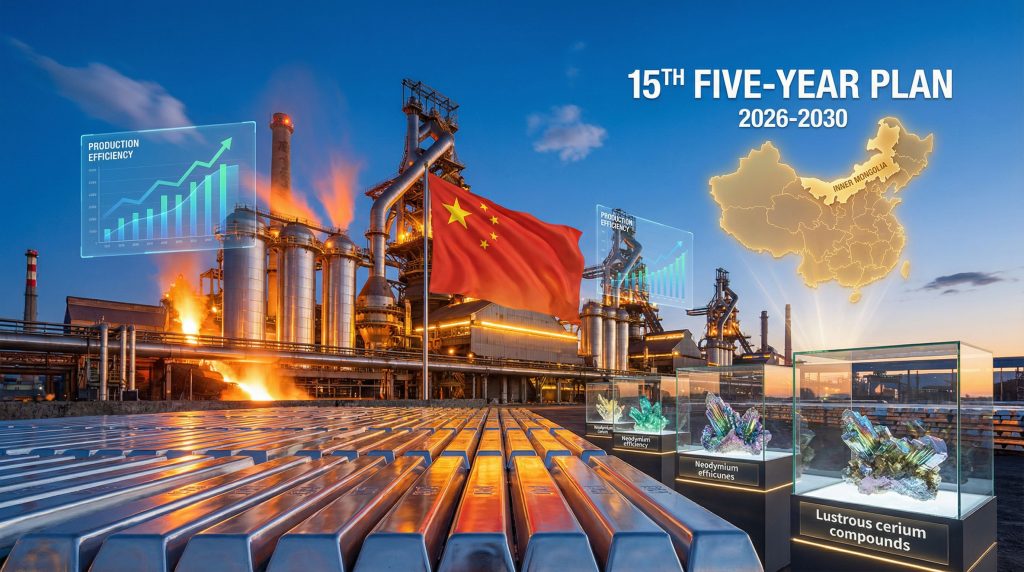
China's state-owned enterprise reforms have entered a critical phase as the nation prepares for its ambitious 15th Five-Year Plan period spanning 2026 to 2030. The Baogang Group China Five-Year Plan reflects systematic restructuring of industrial giants that extends far beyond corporate governance improvements. These transformations signal China's determination to consolidate control over critical materials supply chains while positioning domestic enterprises for expanded global market participation.
The convergence of internal governance standardisation with national industrial policy represents a sophisticated approach to economic statecraft, where corporate discipline serves dual purposes of operational efficiency and geopolitical leverage. Understanding these dynamics provides insight into how China's industrial ecosystem will evolve during the next planning cycle and its implications for global supply chain dependencies.
Strategic Materials Command Structure Within China's Industrial Framework
The Inner Mongolia-based Baogang Group operates as one of China's most strategically significant state-owned enterprises, controlling integrated operations across steel production, rare earth processing, logistics coordination, and energy subsidiaries. This multi-sector positioning enables comprehensive supply chain control from raw material extraction through final product delivery, creating vertical integration that few international competitors can replicate.
Corporate Structure Analysis:
- Steel production facilities serving national infrastructure demands
- Rare earth processing operations handling critical technology materials
- Logistics subsidiaries coordinating regional and national distribution networks
- Energy divisions supporting integrated operational requirements
China's rare earth sector dominance underpins much of this strategic positioning. According to the U.S. Geological Survey's 2024 Mineral Commodity Summaries, China maintains approximately 70% of global rare earth production capacity and processes 90% of worldwide rare earth elements. This concentration creates significant leverage over downstream industries dependent on these materials for advanced technology applications, particularly as iron ore demand trends continue evolving globally.
The dual governance structure implemented across Chinese state enterprises integrates Communist Party oversight with corporate management hierarchies. This framework ensures political alignment while maintaining operational flexibility, creating accountability mechanisms that serve both commercial objectives and national policy priorities.
Furthermore, the World Steel Association's framework highlights how integrated steel and materials companies are adapting to meet evolving global standards whilst maintaining operational efficiency.
Subsidiary Integration Framework:
- Centralised oversight across steel, logistics, and rare earth divisions
- Technology development coordination for competitive positioning
- Quality control standardisation supporting export market requirements
- Resource allocation optimisation serving national infrastructure projects
Inner Mongolia's designation as China's primary rare earth processing hub amplifies Baogang Group's strategic importance. The region hosts multiple state-designated development zones and processing facilities, creating concentrated capacity that enhances China's ability to control global rare earth supply chains and pricing mechanisms.
When big ASX news breaks, our subscribers know first
Internal Discipline as Competitive Strategy Implementation
The systematic implementation of governance reforms across Chinese state enterprises reflects recognition that expanded strategic roles require predictable operational execution. Anti-corruption frameworks serve dual purposes of political risk management and operational standardisation, creating foundations for reliable supply chain performance.
Risk Management Standardisation:
- Mandatory remediation protocols with time-bound compliance requirements
- Executive accountability structures reducing diffusion of responsibility
- Technology integration requirements supporting competitive positioning
- Quality control standardisation ensuring export market compliance
Recent internal inspection processes have identified areas requiring immediate attention across logistics, finance, leasing, investment, and environmental subsidiaries. The "one-line responsibility mechanism" assigns direct executive ownership of remediation efforts, creating clear performance metrics and accountability frameworks.
This governance approach reflects lessons learned from previous industrial scaling efforts where inadequate internal controls created operational vulnerabilities. The emphasis on discipline before expansion indicates recognition that strategic materials operations require exceptional reliability given their importance to national security and economic objectives.
Operational Excellence Framework:
- Centralised oversight expansion across all subsidiary operations
- Technology integration supporting digital transformation requirements
- Environmental compliance standards preparing for carbon neutrality goals
- Executive performance metrics tied to remediation and improvement outcomes
The integration of governance discipline with competitive strategy represents a sophisticated approach where internal controls serve as operational assets rather than administrative burdens.
Policy Transformation Through the 15th Five-Year Plan Framework
China's 15th Five-Year Plan emphasises "high-quality development" over traditional growth-at-any-cost models, requiring state enterprises to balance expansion objectives with sustainability requirements. Consequently, this transition affects operational strategies across steel production, rare earth processing, and related industrial sectors where the Baogang Group China Five-Year Plan serves as a strategic template.
Strategic Development Priorities:
- Technological self-reliance in critical materials processing
- Domestic demand expansion through infrastructure investment
- Environmental compliance integration with industrial output goals
- Regional development coordination between state enterprises and local governments
The technological self-reliance objective requires domestic enterprises to develop advanced capabilities rather than relying on imports or foreign technology licensing. For integrated materials companies, this mandate drives investment in research and development for advanced steel alloys, rare earth processing techniques, and digital production optimisation systems.
Infrastructure-driven demand strategies continue supporting steel and rare earth consumption through large-scale projects including high-speed rail networks, renewable energy installations, and urban development initiatives. These projects provide predictable demand while supporting domestic technology development and industrial capacity utilisation, particularly as critical minerals energy security becomes increasingly important.
Innovation Integration Requirements:
- Advanced materials development for emerging technology applications
- Green technology implementation supporting carbon reduction targets
- Digital transformation across production and logistics operations
- Proprietary technology development reducing foreign dependency
Regional coordination mechanisms enable state enterprises to participate in broader industrial development strategies while maintaining operational autonomy. This approach balances centralised planning with local adaptation, creating flexibility for market-responsive execution within strategic frameworks.
Global Supply Chain Dependency Implications
China's industrial consolidation affects global supply chain alternatives through enhanced coordination and centralised control over critical materials production. These developments create challenges for Western diversification efforts while strengthening China's position in strategic materials markets.
Market Control Enhancement Factors:
- Vertical integration reducing external dependencies
- Pricing mechanism coordination across production and logistics
- Supply chain reliability improvements through governance standardisation
- Technology development acceleration supporting competitive advantages
The concentration of rare earth processing capacity within China creates structural dependencies that alternative suppliers cannot easily replicate. New processing facilities require significant capital investment, environmental permitting, and technical expertise development, creating barriers to rapid diversification.
Western efforts to establish alternative supply sources face cost, scale, and timeline challenges. According to industry analyses, non-Chinese rare earth processing capacity would require substantial expansion to meaningfully reduce dependency on Chinese suppliers for critical technology materials. However, China's export controls further complicate alternative sourcing strategies.
Diversification Challenge Analysis:
- Capital Requirements: New processing facilities require hundreds of millions in investment
- Timeline Constraints: Development periods spanning 5-10 years for new operations
- Technical Expertise: Limited global capacity for advanced rare earth processing
- Cost Competitiveness: Chinese integrated operations maintain significant cost advantages
The European Union has targeted 30% of rare earth processing capacity outside China by 2030, while the United States has initiated various critical materials programs. However, these initiatives face significant implementation challenges related to permitting, financing, and technical capacity development.
Strategic Preparation Indicators and Expansion Signals
The pattern of governance tightening followed by operational scaling suggests preparation for expanded strategic roles during the 15th Five-Year Plan period. Internal control strengthening typically precedes capital deployment phases and supply chain integration expansion, particularly as the Baogang Group China Five-Year Plan demonstrates.
Management Reset Indicators:
- Comprehensive inspection coverage across key subsidiaries
- Time-bound remediation requirements with executive accountability
- Compliance verification mechanisms detecting superficial versus substantive improvements
- Risk reduction strategies preparing for increased operational scope
Historical analysis reveals similar governance enhancement patterns preceding major industrial expansions. Chinese state enterprises often undergo "house-cleaning" processes before assuming expanded responsibilities, indicating systematic preparation for increased strategic roles.
The timing of these governance reforms coincides with China's transition into the 15th Five-Year Plan cycle, suggesting coordination between corporate preparation and national policy implementation. This alignment indicates potential for expanded roles in supply chain coordination, pricing mechanism management, and technology development initiatives, particularly through Zijin Mining expansion strategies.
Operational Expansion Preparation:
- Internal control standardisation supporting scaled operations
- Executive accountability frameworks enabling complex project management
- Compliance infrastructure preparing for international market participation
- Technology integration creating foundations for advanced manufacturing capabilities
Critical Materials Market Dynamics Evolution
Enhanced governance standards affect market dynamics through improved operational reliability and centralised coordination capabilities. These changes influence pricing mechanisms, supply chain predictability, and competitive positioning in global markets.
Pricing Control Enhancement Mechanisms:
- Centralised oversight enabling coordinated pricing strategies
- Integrated operations reducing internal cost volatility
- Supply chain optimisation supporting competitive positioning
- Technology development creating value-added product capabilities
The consolidation of operations under standardised governance frameworks enables more sophisticated market participation strategies. Integrated companies can respond rapidly to demand fluctuations while maintaining supply reliability, creating advantages over less coordinated competitors.
Green technology integration requirements support positioning for emerging market segments while meeting environmental compliance standards. This dual approach enables participation in traditional markets while developing capabilities for future growth sectors.
Technology Development Acceleration:
- Advanced materials research supporting emerging applications
- Digital optimisation improving operational efficiency
- Environmental technology integration supporting sustainability goals
- Proprietary development reducing external technology dependencies
Market participants seeking supply reliability may find Chinese integrated suppliers increasingly attractive despite diversification preferences, creating tension between risk management objectives and operational requirements. In addition, the broader mining industry evolution affects how companies approach strategic materials sourcing.
What Are the Key Competitive Advantages?
For instance, the comprehensive green steel strategy demonstrates how integrated operations can achieve environmental and competitive objectives simultaneously, creating sustainable advantages over fragmented competitors.
The next major ASX story will hit our subscribers first
Strategic Implications for International Markets
The systematic strengthening of Chinese state enterprise operations creates both challenges and opportunities for global market participants. Understanding these dynamics enables better strategic planning for supply chain management and competitive positioning.
Short-Term Market Effects:
- Enhanced operational reliability through standardised governance frameworks
- Reduced tolerance for procedural shortcuts affecting supply consistency
- Strengthened compliance mechanisms supporting international market confidence
- Improved predictability in supply chain coordination and logistics
Long-Term Competitive Positioning:
- Consolidated state control over strategic materials supply chains
- Technology integration acceleration maintaining competitive advantages
- Environmental standards improvement supporting sustainable market participation
- Reduced vulnerability to external supply chain disruptions
The integration of governance discipline with strategic planning represents sophisticated industrial policy execution that extends beyond traditional corporate reform efforts. These developments affect global market dynamics through enhanced Chinese competitive positioning and reduced alternatives for critical materials sourcing.
International companies dependent on Chinese supply chains should evaluate diversification strategies while recognising the practical constraints limiting alternative sourcing options. The timeline and cost requirements for meaningful supply chain diversification exceed many organisations' planning horizons, requiring balanced approaches to risk management.
Investment and Policy Considerations:
- Supply Chain Risk Assessment: Evaluate exposure to Chinese critical materials suppliers
- Diversification Timeline Planning: Understand realistic timelines for alternative sourcing development
- Technology Innovation Investment: Consider proprietary capabilities reducing external dependencies
- Strategic Partnership Development: Explore collaboration opportunities balancing risk and operational requirements
These governance reforms demonstrate China's commitment to maintaining and expanding its position in critical materials markets while addressing internal operational challenges. The systematic approach to enterprise strengthening suggests continued evolution toward enhanced market control and strategic materials dominance during the Baogang Group China Five-Year Plan period and beyond.
Looking to Capitalise on China's Strategic Materials Dominance?
Discovery Alert's proprietary Discovery IQ model provides real-time alerts on significant ASX mineral discoveries, enabling investors to identify opportunities in the growing critical minerals sector as global supply chains evolve. Start your 30-day free trial today to gain immediate access to actionable insights and position yourself ahead of market movements in strategic materials investing.