May 23, 2026
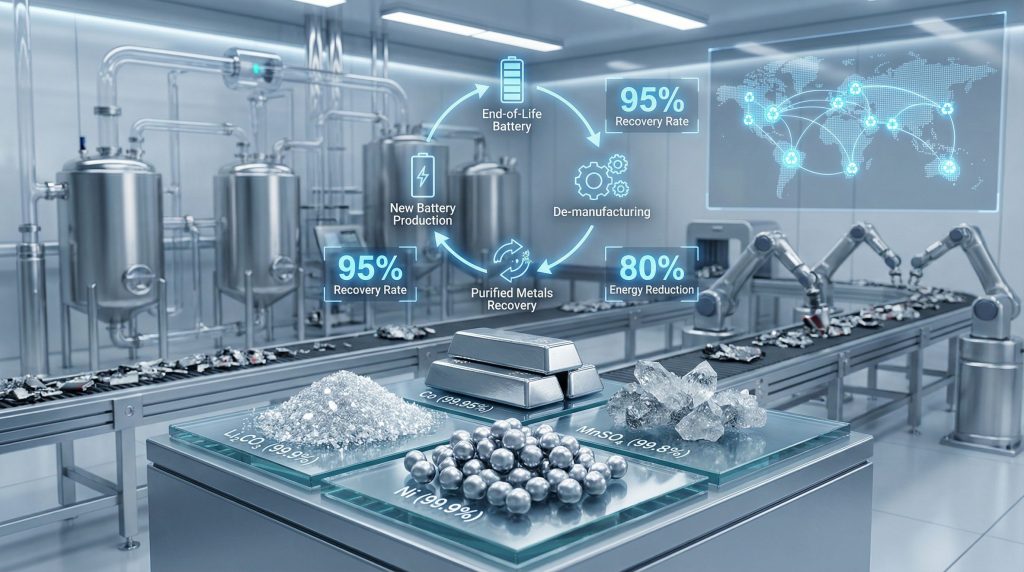
The global transition towards electrification is driving unprecedented demand for battery metals recycling, a critical technology that transforms end-of-life batteries into valuable raw materials. This innovative approach to resource recovery has emerged as a strategic solution to supply chain vulnerabilities, enabling manufacturers to reduce dependence on traditional mining whilst maintaining access to essential materials. Furthermore, the infinite recyclability of metallic elements creates opportunities for circular economy models that fundamentally reshape resource planning assumptions.
Revolutionary Material Recovery Transforms Resource Security
Battery metals recycling has emerged as a cornerstone technology for achieving supply chain independence, particularly as nations seek to reduce dependence on geographically concentrated primary mining operations. The sector focuses on recovering lithium, cobalt, nickel, manganese, and specialised elements from end-of-life battery systems through advanced processing technologies that maintain material purity standards required for direct reintegration into new battery manufacturing.
The technology encompasses multiple sophisticated recovery pathways, from hydrometallurgical processing systems to specialised automated disassembly platforms. Unlike conventional recycling approaches that often result in material degradation, these processes preserve the electrochemical properties essential for battery applications, creating closed-loop systems that theoretically eliminate the need for virgin material extraction.
Recent developments demonstrate commercial viability reaching industrial scale. A promising Chinese battery recycling breakthrough has shown that recycling operations can process 300 kg of black mass daily, representing significant advancement in dedicated electric vehicle battery recycling operations. Additionally, planned commercial facilities target production of approximately 3,200 tonnes annually of nickel mixed hydroxide precipitate, addressing critical supply gaps in domestic battery manufacturing capabilities.
Key Recovery Targets in Battery Recycling:
- Lithium: Essential for electrolyte systems and energy density optimisation
- Cobalt: Critical for thermal stability and cycle life performance
- Nickel: Primary component in high-energy cathode chemistries
- Manganese: Structural stabiliser for battery chemistry optimisation
- Rare earth elements: Specialised applications in advanced battery systems
When big ASX news breaks, our subscribers know first
Infinite Material Properties Drive Circular Economy Models
The fundamental principle underlying battery metals recycling lies in the preservation of atomic-level properties through recovery processes. Unlike organic materials that experience molecular degradation, metallic elements maintain their essential characteristics indefinitely when processed through appropriate recovery systems. This characteristic enables theoretical infinite recyclability, fundamentally altering long-term resource planning assumptions.
Lithium maintains its electrochemical activity across multiple use cycles, whilst cobalt preserves its magnetic and conductive properties essential for battery stability. Nickel retains structural integrity necessary for cathode applications, and manganese continues providing chemical stability throughout repeated processing cycles. These preservation characteristics mean that every unit of recovered material represents permanent addition to global resource availability.
The infinite recyclability principle creates unique strategic advantages for supply chain planners. Rather than depleting geological reserves, recycling operations can theoretically expand available material pools indefinitely. This concept fundamentally changes commodity planning models, shifting focus from reserve depletion scenarios toward waste stream optimisation and collection network development.
Industry projections support this transformation. Nickel mixed hydroxide precipitate (MHP) is anticipated to comprise more than 80% of the battery-grade nickel sulphate feedstock market by 2030, indicating significant demand for recycled material inputs. Moreover, the battery metals investment landscape demonstrates market recognition of circular economy principles.
Advanced Processing Technologies Achieve Commercial Viability
Hydrometallurgical Processing Systems
Sophisticated aqueous chemistry techniques enable selective metal extraction without high-temperature degradation typical of traditional smelting operations. These systems achieve exceptional recovery rates whilst producing materials meeting battery-grade specifications directly, eliminating intermediate processing requirements that add cost and complexity to supply chains.
The technology eliminates traditional pyrometallurgical energy requirements, offering significant operational cost advantages. Advanced processing systems demonstrate commercial readiness, with facilities already meeting stringent industry specifications for recovered materials. Companies have filed tenth UK patent applications covering proprietary processes for producing critical battery intermediates from recycled feedstocks.
Hydrometallurgical Process Advantages:
- Lower energy consumption compared to traditional smelting
- Direct production of battery-grade materials
- Selective recovery of target metals
- Reduced environmental impact
- Compatibility with multiple feedstock types
Automated De-Manufacturing Platforms
Advanced disassembly systems break down complex battery packs to component levels, enabling material-specific recovery optimisation. These platforms integrate robotics, artificial intelligence, and sophisticated sorting technologies to maximise material purity whilst ensuring safe handling of potentially hazardous components.
The process flow begins with automated pack disassembly, progressing through cell-level separation, electrolyte recovery, cathode material extraction, anode processing, and housing material segregation. Each stage optimises recovery efficiency for specific material types, ensuring maximum value extraction from waste streams.
In addition, innovative flash joule heating recycling innovation enables recovery from diverse feedstock sources including end-of-life lithium-ion batteries, black mass, and manufacturing scrap. The process produces high-quality, low carbon MHP containing both nickel and cobalt, alongside lithium sulphate, with these materials capable of direct reintegration into new battery production.
Regional Supply Chain Restructuring Enhances Security
Domestic Production Capabilities
Countries previously dependent on imported battery materials are developing comprehensive domestic recycling infrastructure to enhance supply chain resilience. These facilities process local waste streams whilst reducing transportation costs and eliminating geopolitical risks associated with international material dependencies.
Strategic initiatives demonstrate this approach through domestic recycling infrastructure addressing critical supply vulnerabilities, particularly given that Indonesia currently dominates global MHP supply. Establishing domestic processing capabilities creates supply chain independence whilst supporting national energy security objectives and geopolitical resilience.
Regional processing capabilities enable optimised logistics for battery manufacturers, reducing inventory requirements and improving working capital management. This proximity advantage becomes particularly valuable during supply chain disruptions, providing guaranteed material availability regardless of international market conditions.
Strategic Domestic Advantages:
- Reduced exposure to geopolitical supply risks
- Lower transportation and logistics costs
- Enhanced supply chain visibility and control
- Support for domestic manufacturing competitiveness
- Reduced carbon footprint from material transportation
Strategic Material Reserve Development
Recycling operations create opportunities for strategic material stockpiling without traditional mining dependencies. Governments and corporations can build resource security through controlled waste stream management rather than relying solely on geological deposit access or international commodity markets.
Planned facilities will process scrap from more than 150,000 electric vehicles annually, producing 30,000 tonnes of cathode active materials. This output represents approximately 20% of expected battery material needs by 2030, demonstrating how domestic recycling can achieve strategic material security at national scale.
The predictable nature of device lifecycles enables long-term material availability planning. Electric vehicle batteries typically provide 8-15 years of service, creating predictable waste streams that recycling facilities can plan around. This predictability contrasts favourably with geological resource uncertainty and commodity market volatility.
Economic Models Drive Recycling Profitability
Value Recovery Optimisation
Modern recycling operations focus on maximising value extraction through sophisticated material characterisation and selective recovery processes. This approach identifies highest-value recovery pathways for specific battery chemistries, optimising revenue generation from each waste stream processed.
Revenue Stream Diversification Strategies:
- Premium pricing for battery-grade recovered materials
- Secondary market sales for industrial-grade outputs
- Processing service fees for waste stream management
- Carbon credit generation through emission reduction
- Specialised metal recovery for niche applications
Scale Economics and Processing Efficiency
Large-scale recycling facilities achieve significant unit cost advantages through processing volume optimisation. Facilities targeting 150,000+ equivalent vehicle batteries annually demonstrate the scale required for optimal economic performance, suggesting industry consolidation around major processing hubs.
These operations justify advanced technology investments that smaller facilities cannot support economically, creating competitive advantages around efficient operators. Commercial facility development demonstrates confidence in scale economics, progressing from pilot-scale operations to commercial production targeting 3,200 tonnes annually of critical materials.
The economic model depends heavily on material value recovery and processing efficiency. Cobalt typically provides highest value per unit recovered, followed by lithium due to growing supply constraints, nickel for steady demand across multiple sectors, manganese for high-volume applications, and aluminium/copper as established commodity markets.
Policy Frameworks Accelerate Industry Adoption
Regulatory Mandates and Compliance Requirements
Government regulations increasingly require minimum recycled content in new battery production, creating guaranteed demand for recovered materials. These mandates establish price floors ensuring recycling profitability even during commodity price downturns, providing economic stability for facility investments.
The European Union's minimum recycled content requirements drive significant technology development. Companies specifically develop advanced blending techniques to meet these regulatory standards, demonstrating how policy frameworks directly influence innovation and commercial development priorities.
Key Regulatory Drivers:
- Minimum recycled content mandates for battery production
- Extended producer responsibility frameworks
- Hazardous waste landfill diversion requirements
- Carbon emission reduction targets
- Critical material security legislation
Financial Incentives and Support Mechanisms
Government support through tax credits, grants, and loan guarantees reduces capital requirements for recycling facility development. These incentives accelerate industry growth by improving project economics during critical early adoption phases when scale economies have not yet been achieved.
Support often focuses on strategic material recovery capabilities that enhance national security, creating additional funding sources beyond traditional environmental programmes. Government emphasis on domestic battery supply chain development reflects recognition of recycling's strategic importance for energy security and industrial competitiveness.
The next major ASX story will hit our subscribers first
Battery Chemistry Variations Affect Recovery Economics
Lithium-Ion Battery Processing
Lithium-ion batteries offer exceptional value recovery potential due to cobalt and lithium content concentrations. Processing requires specialised safety protocols addressing fire risks and toxic gas emissions, but material values justify additional handling costs and safety infrastructure investments.
Recovery Value Hierarchy for Lithium-Ion Systems:
- Cobalt: Highest value per kilogram recovered
- Lithium: Growing value due to supply constraints
- Nickel: Steady demand from multiple industrial sectors
- Manganese: Lower value but high-volume applications
- Aluminium and copper: Established commodity metal markets
Lead-Acid Battery Recycling Precedent
Lead-acid batteries represent the most mature recycling market, achieving 98-99% material recovery rates through established collection networks and processing infrastructure. This system demonstrates economic viability of closed-loop battery recycling and provides operational templates for lithium-ion recycling development.
The lead-acid model shows how industry standards and consumer behaviour can support comprehensive material recovery. These systems achieved commercial viability through combination of regulatory requirements, economic incentives, and consumer awareness programmes that created reliable waste stream collection.
Infrastructure Requirements Support Scale Development
Collection Network Optimisation
Efficient recycling requires comprehensive collection systems capturing batteries across multiple end-of-life pathways. Networks must handle consumer electronics, electric vehicles, industrial equipment, and grid storage systems through specialised logistics chains optimised for different battery types and safety requirements.
Collection Strategy Components:
- Retail takeback programmes for consumer devices
- Automotive dealership collection for vehicle batteries
- Industrial pickup services for large-scale systems
- Hazardous waste facility integration
- Transportation and storage safety protocols
Processing Facility Design Requirements
Modern recycling facilities require sophisticated environmental controls, comprehensive safety systems, and specialised material handling equipment. These capital-intensive operations benefit from strategic location selection minimising transportation costs whilst maximising waste stream access from multiple collection sources.
Facility design must accommodate multiple battery chemistries and evolving technology standards, requiring flexible processing equipment and expansion capabilities. Furthermore, insights into battery recycling facility insights demonstrate this approach, with pilot operations and planned commercial scale operations designed for multiple feedstock processing.
Market Dynamics Shape Future Growth Trajectories
Supply-Demand Balance Evolution
Growing electric vehicle adoption creates predictable waste streams maturing over 8-15 year battery lifecycles. This timing allows recycling infrastructure development to align with material availability, supporting sustainable industry growth without creating oversupply or undersupply imbalances.
Market Growth Projection Factors:
- Electric vehicle battery waste streams reaching commercial scale by 2030-2035
- Manufacturing scrap providing immediate material sources
- Grid storage systems creating large-scale waste streams
- Consumer electronics maintaining steady material flows
- Industrial applications contributing specialised waste streams
Technology Development Trajectories
Advancing battery chemistries may alter material recovery priorities, requiring recycling technology adaptation and flexibility. Facilities must maintain processing capability for emerging battery types whilst optimising recovery from current chemistry standards.
Research into direct recycling methods preserving battery structure could revolutionise industry economics by enabling multiple use cycles before material recovery becomes necessary. These approaches might extend battery lifecycles significantly whilst reducing recycling processing requirements.
Stakeholder Value Chain Optimisation Strategies
Manufacturer Integration Approaches
Battery manufacturers optimise recycling outcomes through design-for-recycling principles simplifying material recovery processes. These approaches include standardised connection systems, comprehensive material labelling, and modular designs facilitating automated disassembly operations.
Vertical integration between manufacturers and recyclers creates closed-loop systems guaranteeing material quality and supply security whilst reducing transaction costs. Advanced approaches demonstrate this integration, working directly with battery manufacturers to ensure recovered materials meet stringent industry specifications for direct reuse.
Investment and Partnership Models
Strategic partnerships between recyclers, manufacturers, and waste generators create stable material flows and shared risk management systems. These relationships often involve long-term contracts providing revenue predictability supporting recycling facility investments and expansion planning.
Partnership Structure Options:
- Manufacturer-recycler joint ventures for integrated operations
- Waste generator supply agreements ensuring feedstock availability
- Technology licensing arrangements for process optimisation
- Regional processing consortiums for shared infrastructure
- Government-industry collaborations for strategic development
Risk Management Protects Recycling Operations
Operational Safety Protocols
Battery recycling involves significant safety risks from fire hazards, toxic gas emissions, and electrical dangers. Comprehensive safety management systems protect workers whilst preventing facility damage that could disrupt operations and compromise economic viability.
Advanced fire suppression systems, continuous atmospheric monitoring, and emergency response protocols represent essential infrastructure components affecting both operational safety and insurance costs. These systems require significant capital investment but are essential for sustainable operations.
Market Risk Mitigation Strategies
Commodity price volatility significantly impacts recycling profitability, requiring sophisticated hedging strategies and diversified revenue streams. Long-term contracts with material buyers provide price stability whilst maintaining upside exposure through market-linked pricing mechanisms.
Risk Management Tools:
- Commodity price hedging contracts for major material outputs
- Diversified customer base development across multiple sectors
- Multiple material recovery pathways for flexibility
- Strategic processing capacity management
- Comprehensive inventory management systems
Building resilient material recovery systems represents a critical infrastructure component for sustainable technology development, offering pathways to resource security that simultaneously reduce environmental impact whilst supporting economic growth. Success requires coordinated development of collection networks, processing capabilities, and market frameworks optimising material recovery value across entire supply chains.
However, understanding the broader context of critical minerals energy transition remains essential for strategic planning. The industry's progression toward commercial viability demonstrates how environmental necessity drives technological innovation and creates substantial economic opportunities. As waste streams mature and processing technologies advance, battery metals recycling transitions from supplementary material sourcing toward primary supply chain infrastructure supporting circular economy principles.
Strategic planning must account for evolving battery chemistries, regulatory requirements, and dynamic market conditions whilst maintaining focus on operational safety, processing efficiency, and long-term profitability. Organisations developing comprehensive recycling capabilities position themselves to capture significant competitive advantages as material scarcity increasingly drives demand for recovered resources over primary extraction alternatives.
Consequently, the integration of sustainable mining practices with advanced recycling technologies creates comprehensive resource management systems that ensure long-term material security whilst minimising environmental impact.
Ready to Capitalise on Critical Minerals Recovery Opportunities?
Discovery Alert's proprietary Discovery IQ model delivers instant alerts on significant ASX mineral discoveries, including companies advancing battery metals recycling and critical minerals recovery technologies. Stay ahead of emerging opportunities in this rapidly evolving sector by exploring Discovery Alert's dedicated discoveries page, showcasing historic examples of exceptional market returns from major mineral discoveries.