May 22, 2026
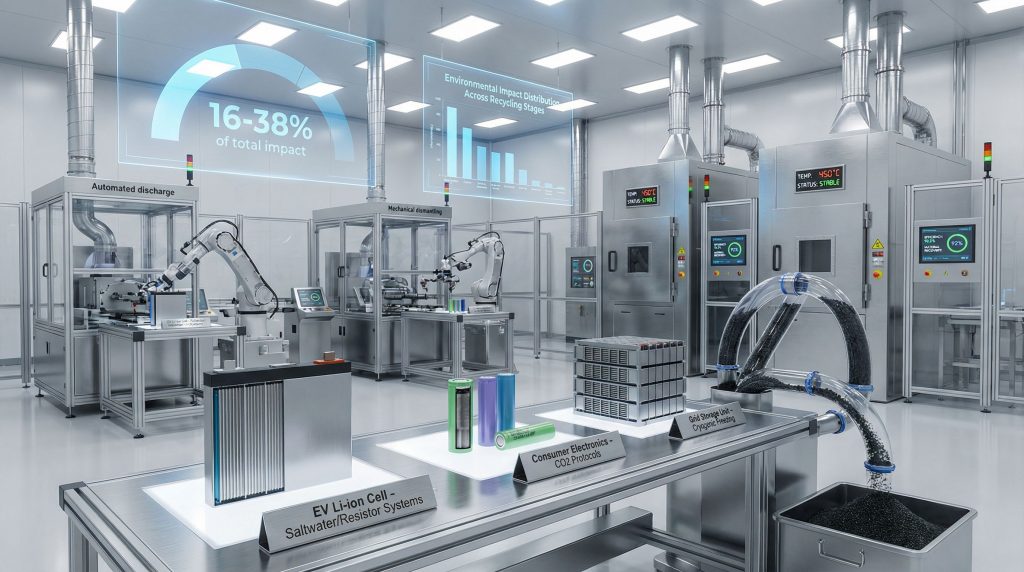
The overlooked step in battery recycling represents a critical knowledge gap that could unlock significant improvements in material recovery and environmental performance across the industry. Recent research from Monash University has revealed that pre-treatment operations, which prepare spent batteries for downstream processing, account for 16-38% of the total environmental impact in recycling systems. Despite this substantial influence, pre-treatment continues to receive insufficient attention in facility design and optimization strategies, creating cascading inefficiencies throughout entire recycling value chains.
Why Pre-Treatment Determines the Success of Entire Recycling Systems
Research published in Nature Sustainability by Monash University's Department of Civil and Environmental Engineering demonstrated how the overlooked step in battery recycling creates ripple effects across all subsequent processing stages. This substantial range demonstrates how methodology selection at this initial stage creates cascading effects throughout the entire recycling value chain.
The significance extends beyond environmental considerations into operational efficiency and material recovery outcomes. Professor Victor Chang, deputy head of Monash's Department of Civil and Environmental Engineering, emphasized that decisions made during early recycling stages influence both system efficiency and long-term resource recovery potential. Chang characterized the challenge as fundamentally a system design issue rather than merely a technical problem, noting that choices at the pre-treatment level affect performance for decades.
Furthermore, the battery recycling breakthrough technologies emerging from research institutions worldwide highlight the importance of optimizing every stage of the recycling process. These innovations demonstrate how pre-treatment improvements can dramatically enhance overall system performance.
The Critical Safety and Efficiency Gateway
Pre-treatment serves as the primary safety checkpoint where residual energy must be completely neutralized before mechanical processing begins. Battery discharge protocols vary significantly based on chemistry type, with lithium-ion systems requiring specialized approaches to prevent thermal runaway during subsequent handling stages.
The complexity increases when facilities process mixed battery streams, as each chemistry presents unique deactivation requirements. Consumer electronics batteries demand different safety protocols compared to electric vehicle batteries, which contain substantially higher energy densities and present elevated fire risks during shredding operations.
Material contamination risks escalate dramatically when pre-treatment steps are bypassed or inadequately executed. Contaminated feed streams compromise the purity of downstream extraction processes, reducing the market value of recovered materials and potentially necessitating additional purification steps that increase operational costs.
Quantifying Pre-Treatment's Environmental Footprint
| Process Stage | Environmental Impact Range | Material Loss Potential |
|---|---|---|
| Pre-treatment | 16-38% of total impact | Varies by battery chemistry |
| Mechanical processing | 25-40% | Low with proper pre-treatment |
| Chemical extraction | 30-45% | Dependent on feed quality |
The environmental impact distribution across recycling stages demonstrates why pre-treatment optimization delivers disproportionate benefits. When the overlooked step in battery recycling is executed efficiently, material losses remain minimal during subsequent mechanical processing. However, inadequate pre-treatment creates quality issues that propagate through chemical extraction stages, reducing overall system efficiency.
Consequently, battery recycling facility insights from operational facilities emphasize the critical importance of investing in robust pre-treatment systems as a foundation for successful recycling operations.
When big ASX news breaks, our subscribers know first
How Do Different Pre-Treatment Methods Compare for Operational Efficiency?
The Monash University study examined three primary industrial approaches for pre-treatment: mechanical, thermal, and chemical methodologies. Each approach presents distinct advantages and limitations across environmental performance, recovery efficiency, and operational complexity metrics.
Mechanical Pre-Treatment Systems Analysis
Mechanical pre-treatment relies on physical dismantling and shredding to separate battery components and produce black mass. This approach offers relatively straightforward implementation with established equipment technologies, making it accessible for facilities with limited chemical processing capabilities.
The mechanical route typically achieves consistent throughput rates and produces black mass suitable for hydrometallurgical extraction. Energy consumption patterns remain predictable, allowing for accurate operational cost projections. However, the approach requires robust safety systems to manage the fire and explosion risks associated with processing batteries containing residual charge.
Equipment requirements include specialized shredding systems designed for battery materials, magnetic separation units for ferrous components, and air classification systems for material sorting. The mechanical approach generates minimal chemical waste streams but produces dust and particulate matter that requires containment and filtration systems.
Thermal Processing Route Evaluation
Thermal pre-treatment employs controlled high-temperature processing to alter battery chemistry and facilitate material separation. This approach can effectively neutralize battery charge while simultaneously beginning the liberation of valuable metals from their chemical matrices.
Temperature control becomes critical as different battery chemistries respond optimally to specific thermal ranges. Lithium-ion batteries require careful temperature management to avoid volatilising lithium compounds while effectively decomposing organic electrolytes and polymer separators.
Infrastructure requirements for thermal systems include high-temperature furnaces, off-gas treatment systems, and specialised handling equipment for hot materials. While thermal processing can achieve high material recovery rates, the approach demands significant energy input and generates gaseous emissions requiring treatment before atmospheric release.
Chemical Pre-Treatment Pathway Assessment
Chemical pre-treatment utilises solvents and reagents to selectively dissolve or separate battery components. This approach offers precise control over material separation and can achieve high purity levels in extracted materials.
Solvent-based systems require careful selection of chemical agents based on target materials and battery chemistries being processed. The approach generates liquid waste streams containing dissolved metals and organic compounds, necessitating comprehensive waste management solutions that align with environmental regulations.
Chemical pre-treatment typically demands higher operator skill levels and more sophisticated process control systems compared to mechanical approaches. However, the route can achieve superior separation efficiency for certain battery types, particularly those containing high-value materials requiring precise extraction.
What Are the Hidden Costs of Inadequate Pre-Treatment Planning?
Chang's research team emphasised that current understanding of pre-treatment impacts on overall recycling performance remains limited, creating significant knowledge gaps in facility planning and optimisation. This uncertainty translates into operational risks that compound over facility lifespans.
Decisions made during the early stages of recycling can influence both system efficiency and long-term resource recovery for decades
Material Recovery Efficiency Losses
Inadequate pre-treatment creates material loss cascades that extend far beyond the initial processing stage. Poor discharge protocols can result in safety incidents that shut down operations, while incomplete material separation reduces the quality of black mass fed to downstream extraction processes.
Recovery efficiency losses compound geometrically as contaminated materials progress through subsequent processing stages. Impurities introduced during inadequate pre-treatment require additional purification steps, consuming chemicals and energy while reducing overall throughput rates.
The economic impact extends to product quality specifications, as contaminated extracted materials may fail to meet industry purity standards. This forces facilities to either accept lower prices for off-specification materials or invest in additional purification infrastructure.
Downstream Processing Complications
Contamination effects propagate through both hydrometallurgical and pyrometallurgical processing routes, creating operational challenges that persist throughout facility lifecycles. Hydrometallurgical systems experience increased chemical consumption rates when processing poorly prepared feed materials, while pyrometallurgical operations face elevated energy requirements to achieve target extraction rates.
Equipment wear accelerates significantly when processing contaminated or inadequately prepared materials. Abrasive contaminants increase maintenance frequencies, while corrosive substances reduce equipment lifespan and necessitate more frequent component replacement.
Product purity degradation affects market positioning and revenue potential for recycled materials. Battery manufacturers increasingly demand high-purity recycled materials that meet or exceed virgin material specifications, making product quality a competitive differentiator in recycling operations. Moreover, the critical minerals energy transition demands reliable sources of high-quality recycled materials to support supply chain security.
Which Battery Types Require Specialised Pre-Treatment Approaches?
The Monash research confirmed that outcomes vary significantly by battery type and processing route, indicating that successful pre-treatment requires chemistry-specific protocols rather than universal approaches.
Lithium-Ion Battery Pre-Treatment Protocols
| Battery Type | Discharge Method | Key Safety Considerations |
|---|---|---|
| EV Lithium-ion | Saltwater/resistor systems | Thermal runaway prevention |
| Consumer electronics | CO2 protocols | Fire risk during shredding |
| Grid storage | Cryogenic freezing | High-voltage safety |
Electric vehicle batteries present unique challenges due to their high energy densities and sophisticated battery management systems. Complete discharge requires specialised equipment capable of safely extracting stored energy while monitoring for thermal events that could trigger runaway reactions.
Consumer electronics batteries, while smaller in individual capacity, often arrive at recycling facilities in mixed conditions with varying charge states. Research from Nature Communications demonstrates how CO2 displacement protocols help reduce fire risks during mechanical processing by creating inert atmospheres that prevent combustion.
Grid storage batteries typically contain the highest voltage systems and may require cryogenic treatment to ensure complete energy neutralisation before processing. The large format cells common in stationary storage applications present handling challenges requiring specialised dismantling equipment.
Lead-Acid and Alternative Chemistry Considerations
Lead-acid batteries benefit from decades of recycling experience, resulting in well-established pre-treatment protocols that require minimal energy discharge procedures. The mature technology allows for streamlined processing with predictable safety requirements.
Facilities processing mixed battery streams must implement cross-contamination prevention strategies to maintain material purity. Lead contamination in lithium-ion processing streams can severely compromise product quality, while lithium compounds can interfere with lead-acid recycling chemistry.
Processing efficiency optimisation for mixed streams requires careful scheduling and equipment cleaning protocols between different battery chemistry campaigns. Some facilities dedicate specific processing lines to individual chemistries, while others implement thorough cleaning procedures to enable multi-chemistry processing on shared equipment.
How Can Facilities Optimise Pre-Treatment for Maximum Material Recovery?
The research emphasised that battery recycling represents a system design challenge where pre-treatment optimisation requires evidence-based approaches rather than reactive strategies. Current understanding limitations indicate substantial opportunities for improvement through systematic analysis and protocol development.
Advanced Discharge and Deactivation Technologies
Automated energy extraction systems offer improved safety and consistency compared to manual discharge procedures. These systems monitor battery voltage, temperature, and current flow during discharge cycles, adjusting parameters in real-time to prevent thermal events while maximising energy recovery.
Inert atmosphere processing capabilities enable safer handling of reactive battery materials, particularly lithium metal anodes found in next-generation battery designs. Nitrogen or argon atmospheres prevent oxidation reactions that could generate heat or toxic gases during mechanical dismantling.
Real-time monitoring systems integrate multiple sensors to track safety parameters throughout pre-treatment operations. Temperature sensors, gas detectors, and voltage monitors provide continuous feedback enabling immediate response to developing safety conditions.
Integration with Downstream Processing Systems
Feed quality standardisation ensures consistent performance in hydrometallurgical and pyrometallurgical extraction processes. Standardised black mass specifications enable process optimisation and reduce variability in chemical consumption and energy requirements.
Material flow optimisation between pre-treatment and recovery stages minimises handling steps and reduces contamination opportunities. Closed-loop systems maintain material integrity while enabling continuous processing rather than batch operations.
Quality control protocols for black mass production include particle size distribution analysis, moisture content measurement, and chemical composition verification. These protocols ensure downstream processes receive materials meeting design specifications, optimising extraction efficiency and product quality. Additional insights from CSIRO research highlight the importance of standardised approaches in achieving consistent material recovery outcomes.
What Role Does Pre-Treatment Play in Circular Economy Battery Systems?
The Monash research team positioned their findings as potential guidance for policymakers and industry stakeholders developing new battery systems. Pre-treatment optimisation contributes to circular economy objectives by maximising material recovery rates and minimising environmental impacts across battery lifecycles.
System-Wide Impact Assessment Methodologies
Life cycle analysis integration across the entire recycling value chain reveals how pre-treatment decisions influence environmental performance throughout system operations. Comprehensive assessments include energy consumption, chemical usage, waste generation, and material recovery metrics across all processing stages.
Environmental footprint optimisation through pre-treatment design choices enables facilities to minimise total system impact while maintaining economic viability. Energy-efficient discharge protocols, selective material separation techniques, and waste minimisation strategies contribute to overall sustainability objectives. In addition, mining decarbonisation benefits demonstrate how improved recycling processes can reduce the environmental burden of primary material extraction.
Economic viability modelling for different pre-treatment approaches incorporates capital costs, operating expenses, material recovery values, and environmental compliance costs. These models enable informed decision-making for facility design and technology selection.
Policy and Regulatory Considerations
Emerging standards for pre-treatment safety and environmental performance establish minimum requirements for facility operations while encouraging innovation in processing technologies. Regulatory frameworks increasingly emphasise material recovery targets and environmental impact limits.
Industry best practice development for scaling recycling operations requires standardised pre-treatment protocols that ensure consistent safety and performance outcomes. Professional organisations and regulatory bodies collaborate to establish guidelines supporting industry growth while maintaining safety standards.
Investment planning guidance for new battery recycling facilities incorporates pre-treatment optimisation as a critical success factor. Financial models increasingly recognise pre-treatment as a strategic differentiator affecting long-term facility profitability and competitive positioning.
The next major ASX story will hit our subscribers first
Future-Proofing Pre-Treatment Systems for Emerging Battery Technologies
Chang noted that decisions made at the pre-treatment stage affect system performance for decades, highlighting the importance of designing systems capable of adapting to evolving battery technologies and chemistries. Furthermore, addressing the overlooked step in battery recycling becomes increasingly critical as battery technologies advance and diversify.
Next-Generation Battery Chemistry Preparation
Solid-state battery pre-treatment protocol development addresses the unique characteristics of ceramic and polymer electrolytes that require different processing approaches compared to liquid electrolyte systems. Solid electrolytes may necessitate thermal or chemical treatment to enable effective material separation.
Advanced lithium metal and silicon anode processing requirements include specialised handling procedures for highly reactive materials. Lithium metal poses fire and explosion risks requiring inert atmosphere processing, while silicon anodes present unique mechanical properties affecting dismantling procedures.
Scalability planning for diverse future battery chemistries requires flexible facility designs capable of accommodating new processing requirements without major infrastructure modifications. Modular pre-treatment systems enable technology updates and chemistry-specific optimisation.
Automation and AI Integration Opportunities
Machine learning optimisation for pre-treatment parameter selection utilises historical performance data to identify optimal processing conditions for different battery types and conditions. AI systems can predict optimal discharge rates, temperature profiles, and chemical dosing based on battery characteristics.
Predictive maintenance systems for pre-treatment equipment utilise sensor data and performance analytics to forecast equipment failures and optimise maintenance schedules. These systems reduce unplanned downtime while extending equipment lifespan through condition-based maintenance strategies.
Real-time quality control and process adjustment capabilities enable automated optimisation of pre-treatment operations. AI systems monitor material quality metrics and automatically adjust processing parameters to maintain target specifications while maximising throughput and recovery rates.
Disclaimer: This analysis is based on publicly available research findings and industry observations. Battery recycling technologies and regulations continue evolving, and specific facility requirements may vary based on local conditions, regulations, and operational objectives. Readers should consult qualified professionals for facility-specific guidance and conduct thorough due diligence before making investment or operational decisions.
Readers interested in learning more about battery recycling research developments can explore related educational content from Australian university research programmes and industry publications that cover sustainable materials processing innovations.
Ready to Capitalise on Critical Minerals and Battery Technology Opportunities?
Discovery Alert's proprietary Discovery IQ model delivers real-time alerts on significant ASX mineral discoveries, instantly empowering subscribers to identify actionable opportunities in critical minerals and battery technology companies ahead of the broader market. Understand why major mineral discoveries can lead to substantial returns whilst positioning yourself at the forefront of the energy transition sector.