May 22, 2026
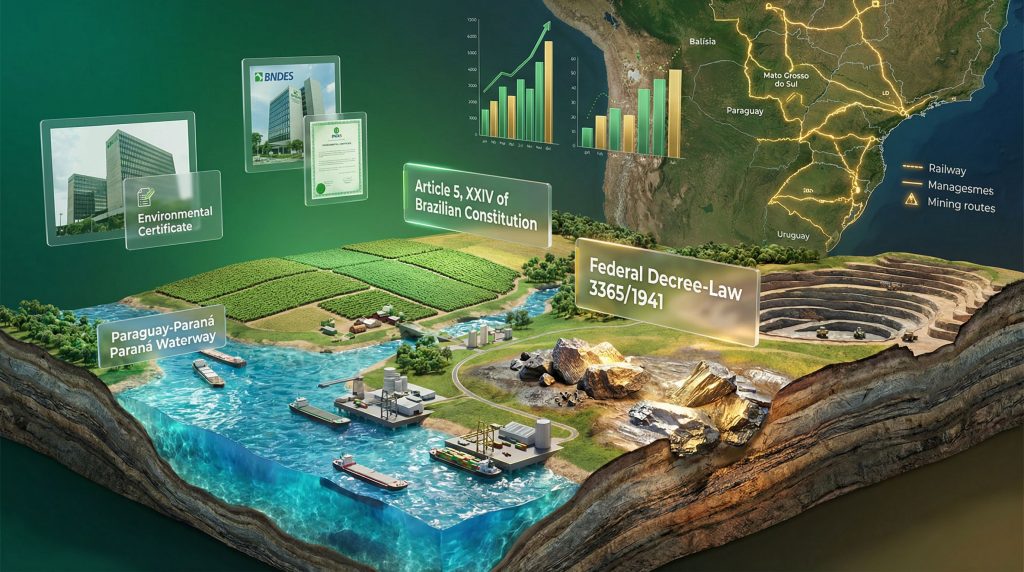
Brazil's regulatory landscape presents a complex framework where constitutional property protections intersect with public interest declarations for resource extraction. The tension between individual landowner rights and national economic development creates unique challenges that test the boundaries of eminent domain authority. Understanding these dynamics becomes crucial as mining projects increasingly require large-scale infrastructure development across agriculturally productive regions, particularly when considering mining permitting guide requirements.
Understanding Brazil's Eminent Domain Framework for Resource Projects
The constitutional foundation for property expropriation in Brazil stems from Article 5, Section XXIV of the 1988 Federal Constitution, which establishes the fundamental principle that expropriation must serve public utility or social interest while ensuring just compensation. This constitutional framework provides the legal architecture for balancing private property rights with broader economic development objectives.
Federal Decree-Law 3365, enacted on December 21, 1941, remains the primary statutory instrument governing expropriation procedures and compensation mechanisms. This landmark legislation established standardised protocols for property acquisition by government entities, creating a structured approach that has evolved through decades of judicial interpretation and administrative practice.
The distribution of expropriation authority between federal, state, and municipal governments follows a hierarchical structure based on project scope and regional impact. Federal authorities typically oversee projects affecting multiple states or involving strategic infrastructure corridors, while state governments maintain jurisdiction over regionally significant developments. Mato Grosso do Sul expropriations for LHG Mining project, valued at US$754 million, exemplifies how state-level authority operates within this framework.
Key procedural requirements include:
• Mandatory environmental impact assessments before expropriation declarations
• Public consultation periods allowing community input on project necessity
• Independent property valuation conducted by certified appraisers
• Transparent compensation calculation methodologies
• Timeline compliance for all procedural stages
The legal precedents established through previous mining infrastructure cases have refined the interpretation of "public utility" in resource extraction contexts. Courts have consistently emphasised that economic development benefits must be demonstrable and that alternative approaches must be thoroughly evaluated before expropriation approval.
When big ASX news breaks, our subscribers know first
Legal Mechanisms Protecting Landowner Rights During Mining Expropriations
Brazil's constitutional framework provides robust safeguards for property owners facing expropriation, anchored in Article 5, Section XXXV, which guarantees that "the law shall not exclude any matter from the scope of judicial review." This principle ensures that all expropriation decisions remain subject to independent judicial oversight and constitutional scrutiny.
The due process requirements establish multiple layers of protection throughout the expropriation timeline. Property owners maintain the right to legal representation at every stage, from initial public interest declarations through final compensation determinations. Furthermore, independent appraisal processes must follow standardised methodologies that consider market value, agricultural productivity potential, and any special characteristics affecting property valuation.
Compensation Framework Components:
• Market Value Assessment: Comparable sales analysis using recent transactions in similar agricultural or mineral-rich areas
• Lost Productivity Compensation: Additional payments for agricultural operations disrupted by land acquisition
• Relocation Assistance: Support programmes helping displaced agricultural operations establish alternative facilities
• Interest Calculations: Adjustment mechanisms for delayed compensation payments tied to official government rates
The judicial review process operates through both state and federal court systems, depending on the originating authority for expropriation. Property owners can challenge initial valuations, contest the public utility determination, or appeal compensation amounts through successive judicial levels.
In addition, specialised administrative courts that focus specifically on property valuation disputes have developed expertise in agricultural land assessment and mining project evaluation, creating more informed decision-making processes for complex cases involving dual-use potential.
Balancing Mining Development with Agricultural Land Use in Mato Grosso do Sul
Mato Grosso do Sul represents one of Brazil's most productive agricultural regions, generating substantial revenue from soybean, corn, and cattle operations. The state's economy demonstrates a delicate balance between traditional agricultural activities and emerging mining opportunities, creating complex policy challenges for government decision-makers.
The LHG Mining project's US$754 million investment introduces significant economic considerations that extend beyond simple land use calculations. Mining operations typically generate higher tax revenues per hectare compared to agricultural activities, whilst simultaneously creating different employment patterns and infrastructure requirements.
However, the mining claims framework demonstrates how proper regulatory structures can help balance competing interests. Consider the following economic impact analysis:
• Revenue Generation: Mining operations often produce 3-5 times higher tax revenue per hectare than agricultural activities
• Employment Patterns: Agricultural jobs tend to be seasonal and labour-intensive, while mining positions offer higher wages but require specialised skills
• Infrastructure Development: Mining projects typically accelerate road, power, and telecommunications improvements that benefit surrounding agricultural operations
• Market Integration: Transportation infrastructure developed for mining exports can reduce logistics costs for agricultural commodity shipments
Long-term land use planning in Mato Grosso do Sul requires sophisticated zoning approaches that acknowledge both current agricultural productivity and subsurface mineral potential. Environmental sustainability assessments must evaluate cumulative impacts from multiple land uses whilst ensuring that mining operations don't permanently compromise agricultural capacity in surrounding areas.
Consequently, the state government's approach involves comprehensive regional development strategies that seek to maximise total economic output rather than favouring either sector exclusively. This framework recognises that agricultural and mining activities can coexist when proper planning and environmental safeguards are implemented.
Federal Financing's Role in Mining Infrastructure Expansion
The Brazilian Development Bank (BNDES) operates as the primary federal financing mechanism for large-scale mining infrastructure projects, providing capital under specific criteria designed to promote national economic development whilst ensuring environmental and social compliance. BNDES lending policies require detailed job creation projections, local content commitments, and technology transfer agreements.
For instance, recent policy developments including executive mining permits in other jurisdictions show how streamlined processes can affect project timelines. Brazil's BNDES Environmental Compliance Requirements include:
• Carbon Footprint Reduction: Mining operations must demonstrate measurable progress toward emissions reduction targets
• Water Management Standards: Mandatory recycling and treatment protocols for industrial water use
• Biodiversity Protection: Habitat restoration commitments and endangered species protection measures
• Community Engagement: Social licence requirements including local hiring and infrastructure development commitments
The Paraguay-Paraná Waterway development represents a strategic infrastructure priority that directly impacts mining export capacity. This multimodal transportation corridor aims to reduce logistics costs for commodity exports whilst improving Brazil's competitive position against Australian and African mineral producers. Federal financing for waterway improvements creates synergies with mining project development by reducing transportation bottlenecks.
Railway concession tender processes have become increasingly important for mining infrastructure expansion. The National Land Transport Agency (ANTT) oversees these competitive processes, requiring bidders to demonstrate technical capacity, financial resources, and environmental compliance capabilities.
Moreover, port facility modernisation at Santos, Paranaguá, and other strategic locations receives federal financing priority due to its impact on export capacity. Efficiency improvements in loading times, throughput capacity, and storage facilities directly affect the competitiveness of Brazilian mineral exports in global markets.
Environmental Regulations Shaping Mining Project Approvals
The Brazilian Institute of Environment and Renewable Natural Resources (IBAMA) maintains federal oversight for mining projects affecting multiple states or environmentally sensitive areas. IBAMA's licensing procedures require comprehensive environmental impact assessments that evaluate water resource impacts, biodiversity effects, and long-term ecological sustainability.
The multi-phase licensing framework operates as follows:
• Preliminary Licence (LP): Evaluates project feasibility and environmental compatibility
• Installation Licence (LI): Authorises construction activities with specific environmental conditions
• Operation Licence (LO): Permits commercial operations after compliance verification
• Renewal Requirements: Periodic review and updating of environmental commitments
Water resource management represents a critical component of environmental approval processes. The National Water Agency (ANA) sets standards for water consumption, recycling percentages, and discharge quality that mining operations must maintain throughout their operational lifecycle. During drought periods, mining operations may face restrictions that prioritise municipal and agricultural water needs.
Furthermore, mine reclamation evolution demonstrates the growing emphasis on post-operational responsibilities. Sustainability Compliance Frameworks now include:
• Circular Economy Principles: Waste reduction and byproduct utilisation requirements
• Tailings Management: Enhanced safety protocols following major dam failures in Minas Gerais
• Restoration Obligations: Long-term land rehabilitation plans with financial guarantees
• Carbon Reporting: Greenhouse gas monitoring and reduction target compliance
Community consultation protocols have become increasingly sophisticated, requiring meaningful engagement with affected populations throughout the project lifecycle. Social licence requirements often include local hiring commitments, infrastructure development contributions, and ongoing community benefit agreements that extend beyond direct compensation for land acquisition.
Brazil's Mining Competitiveness in Global Markets
Brazil's position in global iron ore and manganese markets depends significantly on infrastructure efficiency and cost competitiveness relative to Australian and African producers. The development of integrated transportation corridors linking mining operations to export facilities represents a strategic imperative for maintaining market share in Asian commodity markets.
LHG targets 25 million tons of iron ore production with its R$ 4 billion investment programme, highlighting the scale of infrastructure required for modern mining operations.
Infrastructure Efficiency Improvements focus on:
• Logistics Cost Reduction: Target 15-20% reduction in transportation costs through railway and waterway improvements
• Loading Time Optimisation: Port modernisation aiming for 24-hour loading cycles for large bulk carriers
• Storage Capacity Expansion: Strategic stockpile facilities reducing weather-related shipping delays
• Multimodal Integration: Seamless connections between railway, waterway, and port facilities
Supply chain resilience has become increasingly important for international customers seeking reliable commodity suppliers. Brazilian mining operations must demonstrate operational continuity capabilities during infrastructure disruptions, environmental challenges, or regulatory changes that could affect delivery schedules.
The Centro-Oeste region's industrialisation goals align with mining development objectives by creating domestic demand for mineral inputs whilst reducing dependence on export markets. Regional steel production, fertiliser manufacturing, and construction materials processing can provide alternative revenue streams for mining operations during periods of weak export demand.
Additionally, cross-border trade facilitation with Paraguay and Bolivia creates alternative export opportunities through different transportation corridors. These regional integration initiatives can reduce dependency on traditional export routes whilst creating competitive pressure for infrastructure improvements.
The next major ASX story will hit our subscribers first
Regional Development Strategy Integration
Mato Grosso do Sul's strategic position in Brazil's Centro-Oeste region creates unique opportunities for integrated development approaches that leverage both agricultural productivity and mineral resources. The state's border location with Paraguay and Bolivia enables cross-border logistics networks that can serve multiple commodity export streams simultaneously.
However, the mining industry evolution shows how technological advances are reshaping regional development strategies. Economic Diversification Objectives include:
• Value-Added Processing: Steel production facilities using locally sourced iron ore and manganese
• Agricultural Input Manufacturing: Fertiliser production utilising mineral byproducts
• Transportation Hub Development: Logistics centres serving agricultural and mining commodity flows
• Technology Innovation: Research and development facilities focused on sustainable mining and agricultural practices
Regional development financing mechanisms increasingly emphasise integrated approaches that maximise synergies between different economic sectors. Federal development programmes prioritise projects that demonstrate clear benefits for multiple industries whilst creating sustainable employment opportunities for local communities.
The integration of mining infrastructure with existing agricultural transportation networks can generate significant cost savings for both sectors. Shared railway lines, port facilities, and logistics centres create economies of scale that improve competitiveness for all regional commodity producers.
Regulatory Risk Management for Mining Stakeholders
Successful navigation of Brazil's complex regulatory environment requires proactive engagement strategies that anticipate policy changes whilst building strong relationships with government agencies and local communities. Mining companies must develop comprehensive compliance frameworks that exceed minimum regulatory requirements and demonstrate commitment to sustainable development principles.
Strategic Risk Mitigation Approaches include:
• Early Stakeholder Engagement: Community consultation beginning in project planning phases
• Environmental Excellence: Sustainability practices exceeding regulatory minimums
• Local Economic Integration: Supply chain partnerships with regional businesses
• Transparency Commitments: Regular public reporting on environmental and social performance
Legal risk management increasingly focuses on ESG (Environmental, Social, and Governance) compliance that meets international financing standards. Major mining projects require environmental and social management systems that satisfy both Brazilian regulations and international best practices demanded by global investors.
Furthermore, government authorizes expropriations in new mega railway area that will transport 25 million tonnes of iron ore annually, demonstrating the scale of Mato Grosso do Sul expropriations for LHG Mining project within broader infrastructure development plans.
Future Policy Development Indicators:
• Enhanced Community Participation: Expanded consultation requirements and benefit-sharing mechanisms
• Stricter Environmental Standards: Increased emphasis on biodiversity protection and climate change mitigation
• Technology Integration Requirements: Digital monitoring and reporting systems for environmental compliance
• Regional Development Integration: Mandatory coordination with state and municipal development plans
The evolving regulatory landscape reflects Brazil's commitment to sustainable development principles whilst maintaining competitiveness in global commodity markets. Mining companies that anticipate these trends and invest in compliance excellence position themselves for long-term success in Brazil's dynamic regulatory environment.
Investors and industry participants should monitor policy developments at federal, state, and municipal levels whilst maintaining flexibility to adapt operational strategies as regulatory frameworks continue evolving. The intersection of environmental protection, economic development, and community rights will remain a defining characteristic of Brazil's mining regulation for the foreseeable future.
Investment Disclaimer: This analysis is for informational purposes only and does not constitute investment advice. Mining investments involve significant risks including regulatory changes, environmental liabilities, and market volatility. Potential investors should conduct thorough due diligence and consult qualified professionals before making investment decisions.
Ready to Capitalise on Mining Infrastructure Developments?
Discovery Alert's proprietary Discovery IQ model delivers real-time alerts on significant ASX mineral discoveries, instantly empowering subscribers to identify actionable opportunities ahead of the broader market. Begin your 14-day free trial today and secure your market-leading advantage in the evolving mining sector.