
May 24, 2026
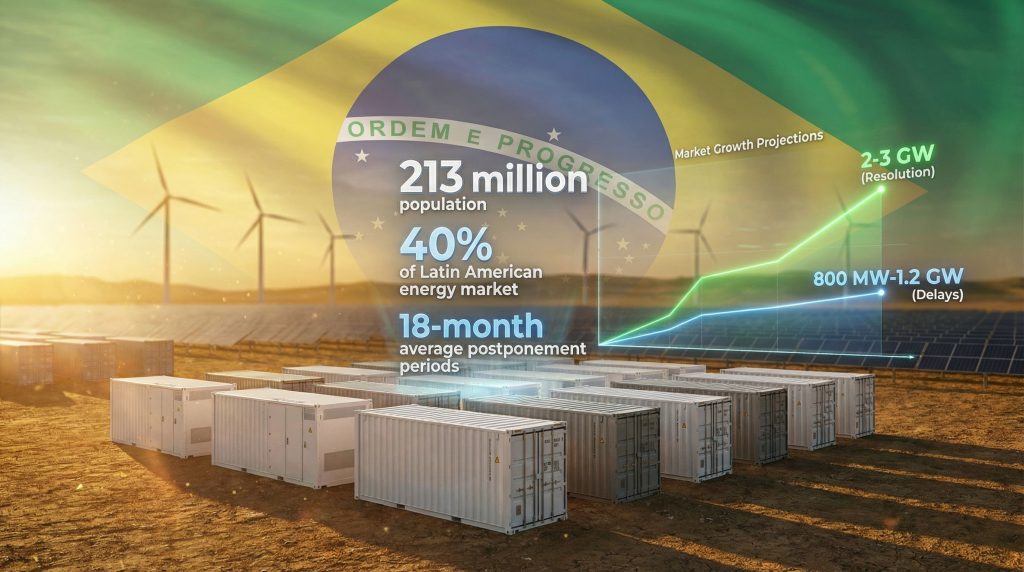
Brazil's energy storage regulation delay continues to hinder the country's clean energy transition as regulatory uncertainties persist throughout 2025. This situation represents a critical bottleneck for Latin America's largest electricity market, where policy development struggles to keep pace with technological advancement and growing renewable integration demands. Furthermore, the extended approval processes create substantial competitive disadvantages compared to neighboring countries that have successfully implemented comprehensive storage frameworks.
Latin America represents a particularly complex regulatory landscape where policy development often lags behind technological advancement and market demand. The region's diverse political systems, varying economic priorities, and distinct energy infrastructure create unique challenges for implementing cohesive storage frameworks.
Understanding Brazil's Regulatory Framework Delays
Brazil's energy storage regulation delay reflects broader institutional challenges within the country's electricity governance structure. The National Electric Energy Agency (ANEEL) operates under complex procedural requirements that involve multiple director reviews, federal legal consultations, and stakeholder engagement processes that can extend approval timelines significantly.
The regulatory approval process encountered fresh obstacles during ANEEL's April 7, 2026 board meeting. Director Fernando Mosna had previously requested additional time for legal consultation with federal advisory bodies, demonstrating the intricate institutional coordination required for energy storage policy development. However, Director Willamy Frota subsequently requested his own comprehensive review period, citing concerns about legal implications connected to recent legislation and its interaction with proposed storage regulations.
Technical Complexities Behind Regulatory Delays
Energy storage systems present unique technical challenges that traditional power sector regulations struggle to accommodate effectively. Unlike conventional generation assets, storage facilities operate bidirectionally, consuming electricity during charging phases and injecting power during discharge periods. This dual functionality creates complex tariff treatment scenarios that existing regulatory frameworks cannot easily address.
The proposed regulations attempt to resolve several contentious technical issues. In addition, these challenges require careful consideration of how critical minerals energy transition requirements will affect long-term supply chains and project economics.
Network Tariff Treatment:
- Elimination of double charging mechanisms
- Application of transmission charges only during grid injection
- Differential treatment for standalone versus co-located systems
- Consumption-side charge maintenance for self-consumption applications
Grid Integration Protocols:
- Capacity reduction allowances up to 30% for hybrid installations
- Immediate implementation without additional charging structures
- Notification procedures for grid capacity modifications
- System flexibility optimization requirements
Revenue Model Classifications:
- Standalone storage system revenue frameworks
- Hybrid project operational protocols
- Peak demand management compensation structures
- Renewable curtailment reduction value recognition
When big ASX news breaks, our subscribers know first
Regional Competitive Disadvantages
Brazil's regulatory delays create significant competitive disadvantages compared to neighboring Latin American countries that have implemented more streamlined energy storage frameworks. This regulatory lag affects investment flows, technology deployment, and market development across multiple dimensions. For instance, recent developments in global markets, including China's battery recycling breakthrough, highlight how quickly other regions are advancing while Brazil remains constrained by regulatory uncertainty.
Comparative Regional Analysis:
| Country | Framework Status | Implementation Timeline | Key Features |
|---|---|---|---|
| Chile | Operational (2023) | 18-month development | Clear revenue mechanisms |
| Mexico | Implemented (2024) | 24-month consultation | Auction-based frameworks |
| Colombia | Active (2024) | 15-month approval | Hybrid project guidelines |
| Argentina | Established (2024) | 12-month fast-track | Simplified approval processes |
| Brazil | Delayed (2026+) | 84+ months discussion | Unresolved technical issues |
The extended regulatory uncertainty generates cascading effects across Brazil's energy investment landscape. International investors increasingly allocate capital toward markets with established regulatory certainty, leaving Brazil at a structural disadvantage despite its substantial renewable energy potential and large electricity market.
Investment Climate Implications
The prolonged regulatory uncertainty affects multiple stakeholder categories within Brazil's energy sector. Project developers face challenges securing financing for utility-scale battery installations without clear revenue frameworks. Equipment manufacturers delay facility investments due to uncertain market demand projections. Grid operators struggle implementing system flexibility solutions without defined storage integration protocols.
Direct Economic Impacts:
- Project Pipeline Delays: Average 18-month postponements for planned installations
- Stranded Renewable Capacity: Increased curtailment during peak generation periods
- Grid Infrastructure Underutilisation: Reduced efficiency from transmission investments
- Technology Transfer Limitations: Decreased manufacturing investment incentives
- Regional Market Position: Competitive disadvantage versus neighbouring countries
Industry stakeholders estimate that regulatory delays have deferred approximately $800 million to $1.2 billion in potential energy storage investments across Brazil's electricity sector. These figures represent both direct project financing and associated supply chain investments that could support domestic manufacturing capabilities.
Stakeholder Response and Industry Concerns
The Brazilian Association of Energy Storage Solutions (ABSAE) has expressed significant concern regarding the renewed regulatory delays, emphasising that storage regulation discussions have extended since 2019 without resolution. The organisation argues that continued postponements create substantial uncertainty for power sector investments and technological advancement.
ABSAE's executive leadership indicates that technical justifications for further delays are insufficient, warning that reopening consultation processes at this advanced stage could generate irreparable damage to sector development. The association emphasises energy storage's critical role in addressing renewable curtailment, system inflexibility, and peak capacity risks while limiting rising system costs.
According to Brazil's energy sector analysis, "The lack of clear regulatory frameworks continues to hinder investment decisions and delay the modernisation of Brazil's electricity grid infrastructure".
Technical Justification Analysis
The regulatory review process involves complex technical assessments that extend beyond simple policy formulation. Director Mosna's opinion addresses several contested technical issues that require careful legal and operational analysis:
Tariff Structure Optimisation:
- Double charging elimination for storage systems
- Differentiated treatment between standalone and co-located installations
- Grid injection versus consumption charge applications
- Self-consumption asset integration protocols
Capacity Management Protocols:
- Immediate implementation of 30% capacity reduction allowances
- Notification procedures for grid capacity modifications
- Hybrid system operational flexibility enhancements
- Transmission optimisation through storage integration
Regulatory Review Acceleration:
- Shortened review periods from six to three years
- Streamlined approval processes for established technologies
- Adaptive framework development for emerging applications
- Performance-based regulatory adjustment mechanisms
Economic Consequences of Continued Delays
Brazil's energy storage regulation delay generates substantial economic opportunity costs across multiple sectors. The country's renewable energy expansion continues accelerating, yet without adequate storage integration, system efficiency remains suboptimal and grid stability faces increasing challenges.
Quantified Economic Impacts:
- Renewable Curtailment Costs: Estimated $120-180 million annually from unused generation capacity
- Grid Stability Expenses: Increased thermal generation requirements during renewable shortages
- Infrastructure Inefficiency: Underutilised transmission investments reducing system optimisation
- Technology Import Dependency: Continued reliance on imported storage solutions versus domestic manufacturing
Market Development Scenarios
Different regulatory resolution timelines create varying market development trajectories for Brazil's energy storage sector. Industry analysts project several potential scenarios based on regulatory framework completion schedules. However, global trends suggest that countries like Australia are pursuing green metals leadership strategies that could leave Brazil further behind without swift action.
Optimistic Scenario (2026 Resolution):
- Rapid utility-scale deployment reaching 2-3 GW by 2028
- Investment volumes approaching $1.5-2.2 billion
- Domestic manufacturing capability development
- Regional market leadership establishment
Moderate Scenario (2027 Resolution):
- Gradual market development reaching 1.5-2 GW by 2029
- Investment flows of $1.1-1.6 billion
- Limited manufacturing investment
- Continued regional competitive disadvantage
Pessimistic Scenario (Continued Delays):
- Minimal deployment limited to pilot projects
- Investment volumes below $600-900 million
- Technology import dependency maintenance
- Market leadership loss to regional competitors
Potential Resolution Pathways
Several procedural and institutional reforms could accelerate Brazil's energy storage regulatory framework completion. Industry stakeholders and policy experts have identified specific mechanisms that could reduce approval timelines while maintaining regulatory thoroughness. Moreover, examining how tariffs' impact on investments might influence Brazil's approach could provide valuable insights for policy development.
Procedural Optimisation Strategies
Parallel Review Implementation:
Rather than sequential director assessments, simultaneous review processes could reduce overall evaluation timelines by 40-60%. This approach requires coordination mechanisms between reviewing directors but maintains thoroughness while improving efficiency.
Specialised Technical Committees:
Dedicated working groups focused on complex tariff methodology development could provide specialised expertise without requiring full board engagement for technical details. These committees could prepare recommendations for director review rather than requiring directors to develop technical expertise independently.
International Best Practice Integration:
Accelerated learning from successful regulatory frameworks in Chile, Mexico, and other comparable markets could provide proven solutions rather than developing entirely novel approaches. This strategy reduces development time while benefiting from tested regulatory mechanisms.
Phased Implementation Frameworks:
Gradual rollout schedules could enable immediate market activity for established technologies while allowing continued development for more complex applications. This approach provides regulatory certainty for current investment while accommodating future technological advancement.
Stakeholder Engagement Enhancement
Industry-Regulator Collaboration:
Regular dialogue mechanisms between ANEEL and industry stakeholders could prevent extended consultation cycles by addressing concerns during framework development rather than after formal proposal publication.
Technical Standard Harmonisation:
Alignment with international storage protocols and grid integration standards could reduce regulatory development complexity while ensuring compatibility with global best practices.
Performance-Based Adjustment Mechanisms:
Adaptive frameworks allowing regulatory refinement based on operational experience could reduce initial approval complexity while enabling continuous improvement through practical implementation.
Regional Market Leadership Implications
Brazil's regulatory delays create opportunities for neighbouring countries to establish regional energy storage market leadership. Chile's successful framework implementation has attracted significant international investment, while Mexico's auction-based mechanisms provide clear revenue visibility for project developers.
Competitive Positioning Analysis:
- Technology Transfer: Leading countries attract manufacturing investment and knowledge development
- Supply Chain Integration: Established markets develop domestic component production capabilities
- Export Opportunities: Regional storage demand could support cross-border project development
- Innovation Ecosystem: Regulatory certainty enables research and development investment
- Financial Market Development: Clear frameworks support specialised financing mechanisms
Long-Term Strategic Considerations
Brazil's eventual regulatory framework could still establish the country as a regional leader given its market size, renewable energy potential, and industrial capacity. However, continued delays reduce this likelihood while strengthening competitive positioning for earlier-moving countries.
The regulatory framework's eventual characteristics will significantly influence market development trajectories. Comprehensive approaches addressing standalone storage, hybrid systems, and distributed applications could enable rapid catch-up growth, while limited frameworks may perpetuate competitive disadvantages.
Critical Success Factors:
- Clear revenue mechanism establishment
- Grid integration protocol standardisation
- Tariff treatment optimisation
- Investment incentive alignment
- Technology transfer facilitation
The next major ASX story will hit our subscribers first
Investment Strategy Implications
For international investors and technology companies, Brazil's regulatory delays create complex strategic considerations. The market's substantial potential conflicts with near-term uncertainty, requiring careful risk assessment and timing evaluation. Consequently, developments such as India's new battery-grade lithium refinery projects highlight alternative investment destinations that may attract capital previously destined for Brazilian markets.
Investment Decision Framework:
Risk Assessment Dimensions:
- Regulatory completion timeline uncertainty
- Policy framework comprehensiveness potential
- Competitive market development during delays
- Technology advancement during waiting periods
- Alternative market opportunity costs
Strategic Positioning Options:
- Early market preparation despite regulatory uncertainty
- Regional market diversification while awaiting Brazil resolution
- Technology partnership development for eventual market entry
- Manufacturing capacity planning for multiple scenarios
- Financial instrument development supporting project financing
Market Psychology and Investor Sentiment
Prolonged regulatory delays affect investor psychology beyond immediate economic calculations. Uncertainty creates risk premium requirements that increase project financing costs even after regulatory resolution. Market confidence requires consistent policy signals rather than extended institutional debates.
Sentiment Impact Factors:
- Institutional credibility from extended approval processes
- Policy stability expectations based on historical performance
- Comparative market attractiveness versus regional alternatives
- Technology evolution during regulatory development periods
- Global capital allocation trends affecting emerging market investment
Future Market Development Scenarios
Brazil's energy storage market development will ultimately depend on regulatory framework characteristics and implementation effectiveness. Several scenarios represent potential trajectories based on different policy outcomes and market responses.
Rapid Development Scenario:
Comprehensive regulatory framework enabling immediate utility-scale deployment, hybrid project acceleration, and distributed storage growth. This pathway requires swift regulatory completion with clear technical standards and attractive revenue mechanisms.
Gradual Growth Scenario:
Moderate regulatory framework providing basic operational certainty while leaving some technical issues for future resolution. This approach enables limited market development while requiring ongoing policy refinement.
Limited Progress Scenario:
Minimal regulatory framework addressing only basic storage integration without comprehensive revenue mechanisms or technical optimisation. This outcome maintains current constraints while providing marginal improvement over existing uncertainty.
Technology Integration Considerations
Brazil's regulatory framework will need accommodating emerging storage technologies beyond conventional lithium-ion batteries. Flow batteries, compressed air storage, and other innovative solutions require flexible regulatory approaches that can adapt to technological advancement without requiring complete framework revision.
The framework's technology neutrality becomes particularly important given rapid global advancement in energy storage solutions. Prescriptive regulations targeting specific technologies risk obsolescence, while performance-based approaches maintain relevance across technological evolution.
Global Market Context and Learning Opportunities
Brazil's regulatory challenges reflect broader global patterns in energy storage policy development. Many countries face similar technical complexities when integrating bidirectional energy assets into traditional power sector frameworks designed for unidirectional generation.
International Learning Applications:
- Australia's market mechanism development for grid stability services
- Germany's hybrid project integration within existing renewable frameworks
- United Kingdom's storage revenue stacking optimisation approaches
- California's distributed storage aggregation protocols
- China's utility-scale storage mandate implementation
These international examples demonstrate various approaches to technical challenges similar to those facing Brazilian regulators. However, direct framework transfer requires adaptation to Brazil's specific institutional structures, market characteristics, and energy sector objectives.
According to a recent study on regulatory barriers, researchers emphasise that "regulatory frameworks must balance technical precision with market development urgency to avoid perpetuating competitive disadvantages".
What Does This Mean for Brazil's Energy Future?
Brazil's energy storage regulation delay represents a critical juncture for Latin America's largest energy market. The prolonged uncertainty affects not only immediate investment flows but also long-term market positioning within the region's rapidly evolving clean energy landscape.
Resolution requires balancing technical precision with implementation urgency, ensuring that comprehensive regulatory frameworks do not sacrifice market development through extended approval processes. The eventual framework's characteristics will significantly influence Brazil's energy storage market trajectory and regional competitive positioning.
For stakeholders across the energy storage value chain, Brazil's experience provides valuable insights into regulatory development challenges while highlighting the importance of early, consistent policy signals in emerging technology markets. The resolution timeline and framework comprehensiveness will ultimately determine whether Brazil captures its substantial energy storage potential or continues lagging behind regional competitors.
Disclaimer: This analysis is based on publicly available information and industry reports. Regulatory timelines, investment projections, and market scenarios involve inherent uncertainty and should not be considered investment advice. Readers should conduct independent research and consult qualified professionals before making investment decisions related to Brazil's energy storage market.
Ready to Stay Ahead of Critical Energy Discoveries?
Discovery Alert's proprietary Discovery IQ model delivers real-time notifications on significant ASX mineral discoveries, instantly empowering subscribers to identify actionable opportunities in emerging energy storage markets and critical minerals ahead of the broader market. With major battery mineral discoveries potentially transforming portfolios overnight, explore Discovery Alert's discoveries page to understand how historic mineral finds have generated substantial returns, then begin your 14-day free trial to position yourself ahead of the competition.