May 21, 2026
Brazil's complex environmental governance system for mining operations operates through multiple overlapping agencies, each with distinct but interconnected responsibilities. This multi-layered approach, while comprehensive in scope, creates significant governance challenges during environmental emergencies where rapid response proves critical for containment and remediation efforts.
Federal Environmental Licensing Requirements for Mining Operations
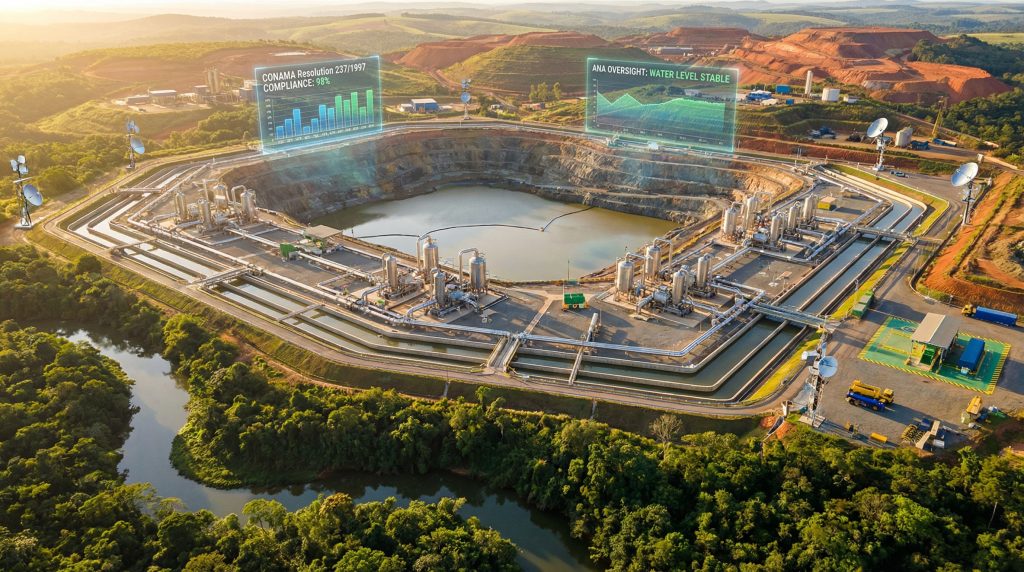
The foundation of Brazil's mining water management oversight rests on CONAMA Resolution 237/1997, which established comprehensive environmental licensing requirements for all mining activities within Brazilian territory. This regulatory framework classifies mining operations into three distinct licensing categories: Preliminary License (LP) for initial feasibility assessment, Installation License (LI) for construction authorization, and Operating License (LO) for active mining operations.
Mining projects typically require 18 to 36 months for complete federal environmental licensing, involving extensive Environmental Impact Assessment (EIA) documentation. Furthermore, this process includes Environmental Report (RIMA) preparation, mandatory 45-day public comment periods, CONAMA committee review processes, and coordination between multiple federal agencies. However, these comprehensive permitting guidelines often create operational uncertainties for mining companies planning capital investments in water management infrastructure.
The National Water Agency (ANA), established in 2000 through Law 9,433, serves as the federal authority responsible for implementing and coordinating water resource management across Brazil's interstate water bodies. Consequently, ANA's jurisdiction extends to coordinating with state agencies on mining water usage permits, establishing water allocation priorities during drought conditions, and maintaining oversight of water quality standards in mining-affected watersheds.
The Brazilian Institute of Environment and Renewable Natural Resources (IBAMA), operating under the Ministry of Environment and Climate Change, enforces federal environmental standards through comprehensive compliance inspections for mining operations nationwide. Moreover, IBAMA's enforcement authority includes issuing environmental violations, coordinating federal emergency response efforts, and maintaining long-term monitoring programs for mining-affected ecosystems.
When big ASX news breaks, our subscribers know first
Post-Brumadinho Legislative Reforms and Their Implementation
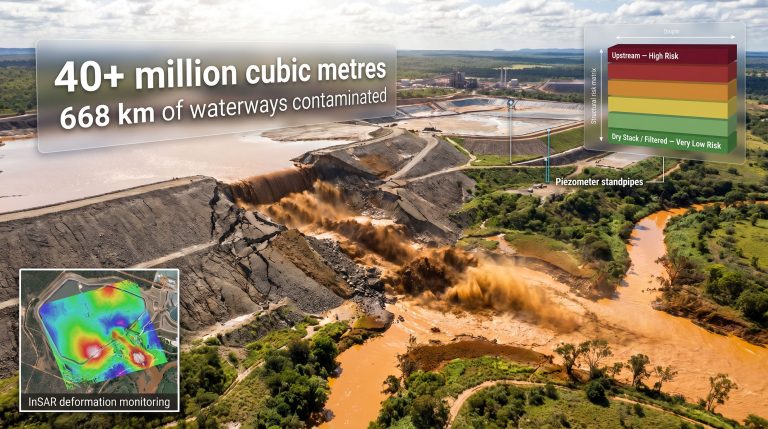
The catastrophic Brumadinho tailings dam collapse in January 2019, which released approximately 12.7 million cubic metres of mining waste and resulted in at least 272 confirmed deaths, exposed critical gaps in Brazil's mining environmental oversight system. This disaster prompted comprehensive legislative reforms through Law 14,066/2020, enacted in September 2020, which mandated substantially stricter tailings dam safety standards and enhanced inspection protocols.
The National Mining Agency (ANM), established in 2017 through Law 13,575 as Brazil's federal mining regulator, implemented significantly enhanced inspection frameworks following the Brumadinho incident. In addition, post-2019 reforms increased inspection frequency for high-risk mining operations, established mandatory early warning systems for all tailings facilities, and required mining companies to maintain comprehensive emergency action plans with community notification protocols.
However, implementation effectiveness remains constrained by funding limitations among state environmental agencies and enforcement capacity gaps, particularly in remote mining regions where monitoring infrastructure proves inadequate for continuous oversight. The coordination between federal mandates and state-level implementation continues to present challenges, especially during extreme weather events when multiple jurisdictional authorities must respond simultaneously.
Law 14,066/2020 established enhanced community notification timeline requirements, mandating mining companies to implement immediate alert systems when environmental incidents occur. These requirements specifically address the communication failures that characterised the Brumadinho response, where affected communities received inadequate advance warning of the impending disaster.
How Do Heavy Rainfall Events Expose Infrastructure Vulnerabilities in Brazilian Mining?
Climate variability in tropical mining regions like Minas Gerais creates fundamental challenges for infrastructure design and operational management. Furthermore, the interaction between seasonal precipitation patterns and mining pit water accumulation mechanisms demonstrates how historical design standards may inadequately address contemporary extreme weather scenarios exacerbated by climate change impacts.
Climate Risk Assessment Protocols for Mining Operations
Minas Gerais experiences annual rainfall averages ranging from 1,500 to 1,800 millimetres, concentrated primarily during the austral summer rainy season from November through March. Historical extreme rainfall events in the region have documented multiple incidents exceeding 200 millimetres within 24-hour periods, creating sudden water accumulation volumes that can overwhelm conventional pit dewatering systems.
Global warming has increased atmospheric water vapour capacity by approximately 7 percent per degree Celsius of temperature increase. With Brazil experiencing average temperature increases of approximately 0.9 degrees Celsius since 1961, the Minas Gerais region faces increasing frequency of extreme precipitation events that exceed historical design parameters for mining infrastructure.
Current Brazilian mining water management systems typically design for "100-year flood" scenarios, representing events with 1 percent annual probability based on historical precipitation data. However, climate change effects are reducing the effective design life of infrastructure based on historical data patterns, as contemporary extreme weather probabilities increasingly diverge from past statistical models.
Real-time monitoring systems for water level management in active pits require continuous operational capacity during extreme weather events, precisely when electrical power systems and mechanical equipment face greatest stress from environmental conditions. Consequently, this creates a fundamental vulnerability where monitoring and response capacity diminishes exactly when demand peaks.
Comparative Analysis: Pit Overflow vs. Tailings Dam Failures
Understanding the distinct risk profiles between pit overflow incidents and tailings dam failures provides critical context for regulatory priorities and emergency response planning. While both scenarios involve mining-related water management failures, their environmental impact patterns, regulatory responses, and recovery timelines differ substantially.
| Risk Factor | Pit Overflow | Tailings Dam Failure |
|---|---|---|
| Immediate Impact | Localised flooding affecting adjacent waterways | Catastrophic release affecting multiple watersheds |
| Environmental Scope | Single watershed system contamination | Multiple municipalities and river systems |
| Regulatory Response | Enhanced monitoring and operational restrictions | Complete operational halt and comprehensive review |
| Recovery Timeline | Weeks to months for water quality restoration | Years to decades for ecosystem rehabilitation |
| Fatality Risk | Generally low due to localised impact | Extremely high due to sudden release volumes |
The January 26, 2026 incident involving Vale's mining pit overflow in Minas Gerais illustrates how seasonal rainfall patterns can overwhelm containment capacity when coupled with infrastructure maintenance gaps or operational factors. This flood in Vale mining pit causes environmental damage to local Brazilian river systems, specifically affecting the Maranhao River and causing secondary flooding at an adjacent CSN steelmaking facility.
Open pit mines function as large surface depressions collecting rainfall, groundwater seepage, and process water throughout their operational life. Typical pit dimensions range from 100 to 800 metres in depth with surface areas spanning 0.5 to 3 or more kilometres, creating substantial catchment areas during heavy precipitation events. In addition, water accumulation volumes during rainy seasons can reach millions of cubic metres, requiring continuous dewatering system operation to prevent overflow.
What Environmental Impact Assessment Methods Apply to Mining-Related Water Contamination?
Environmental impact assessment protocols for mining-related water contamination in Brazil combine physical-chemical testing methodologies with biological monitoring systems to establish comprehensive contamination characterisation and ecosystem recovery tracking. However, coordination between different testing methodologies remains inconsistent across state agencies, creating gaps in standardised assessment approaches.
Water Quality Testing Protocols for Mining Incidents
Mining operations must comply with CONAMA Resolution 357/2005, which establishes comprehensive water quality standards for different water body classifications throughout Brazil. Contaminant monitoring parameters typically include pH levels, turbidity measurements, dissolved oxygen concentrations, heavy metals analysis covering iron, copper, zinc, cadmium, lead, and mercury, sulfate concentrations, and sediment load quantification.
Monitoring frequency requirements vary based on operational status, with minimum quarterly testing for operational mines escalating to daily monitoring during incident response periods. This increased frequency allows for rapid detection of contamination changes and enables adaptive management responses based on real-time water quality data.
Brazilian water quality standards establish maximum contaminant levels that vary by water body classification:
- Iron (total): 15 mg/L for Class 2 waters, reduced to 5 mg/L for drinking water standards
- Copper: 0.009 mg/L maximum for Class 2 freshwater bodies
- Zinc: 0.18 mg/L limit for Class 2 freshwater classification
- Lead: 0.01 mg/L maximum concentration allowed
- Mercury: 0.002 mg/L strict limit across all classifications
Total Suspended Solids (TSS) limits demonstrate the varying tolerance levels between water body classifications. For instance, Class 2 water bodies commonly found downstream from mining operations are limited to 100 mg/L maximum, while Class 3 water bodies designated for industrial use allow up to 500 mg/L TSS concentrations.
Ecosystem Recovery Indicators and Timeline Projections
Aquatic ecosystem assessment metrics employed in Brazil include benthic macroinvertebrate biotic indices, fish species diversity counts, population density estimates, algal bloom frequency measurements, and chlorophyll-a concentration analysis. These biological indicators provide essential data for understanding ecosystem health beyond simple chemical contamination measurements.
Multi-year contamination tracking programmes require systematic design incorporating baseline water quality establishment through pre-incident or historical data. Furthermore, the framework includes acute response monitoring with daily to weekly sampling immediately post-incident, intermediate monitoring involving weekly to monthly testing for 3 to 6 months following incidents, and long-term monitoring with quarterly assessments extending 2 to 5 or more years depending on contamination severity.
Fish population recovery rates following mining-related water contamination demonstrate substantial variation based on contamination magnitude, duration, and pre-impact ecosystem health. Minas Gerais rivers already stressed by historical mining contamination show substantially slower recovery trajectories than less-impacted systems, suggesting cumulative contamination effects that linear recovery models may underestimate.
The aftermath of the Brumadinho tailings dam contamination in 2019 documented iron concentrations exceeding 10,000 mg/L in immediately affected areas, compared to 15 mg/L standards for Class 2 waters. Sediment load increases exceeded 1,000 percent in downstream river sections, with fish kill events documented across more than 300 kilometres of affected river systems. Consequently, partial fish population recovery occurred in some sections by 2022-2023, representing 3 to 4 years post-incident recovery timelines.
How Do Mining Companies Structure Environmental Liability and Insurance Coverage?
Mining companies operating in Brazil employ complex financial risk management strategies to address environmental liability exposure, combining self-insurance reserves, third-party coverage arrangements, and government-mandated compensation mechanisms. The financial implications of environmental incidents extend far beyond immediate cleanup costs, encompassing long-term remediation expenses, legal settlements, and regulatory penalties.
Corporate Environmental Risk Management Strategies
Major mining corporations typically maintain substantial self-insurance reserves specifically designated for environmental incident response and remediation. These internal financial buffers provide immediate funding access for emergency containment measures and initial cleanup activities, avoiding delays associated with third-party insurance claim processing during critical response periods.
Third-party environmental insurance coverage presents significant limitations and exclusions that constrain comprehensive risk transfer. Insurance market conditions following major environmental disasters like Brumadinho have resulted in substantial premium increases and coverage restrictions that affect mining company financial planning and operational decision-making.
| Coverage Type | Premium Increase (2019-2026) | Coverage Limitations |
|---|---|---|
| Environmental Liability | 45-60% increase | Excludes gradual pollution scenarios |
| Business Interruption | 25-35% increase | Limited to 24-month coverage periods |
| Third-Party Claims | 55-70% increase | Coverage caps at $500 million per incident |
Joint liability arrangements between mining companies and contractors create additional complexity in environmental risk allocation. These agreements must clearly define responsibility boundaries for different aspects of environmental management, from routine operational oversight to emergency response coordination and long-term remediation funding.
Government compensation fund mechanisms provide supplementary coverage for environmental disasters that exceed private insurance capacity. However, these public funds often operate with complex eligibility requirements and extended claim processing timelines that may inadequately address immediate community needs following environmental incidents.
Financial Impact Analysis of Environmental Incidents
Environmental incidents in mining operations generate multiple categories of financial impact that extend well beyond immediate response costs. Immediate response expenses for emergency containment and initial cleanup typically represent the smallest component of total incident costs, while long-term remediation expenses and legal settlements constitute the majority of financial exposure.
Environmental incidents can result in cleanup costs ranging from $10 million to $100 million depending on contamination scope and affected ecosystem complexity, with legal settlements and regulatory penalties often exceeding direct remediation expenses.
Long-term remediation expenses spanning multiple years create ongoing financial obligations that may extend decades beyond initial incident occurrence. These costs include continued water quality monitoring, ecosystem restoration activities, infrastructure upgrades, and community health programmes designed to address long-term contamination impacts.
Legal settlement payments to affected communities and businesses represent substantial financial exposure that varies significantly based on incident severity, affected population size, and local economic dependencies on environmental resources. Furthermore, settlement negotiations often extend multiple years, creating extended financial uncertainty for mining companies and affected communities.
What Role Do Community Stakeholders Play in Mining Environmental Oversight?
Community stakeholder engagement in mining environmental oversight has evolved substantially following major environmental incidents, with enhanced participation mechanisms and expanded authority for local oversight activities. However, implementation effectiveness varies significantly across different regions and mining operations, influenced by local capacity, resource availability, and institutional relationships.
Public Participation Mechanisms in Environmental Monitoring
Community advisory panels established for major mining operations provide structured forums for local stakeholder input on environmental management decisions, monitoring priorities, and emergency response planning. These panels typically include representatives from municipal governments, local business associations, environmental organisations, and directly affected communities, creating diverse perspectives on environmental oversight priorities.
Citizen science programmes enable local water quality monitoring by providing community members with training and equipment for basic water testing activities. These programmes supplement formal regulatory monitoring while building local capacity for environmental awareness and incident detection, particularly in remote areas where regular professional monitoring proves logistically challenging.
Indigenous land rights considerations in mining environmental assessments require specialised consultation processes that acknowledge traditional ecological knowledge and cultural connections to affected landscapes. These consultations often involve complex negotiations regarding mining access rights, environmental protection standards, and benefit-sharing arrangements that reflect indigenous community priorities.
Municipal government coordination with state and federal oversight bodies creates additional layers of environmental monitoring and response capacity. In addition, local governments often possess detailed knowledge of community vulnerabilities, infrastructure limitations, and emergency response capabilities that prove essential during environmental incident management.
The next major ASX story will hit our subscribers first
How Do International Mining Environmental Standards Compare to Brazilian Regulations?
International mining environmental standards provide valuable comparative context for evaluating Brazilian regulatory frameworks and identifying potential improvements in environmental protection and incident prevention. These comparisons reveal both strengths and gaps in Brazil's approach to mining water management oversight and emergency response capabilities.
Global Best Practices in Mining Water Management
Australian mining water discharge standards operate through comprehensive environmental assessment processes that emphasise continuous monitoring, adaptive management responses, and community consultation throughout project lifecycles. Furthermore, Australian enforcement mechanisms include substantial financial penalties, operational restrictions, and mandatory environmental bonds that ensure adequate funding for long-term environmental management.
Canadian environmental assessment processes for mining project approvals incorporate climate change considerations, cumulative impact analysis, and Indigenous rights recognition as mandatory components of environmental evaluation. These assessments typically require longer evaluation periods but result in more comprehensive environmental protection measures and clearer regulatory compliance expectations.
The European Union mining waste directive establishes detailed requirements for waste management planning, financial guarantee provisions, and post-closure monitoring obligations that extend decades beyond active mining operations. EU compliance rates demonstrate how comprehensive regulatory frameworks can achieve high environmental protection standards when combined with adequate enforcement resources.
International Finance Corporation (IFC) environmental performance standards influence global mining operations through project financing requirements that mandate adherence to international best practices regardless of local regulatory standards. These standards often exceed national requirements and provide frameworks for continuous improvement in environmental management practices.
Technology Solutions for Preventing Mining Water Contamination
Real-time water level monitoring systems using IoT sensors and satellite data enable continuous surveillance of mining pit water accumulation and early detection of overflow risks. These systems can trigger automated responses including pump activation, spillway opening, and emergency notification protocols that reduce response times during extreme weather events.
Predictive modelling software for rainfall impact assessment integrates meteorological forecasting with site-specific hydrological modelling to provide advance warning of potential overflow scenarios. This technology enables proactive management responses including preemptive dewatering, equipment positioning, and community notification before incidents occur.
Automated overflow prevention systems triggered by weather forecasts represent emerging technology solutions that can activate containment measures independently of human oversight during extreme weather events. Consequently, these systems prove particularly valuable during nighttime or holiday periods when staffing levels may be reduced but weather risks remain elevated.
Modern industry innovation trends include containment barrier technologies designed for extreme weather events that incorporate climate change projections into infrastructure design specifications. These technologies move beyond historical precipitation data toward forward-looking climate resilience standards, often requiring substantial capital investments while providing enhanced protection against increasingly frequent extreme weather scenarios.
What Economic Implications Arise from Mining Environmental Incidents?
Environmental incidents in mining operations generate substantial economic impacts that extend far beyond direct cleanup costs, affecting regional economies, insurance markets, and long-term investment patterns. Understanding these broader economic implications provides essential context for evaluating the true costs of environmental risk in mining operations and the economic benefits of enhanced environmental protection measures.
Regional Economic Impact Assessment Methodology
Tourism sector revenue losses from environmental reputation damage can persist for years following mining incidents, as negative publicity affects destination attractiveness and visitor confidence in environmental safety. Regional tourism economies dependent on natural attractions, recreational fishing, or ecotourism activities face particularly severe impacts from mining-related water contamination incidents.
Agricultural productivity decline in contaminated watersheds affects both immediate crop yields and long-term soil health, creating extended economic impacts for farming communities. Contamination effects on irrigation water sources can force agricultural operations to seek alternative water supplies at higher costs or reduce production levels until environmental recovery occurs.
Property value impacts in communities near mining operations demonstrate measurable effects from environmental incidents, with residential and commercial property values declining in affected areas. These impacts often persist beyond environmental remediation completion, reflecting ongoing community concerns about future environmental risks and property marketability.
Employment effects on local mining-dependent economies create complex economic dynamics where environmental incidents may result in operational suspensions that eliminate employment while simultaneously reducing environmental risks. Furthermore, communities heavily dependent on mining employment face difficult tradeoffs between economic security and environmental protection priorities.
Insurance Market Response to Mining Environmental Risks
Insurance market conditions for mining environmental risks have tightened substantially following major incidents like Brumadinho, with premium increases, coverage restrictions, and enhanced underwriting requirements affecting mining company financial planning. These market changes reflect insurance industry assessments of increasing environmental risk exposure in mining operations.
Environmental liability insurance premium increases of 45 to 60 percent between 2019 and 2026 demonstrate how major environmental incidents affect insurance pricing across the entire mining sector. These increases affect operational costs for all mining companies, regardless of their individual environmental performance records.
Coverage limitations excluding gradual pollution scenarios create gaps in insurance protection that require mining companies to maintain larger self-insurance reserves or accept higher levels of uninsured environmental risk exposure. These exclusions reflect insurance industry concerns about long-term contamination liability that may exceed policy coverage periods.
Business interruption coverage limited to 24-month periods may prove inadequate for extended environmental remediation scenarios that require longer operational suspensions. Consequently, mining companies must evaluate whether standard insurance coverage provides adequate protection for their specific operational and environmental risk profiles.
How Can Regulatory Frameworks Evolve to Prevent Future Mining Water Incidents?
Regulatory framework evolution requires comprehensive integration of climate adaptation strategies, technological advancement, and community engagement mechanisms to address emerging environmental challenges in mining operations. Future regulatory approaches must balance environmental protection objectives with operational feasibility and economic sustainability for mining sector development.
Proposed Legislative Reforms for Enhanced Environmental Protection
Mandatory climate resilience assessments for all new mining permits would require comprehensive evaluation of climate change impacts on proposed mining operations. These assessments would include updated extreme weather projections, infrastructure design requirements, and long-term operational sustainability planning, moving beyond historical climate data toward forward-looking climate risk evaluation.
Stricter water discharge monitoring requirements with real-time reporting capabilities would enhance regulatory oversight through continuous data transmission from mining sites to regulatory agencies. This technological integration could enable immediate detection of environmental incidents and rapid regulatory response coordination.
Enhanced community notification systems for environmental incidents would establish standardised alert protocols ensuring affected populations receive timely information about environmental risks, evacuation procedures, and safety precautions. These systems would address communication failures that have characterised past environmental emergencies in mining regions.
Increased financial assurance requirements for environmental cleanup would ensure mining companies maintain adequate funding reserves for comprehensive environmental remediation, including long-term monitoring and ecosystem restoration activities. Moreover, these requirements would provide greater certainty that cleanup costs will not burden public resources.
Technology Integration in Regulatory Compliance Monitoring
Satellite-based monitoring systems for continuous environmental surveillance could provide regulatory agencies with real-time oversight capability across remote mining operations, reducing dependence on self-reported compliance data from mining companies. These systems would enable detection of environmental incidents through remote sensing technology.
Blockchain-based compliance reporting would ensure data integrity and transparency in environmental monitoring by creating immutable records of water quality data, incident reports, and regulatory inspections. This technology could enhance public confidence in regulatory oversight and reduce opportunities for data manipulation.
AI-powered risk assessment tools for predictive environmental impact analysis would enable regulatory agencies to identify high-risk scenarios before environmental incidents occur. Furthermore, these tools allow proactive regulatory interventions and enhanced inspection targeting by integrating multiple data sources including weather forecasting, operational parameters, and historical incident patterns.
Mobile app platforms enabling community reporting of environmental concerns would create additional monitoring capacity through citizen participation while providing regulatory agencies with broader environmental surveillance networks. These platforms could facilitate rapid incident reporting and community engagement in environmental oversight activities.
Building Resilient Mining Environmental Governance
The development of resilient mining environmental governance requires integration of regulatory coordination, climate adaptation planning, community engagement, and technological advancement to address contemporary environmental challenges in Brazil's mining sector. Current approaches must be strengthened through data-driven operations and improved mining claims framework coordination to prevent future environmental disasters.
Key Takeaways for Stakeholders
Regulatory coordination between federal, state, and local authorities remains critical for effective environmental oversight and emergency response. The multi-layered regulatory structure governing Brazilian mining operations requires clear jurisdictional definitions, standardised procedures, and adequate funding to ensure coordinated environmental protection efforts.
Climate adaptation strategies must be integrated into mining operation planning to address increasing frequency and intensity of extreme weather events. Historical precipitation data increasingly fails to represent contemporary climate conditions, requiring infrastructure design standards that incorporate forward-looking climate projections rather than past weather patterns.
Community engagement enhances environmental monitoring effectiveness by providing additional surveillance capacity, local knowledge, and early warning capabilities that supplement formal regulatory oversight. Furthermore, successful community participation requires adequate resources, training, and institutional support to enable meaningful stakeholder involvement.
Technology adoption can significantly improve incident prevention and response through real-time monitoring systems, predictive modelling capabilities, and automated response mechanisms that reduce human error and response delays during environmental emergencies.
Future Outlook for Brazilian Mining Environmental Policy
Anticipated regulatory changes following recent environmental incidents will likely emphasise enhanced monitoring requirements, stricter financial assurance provisions, and expanded community participation mechanisms. These changes reflect lessons learned from past environmental disasters and growing recognition of climate change impacts on mining operations.
Investment requirements for upgrading environmental protection infrastructure will create substantial capital demands for mining companies while potentially reducing long-term environmental risk exposure and associated financial liabilities. These investments represent essential components of sustainable mining sector development.
International cooperation opportunities for sharing environmental monitoring technologies and best practices could accelerate improvement in Brazilian mining environmental governance while reducing costs through technology sharing and coordinated research and development efforts.
Long-term sustainability goals for Brazil's mining sector development must balance economic objectives with environmental protection requirements and community welfare considerations. Achieving these goals requires comprehensive stakeholder engagement, adequate regulatory resources, and continued technological innovation in environmental management practices.
The evolution of Brazilian mining environmental governance will determine whether incidents like the flood in Vale mining pit causes environmental damage to local Brazilian river can be prevented through enhanced regulatory frameworks, improved technology adoption, and strengthened community participation in environmental oversight activities. Recent mining industry studies have highlighted the urgent need for comprehensive reforms to address these ongoing environmental challenges effectively.
Ready to Invest in the Next Major Mineral Discovery?
Discovery Alert instantly alerts investors to significant ASX mineral discoveries using its proprietary Discovery IQ model, turning complex mineral data into actionable insights. Understand why historic discoveries can generate substantial returns by visiting Discovery Alert's dedicated discoveries page and begin your 30-day free trial today to position yourself ahead of the market.