May 24, 2026
When Coal Country Fails Its Workers: Understanding the Liushenyu Mine Explosion
Industrial disasters rarely emerge from a single point of failure. Behind every catastrophic underground event lies a layered architecture of decisions, pressures, and systemic gaps that accumulate over months or years before converging in a single, irreversible moment. The Liushenyu Coal Mine explosion in Shanxi Province, which occurred on the evening of May 22, 2026, is a case study in exactly that kind of cascading failure, and it raises questions that extend far beyond the immediate tragedy.
What makes the China coal mine disaster in Shanxi particularly significant is not just its death toll, as devastating as that is, but what it reveals about the persistent tension between industrial output imperatives and the structural capacity to protect workers operating kilometres below the earth's surface.
When big ASX news breaks, our subscribers know first
The Incident: What Happened at Liushenyu
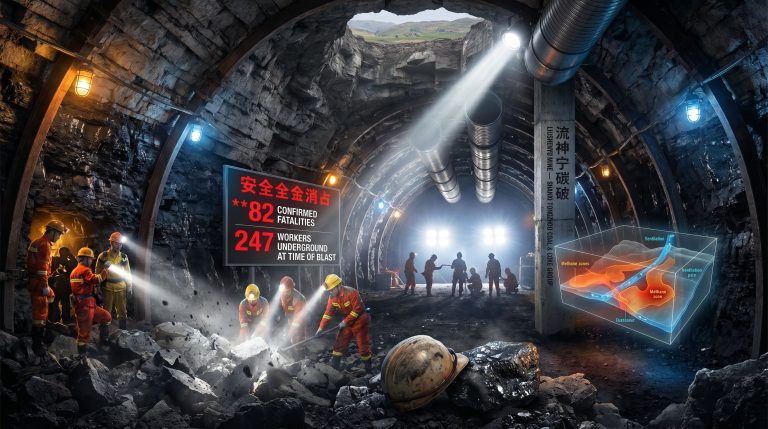
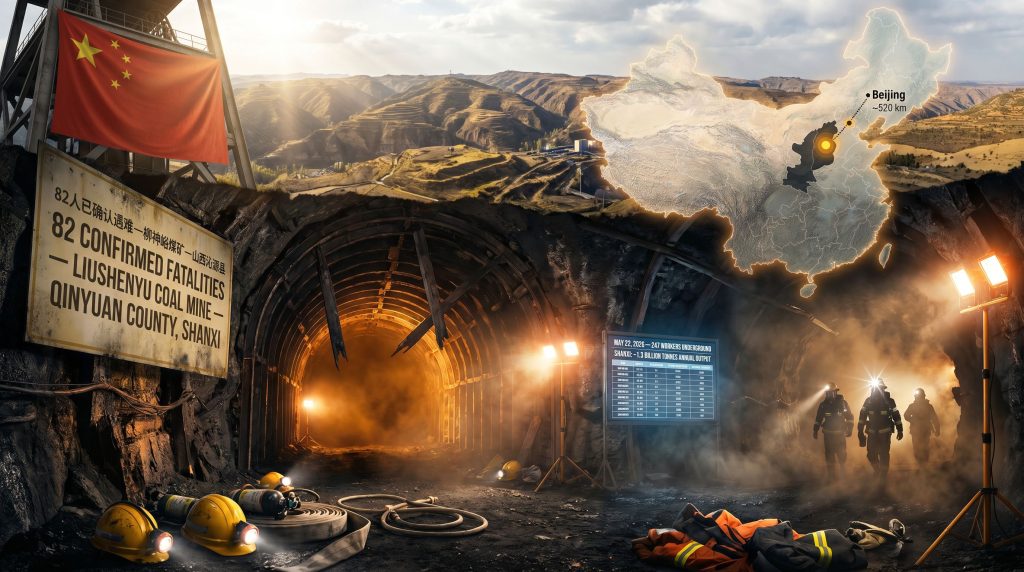
At approximately 7:30 PM local time on May 22, 2026, a gas explosion ripped through the Liushenyu Coal Mine in Qinyuan County, Shanxi Province, located roughly 520 kilometres southwest of Beijing. At the time of the blast, 247 workers were underground.
The confirmed fatality count reached at least 82 people, with a further 128 individuals injured and 2 workers still unaccounted for as of the most recent updates. What drew immediate attention from analysts and safety observers was the sequence of events leading up to the explosion: the mine's monitoring infrastructure had triggered a carbon monoxide alert before the gas blast occurred.
This detail is critical. It suggests the warning systems were functioning, raising pointed questions about whether the alert was acted upon in time, whether evacuation protocols were initiated, and whether the gap between detection and response was sufficient to prevent the loss of life on this scale.
The confirmed death toll also experienced a dramatic overnight surge, jumping from 8 to 82 without an immediate or clear explanation from local authorities — a transparency gap that drew significant international scrutiny. Reuters reporting on the incident captured how rapidly the situation evolved in the hours following the blast.
How Liushenyu Compares to China's Most Severe Mining Disasters
The Liushenyu explosion is now widely characterised as the deadliest coal mine disaster in China in more than a decade, surpassing the 2009 Shanxi mine blast and the Tunlan Mine explosion in Gujiao, which killed 74 miners. The benchmark that remains above it in modern records is the 2009 Heilongjiang mine blast, which claimed 108 lives.
The table below contextualises the Liushenyu incident within China's documented history of major mining accidents:
| Disaster | Year | Province | Cause | Fatalities |
|---|---|---|---|---|
| Heilongjiang Mine Blast | 2009 | Heilongjiang | Gas explosion | 108 |
| Tunlan Mine Explosion | 2009 | Shanxi | Gas explosion | 74 |
| Zhongyang Coal Bunker Collapse | March 2024 | Shanxi | Structural failure | 7 |
| Luliang Mine Roof Collapse | April 2026 | Shanxi | Roof failure | 4 |
| Liushenyu Coal Mine Explosion | May 2026 | Shanxi | Gas explosion | 82+ |
The pattern is striking. Three of these five incidents occurred in Shanxi Province alone, which is not coincidental. It reflects the sheer concentration of extraction activity within a single administrative region.
The Physics and Chemistry of Underground Gas Explosions
Understanding why these disasters happen requires a working knowledge of underground mine atmospherics — a field that remains poorly understood outside specialist circles.
Coal seams naturally release methane (CH₄) as mining progresses. In high-extraction environments, methane can accumulate in poorly ventilated areas of a shaft, reaching concentrations between 5% and 15% by volume in air, which is the explosive range known as the lower and upper flammability limits. A single spark from electrical equipment, a friction source, or even spontaneous ignition can trigger detonation within this concentration band.
Carbon monoxide is a separate but related hazard. It is produced when coal undergoes slow, incomplete oxidation, often a precursor event to more energetic ignition. The presence of a CO alert before the Liushenyu explosion is consistent with a sequence where oxidation was already underway underground, generating both toxic gas and the thermal conditions that can destabilise methane-air mixtures.
Key precursors to gas explosions in deep coal mining environments include:
- Methane accumulation in inadequately ventilated sections of a working shaft
- Insufficient gas drainage conducted prior to shift entry
- Electrical ignition sources operating in gas-saturated atmospheres
- Real-time atmospheric monitoring failures or data suppression
- Falsified safety records that obscure true underground risk levels
- Ageing infrastructure with degraded ventilation capacity
Chinese regulatory authorities have repeatedly flagged the falsification of underground safety data and illegal subcontracting arrangements as systemic vulnerabilities across the sector. Both practices can conceal dangerous conditions until a catastrophic event makes them impossible to ignore.
Shanxi Province: The Weight of One-Third of a Nation's Coal
To understand why the China coal mine disaster in Shanxi carries such outsized significance, it helps to appreciate the province's structural role in China's energy economy. Furthermore, situating Shanxi within the broader picture of global coal-producing nations makes clear just how pivotal this single province is to worldwide supply chains.
Shanxi is geographically larger than Greece and home to approximately 34 million people. In the most recent annual reporting period, miners in Shanxi extracted roughly 1.3 billion tonnes of coal, a figure that represents close to one-third of China's total national coal output. That single statistic explains both the province's economic centrality and its disproportionate representation in safety incident statistics.
The concentration of extraction at this scale within one province creates compounding risk. More mines, more workers, more extraction kilometres, and more ageing shaft infrastructure all operating under the same provincial regulatory framework. When enforcement capacity at the local government level is stretched, or when incentive structures favour output over compliance, the consequences tend to be severe.
The Output Pressure Problem
A pattern that has appeared repeatedly in post-incident analysis of Chinese mining disasters is what safety economists describe as output-safety substitution: the informal prioritisation of production targets over compliance with safety protocols during periods of high demand. Coal remains structurally essential to China's electricity generation and industrial base, and in addition, seasonal demand peaks — particularly during winter heating cycles — have historically created pressure to maximise extraction rates even when conditions underground may not fully warrant it.
This dynamic is well-documented in academic literature on industrial safety governance. Studies of Chinese mining incidents have found that enforcement intensity tends to surge following high-profile disasters but diminishes over time as media attention and political pressure recede, only to allow conditions to deteriorate again ahead of the next major event.
China's Regulatory Architecture: What the Rules Require
China's coal mine safety governance sits primarily under the jurisdiction of the National Mine Safety Administration (NMSA). The regulatory framework is, on paper, comprehensive:
- Continuous atmospheric monitoring for methane and carbon monoxide is mandatory across all underground operations
- Gas drainage programmes must be completed and verified before workers enter high-risk mining zones
- Shift supervisors carry direct legal responsibility for pre-entry safety clearances
- Independent safety inspections are required at defined regulatory intervals
- Ventilation systems must meet prescribed airflow standards for the volume and depth of active workings
The gap between the written framework and actual practice is where the systemic risk accumulates. Several structural vulnerabilities have been identified by safety investigators across multiple incidents:
- Regulatory capture at local government level has historically allowed non-compliant operators to continue working, particularly in regions where coal revenue forms a significant share of local fiscal income.
- Illegal subcontracting diffuses accountability through layers of intermediary operators, making it legally difficult to assign responsibility when something goes wrong.
- Falsified atmospheric monitoring data submitted to regulators undermines the entire inspection architecture.
- Financial pressure to maintain output has, in documented cases, led operators to underreport hazardous underground conditions rather than face production stoppages.
Despite successive national-level enforcement campaigns spanning more than two decades, fatality rates in Chinese coal mining — while substantially reduced from the peak figures recorded in the early 2000s when annual deaths exceeded 6,000 — have not reached zero. Major incidents continue to emerge from the provinces carrying the highest extraction volumes.
However, it is worth noting that these coal supply challenges are not unique to China. Broader coal supply challenges across global markets continue to place pressure on producing nations to balance output with safety compliance.
The next major ASX story will hit our subscribers first
The Government Response: Detentions, Directives, and a Nationwide Crackdown
The state response to the Liushenyu disaster moved on multiple tracks simultaneously.
In the immediate aftermath, law enforcement detained executives from the company operating the mine. At least one individual with direct operational responsibility was placed under formal control by authorities, according to reporting by state news agency Xinhua.
At the head-of-state level, President Xi Jinping issued direct instructions for rescue teams to pursue every available means of locating survivors and emphasised that the full consequences of the accident must be properly managed. Xi specifically called for those responsible to face accountability under Chinese law, and flagged the additional complication of the active rainy season, ordering flood prevention measures at the Qinyuan County site given the risk of water infiltration into the damaged mine workings.
Premier Li Qiang reinforced these directives, stressing that the investigation into causation must be completed as rapidly as possible and that accountability for the disaster must be clearly established.
Beyond the immediate incident response, Beijing announced a nationwide crackdown targeting:
- Falsification of underground safety monitoring records
- Illegal subcontracting of mining operations to uncertified operators
- Non-compliant ventilation and gas management systems across active mines
- Inadequate enforcement of pre-shift safety inspection requirements
Consequently, the response mirrors previous crackdowns, though analysts note that the test will be whether enforcement is sustained beyond the immediate news cycle. Improved mine fire safety response protocols developed in other jurisdictions may offer applicable lessons for Chinese authorities as they review their own emergency procedures.
International Dimensions: Modi's Condolences and What They Signal
The scale of the Liushenyu disaster was reflected in the diplomatic response it generated. Indian Prime Minister Narendra Modi publicly expressed deep grief over the loss of life, directing his condolences to President Xi Jinping and the Chinese people via social media on May 23, 2026. Modi conveyed the sorrow of the Indian people and expressed hope for the safe recovery of those still missing.
Head-of-state condolences in response to industrial accidents are not routine. They typically occur when the scale of a disaster crosses a threshold of exceptional magnitude, and the Liushenyu explosion clearly met that standard. The fact that 247 workers were underground when the blast occurred, combined with the dramatic overnight spike in confirmed deaths, amplified global attention in a way that smaller incidents, however tragic, rarely do.
Key Statistics: The Liushenyu Disaster at a Glance
| Metric | Figure |
|---|---|
| Date of explosion | May 22, 2026 |
| Time of explosion | Approximately 7:30 PM local time |
| Location | Qinyuan County, Shanxi Province |
| Workers underground at time of blast | 247 |
| Confirmed fatalities | 82+ |
| Injured | 128+ |
| Still missing | 2 |
| Distance from Beijing | ~520 km (320 miles) |
| Shanxi's annual coal output | ~1.3 billion tonnes |
| Shanxi's share of national coal output | ~33% |
| Last comparable disaster | 2009 Heilongjiang blast (108 deaths) |
What Meaningful Reform Would Actually Require
Short-term enforcement responses — detentions, audits, and crackdowns — have featured in China's post-disaster playbook for decades. The more difficult question is whether the structural conditions that produce these disasters can be altered without compromising the economic function that coal extraction serves.
Immediate Priorities
- Full criminal investigation and prosecution of all individuals with identified responsibility
- Mandatory safety audits across all active mining operations in Shanxi Province
- Independent verification of atmospheric monitoring data at high-risk operations
- Suspension of mines with documented compliance deficiencies until remediation is confirmed
Structural Reforms That Would Address Root Causes
- Decoupling local government fiscal incentives from coal extraction volume metrics
- Mandatory third-party safety auditing for all mines above a defined production threshold
- Enforceable whistleblower protections allowing workers to report hazards without fear of retaliation
- Accelerated retirement of mining infrastructure that cannot meet modern ventilation and gas management standards
- Integration of real-time atmospheric monitoring data into a centralised national safety dashboard accessible to regulators independently of operator reporting
In addition, improved approaches to mining safety and management could provide complementary frameworks for reducing risk exposure across the broader sector. Furthermore, policymakers looking at global coal reserves data will understand why abrupt production curtailments remain politically and economically difficult, even in the wake of tragedies of this magnitude.
China's long-term energy transition toward renewables may gradually reduce the operational pressure on coal-dependent provinces like Shanxi. However, in the near term, coal remains structurally essential to national energy security and industrial continuity, meaning safety reforms must operate within a framework that cannot simply pause production to achieve compliance. That constraint is perhaps the most honest explanation for why the China coal mine disaster in Shanxi and incidents like it keep occurring.
Frequently Asked Questions
How many people died in the Shanxi coal mine disaster in 2026?
State media confirmed at least 82 fatalities from the gas explosion at the Liushenyu Coal Mine in Qinyuan County on May 22, 2026. At least 128 people were injured, and 2 workers remained unaccounted for as of the latest available updates. Initial reports had cited a higher figure of 90 deaths before official revisions.
What caused the Liushenyu coal mine explosion?
A gas explosion triggered the disaster. A carbon monoxide alert was activated by the mine's monitoring systems shortly before the blast occurred. Chinese authorities have launched a formal investigation, with early scrutiny directed at ventilation management, gas drainage protocols, and the potential falsification of safety records prior to the incident.
Is the Liushenyu disaster the deadliest coal mine accident in Chinese history?
No. It is considered the deadliest China coal mine disaster in Shanxi in more than a decade. The 2009 Heilongjiang mine explosion, which killed 108 people, remains the modern benchmark. The Liushenyu explosion surpasses the 74-fatality Tunlan Mine disaster of 2009, also in Shanxi Province.
Why does Shanxi Province experience so many coal mining accidents?
Shanxi is China's largest coal-producing province, responsible for approximately one-third of national output and extracting around 1.3 billion tonnes annually. The sheer volume of extraction activity, combined with ageing mine infrastructure, gaps between national regulatory standards and local enforcement capacity, and structural economic pressure to maintain production, creates persistent safety challenges that repeated regulatory interventions have not fully resolved.
Disclaimer: This article presents factual reporting and analytical commentary based on publicly available information as of the date of publication. All casualty figures and timelines are subject to revision as official investigations progress. This article does not constitute legal, regulatory, or investment advice.
Want to Stay Ahead of Significant ASX Mineral Discoveries Before the Broader Market Does?
While coal mining safety remains a critical global issue, savvy investors know that identifying transformative mineral discoveries early can be equally consequential — Discovery Alert's proprietary Discovery IQ model scans ASX announcements in real time, delivering actionable alerts the moment a significant discovery is confirmed, much as the historic returns documented on Discovery Alert's discoveries page demonstrate. Begin your 14-day free trial today and position yourself ahead of the market.