May 23, 2026
What Are the Core Engineering Principles Behind In-Pit Sizing Systems?
The modern approach to mineral processing increasingly demands equipment that can handle complex geological variations while maintaining operational efficiency. In-pit sizing rare earth elements requires sophisticated engineering solutions that address the unique challenges presented by weathered ore profiles and variable moisture content.
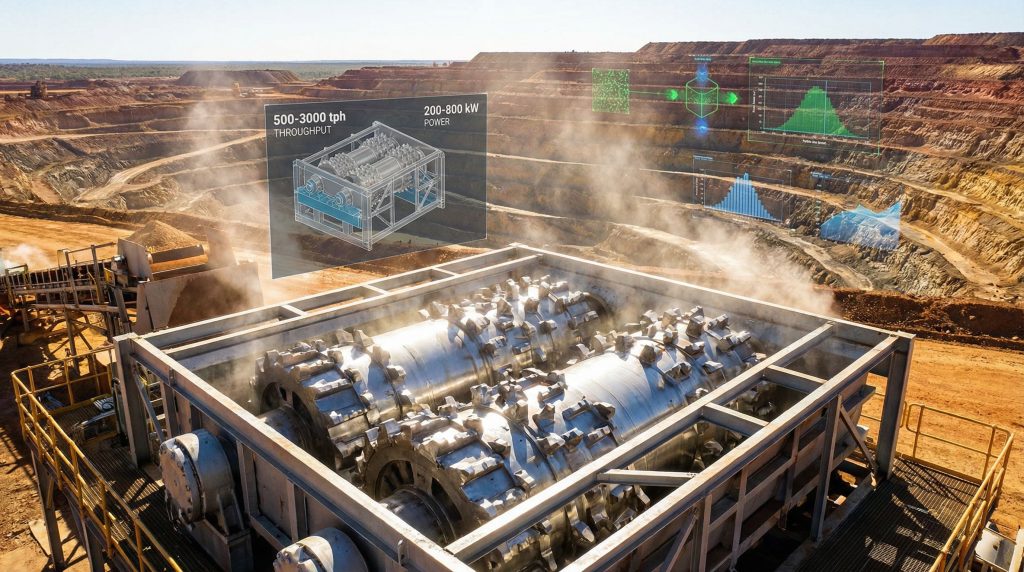
Twin-shaft mineral sizers represent a significant advancement over traditional crushing technologies, particularly for rare earth element applications. These systems utilise counter-rotating shafts equipped with specialised tooth configurations designed to break down material through a combination of impact and shearing forces. The self-cleaning design prevents material buildup that commonly plagues conventional crushers when processing sticky, clay-rich ores.
Mechanical Design Parameters for REE Material Handling
The engineering specifications for data-driven mining operations must accommodate the extreme variability found in rare earth deposits. Variable speed control systems allow operators to optimise throughput based on real-time material characteristics, adjusting processing rates when encountering zones of high clay content or excessive moisture.
Structural load calculations become particularly critical for semi-mobile installations that must withstand the dynamic forces generated during continuous operation. The foundation design must account for vibration dampening while providing sufficient stability for equipment that may operate in challenging pit conditions.
Equipment Specification Parameters:
| Parameter | Standard Range | REE-Specific Considerations |
|---|---|---|
| Feed Size | 0-1200mm | Variable due to weathering profiles |
| Product Size | 0-150mm | Optimised for downstream flotation |
| Throughput Capacity | 500-3000 tph | Adjusted for moisture content |
| Power Requirements | 200-800 kW | Higher for abrasive gangue minerals |
Material Property Assessment Protocols
Comprehensive material characterisation forms the foundation of successful in-pit sizing implementation. The assessment process involves multiple analytical techniques to determine physical properties that directly impact equipment selection and operational parameters, as detailed in viability assessment studies.
Key evaluation criteria include:
- Size distribution analysis across the complete ore body profile
- Megapascal strength measurements for different geological zones
- Abrasion index calculations to predict equipment wear rates
- Moisture content determination throughout seasonal variations
- Bulk density assessment for different alteration zones
- Plasticity index measurements for clay-rich intervals
The complexity of rare earth deposits requires specialised testing protocols that extend beyond standard comminution studies. Weathered saprolite zones exhibit dramatically different mechanical properties compared to fresh rock, necessitating equipment configurations that can accommodate this variability without performance degradation.
When big ASX news breaks, our subscribers know first
Why Do Rare Earth Deposits Require Specialised Sizing Approaches?
Global demand for rare earth elements has doubled over the past decade, with the International Energy Agency forecasting potential doubling again by 2050. This unprecedented growth trajectory, driven primarily by clean energy technologies including wind turbines and electric vehicles, has intensified focus on processing efficiency and operational optimisation.
Australia's position as holder of at least 4% of global rare earth reserves, combined with the US-Australia Critical Minerals Framework, has accelerated development of domestic processing capabilities. However, the geological complexity of Australian rare earth deposits presents unique challenges that conventional processing approaches struggle to address effectively.
Mineralogical Complexity Factors
Australian rare earth deposits typically contain either monazite-dominated or bastnäsite-dominated mineralisation systems. These deposits commonly include weathered saprolite zones mixed with harder fresh rock and significant clay content. This mineralogical heterogeneity creates operational instability in conventional processing circuits, leading to fluctuating performance and inconsistent product size distribution.
The weathering profiles characteristic of lateritic and weathered granitoid-hosted ore bodies generate materials with dramatically different processing requirements. Furthermore, fines and clays become plastic under moisture conditions, creating material flow challenges that traditional crushing equipment cannot efficiently handle.
Comparative REE Ore Characteristics:
- Monazite Systems: Higher density, phosphate mineral association, variable weathering intensity
- Bastnäsite Systems: Carbonate mineral association, different breakage characteristics, distinct clay interactions
- Saprolite Zones: Highly weathered material, irregular moisture retention, unpredictable flow properties
- Fresh Rock Intervals: Higher strength requirements, conventional crushing behaviour, lower clay content
Environmental Processing Constraints
Australian climatic conditions create additional operational challenges for rare earth processing operations. Seasonal moisture fluctuations affect material cohesion and stickiness, directly impacting throughput reliability and equipment performance.
The semi-arid to tropical climate zones where many Australian rare earth deposits are located experience significant seasonal variations in humidity and precipitation. These conditions require equipment designs that maintain consistent performance regardless of ambient moisture levels.
Dust suppression requirements for rare earth-bearing materials add another layer of complexity to processing system design. The potential health implications of rare earth element exposure necessitate enclosed processing systems with sophisticated dust collection capabilities.
What Equipment Configurations Optimise REE Processing Outcomes?
The selection and configuration of in-pit sizing equipment for rare earth applications requires careful consideration of multiple interdependent factors. Standard equipment specifications must be modified to accommodate the unique characteristics of REE deposits while maintaining operational flexibility across different geological zones.
Sizing Equipment Selection Criteria
Modern twin-shaft sizers incorporate several design features specifically beneficial for rare earth processing. The self-cleaning tooth geometry prevents material buildup that commonly occurs with sticky, clay-rich ores. This design advantage becomes particularly important in high-moisture environments where conventional crushers experience reduced production due to material binding.
Equipment customisation focuses on several key areas:
- Specialised tooth configurations optimised for clay-rich material processing
- Enhanced wear protection packages designed for abrasive gangue mineral environments
- Modified hopper designs accommodating irregular feed characteristics
- Integrated moisture management systems maintaining consistent material flow properties
The tooth configuration selection depends heavily on material moisture characteristics and clay content. Operations processing weathered saprolite zones typically require different tooth geometries compared to those handling fresher rock intervals.
Customisation Requirements for REE Applications
Rare earth operations tend to require more specific modifications compared to standard mineral processing applications. The abrasive nature of many rare earth deposits, combined with variable clay content, necessitates custom wear protection strategies and specialised component materials.
Key Customisation Areas:
- Tooth Design Modifications: Height, pitch, and breaker bar arrangements adapted for oversize frequency and lump characteristics
- Wear Lining Specifications: Advanced materials resistant to abrasive gangue minerals
- Speed Control Systems: Variable frequency drives optimised for material property variations
- Structural Reinforcement: Enhanced framework design for challenging pit environments
The mobile nature of many rare earth mining operations adds another dimension to equipment design requirements. Satellite pit configurations common in Australian REE projects require equipment that can process effectively while remaining transportable between different mining areas.
How Do Cost-Benefit Calculations Support In-Pit Sizing Investment Decisions?
The economic justification for in-pit sizing systems in rare earth operations extends beyond simple equipment acquisition costs. The technology offers multiple avenues for capital and operating expense reduction while improving overall mine-to-mill efficiency through sustainable mining practices.
Capital Expenditure Reduction Strategies
In-pit sizing eliminates the need for multiple crushing stages and associated infrastructure requirements. Traditional rare earth processing circuits typically require primary jaw crushers, secondary cone crushers, and potentially tertiary crushing or milling stages. Each stage demands significant structural and civil engineering works, multiple conveyor systems, and transfer stations.
The consolidation of these operations into a single in-pit sizing system reduces infrastructure complexity substantially. Mobile equipment deployment provides additional flexibility, allowing operators to optimise processing locations based on ore body geometry and mining progression.
Infrastructure Reduction Benefits:
- Elimination of multiple transfer points and associated maintenance requirements
- Reduced conveyor system complexity and power distribution needs
- Minimised structural engineering requirements for fixed processing facilities
- Enhanced operational flexibility through mobile equipment deployment
Operating Cost Optimisation Metrics
The operational advantages of in-pit sizing extend across multiple cost categories. Haulage distance reduction provides immediate fuel consumption savings while reducing truck fleet requirements. The ability to condition ore to a consistent size early in the material handling chain improves downstream processing efficiency.
Power efficiency improvements compared to traditional multi-stage crushing circuits can be substantial. The elimination of multiple motor drives and their associated electrical infrastructure reduces both energy consumption and maintenance requirements.
Operational Cost Categories:
- Fuel and Haulage: Reduced truck-kilometres through shorter material transport distances
- Power Consumption: Single-point processing versus multiple crushing stages
- Maintenance: Self-cleaning design reduces scheduled maintenance intervals
- Labour: Automated systems require fewer operators compared to multi-stage circuits
The maintenance schedule optimisation achieved through self-cleaning tooth designs represents a significant operational advantage. Traditional crushers processing sticky materials often require frequent cleaning cycles that interrupt production and increase labour costs.
What Site-Specific Factors Determine Optimal System Configuration?
The successful implementation of AI-powered mining efficiency requires comprehensive evaluation of site-specific constraints and opportunities. Each project presents unique challenges related to geology, infrastructure, and operational requirements.
Greenfield Project Integration Protocols
Greenfield rare earth projects offer the advantage of integrated design optimisation from initial planning stages. Pit design can incorporate optimal sizer station placement that minimises material handling distances while maintaining operational flexibility as mining progresses.
Material flow modelling becomes crucial for determining equipment placement and capacity requirements. The heterogeneous nature of rare earth deposits requires sophisticated simulation tools that can account for geological variability and seasonal operational changes.
Design Optimisation Elements:
- Pit Geometry: Optimal sizer placement for multi-bench operations
- Power Supply: Infrastructure planning for remote equipment locations
- Access Roads: Maintenance and component replacement logistics
- Environmental Controls: Dust suppression and containment systems
Brownfield Retrofit Assessment Procedures
Existing rare earth operations considering in-pit sizing implementation face different challenges related to infrastructure integration and production continuity. The assessment process must evaluate compatibility with existing processing circuits while identifying opportunities for operational improvement.
Structural modification requirements often represent the most significant constraint in brownfield applications. Existing conveyor systems, transfer points, and processing facilities may require substantial modifications to accommodate new equipment configurations.
Retrofit Evaluation Criteria:
- Existing Infrastructure Compatibility: Integration with current processing systems
- Production Continuity: Phased implementation strategies to minimise operational disruption
- Structural Constraints: Foundation and support system modifications
- Regulatory Compliance: Environmental and safety requirement updates
Which Key Performance Indicators Track In-Pit Sizing Success?
Effective monitoring of in-pit sizing operations requires comprehensive tracking systems that capture both equipment performance and process outcomes. The complex nature of rare earth processing demands sophisticated measurement techniques that can identify optimisation opportunities.
Real-Time Monitoring Systems
Modern in-pit sizing installations incorporate advanced monitoring technologies that provide continuous feedback on equipment performance and material characteristics. These systems enable operators to make real-time adjustments based on changing geological conditions or operational requirements.
Critical Monitoring Parameters:
- Throughput Rate Tracking: Continuous measurement with surge capacity management
- Product Size Distribution: Real-time particle size analysis for consistency verification
- Equipment Vibration Analysis: Predictive maintenance through wear pattern recognition
- Power Consumption Optimisation: Energy efficiency algorithms for variable operating conditions
The integration of automated feed rate adjustment based on material properties represents a significant advancement in operational control. These systems can respond to changes in ore hardness, moisture content, or clay composition without operator intervention.
Quality Assurance Protocols
Quality control for rare earth processing extends beyond traditional size distribution measurements. The valuable nature of rare earth elements requires sophisticated sampling and analysis protocols to ensure optimal recovery rates throughout the processing chain.
Quality Control Framework:
- Feed Characterisation: Continuous sampling for geological property verification
- Product Specification Compliance: Automated testing for downstream compatibility
- Recovery Optimisation: Material balance calculations for process efficiency
- Long-term Performance Analysis: Trend identification for continuous improvement
The downstream process compatibility testing becomes particularly important for rare earth applications. The flotation and hydrometallurgical processes used in REE recovery are sensitive to particle size distribution and surface characteristics that can be influenced by comminution methods.
The next major ASX story will hit our subscribers first
What Innovations Are Advancing REE In-Pit Processing Capabilities?
The evolution of in-pit sizing technology continues to accelerate, driven by increasing demand for rare earth elements and the need for more efficient processing methods. Emerging technologies focus on automation, sustainability, and operational optimisation.
Automation and Remote Operation Integration
The integration of artificial intelligence and machine learning technologies represents the next frontier in in-pit sizing optimisation. Predictive maintenance algorithms can analyse equipment vibration patterns, power consumption trends, and wear part performance to optimise maintenance schedules and prevent unplanned shutdowns.
Remote monitoring systems enable operators to manage multiple sites from centralised control rooms, reducing labour costs while improving operational consistency. These systems can integrate with mine planning software to optimise equipment deployment across satellite pit operations.
Automation Technology Applications:
- Predictive Analytics: Equipment failure prevention through pattern recognition
- Remote Operation: Multi-site management from centralised facilities
- Automated Adjustments: Real-time equipment optimisation based on material properties
- Integration Platforms: Seamless connectivity with mine planning and production systems
Sustainability Enhancement Technologies
Environmental considerations increasingly influence equipment design and operational strategies. Energy efficiency improvements through variable frequency drives can reduce power consumption while maintaining processing capacity. These systems automatically adjust motor speed based on material characteristics and throughput requirements.
Dust emission reduction through enclosed processing systems addresses both environmental compliance and worker safety requirements. Advanced filtration and collection systems can recover fine material that would otherwise be lost to the atmosphere.
Water recycling integration for moisture management represents another important sustainability advancement. These systems can maintain optimal material moisture content while minimising fresh water consumption and reducing environmental impact.
How Do Operators Minimise Technical and Financial Risks?
Risk management for in-pit sizing implementations requires comprehensive evaluation of technical, operational, and financial factors. The substantial capital investment and operational importance of these systems necessitate thorough risk assessment and mitigation strategies.
Equipment Reliability Factors
The remote operating environment and critical nature of in-pit sizing equipment make reliability a paramount concern. Wear part availability and replacement scheduling must be carefully planned to prevent extended downtime during critical production periods.
Reliability Enhancement Strategies:
- Spare Parts Inventory: Strategic stockpiling of critical components
- Backup Systems: Redundant equipment for continuous operation capability
- Climate Protection: Environmental shielding for Australian operating conditions
- Maintenance Access: Infrastructure design for efficient service operations
The harsh Australian mining environment presents unique challenges for equipment reliability. Extreme temperatures, dust exposure, and potential flooding during wet seasons require specialised protection measures and maintenance protocols.
Commercial Risk Management Approaches
Financial risk mitigation often involves flexible commercial arrangements that allow operators to validate equipment performance before committing to full capital expenditure. Leasing options and performance guarantees can provide confidence during the technology adoption phase.
Staged implementation strategies allow operators to gain experience with in-pit sizing technology on a smaller scale before expanding to full-scale operations. This approach reduces both technical and financial risks while building operational expertise.
Risk Mitigation Options:
- Equipment Validation Programs: Pilot testing for performance verification
- Flexible Commercial Terms: Leasing and rental options for initial deployment
- Performance Guarantees: Supplier accountability for operational outcomes
- Insurance Coverage: Comprehensive protection for mobile equipment operations
What Decision-Making Process Ensures Successful In-Pit Sizing Adoption?
The successful implementation of in-pit sizing for rare earth operations requires a systematic evaluation process that considers technical, economic, and operational factors. This multi-criteria analysis must account for the unique characteristics of each project while incorporating lessons learned from successful implementations.
Evaluation Methodology Summary
The decision-making framework should incorporate comprehensive feasibility studies that extend beyond simple cost comparisons. Technical evaluation must consider the specific geological characteristics of the deposit, including mineralogy, weathering profiles, and moisture content variations.
Critical Evaluation Components:
- Geological Assessment: Comprehensive ore body characterisation and variability analysis
- Economic Analysis: Life-cycle cost comparison including capital and operating expenses
- Technical Validation: Equipment testing and performance verification
- Risk Assessment: Comprehensive evaluation of technical, operational, and financial risks
The pilot testing phase provides crucial data for final equipment selection and configuration optimisation. These trials should replicate actual operating conditions as closely as possible, including seasonal variations and geological heterogeneity.
Stakeholder alignment processes ensure that all project participants understand the implications and benefits of in-pit sizing adoption. This includes mine operations staff, maintenance teams, and senior management who must support the operational changes required for successful implementation.
Timeline optimisation focuses on maximising operational benefits while minimising disruption to existing production schedules. The phased implementation approach often provides the best balance between risk management and operational continuity.
Implementation Success Factors:
- Comprehensive Planning: Detailed project development with contingency provisions
- Stakeholder Engagement: Clear communication and training programs
- Performance Monitoring: Continuous evaluation and optimisation processes
- Continuous Improvement: Ongoing refinement based on operational experience
The growing demand for rare earth elements, combined with the complex geology of Australian deposits, makes critical minerals outlook increasingly attractive processing strategy. Success requires careful evaluation of site-specific factors, comprehensive risk management, and commitment to operational excellence throughout the implementation process.
Looking for Your Next REE Investment Opportunity?
Discovery Alert instantly identifies significant rare earth element discoveries across the ASX using its proprietary Discovery IQ model, delivering real-time alerts that help investors capitalise on major announcements before the broader market reacts. Understand why historic mineral discoveries have generated substantial returns and begin your 14-day free trial today to secure your competitive advantage in the critical minerals sector.