May 24, 2026
Understanding the Strategic Context Behind Critical Minerals Diplomacy
Resource security strategies have fundamentally transformed following pandemic-induced supply chain disruptions that exposed vulnerabilities in industrial commodity networks. The emerging Peru US critical minerals agreement represents a significant step toward addressing these vulnerabilities through bilateral partnerships. Nations now prioritise domestic sourcing alternatives and bilateral partnerships to reduce dependencies on single-source suppliers, particularly in sectors critical to clean energy infrastructure development.
The evolution toward bilateral critical minerals frameworks represents a departure from traditional multilateral trade approaches. Countries are increasingly negotiating direct partnerships that encompass not only raw material access but also processing capabilities, technology transfer, and infrastructure development. This shift reflects growing recognition that critical minerals energy security extends beyond extraction to encompass entire value chains.
Contemporary critical minerals diplomacy operates within a complex geopolitical landscape where traditional allies seek to establish redundant supply pathways while emerging economies leverage their geological endowments for strategic positioning. These dynamics create opportunities for resource-rich nations to develop enhanced partnerships that provide both economic benefits and geopolitical influence.
When big ASX news breaks, our subscribers know first
What Makes Peru a Critical Minerals Powerhouse for US Strategic Interests?
Peru's Resource Portfolio: Beyond Traditional Copper Dominance
Peru maintains exceptional geological diversity that positions the nation as a comprehensive supplier across multiple critical mineral categories. The country's mineral wealth extends far beyond its established copper production leadership, encompassing deposits essential for battery manufacturing, renewable energy infrastructure, and advanced manufacturing applications.
Peru's Critical Minerals Production Profile:
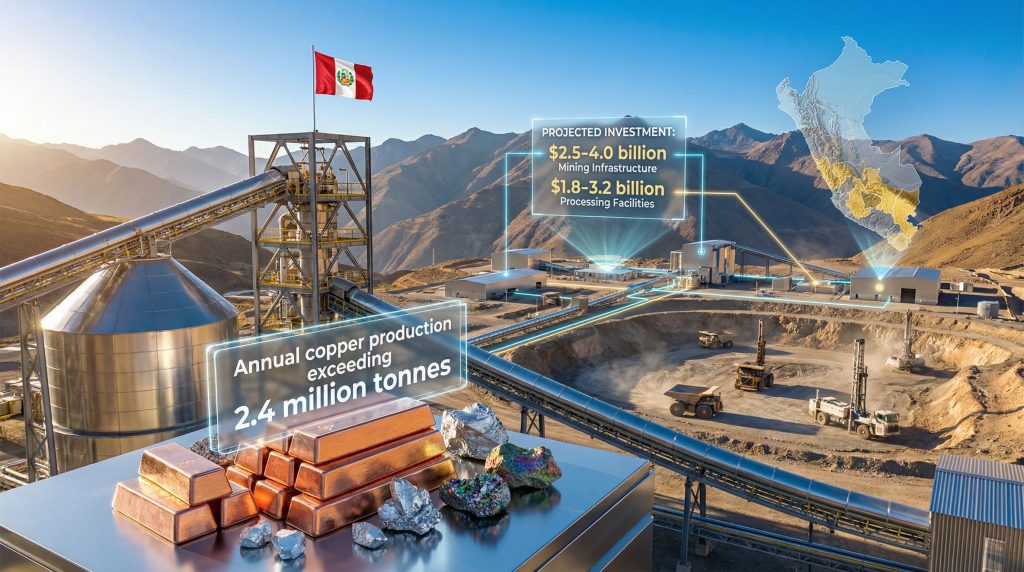
- Copper Production: Peru ranks as the world's second-largest copper producer with annual output exceeding 2.2 million tonnes, representing approximately 12% of global production
- Silver Resources: Peru maintains the second-largest global silver production at approximately 115,000-120,000 tonnes annually, trailing only Mexico
- Zinc and Lead: Peru holds the third position globally in zinc production with 1.3 million tonnes annually and ranks fourth in lead production
- Lithium Potential: Southern Peru contains significant lithium resources concentrated in high-altitude salt flats, with identified resources of approximately 3.0 million tonnes of lithium carbonate equivalent
The geological advantages extend to ore quality and extraction accessibility. Peru's copper deposits typically feature higher grade concentrations compared to many international competitors, while the established mining infrastructure provides immediate scalability for expanded operations. However, lithium development remains in early stages, with no operational commercial production as of late 2024.
Peru's mineral processing capabilities present both opportunities and limitations for US partnership development. While the nation excels in primary extraction, approximately 80% of copper concentrate requires processing outside Peru, creating dependency relationships that bilateral agreements could potentially address through technology transfer and infrastructure investment.
Geopolitical Positioning in the Americas Mining Landscape
Peru's geographic location provides strategic advantages for US supply chain diversification efforts, particularly when compared to African or Asian alternatives. The nation offers Pacific port access through facilities at Callao, Matarani, and Ilo, enabling direct shipping routes to US West Coast ports with transit times of 10-14 days.
The existing Peru-US Free Trade Agreement, operational since 2009, establishes preferential tariff structures that enhance economic viability for mineral trade expansion. This regulatory foundation provides competitive advantages over suppliers from non-FTA nations, reducing transaction costs and administrative barriers for bilateral commerce.
Furthermore, Peru's democratic governance structure and established rule of law frameworks align with US strategic preferences for reliable long-term partnerships. Unlike some resource-rich nations with volatile political environments, Peru maintains consistent mining policies and foreign investment protections that support sustainable partnership development.
How Does This Agreement Address Current Supply Chain Vulnerabilities?
Reducing Single-Source Dependencies
The Peru US critical minerals agreement directly targets vulnerabilities in US supply chains that currently exhibit dangerous concentration risks. According to US Geological Survey data, the United States imports 100% of finished rare earth magnets, with China controlling approximately 85% of global rare earth processing capacity.
Current US Critical Minerals Dependencies:
| Mineral Category | Import Dependency | Primary Sources | Strategic Risk Level |
|---|---|---|---|
| Lithium (refined) | 70-80% | Chile, Argentina, China | High |
| Cobalt | 100% | DRC, China (processing) | Critical |
| Rare Earth Elements | 100% (finished products) | China (85% processing) | Critical |
| Copper (processed) | 60% | Chile, Peru, China (refining) | Moderate-High |
Peru's role in supply chain diversification focuses primarily on copper and silver production, with potential lithium development offering future alternatives to current South American suppliers. The partnership addresses processing bottlenecks by potentially establishing refining capabilities within Peru, reducing reliance on Chinese processing facilities.
The strategic value extends beyond raw material access to encompass technological sovereignty in mineral processing. By developing processing capabilities in allied nations, the US reduces exposure to supply interruptions that could affect critical infrastructure projects and defense applications.
Technology Transfer and Infrastructure Development Framework
Advanced mining technology represents a cornerstone of the Peru US critical minerals agreement, with potential applications spanning extraction efficiency, environmental monitoring, and processing optimisation. The partnership framework emphasises knowledge sharing arrangements that could transform Peru's mining sector capabilities while securing US strategic interests.
Technology Integration Opportunities:
- Automated Extraction Systems: Implementation of autonomous mining equipment reducing labour requirements while increasing precision and safety
- Advanced Ore Processing: Development of in-country refining capabilities using US technology, particularly for copper concentrate processing
- Environmental Monitoring: Real-time tracking systems for water usage, air quality, and ecosystem impact assessment
- Supply Chain Transparency: Blockchain-based tracking systems ensuring responsible sourcing verification
The infrastructure development component addresses Peru's logistical challenges, particularly for high-altitude mining operations where lithium deposits are located at 4,000-4,500 meters elevation. These investments could include transportation networks, power generation facilities, and water management systems essential for scaled operations.
What Are the Economic Implications for Both Nations?
Investment Flow Projections and Market Impact
The economic implications of expanded Peru US critical minerals cooperation extend beyond traditional commodity trading relationships to encompass comprehensive infrastructure development and technology transfer arrangements. Investment flows could potentially reach billions of dollars across multiple categories over the next decade.
Projected Investment Categories:
| Investment Sector | Estimated Range (USD) | Implementation Timeline | Primary Beneficiaries |
|---|---|---|---|
| Mining Infrastructure | $2.5-4.0 billion | 2025-2030 | Equipment manufacturers, contractors |
| Processing Facilities | $1.8-3.2 billion | 2026-2032 | Technology providers, skilled workforce |
| Transportation Networks | $800M-1.5 billion | 2025-2028 | Logistics companies, port authorities |
| Environmental Systems | $400-700 million | 2025-2027 | Environmental technology firms |
Note: These projections represent potential investment scenarios based on similar bilateral agreements and industry analysis. Actual investment levels will depend on formal agreement implementation and market conditions.
For the United States, the partnership offers supply chain resilience worth potentially tens of billions in avoided disruption costs. Critical minerals shortages could impact $2.8 trillion in US economic activity annually, according to Department of Energy assessments, making diversification investments highly cost-effective from a risk mitigation perspective.
In addition, Peru stands to benefit through foreign currency inflows, technology acquisition, and employment generation across mining and related industries. The multiplier effects could support economic diversification efforts while maintaining Peru's position as a leading minerals exporter.
Trade Balance and Export Revenue Transformation
Peru's critical minerals exports to the United States could potentially double within the next decade under an expanded partnership framework, fundamentally altering bilateral trade dynamics. Current Peru-US trade relationships already feature significant mineral components, with copper representing a substantial portion of Peruvian exports.
The transformation extends beyond volume increases to include value-added processing that could substantially increase per-unit revenues for Peruvian exports. Rather than exporting raw concentrates, Peru could develop refined products commanding premium pricing in US markets.
Export revenue enhancement depends critically on developing processing capabilities within Peru rather than continuing reliance on concentrate exports. This shift requires substantial capital investment in smelting and refining infrastructure, representing a key component of potential US-Peru cooperation agreements.
How Will This Partnership Navigate Environmental and Social Governance Challenges?
Sustainable Mining Standards Integration
Environmental stewardship represents a fundamental component of any sustainable Peru US critical minerals agreement, particularly given Peru's sensitive Andean ecosystems and water resource constraints. The partnership framework must address environmental challenges while maintaining operational viability for large-scale mineral extraction.
Critical Environmental Considerations:
- Water Management: High-altitude mining operations require carefully managed water resources, particularly for lithium brine extraction that consumes approximately 500,000 gallons per tonne of lithium produced
- Biodiversity Protection: Mining operations must navigate sensitive habitats including protected areas and migration corridors
- Carbon Footprint Reduction: Integration of renewable energy sources and emission reduction technologies
- Waste Management: Development of comprehensive tailings management and mineral processing waste protocols
Peru's existing environmental regulations provide a foundation for enhanced standards implementation, though enforcement capabilities vary across different regions. The partnership could strengthen regulatory frameworks through technology transfer and capacity building initiatives.
However, international ESG standards increasingly influence mining project financing and market access, making environmental compliance essential for commercial viability. The Peru US critical minerals agreement could establish benchmark practices for responsible extraction throughout Latin America.
Indigenous Rights and Community Engagement Protocols
Indigenous communities hold traditional territories overlapping with significant mineral deposits throughout Peru, creating complex stakeholder relationships that require careful navigation. Successful partnership implementation depends on developing inclusive consultation processes and benefit-sharing mechanisms that respect indigenous rights while enabling development projects.
Peru's mining sector has experienced community conflicts related to environmental concerns, benefit distribution, and consultation processes. The US partnership provides opportunities to implement enhanced community engagement standards that could serve as models for broader industry application.
Community Engagement Framework Elements:
- Prior Consultation: Implementation of robust consultation processes meeting international standards
- Benefit Sharing: Development of mechanisms ensuring local communities receive tangible benefits from mining operations
- Environmental Monitoring: Community participation in environmental oversight and monitoring programs
- Capacity Building: Educational and training programs supporting local economic development
Effective indigenous engagement requires long-term relationship building rather than transactional approaches. The partnership framework should emphasise sustained dialogue and collaborative development approaches that build trust and mutual understanding.
What Competitive Dynamics Will This Agreement Create?
China's Response Strategy and Market Positioning
China maintains substantial existing investments throughout Peru's mining sector, creating complex dynamics as the United States seeks expanded influence through critical minerals partnerships. Chinese companies operate significant copper mines and processing facilities, while Chinese financial institutions provide substantial mining sector funding.
The competitive landscape requires careful navigation to avoid unnecessarily antagonising existing relationships while building new strategic partnerships. Peru benefits from maintaining positive relationships with multiple major economies rather than forcing exclusive arrangements that could limit options.
Consequently, China's likely response strategies include enhanced investment offerings, improved terms for existing partnerships, and potential development of processing capabilities that could compete directly with US-supported infrastructure projects. This competition could ultimately benefit Peru through improved terms and accelerated development.
Strategic Competitive Factors:
- Processing Capacity: China currently controls significant global refining capabilities, while US partnerships focus on diversifying processing locations
- Financial Terms: Competition may drive more favourable financing arrangements for Peruvian development projects
- Technology Transfer: Multiple competing technology offerings could accelerate Peru's mining sector modernisation
- Market Access: Diversified partnerships provide Peru with multiple export destination options
Regional Competition and Alliance Building
The Peru US critical minerals agreement may catalyse similar partnerships throughout Latin America, as countries evaluate opportunities to leverage their geological endowments for strategic partnerships. Chile, Argentina, and Bolivia all possess significant critical minerals resources that could support bilateral agreements.
Regional competition could drive innovation in partnership frameworks while encouraging best practices in environmental and social governance. Countries may compete to offer the most attractive investment climates and regulatory frameworks for critical minerals development. For instance, detailed Argentina lithium insights reveal competitive advantages that Peru must address in its own development strategy.
Similarly, the Argentina copper sector offers potential competition for Peru's established copper processing capabilities, providing benchmarks for Peru's development aspirations. This regional dynamic encourages continuous improvement in operational efficiency and environmental performance.
The broader implications extend to hemispheric security and economic integration, with critical minerals partnerships potentially strengthening overall US-Latin America relationships while reducing dependence on extra-hemispheric suppliers.
The next major ASX story will hit our subscribers first
How Will Technology and Innovation Drive Partnership Success?
Advanced Extraction Technologies
Technological innovation represents a fundamental driver of Peru US critical minerals partnership success, with advanced extraction methods offering opportunities to increase efficiency while reducing environmental impact. Modern mining technologies enable operations in challenging environments while maintaining safety and environmental standards.
Emerging Technology Applications:
- Autonomous Mining Equipment: Remote-controlled and autonomous vehicles reducing human exposure to hazardous conditions while increasing operational precision
- Advanced Ore Processing: Improved separation and concentration technologies maximising resource recovery from existing deposits
- Environmental Monitoring Systems: Real-time sensor networks providing continuous ecosystem impact assessment
- Energy Efficiency: Integration of renewable energy sources and waste heat recovery systems
Peru's high-altitude mining environments present unique technical challenges that drive innovation in equipment design and operational procedures. These innovations could have broader applications in challenging mining environments worldwide, creating intellectual property value for partnership participants.
The technology transfer component enables Peru to develop domestic expertise in advanced mining methods while providing US companies with access to diverse operational environments for technology testing and refinement.
Research and Development Collaboration
Joint research initiatives between US universities and Peruvian institutions could accelerate innovation in critical minerals processing and application technologies. These collaborations provide opportunities for knowledge exchange while developing practical solutions for specific operational challenges.
Research Priority Areas:
- Lithium Extraction Optimisation: Development of more efficient brine processing methods for high-altitude environments
- Environmental Impact Mitigation: Research into ecosystem protection and restoration methods for mining areas
- Materials Science: Investigation of mineral processing innovations and application development
- Sustainable Technologies: Integration of renewable energy and circular economy principles in mining operations
Academic collaboration provides long-term foundation for partnership sustainability while developing human capital capable of supporting expanded mining operations. This educational component ensures continued innovation and knowledge transfer beyond initial infrastructure development.
The research collaboration extends to geological exploration technologies that could identify additional mineral deposits, expanding the resource base available for future partnership development.
What Are the Long-term Strategic Scenarios for This Partnership?
Accelerated Integration Scenario
Under optimal conditions, the Peru US critical minerals agreement could transform Peru into a primary supplier for US clean energy infrastructure development within the next decade. This scenario assumes successful implementation of processing facilities, infrastructure development, and technology transfer programs.
Success Indicators:
- Peru supplies 15-20% of US copper requirements by 2030
- Operational lithium production facilities contributing to US battery supply chains
- Established in-country processing capabilities reducing concentrate export dependency
- Enhanced environmental and social governance standards serving as regional models
This scenario requires sustained political support in both countries, successful community engagement, and competitive project economics compared to alternative suppliers. Success depends on maintaining partnership momentum through potential political transitions and market volatility.
Gradual Development Scenario
A more conservative trajectory assumes steady but measured progress in partnership implementation, with gradual expansion of mining operations and selective technology transfer. This scenario accounts for potential political, environmental, or economic challenges that could slow development.
Under this pathway, Peru maintains its current position as a significant US copper supplier while developing modest lithium production capabilities and selective processing infrastructure. Progress occurs incrementally with careful attention to environmental and community considerations. Lithium market analysis suggests this measured approach may align with global market conditions and demand projections.
Competitive Disruption Scenario
External factors, including enhanced Chinese investment offerings or significant technological breakthroughs in alternative suppliers, could substantially alter partnership dynamics. This scenario considers potential market disruptions that might reduce the strategic value proposition.
Alternative disruption sources include major geological discoveries in other regions, breakthrough technologies reducing critical minerals requirements, or geopolitical developments affecting bilateral relationships. Partnership frameworks must remain flexible to adapt to changing circumstances.
Measuring Success: Key Performance Indicators for Partnership Evaluation
Quantitative Metrics
Partnership success requires measurable indicators spanning economic, operational, and strategic objectives. These metrics provide objective assessments of progress while identifying areas requiring additional attention or resource allocation.
Primary Performance Indicators:
- Export Volume Growth: Annual percentage increases in critical minerals exports to US markets
- Investment Flow Tracking: Foreign direct investment levels in Peruvian mining sector from US sources
- Processing Capacity Development: Measurement of in-country processing capabilities as percentage of raw material production
- Employment Generation: Job creation in mining and related industries, with emphasis on skilled position development
Environmental and Social Metrics:
- Environmental Compliance Rates: Adherence to enhanced environmental standards across partnership operations
- Community Satisfaction Indices: Regular assessment of local community perspectives on mining operations and benefit distribution
- Water and Energy Efficiency: Resource consumption per unit of mineral production compared to industry benchmarks
- Safety Performance: Accident rates and safety protocol compliance across partnership operations
Qualitative Assessments
Beyond quantitative measures, partnership success depends on qualitative factors that influence long-term sustainability and stakeholder satisfaction. These assessments provide context for numerical performance while identifying relationship factors affecting partnership effectiveness.
Strategic Relationship Quality:
- Government-to-Government Cooperation: Assessment of diplomatic relationship strength and policy coordination effectiveness
- Private Sector Engagement: Evaluation of commercial relationship development and investment confidence levels
- Academic and Technical Collaboration: Progress in knowledge transfer and joint research initiative effectiveness
- Community Integration: Success in building positive relationships with indigenous and local communities
Regular evaluation cycles should incorporate stakeholder feedback from government agencies, private sector participants, academic institutions, and community organisations to ensure comprehensive perspective integration. Furthermore, US-Peru diplomatic cooperation frameworks provide established mechanisms for ongoing partnership assessment and adjustment.
Disclaimer: This analysis is based on publicly available information and industry assessments. Actual partnership developments, investment levels, and implementation timelines may differ significantly from projections presented. The Peru US critical minerals agreement represents early-stage diplomatic discussions, and formal implementation details remain to be determined through ongoing negotiations. Market conditions, political factors, and technological developments could substantially alter projected outcomes. Readers should verify current agreement status and specific terms through official government sources before making investment or strategic decisions.
Ready to Invest in the Next Major Mineral Discovery?
Discovery Alert instantly alerts investors to significant ASX mineral discoveries using its proprietary Discovery IQ model, turning complex mineral data into actionable insights. Understand why historic discoveries can generate substantial returns by visiting Discovery Alert's dedicated discoveries page, and begin your 30-day free trial today to position yourself ahead of the market.