May 22, 2026
Deep-Sea Resource Extraction: Analyzing Global Strategic Implications Through Risk Assessment Frameworks
The intersection of environmental governance and resource security represents one of the most complex strategic challenges facing developed economies today. Recent policy developments in Scandinavian resource extraction demonstrate how democratic processes can fundamentally reshape global supply chain architectures, particularly when Norway abandons deep sea mining plans due to environmental considerations overriding immediate economic opportunities. This analytical framework examines how precautionary environmental policies create cascading effects across international mineral markets, technology development timelines, and geopolitical resource competition dynamics.
When big ASX news breaks, our subscribers know first
Strategic Policy Reversals in Nordic Resource Management
Parliamentary Coalition Dynamics and Resource Decision-Making
Nordic political systems demonstrate unique vulnerabilities when minority governments depend on environmental party support for legislative majorities. The recent suspension of deep-sea mining licensing in Norwegian waters illustrates how small coalition partners can exert disproportionate influence over national resource strategies. This policy postponement, extending until 2026, emerged from negotiations between Norway's Labor government and the Socialist Left Party, whose environmental demands became the prerequisite for continued parliamentary support.
The timing proves particularly significant given Norway's parliamentary elections scheduled for September 2025. Political analysts note that electoral considerations often intensify coalition bargaining power, as governing parties seek to maintain stability during critical pre-election periods. Consequently, this creates strategic windows where environmental parties can extract maximum policy concessions, directly impacting the deep‑sea mining controversy unfolding globally.
Key Parliamentary Dynamics:
- Coalition dependency creating environmental party leverage
- Electoral timeline pressures affecting long-term resource planning
- Single-issue politics influencing comprehensive national strategies
- Democratic process integration complicating resource extraction timelines
Critical Minerals Portfolio at Risk
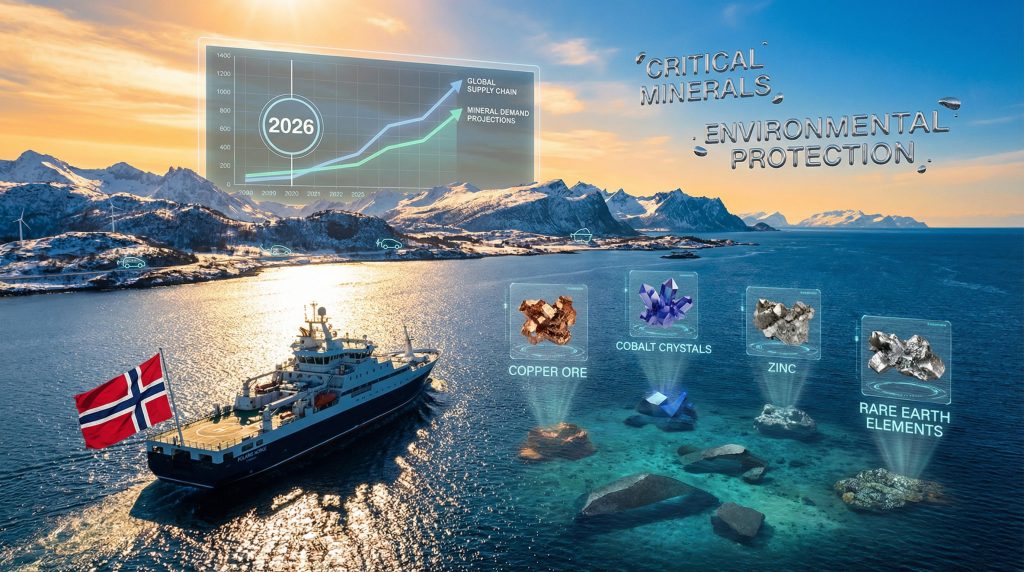
The suspended Norwegian licensing round targeted minerals essential for global technology transition pathways. These resources include copper for electric vehicle manufacturing and renewable energy infrastructure, cobalt for advanced battery cathodes, zinc for galvanisation processes, and rare earth elements critical for wind turbine construction and electric motor systems.
Furthermore, market intelligence suggests that when Norway abandons deep sea mining plans, it occurs precisely when global demand for these materials accelerates due to renewable energy deployment targets and electric vehicle adoption curves. This timing mismatch creates potential supply chain vulnerabilities for European technology manufacturers, particularly affecting energy transition security.
| Mineral Category | Technology Applications | Supply Concentration Risks |
|---|---|---|
| Copper | EV infrastructure, renewable energy systems | Projected supply deficits approaching 2030 |
| Cobalt | Battery technology, energy storage systems | Approximately 70% sourced from Democratic Republic of Congo |
| Zinc | Industrial galvanisation, emerging battery technologies | Limited high-grade reserve availability globally |
| Rare Earth Elements | Wind energy systems, electric motor manufacturing | Chinese processing control exceeding 80% globally |
Global Supply Chain Vulnerability Assessment
Alternative Resource Sourcing Scenarios
The Norwegian policy reversal generates three distinct strategic pathways for global critical mineral supply chains. Each scenario carries different risk profiles, cost implications, and timeline considerations for technology development programmes.
Scenario One: Terrestrial Mining Intensification
Enhanced pressure on existing land-based extraction operations could accelerate environmental degradation per unit of mineral extracted whilst potentially creating supply bottlenecks. Current terrestrial mining operations face increasing environmental scrutiny and community resistance, limiting expansion potential in developed economies. However, advances in mining industry innovation may help mitigate some of these challenges.
Scenario Two: Jurisdictional Arbitrage Acceleration
Alternative seabed mining jurisdictions, particularly International Seabed Authority licensing areas and Pacific nodule fields, may experience increased investment flows. However, these alternative locations often involve more complex regulatory frameworks and higher technical risks compared to Norwegian territorial waters.
Scenario Three: Technology Substitution Advancement
Environmental constraints on traditional mining may catalyse faster development of mineral-efficient technologies, including alternative battery chemistries, enhanced recycling processes, and circular economy models. Innovation timelines for these alternatives typically extend 5-10 years for commercial deployment.
European Energy Security Implications
Recent data indicates European Union gas import dependency reaches 85% of total consumption, compared to 50% domestic production achieved during the 1990s peak. This dependency pattern extends beyond natural gas to critical minerals, creating compound strategic vulnerabilities that mirror the US–China trade war impact on global supply chains.
Current projections suggest the United States will supply approximately 70% of Europe's LNG requirements during 2026-2029, representing an increase from 58% in 2025. The EU has committed €225 billion for LNG imports over three years, including €100 billion specifically for US LNG, with American suppliers commanding premium pricing compared to alternative sources.
Supply Chain Concentration Metrics:
- US LNG share of total EU gas consumption: 16.5%
- Winter import requirements: 160 additional LNG cargoes
- Annual tanker volume increase: 820 vessels from 660 (24% growth)
- LNG proportion of total EU gas supply: 48%
This data reveals how European economies have substituted one form of import dependency (Russian pipeline gas) with another (American LNG), whilst simultaneously constraining domestic mineral extraction through environmental policies.
Geopolitical Resource Competition Analysis
Chinese Strategic Positioning Enhancement
Chinese control over rare earth processing infrastructure (approximately 85-90% of global capacity) provides Beijing with leverage over supply chains regardless of primary extraction locations. The Norwegian policy reversal strengthens this position by reducing potential alternative supply sources from allied nations.
In addition, China's deep-sea mining capabilities continue expanding through state-owned enterprises and International Seabed Authority licensing applications. According to Greenpeace International, environmental organisations have successfully challenged similar deep-sea mining initiatives globally, creating asymmetric advantages when Western nations implement environmental restrictions on their own resource extraction activities.
European Strategic Autonomy Challenges
The Institute for Energy Economics and Financial Analysis argues that continued dependency on imported energy products could compromise EU climate targets, specifically the 90% net greenhouse gas emissions reduction by 2040 compared to 1990 levels. Their analysis suggests renewable energy costs have declined significantly, with utility-scale solar photovoltaic costs halving over the past decade.
However, renewable energy deployment requires substantial critical mineral inputs during manufacturing phases, creating a paradox where environmental protection measures for mining could impede renewable energy transition timelines. For instance, The Guardian reports that environmental groups view Norway's decision as crucial for protecting Arctic ecosystems from irreversible damage.
European Union Resource Dependencies:
- Critical mineral import reliance exceeding 80% for most categories
- Alternative supplier development timelines extending 5-15 years
- Technology substitution requiring substantial R&D investment
- Circular economy systems operating below commercial scale
Market Structure Evolution and Investment Reallocation
Capital Flow Restructuring Patterns
The Norwegian decision triggers strategic investment reallocation across multiple sectors. Terrestrial mining operations anticipate increased capital allocation as investors seek alternative resource access points. Recycling technology development attracts enhanced venture capital interest as supply constraints make secondary material recovery more economically viable.
Alternative battery chemistry research receives accelerated funding as mineral supply uncertainties motivate technology diversification strategies. Sodium-ion, solid-state, and other mineral-efficient battery technologies gain investor attention as hedge positions against supply chain disruptions.
| Investment Category | Expected Capital Shift | Implementation Timeline |
|---|---|---|
| Terrestrial mining expansion | 15-20% allocation increase | 2025-2027 |
| Recycling technology advancement | 25% venture capital growth | 2025-2026 |
| Alternative battery chemistry R&D | 30% research investment boost | 2025-2030 |
| Non-Norwegian seabed mining | 10% regional investment decline | 2025-2026 |
Mining Industry Strategic Responses
Global mining companies face three primary adaptation strategies responding to increased environmental governance pressures. Portfolio diversification involves spreading operations across multiple jurisdictions to reduce single-country policy risks. Technology innovation acceleration focuses on developing reduced-impact extraction methods and enhanced environmental monitoring capabilities.
Moreover, stakeholder engagement enhancement includes proactive environmental impact assessment, comprehensive community consultation processes, and transparent environmental data reporting to preempt policy restrictions. These approaches align with growing mine reclamation innovation practices worldwide.
Industry Adaptation Mechanisms:
- Geographic risk distribution across jurisdictions
- Environmental technology investment acceleration
- Stakeholder communication process enhancement
- Regulatory compliance system strengthening
Environmental Governance Precedent Analysis
Precautionary Principle Implementation
When Norway abandons deep sea mining plans, it demonstrates sophisticated application of environmental precautionary principles in resource extraction decisions. The decision framework prioritises scientific uncertainty acknowledgement over economic opportunity maximisation, establishing precedents for other developed economies facing similar resource extraction decisions.
Key precedent elements include using scientific uncertainty as justification for policy postponement, elevating environmental protection above immediate economic benefits, requiring comprehensive stakeholder consultation, and integrating democratic processes into long-term resource planning.
International Regulatory Influence Potential
The Norwegian approach may influence European Union policy alignment, particularly regarding deep-sea mining regulations. UN International Seabed Authority regulations could strengthen environmental assessment requirements, whilst bilateral trade agreements may incorporate enhanced environmental clauses.
Regulatory Evolution Indicators:
- Scientific uncertainty threshold modifications
- Irreversibility risk assessment integration
- Stakeholder consultation requirement enhancement
- Environmental party influence normalisation
The next major ASX story will hit our subscribers first
Long-Term Strategic Implications for Global Resource Security
Technology Innovation Acceleration Requirements
Environmental constraints on traditional mining create imperative conditions for technological innovation acceleration. Mineral-efficient manufacturing processes, enhanced recycling systems, and alternative material chemistry development become essential for maintaining technology advancement timelines without compromising environmental objectives.
Current recycling rates for critical minerals remain below 10% for most categories, indicating substantial potential for circular economy development. However, recycling infrastructure requires significant capital investment and technological advancement to achieve commercial scale operations.
Democratic Process Integration in Resource Policy
The Norwegian case illustrates how democratic governance systems can significantly impact national resource strategies through coalition politics dynamics. Small environmental parties wielding disproportionate influence, single-issue politics affecting comprehensive resource planning, and electoral cycle vulnerability in long-term strategic decisions represent systemic characteristics of democratic resource governance.
Democratic Governance Impact Factors:
- Coalition negotiation leverage mechanisms
- Electoral timeline influence on policy decisions
- Environmental party strategic positioning
- Stakeholder balance recalibration processes
This analytical framework reveals fundamental tensions between immediate resource security requirements and long-term environmental sustainability objectives. The decision where Norway abandons deep sea mining plans demonstrates how environmental precautionary principles increasingly supersede economic opportunity considerations in developed economy resource policies.
The strategic implications extend beyond Norwegian territorial waters, potentially reshaping global competition dynamics for critical minerals whilst establishing new precedents for environmental governance in resource extraction decisions. As technology transition timelines accelerate globally, the tension between resource access and environmental protection will likely intensify, requiring sophisticated policy frameworks balancing competing strategic objectives.
Strategic Assessment Conclusions:
- Environmental uncertainty increasingly outweighs economic opportunity in developed economies
- Critical mineral supply chains demonstrate continued vulnerability to political decision-making
- Green technology transition timelines face potential delays from resource access constraints
- Innovation acceleration becomes essential for resource security maintenance
- Democratic governance processes create systematic impacts on national resource strategies
The Norwegian precedent suggests that successful resource security strategies must integrate environmental governance considerations from initial planning stages rather than treating them as secondary constraints. This approach may prove essential for maintaining social licence for resource extraction whilst meeting technology transition material requirements in democratic societies.
Ready to Capitalise on Mineral Discovery Opportunities?
Discovery Alert's proprietary Discovery IQ model delivers real-time notifications on significant ASX mineral discoveries, helping investors identify actionable opportunities before the broader market responds. Explore how historic discoveries have generated substantial returns by visiting Discovery Alert's dedicated discoveries page and begin your 30-day free trial today to secure your competitive advantage.