May 22, 2026
Economic Security Through Strategic Mineral Independence
Critical minerals form the foundation of modern technological infrastructure, yet their definition extends far beyond simple geological resources. These materials represent strategic assets whose availability directly impacts national competitiveness, industrial capacity, and technological advancement. The big pivot critical minerals strategy has intensified as geopolitical tensions reshape global trade patterns and supply chain dependencies.
Within North American resource security frameworks, jurisdictions compete to establish comprehensive domestic capabilities spanning extraction, processing, and manufacturing. Ontario's position within this continental ecosystem reflects broader shifts toward resource nationalism and supply chain regionalisation. The province hosts 40 percent of all publicly listed mining companies worldwide through the TSX and TSX-V exchanges, representing combined market value exceeding $1.1 trillion as of 2025.
The economic security implications extend beyond immediate supply availability to encompass technological sovereignty and industrial resilience. Critical minerals enable advanced manufacturing processes, defence technologies, and clean energy systems that define economic competitiveness in the 21st century. Nations lacking secure access to these materials face constraints on technological development and manufacturing capacity that compound over time.
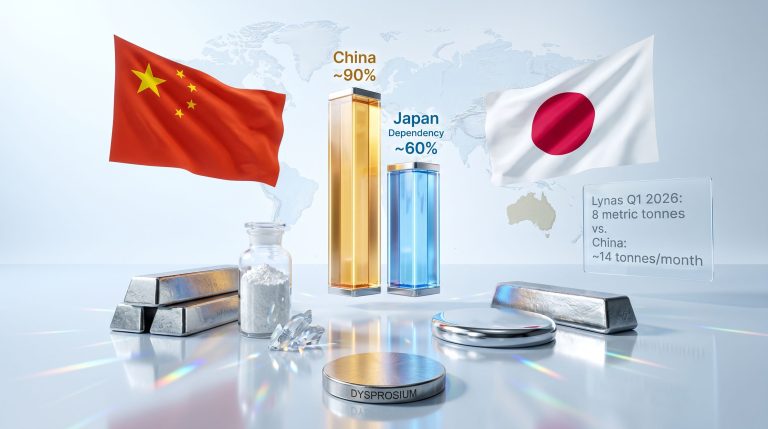
Furthermore, supply chain risk assessment frameworks reveal complex interdependencies that traditional economic models often underestimate. Geopolitical dependency analysis across key mineral categories demonstrates how concentration risks amplify economic vulnerabilities during periods of international tension or trade disruption.
When big ASX news breaks, our subscribers know first
Comprehensive Risk Mitigation Through Supply Chain Diversification
Trade route vulnerabilities and alternative sourcing strategies have become central considerations for economic planners seeking to reduce exposure to supply disruptions. The Ontario critical minerals strategy addresses these vulnerabilities through systematic diversification across 35 critical mineral categories, representing a substantial expansion from the original framework established in 2022.
Economic impact modelling of supply disruptions reveals cascading effects that extend far beyond immediate material shortages. Manufacturing sectors dependent on critical minerals face production delays, cost increases, and competitive disadvantages when supply chains experience disruption. Alternative sourcing strategies must therefore balance cost considerations against supply security and reliability factors.
Investment outcomes from Ontario's updated strategy demonstrate measurable progress in reducing foreign dependencies. The provincial approach aligns with broader trends in energy transition & security considerations that shape modern resource planning.
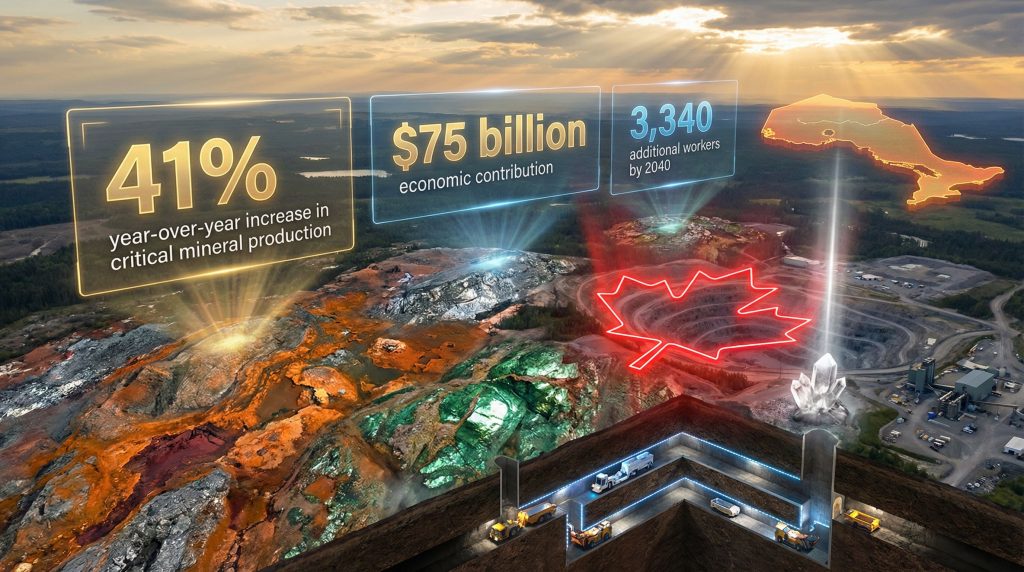
- 41% year-over-year increase in critical mineral production (2022-2026)
- C$328 million in exploration expenditures supporting pipeline development
- $75 billion economic contribution from three designated nation-building projects
- 5,000+ new jobs created across these strategic projects
The 'One Project, One Process' framework has achieved 50% reduction targets in government review timelines, positioning Ontario among the top-2 globally for permitting speed and investment attraction efficiency. This regulatory modernisation reflects broader trends toward streamlined approval processes that balance environmental protection with economic development imperatives.
Consequently, Canada's Critical Minerals Strategy provides the federal framework supporting provincial initiatives while maintaining alignment with continental supply security objectives.
Strategic Mineral Portfolio Expansion and Defensive Positioning
Ontario's expansion of its critical minerals list to include high-purity iron and aluminium represents strategic positioning against evolving trade protectionism and supply chain weaponisation. This expansion addresses vulnerabilities in advanced manufacturing sectors including defence, automotive, and aerospace industries that depend on specialised material specifications.
High-purity iron supports the transition to green steel manufacturing using electric arc furnace technology, addressing both environmental objectives and supply security concerns. The automotive and aerospace sectors require aluminium specifications that differ substantially from commodity-grade materials, creating strategic vulnerabilities when supply chains concentrate in geopolitically unstable regions.
Critical Mineral Strategic Applications Analysis
| Mineral Category | Strategic Applications | Supply Risk Level | Processing Capacity |
|---|---|---|---|
| High-Purity Iron | Green steel production, advanced manufacturing | Medium | Expanding infrastructure |
| Aluminium | Aerospace/automotive components | Low-Medium | Established facilities |
| Battery Minerals | EV manufacturing, energy storage | High | Development phase |
| Defence Materials | Critical infrastructure, military applications | High | Limited domestic capacity |
Trade protection mechanisms implemented through the expanded mineral list create defensive positioning against potential supply disruptions or economic coercion. Domestic value chain development reduces vulnerability to foreign policy decisions that could restrict access to essential materials.
However, strategic partnership frameworks with allied nations provide backup sourcing options while maintaining supply security benefits. These partnerships require careful balance between cooperation and independent capability development to avoid creating new dependencies that replicate existing vulnerabilities.
Financial Architecture Supporting Strategic Development
Investment mechanisms supporting Ontario's critical minerals development demonstrate sophisticated risk-sharing approaches that mobilise private capital while maintaining public strategic objectives. The financial framework combines direct government investment with incentive structures that encourage private sector participation in high-risk exploration and development activities.
This approach reflects broader trends in mining investment funding that seek to balance public strategic interests with private sector efficiency and innovation.
Funding Allocation Structure
Primary Investment Vehicles:
- $500 million Critical Minerals Processing Fund – Supporting downstream value-add capabilities
- $25 million Critical Minerals Innovation Fund – Technology advancement and processing breakthroughs
- $24 million Ontario Junior Exploration Program expansion – Supporting over 213 projects
- $70 million Indigenous Participation Fund – Collaborative development frameworks
Performance metrics demonstrate the effectiveness of these financial mechanisms in attracting complementary private investment. The three nation-building projects receiving strategic designation have leveraged government support to generate $75 billion in economic contribution, representing substantial private sector capital mobilisation beyond initial public investment.
Risk-sharing mechanisms for exploration ventures address the high-risk nature of mineral development while maintaining appropriate public oversight. In addition, technology development incentives support processing innovation that adds value to raw mineral extraction and reduces dependence on foreign processing capabilities.
Market access facilitation programmes connect domestic producers with end-users in manufacturing sectors, creating integrated supply chains that enhance supply security while supporting economic development objectives. These programmes address market failures that can prevent efficient matching between mineral suppliers and industrial consumers.
The Ontario government recently launched a $500 million fund specifically targeting processing capabilities, demonstrating commitment to value-added development rather than raw material export.
Indigenous Partnership Integration and Revenue Distribution
Collaborative framework development with Indigenous communities reflects both legal requirements and strategic necessity for sustainable resource development. The $70 million Indigenous Participation Fund creates mechanisms for meaningful economic participation beyond traditional consultation processes.
Revenue-sharing agreement structures have distributed $360 million since 2018, demonstrating operational effectiveness of benefit-sharing models. These agreements create long-term economic relationships that align community interests with resource development objectives while respecting Indigenous rights and traditional territories.
Traditional knowledge integration protocols recognise Indigenous expertise in environmental stewardship and sustainable resource management. This integration creates opportunities for enhanced environmental monitoring and adaptive management approaches that improve project outcomes while supporting reconciliation objectives.
Furthermore, consultation and consent mechanisms extend beyond minimum legal requirements to create genuine partnership opportunities. Early engagement processes in project development allow Indigenous communities to influence project design and implementation rather than simply responding to predetermined proposals.
Workforce Development Challenges and Demographic Transitions
Labour market analysis reveals significant workforce development challenges that could constrain strategic objectives despite successful investment attraction and project development. Ontario's mining sector currently supports 28,000 direct jobs and 46,000 indirect positions, representing substantial economic activity concentrated in northern communities.
Projected labour shortage analysis identifies 2,960 job vacancies by 2040, representing a 14% vacancy rate that could limit production capacity and project development. This shortage reflects broader demographic trends including retirement of experienced workers and limited attraction of younger workers to mining careers.
These challenges mirror global patterns in mining industry evolution where technological advancement must balance with workforce development requirements.
Workforce Development Investment
Training Infrastructure:
- Regional Future Workforce Critical Minerals Pilot Program – Addressing skills gaps in northern communities
- $300,000 funding for student engagement initiatives – Building pipeline of qualified workers
- Skills certification and mobility programmes – Supporting worker movement between projects
Retention and attraction strategies must address quality of life challenges in remote mining communities while providing competitive compensation frameworks. Career progression pathways create opportunities for skills development and advancement that encourage long-term commitment to the sector.
The skills gap identification process reveals demand for specialised expertise in emerging technologies including green steel production, advanced mineral processing, and environmental monitoring. Training programme development must balance immediate workforce needs against longer-term technological evolution in mining and processing operations.
The next major ASX story will hit our subscribers first
Global Competitive Positioning and Investment Climate
Market position analysis demonstrates Ontario's competitive advantages in attracting international mining investment despite global competition for capital and projects. The province's hosting of 40% of global publicly listed mining companies creates financial market expertise and capital access advantages that smaller jurisdictions cannot replicate.
Regulatory efficiency improvements through the 'One Project, One Process' framework position Ontario competitively against established mining jurisdictions including Australia, Chile, and other Canadian provinces. However, maintaining this competitive position requires continuous improvement as other jurisdictions implement their own modernisation efforts.
This competitive dynamic extends beyond North America, as European initiatives such as the european crm facility create alternative supply chain relationships that could affect global mineral flows and pricing.
International Competitive Benchmarking
| Jurisdiction | Permitting Speed | Investment Climate | Resource Quality | Market Access |
|---|---|---|---|---|
| Ontario | Top 2 globally | Strong regulatory framework | High geological diversity | Excellent North American access |
| Western Australia | Moderate timelines | Strong but complex | High quality resources | Good Asian market access |
| Chile | Slow permitting | Moderate, political risks | High copper reserves | Good global access |
| Democratic Republic of Congo | Variable efficiency | Challenging governance | High cobalt resources | Limited infrastructure |
Geological diversity and resource quality provide fundamental competitive advantages that regulatory efficiency can enhance but cannot create. Ontario's geological endowment across multiple mineral categories reduces project-specific risks while supporting portfolio diversification strategies for mining companies.
For instance, proximity to major North American markets creates transportation cost advantages and supply chain integration opportunities that offset higher labour and regulatory compliance costs compared to developing country jurisdictions.
Scenario Planning for Strategic Implementation
Future scenarios analysis reveals multiple pathways that could impact strategy implementation success, requiring adaptive management approaches that maintain strategic objectives while responding to changing conditions.
Primary Scenario Framework
Scenario 1: Accelerated Geopolitical Competition
- Increased trade restrictions and mineral export controls from major producing countries
- Enhanced domestic processing requirements to maintain supply security
- Strategic partnership realignments toward allied democracies
- Accelerated investment in alternative supply sources and processing capacity
Scenario 2: Technological Disruption and Material Substitution
- Alternative material development reducing demand for traditional critical minerals
- Processing technology breakthroughs enabling lower-grade ore utilisation
- Circular economy advancement reducing primary mineral demand
- Advanced recycling technologies altering supply-demand dynamics
Scenario 3: Climate Policy Integration and ESG Requirements
- Carbon pricing impacts on mining operations and transportation costs
- ESG investment criteria evolution affecting capital access
- Green technology demand acceleration creating new mineral requirements
- Environmental regulation enhancement increasing compliance costs
Risk mitigation strategies must address multiple scenarios simultaneously while maintaining flexibility to adapt as conditions evolve. Diversified supply chain development provides resilience against geopolitical scenarios while technology adaptation frameworks prepare for disruption scenarios.
Consequently, policy flexibility mechanisms allow strategy updates without complete reorganisation of institutional frameworks or investment programmes. This adaptability enables response to changing conditions while maintaining investor confidence and project continuity.
Performance Measurement and Strategic Adaptation
Success measurement requires comprehensive performance indicators that capture both quantitative outcomes and qualitative improvements in strategic positioning. Traditional economic metrics provide baseline assessment while strategic resilience indicators measure progress toward supply security objectives.
Key Performance Indicators Framework
Production and Investment Metrics:
- Volume increases across critical mineral categories
- Investment attraction and capital deployment effectiveness
- Employment growth and skills development outcomes
- Processing capacity expansion and value-addition progress
Strategic Resilience Indicators:
- Supply chain security improvements and diversification progress
- Market share growth in critical manufacturing sectors
- Innovation ecosystem development and technology advancement
- Community benefit distribution and partnership effectiveness
Monitoring and evaluation frameworks must balance accountability with flexibility to avoid rigid adherence to metrics that may become inappropriate as conditions change. Annual strategy review processes provide opportunities for course correction while maintaining long-term strategic direction.
Stakeholder feedback integration ensures strategy implementation reflects ground-truth conditions and community input rather than solely government or industry perspectives. This integration improves strategy effectiveness while building broader support for resource development activities.
Investment Disclaimer: This analysis discusses government policy frameworks and economic development strategies that may involve speculative elements regarding future outcomes, market conditions, and technological developments. Readers should conduct independent research and seek professional advice before making investment decisions related to critical minerals, mining companies, or related sectors. Past performance and government projections do not guarantee future results, and mineral development projects carry inherent risks including regulatory, environmental, and market uncertainties.
Ready to Capitalise on the Next Major Mineral Discovery?
Discovery Alert instantly notifies investors of significant ASX mineral discoveries using its proprietary Discovery IQ model, turning complex mineral data into actionable insights for both short-term trading and long-term investment opportunities. Understand why major mineral discoveries can lead to substantial market returns by exploring Discovery Alert's dedicated discoveries page, showcasing historic examples of exceptional outcomes, and begin your 14-day free trial today to position yourself ahead of the market.