May 22, 2026
Modern industrial metallurgy stands at a crossroads between traditional high-energy processes and revolutionary electrochemical methods that promise to reshape metal production fundamentals. Across various metal systems, conventional pyrometallurgical approaches have dominated for decades, yet emerging electrolytic technologies are challenging established paradigms by offering streamlined pathways that eliminate multiple processing stages while potentially reducing both operational costs and environmental impact. Furthermore, these industry innovation trends are driving significant transformations across mining operations globally.
Understanding Electrolytic Niobium Processing: Core Fundamentals
The electrochemical production of niobium represents a significant departure from conventional metallurgical practices that have relied on complex multi-stage processes for decades. Traditional niobium production involves pyrometallurgical techniques including aluminothermic reduction, which requires substantial energy inputs and generates considerable waste streams throughout the conversion process.
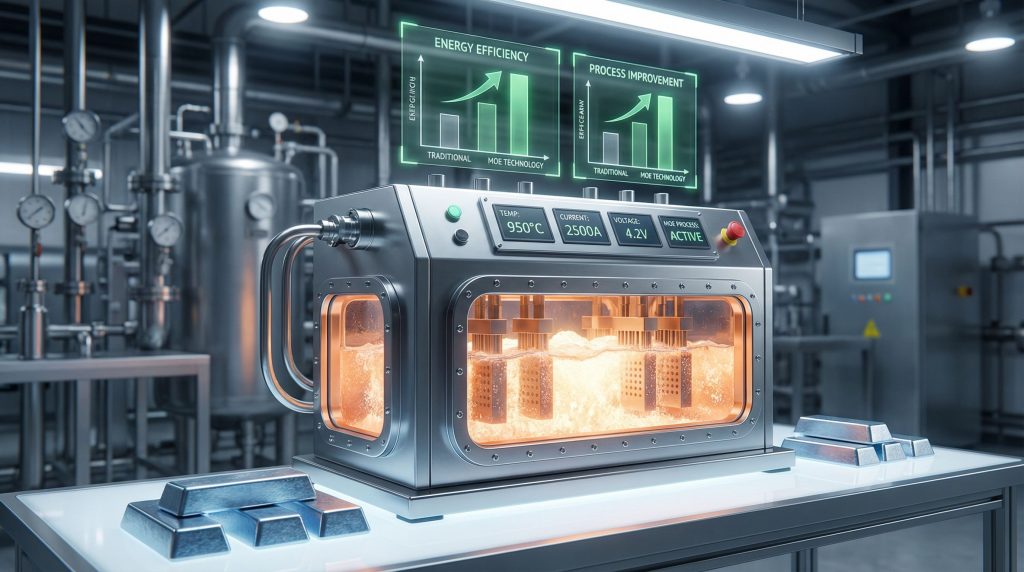
Molten oxide electrolysis (MOE) technology introduces a fundamentally different approach by utilizing electrochemical reactions to extract niobium directly from oxide feedstocks. This process operates through the dissolution of niobium-containing compounds in molten salt electrolytes, typically composed of sodium chloride and potassium chloride mixtures, creating an environment where electrical energy drives the reduction reactions necessary for metal production.
The electrochemical principles underlying this technology center on the selective reduction of metal oxides at cathode surfaces while oxygen evolution occurs at consumable anodes. Unlike traditional methods that require separate reduction, refining, and conversion stages, electrolysis for niobium production can potentially integrate these functions into a single electrochemical operation.
Why Traditional Methods Fall Short
Conventional niobium processing faces several inherent limitations that create opportunities for technological advancement. The aluminothermic reduction process, which has been the industry standard, involves complex thermochemical reactions that require precise temperature control and generate aluminum oxide byproducts that must be managed as waste streams.
Environmental concerns surrounding traditional processing include:
• High energy consumption from multiple heating and cooling cycles
• Generation of slag and other solid waste materials
• Emissions from high-temperature pyrometallurgical operations
• Water usage for hydrometallurgical refining stages
• Limited flexibility in processing different ore grades and compositions
Cost inefficiencies arise from the sequential nature of conventional processing, where each stage requires separate equipment, energy inputs, and material handling systems. The need for hydrometallurgical refining and aluminothermic conversion creates operational complexity that translates into higher capital and operating expenditures.
When big ASX news breaks, our subscribers know first
How Molten Oxide Electrolysis Works for Niobium
The electrochemical mechanism of MOE for niobium production involves the formation of electrically conductive pathways through molten salt media at elevated temperatures. Niobium-containing oxide compounds dissolve into the electrolyte, creating ionic species that can be selectively reduced at cathode surfaces through the application of electrical potential. Moreover, ai in drilling operations is enhancing precision in extraction processes.
The process utilises specialized electrode materials designed to withstand the corrosive environment of molten salts while maintaining electrical conductivity. Anode materials must be carefully selected to ensure stable oxygen evolution reactions without introducing contaminants that could compromise product purity.
Key Technical Advantages Over Conventional Methods
| Processing Parameter | MOE Technology | Traditional Aluminothermic |
|---|---|---|
| Processing Stages | Single electrolytic step | Multiple sequential operations |
| Temperature Control | Precise electrical regulation | Complex thermal management |
| Waste Generation | Reduced solid byproducts | Significant slag production |
| Energy Efficiency | Direct electrical conversion | Multiple heating cycles |
| Feedstock Flexibility | Variable ore compositions | Standardised input requirements |
The elimination of hydrometallurgical refining stages represents a significant operational simplification. Traditional processing requires aqueous chemical treatments to achieve desired purity levels, involving acid leaching, solvent extraction, and precipitation steps that consume reagents and generate liquid waste streams.
Electrolytic processing can achieve high purity levels directly through electrochemical purification mechanisms that occur simultaneously with metal production. This integration reduces the need for downstream processing while maintaining quality specifications required for high-value applications.
Equipment and Infrastructure Requirements
Commercial-scale electrolytic niobium production requires specialised cell designs capable of maintaining molten salt systems at operating temperatures while providing precise electrical control. Cell construction materials must resist corrosion from both the molten electrolyte and the reactive atmosphere created during electrolysis.
Power supply systems must deliver controlled direct current with sufficient amperage to maintain desired production rates. Modern installations incorporate digital control systems that monitor cell voltage, current density, and electrolyte composition to optimise operational efficiency and product quality.
Material handling systems for high-temperature operations include automated feedstock delivery, molten metal collection, and electrolyte maintenance equipment. These systems must operate reliably in elevated temperature environments while maintaining safety protocols for personnel and equipment protection.
Industrial Applications and Process Integration
The integration of electrolytic niobium production with existing mining operations presents opportunities for operational synergies and cost optimisation. Recent developments in Brazil have demonstrated practical applications of this technology integration approach, while data-driven operations are optimising these processes further.
Boston Metal's commissioning of its first commercial plant in Minas Gerais represents a significant milestone in MOE technology deployment for critical metals production. The facility's location in Brazil's premier mining region provides access to established supply chains and technical expertise necessary for commercial operations.
St George Mining's tests of new technology at the Araxá Project, which has identified niobium grades of 7.2%, serves as a case study for integrating electrolytic processing with exploration and development activities. The project's evaluation focuses on efficiency gains, cost optimisation, and environmental impact reduction through advanced processing technology.
Primary Production Routes Using Electrolysis
Direct ore processing through molten salt electrolysis offers the potential to streamline traditional mineral processing flowsheets. Instead of requiring separate concentration, reduction, and refining operations, electrolytic systems can potentially process concentrated ores directly to finished metal products.
The technology's capacity to utilise different raw materials provides operational flexibility that conventional processes cannot match. Variable ore compositions and grades can be accommodated through electrolyte chemistry adjustments and operating parameter modifications.
Hybrid processing approaches combine electrolytic technology with conventional concentration methods to optimise recovery rates while maintaining cost effectiveness. These integrated systems leverage the strengths of both technologies to achieve superior overall performance.
Secondary Processing and Purification
Electrolytic refining for ultra-pure niobium grades represents an emerging application area where electrochemical selectivity provides advantages over traditional purification methods. The ability to achieve precise composition control through electrical parameter adjustment enables production of specialised grades for aerospace and medical applications.
Quality control protocols for electrolytic processing incorporate real-time monitoring of cell conditions and product composition. Advanced analytical techniques ensure compliance with stringent purity specifications while maintaining production efficiency.
Byproduct Recovery and Value Creation
The potential for rare earth element recovery from niobium processing slag represents a significant value creation opportunity. The Araxá Project's evaluation specifically examines slag utilisation, which may contain high concentrations of valuable rare earth elements that can be recovered through integrated processing flows.
Electrolytic processing can potentially reduce operational costs by eliminating hydrometallurgical refining and aluminothermic conversion stages, creating a more streamlined production pathway.
Revenue optimisation through integrated material flows enables mining operations to capture value from previously discarded waste streams. This circular economy approach aligns with environmental sustainability objectives while improving project economics.
Economic and Environmental Impact Analysis
The economic implications of transitioning to electrolysis for niobium production extend beyond direct cost savings to encompass broader operational efficiencies and market positioning advantages. The elimination of multiple processing stages reduces capital equipment requirements while simplifying operational complexity. Additionally, sustainable mining transformation initiatives are driving adoption of these cleaner technologies.
Cost Structure Transformation
Traditional niobium processing involves significant capital expenditures for pyrometallurgical equipment, hydrometallurgical refining facilities, and associated infrastructure. Electrolytic processing consolidates these functions into integrated systems that require lower overall capital investment.
Operating cost advantages arise from reduced energy consumption per unit of production, simplified material handling requirements, and decreased reagent consumption. The elimination of aluminothermic conversion removes the need for aluminium metal consumption while reducing waste disposal costs.
Labour requirements for electrolytic operations typically involve fewer personnel due to automated control systems and reduced process complexity. Maintenance costs may be lower due to fewer mechanical systems and reduced high-temperature equipment requirements.
Environmental Benefits Assessment
Carbon footprint reduction represents a primary environmental benefit of electrolytic processing. The elimination of high-temperature pyrometallurgical operations reduces direct emissions while the potential for renewable energy integration offers pathways to near-zero carbon operations.
Waste stream minimisation occurs through the elimination of slag-generating reactions and reduced chemical reagent consumption. Water usage decreases significantly when hydrometallurgical refining stages are eliminated, reducing both consumption and wastewater treatment requirements.
Energy efficiency improvements derive from the direct conversion of electrical energy to chemical energy without intermediate thermal conversion steps. This direct energy utilisation reduces overall system losses and improves thermodynamic efficiency.
Market Positioning and Competitive Advantages
Production flexibility enables electrolytic operations to respond more rapidly to market demand variations and specification changes. The ability to adjust product composition through electrical parameter control provides competitive advantages in specialised applications.
Scalability considerations favour electrolytic technology for both small-scale operations and large industrial facilities. Modular cell designs allow capacity expansion through additional electrolytic units without fundamental process redesign.
Current Industry Developments and Case Studies
The commercial development of electrolytic niobium production has accelerated significantly with recent partnerships and technology deployment initiatives. Boston Metal's progress in commissioning its Minas Gerais facility represents the first large-scale application of MOE technology for critical metals production.
Commercial Implementation Progress
Boston Metal's facility commissioning has encountered technical challenges typical of emerging technology deployment. Equipment failures reported in February 2026 required personnel reallocation from United States operations, highlighting the complexity of scaling electrolytic processing to commercial production levels.
Despite early operational challenges, the company has maintained its partnership development activities, including the memorandum of understanding with St George Mining for Araxá Project evaluation. This continued investment demonstrates confidence in the technology's long-term viability.
Technical performance metrics from commissioning activities remain proprietary, though the willingness to proceed with additional partnerships suggests that operational parameters are approaching commercial viability thresholds. Finance Yahoo reports indicate growing investor interest in these technological developments.
Partnership Models and Technology Transfer
The Boston Metal-St George Mining partnership represents an evaluation-focused collaboration rather than a committed production agreement. This structure allows both companies to assess technology performance while sharing development risks and costs.
Risk-sharing arrangements in technology adoption typically involve phased implementation approaches where initial evaluations lead to pilot testing before full commercial deployment. This methodology reduces financial exposure while enabling comprehensive technology validation.
Due diligence processes for electrolytic technology evaluation focus on operational reliability, economic performance, and environmental compliance. These assessments require detailed technical analysis and financial modelling to support investment decisions.
Global Market Dynamics
Regional adoption patterns for advanced niobium processing reflect the concentration of deposits and existing industrial infrastructure. Brazil's dominance in global niobium supply creates natural advantages for technology deployment in the region.
Supply chain implications include potential shifts in market dynamics as electrolytic processing enables new participants to enter the market with lower capital requirements. This democratisation effect could increase competition and drive innovation throughout the industry.
Investment flows into advanced processing technologies reflect broader trends toward sustainable mining and environmental responsibility. CBMM's R$ 1.1 billion investment in growth and innovation during 2025 demonstrates industry recognition of the need for technological advancement.
Technical Challenges and Solutions
The transition from laboratory-scale electrolytic processing to commercial operations presents numerous technical challenges that require systematic engineering solutions. Electrode material selection represents a critical consideration due to the corrosive nature of molten salt environments at elevated temperatures.
Process Optimisation Requirements
Electrode longevity directly impacts operational economics through replacement costs and production downtime. Materials must withstand repeated thermal cycling while maintaining electrical conductivity and dimensional stability throughout extended operating periods.
Electrolyte composition requires careful management to maintain optimal conductivity and chemical stability. Contamination from feedstock materials or electrode degradation can compromise process efficiency and product quality.
Corrosion management systems must protect both process equipment and structural components from the aggressive chemical environment. Advanced materials and protective coatings are essential for achieving acceptable equipment lifespans.
Quality Control and Metallurgical Considerations
Purity specifications for different end-use applications require precise process control and analytical monitoring. Aerospace applications demand extremely low impurity levels that challenge conventional quality assurance methods.
Contamination prevention strategies include:
• Careful selection of electrode and cell construction materials
• Rigorous feedstock preparation and purification protocols
• Continuous monitoring of electrolyte chemistry and composition
• Implementation of inert atmosphere protection systems
• Regular maintenance and cleaning procedures for all process equipment
Product characterisation requires advanced analytical techniques capable of detecting trace contaminants that could affect performance in critical applications. Real-time monitoring systems enable rapid response to process deviations before product quality is compromised.
Scaling and Commercial Viability
Capital expenditure requirements for full-scale operations depend heavily on production capacity targets and facility integration complexity. Electrolytic systems require substantial electrical infrastructure and specialised process equipment that represent significant upfront investments.
Operating cost benchmarks must account for electricity consumption, electrode replacement, electrolyte maintenance, and labour requirements. Profitability thresholds vary with niobium market prices and specific product specifications.
Technology maturity considerations include the limited operational history of commercial-scale MOE systems for electrolysis for niobium production. Equipment reliability and process optimisation require extended operating experience to achieve optimal performance levels.
The next major ASX story will hit our subscribers first
Future Outlook and Industry Transformation
The evolution of electrolytic niobium production technology continues to accelerate as commercial applications demonstrate practical viability and economic advantages. Next-generation developments focus on improving energy efficiency, reducing equipment costs, and expanding feedstock compatibility.
Technology Evolution Trajectory
Advanced electrolytic cell designs incorporate improved materials and optimised geometries that enhance current efficiency while extending equipment lifespans. Computational modelling enables better understanding of electrochemical phenomena and guides design improvements.
Automation integration opportunities include artificial intelligence applications for process optimisation and predictive maintenance systems that minimise unplanned downtime. Digital twin technology enables virtual testing of operational scenarios before implementation.
Research priorities for process improvement include:
- Novel electrode materials with enhanced durability
- Advanced electrolyte formulations for improved performance
- Energy recovery systems for thermal and electrical efficiency
- Automated quality control and process adjustment systems
- Integration with renewable energy sources for sustainable operations
Market Adoption Scenarios
Timeline projections for widespread commercial deployment depend on successful resolution of current technical challenges and demonstration of consistent economic advantages. Industry adoption typically follows a graduated pattern from early adopters to mainstream implementation.
Factors influencing adoption rates include regulatory frameworks supporting clean technology, availability of technical expertise, and access to capital for facility development. Environmental regulations may accelerate adoption by creating compliance advantages for cleaner processing methods.
Potential disruption to established niobium supply chains could create both opportunities and challenges for existing market participants. Traditional producers may need to invest in technology upgrades to maintain competitive positioning.
Strategic Implications for Stakeholders
Mining companies must evaluate the strategic implications of electrolytic processing technology for their development pipelines and existing operations. Early adoption may provide competitive advantages, while delayed implementation could result in technological obsolescence.
Technology firms developing electrolytic processing systems face opportunities for licensing arrangements and partnership development with mining companies. Successful commercial deployment creates potential for expansion into other metal systems and geographic markets.
Investment considerations include the balance between proven conventional technology and emerging electrolytic methods. Risk-adjusted returns must account for both technology and market uncertainties while considering long-term positioning advantages.
Frequently Asked Questions
How Does Electrolytic Niobium Compare to Traditional Production Methods?
Electrolysis for niobium production offers several advantages over conventional aluminothermic reduction methods. Processing time reductions occur through the elimination of multiple sequential operations, while energy efficiency improvements result from direct electrical energy conversion rather than thermal processing cycles.
Cost implications vary with specific operational parameters and facility scale, though the elimination of hydrometallurgical refining and aluminothermic conversion stages typically reduces overall production costs. Quality improvements may result from the inherent purification mechanisms of electrochemical processing.
Return on investment analysis must consider both capital expenditure savings from simplified process equipment and operating cost reductions from improved efficiency. Payback periods depend on production volumes and market pricing conditions.
What Are the Main Technical Barriers to Widespread Adoption?
Infrastructure requirements represent a significant barrier due to the specialised equipment and electrical systems required for molten salt electrolysis. Capital investment needs may be substantial, particularly for greenfield developments that lack existing industrial infrastructure.
Skilled workforce development presents challenges as electrolytic processing requires specialised knowledge of electrochemistry and high-temperature operations. Training programmes and technical education initiatives are essential for building necessary expertise.
Technology reliability remains a concern due to limited commercial operating history. Equipment failures and process upsets during commissioning phases highlight the need for continued technology development and operational optimisation.
Which Companies Are Leading Electrolytic Niobium Development?
Boston Metal has emerged as the primary technology provider for MOE systems in critical metals production, with their Minas Gerais facility representing the first commercial-scale application. Their partnership with St George Mining demonstrates the company's strategy of collaborating with exploration and development companies.
Mining companies investing in advanced processing capabilities include St George Mining with their Araxá Project evaluation and other firms exploring technology partnerships for future development projects. The industry trend favours collaboration between technology providers and mineral resource companies.
Research institutions contribute to process innovation through fundamental research into electrochemical mechanisms and materials science applications. Academic partnerships with commercial developers accelerate technology advancement and optimisation.
Investors should conduct comprehensive due diligence and consult with qualified professionals before making investment decisions. The information presented reflects current industry developments and technological progress, though commercial viability and financial performance of specific projects remain subject to various risks and uncertainties.
Could Advanced Processing Technology Transform Your Mining Investment Strategy?
Discovery Alert's proprietary Discovery IQ model delivers instant notifications on breakthrough mining technologies and significant ASX mineral discoveries, empowering subscribers to identify companies pioneering innovative processing methods like electrolytic niobium production. Understand why technological transformations can generate substantial market returns by exploring Discovery Alert's dedicated discoveries page, showcasing historic examples of exceptional outcomes from early-stage technology adoption and major mineral finds.