May 23, 2026
Global energy markets face mounting pressures from supply chain vulnerabilities that extend far beyond typical market dynamics. The concentration of critical infrastructure in geographically constrained regions creates systemic risks that reverberate across international trade networks. When extreme weather events intersect with these chokepoints, the resulting disruptions illuminate the fragile interdependencies underlying modern petrochemical supply systems. Furthermore, recent analysis reveals how us lpg exports fall as temperatures dive, creating cascading effects across global energy markets.
The liquefied petroleum gas sector exemplifies these vulnerabilities, with massive export operations clustered along narrow coastal corridors where single weather events can simultaneously impact multiple facilities. Recent analysis of temperature-related disruptions demonstrates how rapidly localised incidents escalate into global supply concerns, forcing market participants to reassess long-held assumptions about operational resilience and geographic risk distribution. Moreover, these developments highlight the interconnected nature of commodities market volatility in modern trading environments.
Understanding Critical Infrastructure Vulnerabilities in Energy Export Hubs
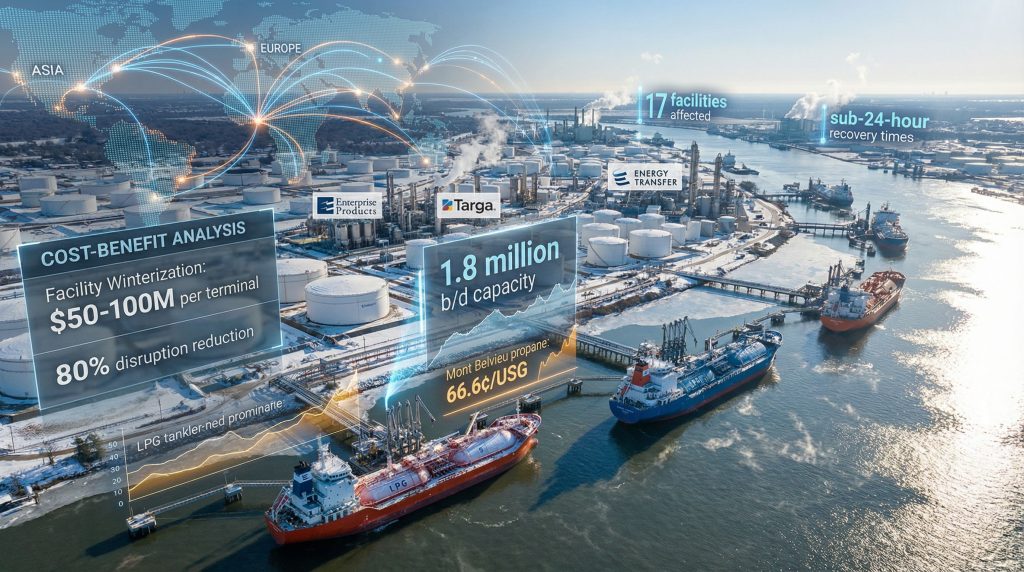
The concentration of 1.8 million barrels per day of LPG export capacity along Texas waterways represents a textbook example of geographic risk clustering. The Houston Ship Channel and Neches River corridors, while offering logistical efficiencies during normal operations, create single points of failure that can disrupt nearly 57 million tonnes per year of export capacity when adverse conditions arise.
Enterprise Products, Targa, and Energy Transfer have strategically positioned their facilities along these waterways to capitalise on inland production connectivity and deep-water port access. However, this clustering strategy inherently concentrates weather-related operational risks within a confined geographic area. When freezing temperatures shut down maritime operations for 24-48 hours, the cumulative impact affects a substantial portion of North American LPG export capability.
Maritime Logistics and Weather Dependencies
The vulnerability of shipping channels to extreme weather extends beyond simple operational delays. Ice formation, reduced visibility, and safety protocols can halt vessel movements entirely, creating upstream bottlenecks that affect loading schedules, inventory management, and contractual delivery commitments. The rapid resumption of operations typically indicates that infrastructure remains intact, with disruptions driven primarily by safety considerations rather than physical damage.
Temperature-related shutdowns differ fundamentally from hurricane damage or mechanical failures. The predictable nature of winter weather patterns allows operators to implement contingency protocols, yet the geographic concentration of facilities limits the effectiveness of alternative routing strategies. When multiple terminals face simultaneous weather impacts, backup capacity becomes insufficient to maintain normal export flows.
Processing Plant Integration Effects
Seventeen natural gas processing plants in west Texas experienced weather-related outages during recent extreme temperature events, demonstrating the interconnected nature of natural gas and LPG supply chains. These facilities extract propane and butane from raw natural gas streams, creating direct linkages between upstream processing disruptions and downstream export availability. Consequently, these disruptions align with broader US natural gas forecasts predicting continued volatility.
The sub-24-hour recovery timeline for most affected processing plants suggests robust emergency response capabilities and equipment winterisation measures. However, even brief processing interruptions can create inventory shortfalls that compound export terminal disruptions, particularly when multiple supply chain segments face simultaneous weather impacts.
When big ASX news breaks, our subscribers know first
Economic Implications of Supply Chain Disruptions
Mont Belvieu propane prices declined to 66.6 cents per US gallon following the resumption of operations, indicating market mechanisms responded to temporary supply-demand imbalances. This price movement reflects the complex interplay between domestic inventory levels, export demand, and international price relationships that determine North American LPG valuations. These patterns mirror recent natural gas price trends observed across energy markets.
Revenue Impact Assessment
Daily export value losses during infrastructure shutdowns extend beyond immediate shipping delays. Contractual obligations, demurrage charges, shipping schedule disruptions, and alternative sourcing costs create cascading financial impacts that affect multiple market participants. Export terminals face direct revenue losses, whilst shipping companies incur additional costs for delayed vessels and rescheduled deliveries.
The concentration of export capacity amplifies these economic impacts by limiting alternative routing options. When major facilities face simultaneous disruptions, buyers cannot easily redirect volumes through unaffected terminals, creating temporary supply shortages that influence pricing across international markets. In addition, these disruptions often correlate with broader oil price movements affecting global energy trading patterns.
International Market Response Dynamics
Global LPG markets demonstrate varying degrees of sensitivity to US export disruptions based on import dependency levels, strategic inventory positions, and alternative supply source availability. Asian markets, particularly Japan and South Korea, maintain substantial reliance on US propane and butane imports for petrochemical feedstock requirements, making them particularly vulnerable to supply interruptions.
European buyers face similar exposure, though regional supply diversity and storage capacity provide some buffering capability. The ability of Middle Eastern producers to increase exports during US disruptions depends on spare production capacity, shipping availability, and contractual flexibility with existing customers.
Infrastructure Resilience and Risk Mitigation Strategies
The recurring nature of weather-related disruptions has prompted industry evaluation of infrastructure hardening investments and operational continuity measures. Facility winterisation programmes, backup power systems, and enhanced weather monitoring capabilities represent primary approaches to reducing temperature-related operational risks. These strategies become increasingly important as the industry navigates energy transition challenges affecting traditional infrastructure.
Winterisation Investment Economics
| Investment Category | Estimated Cost Range | Risk Reduction Potential | Implementation Timeline |
|---|---|---|---|
| Equipment Heating Systems | $10-25M per facility | 70-85% disruption reduction | 1-2 years |
| Backup Power Infrastructure | $5-15M per terminal | 90-95% operational continuity | 6-18 months |
| Advanced Monitoring Systems | $2-8M per location | 60-75% response time improvement | 3-12 months |
These investment ranges reflect the scale of infrastructure modifications required to maintain operations during extreme weather events. The cost-benefit analysis must consider disruption frequency, average duration of outages, revenue losses, and contractual penalties associated with delivery delays.
Geographic Diversification Strategies
Long-term infrastructure resilience increasingly focuses on geographic distribution of export capacity across multiple regions. Gulf Coast concentration, whilst offering operational efficiencies, creates systemic vulnerabilities that can be mitigated through East Coast, West Coast, and Great Lakes export development.
New terminal construction involves substantial capital requirements, typically ranging from $2-5 billion for major facilities capable of handling multiple product streams. The development timeline for new export infrastructure spans 7-10 years, including permitting, construction, and commissioning phases, making geographic diversification a long-term strategic consideration rather than a short-term solution.
Natural Gas Processing Integration and Supply Chain Cascades
The integration between natural gas processing and LPG production creates interdependencies that amplify localised disruptions across broader supply networks. Processing plants extract natural gas liquids through separation processes that require consistent operating temperatures and pressure conditions, making them susceptible to weather-related interruptions.
Processing Capacity Distribution
West Texas processing infrastructure handles significant volumes of natural gas from Permian Basin production, with extracted liquids feeding into the broader LPG supply chain. The seventeen facilities affected by recent weather events represent substantial processing capacity, though the industry's rapid recovery demonstrates effective emergency response protocols.
Processing plant shutdowns create inventory management challenges for both upstream producers and downstream users. Natural gas liquids storage requires specialised facilities, and temporary production interruptions can create bottlenecks that persist beyond the immediate weather event duration.
Cross-Commodity Market Effects
Natural gas processing disruptions influence multiple commodity markets simultaneously. Reduced propane and butane extraction affects LPG supplies, whilst natural gas production may face backing pressure if processing capacity becomes constrained. These interconnections create pricing volatility across related energy commodities during supply disruption periods.
Industrial users dependent on natural gas liquids for petrochemical feedstocks face potential supply shortages that may require temporary operating adjustments or alternative feedstock procurement. The ability to substitute between different feedstock sources depends on facility flexibility and economic considerations.
Market Structure Evolution and Adaptation Mechanisms
Energy market participants increasingly recognise the need for structural adaptations that enhance system resilience against weather-related disruptions. These adaptations encompass technological improvements, contractual modifications, and strategic inventory management approaches designed to minimise supply chain vulnerabilities. Furthermore, these developments demonstrate how extreme weather events contribute to the broader pattern of us lpg exports fall as temperatures dive.
Contractual Flexibility Enhancement
Export contracts increasingly incorporate force majeure provisions specifically addressing weather-related disruptions, shipping delays, and alternative delivery mechanisms. These contractual adaptations provide legal framework for managing supply interruptions whilst maintaining commercial relationships between buyers and sellers.
Flexible shipping arrangements allow cargo redirections when primary export facilities face disruptions, though implementation depends on vessel availability, storage capacity at alternative terminals, and product specification compatibility across different facilities.
Real-Time Monitoring and Predictive Systems
Advanced weather tracking systems and predictive maintenance technologies enable more effective preparation for extreme weather events. These systems provide early warning capabilities that allow operators to implement contingency protocols before conditions become severe enough to force shutdowns.
Predictive analytics help optimise inventory levels, shipping schedules, and maintenance timing to minimise operational impacts from anticipated weather events. The integration of meteorological data with operational planning systems represents a growing trend toward proactive risk management.
Long-Term Infrastructure Development Trends
The recurring nature of weather-related export disruptions drives long-term infrastructure development planning that emphasises geographic diversity, technological resilience, and operational flexibility. These trends reflect industry recognition that climate-related risks require systematic rather than ad-hoc responses.
Regional Export Capacity Development
Future LPG export infrastructure development increasingly considers regional diversification as a risk mitigation strategy. East Coast terminals offer Atlantic market proximity, whilst West Coast facilities provide Asian market access, reducing dependence on Gulf Coast infrastructure concentration.
The development of inland terminals connected to multiple pipeline networks provides additional operational flexibility, though such facilities require substantial transportation infrastructure investments to achieve competitive economics compared to coastal locations.
Technology Integration and Automation
Modern export terminals incorporate advanced automation systems designed to maintain operations during extreme weather conditions. Remote monitoring capabilities, automated loading systems, and emergency shutdown protocols enhance operational safety whilst reducing weather-related disruption risks. However, these disruptions continue to illustrate patterns where us lpg exports fall as temperatures dive across critical infrastructure networks.
These technological improvements require significant capital investments but provide long-term operational benefits through reduced labour requirements, enhanced safety protocols, and improved response capabilities during adverse conditions.
The next major ASX story will hit our subscribers first
Supply Chain Resilience Metrics and Performance Indicators
What factors determine the severity of weather-related export disruptions?
Temperature extremes, duration of adverse conditions, wind speeds, and ice formation in shipping channels represent primary factors influencing disruption severity. Facility winterisation levels, backup power availability, and emergency response protocols also determine operational continuity during extreme weather events. Additionally, the concentration of facilities in weather-sensitive regions amplifies the systemic impact when conditions cause us lpg exports fall as temperatures dive.
How do international buyers respond to US LPG export disruptions?
International buyers typically activate alternative supply sources, adjust production schedules, or draw down strategic inventories during US export disruptions. Middle Eastern suppliers may increase production to fill supply gaps, whilst buyers with flexible contracts may source volumes from alternative regions. For instance, Asian markets have shown increased reliance on alternative suppliers during US supply interruptions.
What role does inventory management play in disruption response?
Strategic inventory positioning at both export terminals and import facilities provides buffering capacity during supply disruptions. Buyers with substantial storage capacity can maintain operations longer during export interruptions, whilst terminals with larger working inventories can resume exports more quickly when operations restart.
How effective are current winterisation measures?
Existing winterisation investments have proven effective at reducing disruption duration, with most processing plants resuming operations within 24 hours of weather events. However, the concentration of export facilities in weather-sensitive regions continues to create systemic vulnerabilities that require ongoing infrastructure improvements.
Disclaimer: This analysis is based on publicly available market information and should not be considered investment advice. Energy markets involve substantial risks, and past performance does not guarantee future results. Market participants should conduct independent research and consult qualified professionals before making investment decisions.
Ready to Capitalise on Energy Market Volatility?
Discovery Alert's proprietary Discovery IQ model delivers instant alerts on significant ASX mineral discoveries, helping investors navigate commodity market disruptions and identify opportunities when supply chain vulnerabilities create market advantages. Begin your 14-day free trial today to stay ahead of energy and commodity market shifts with real-time, actionable insights.