May 22, 2026
Engineering Fundamentals of Advanced Sealing Architecture
Mining operations face unprecedented mechanical challenges when protecting critical rotating equipment from environmental contamination. Traditional sealing approaches in grinding circuits have relied on complex assemblies requiring extensive disassembly procedures, creating operational bottlenecks that compromise both safety and productivity. Furthermore, the evolution toward modular sealing architecture represents a fundamental shift in how the industry approaches equipment protection and maintenance accessibility.
A modular sealing system for GMD motors differs fundamentally from conventional designs through its pre-assembled architecture and dedicated maintenance positioning mechanism. Unlike traditional systems that require complete disassembly of stator components, modular designs enable targeted intervention through retractable segment technology. This architectural innovation maintains the proven benefits of grease-free operation while introducing simplified component access protocols that align with modern data-driven operations.
The core engineering principle centers on barrier redundancy through a four-layer protection system. External T-seals provide the primary contamination barrier, while internal main seals create secondary protection against ingress of particulate matter and moisture. In addition, this multi-barrier approach enables sustained operation in environments characterized by extreme dust concentrations, water exposure, and abrasive grinding debris.
Component Architecture and Assembly Specifications
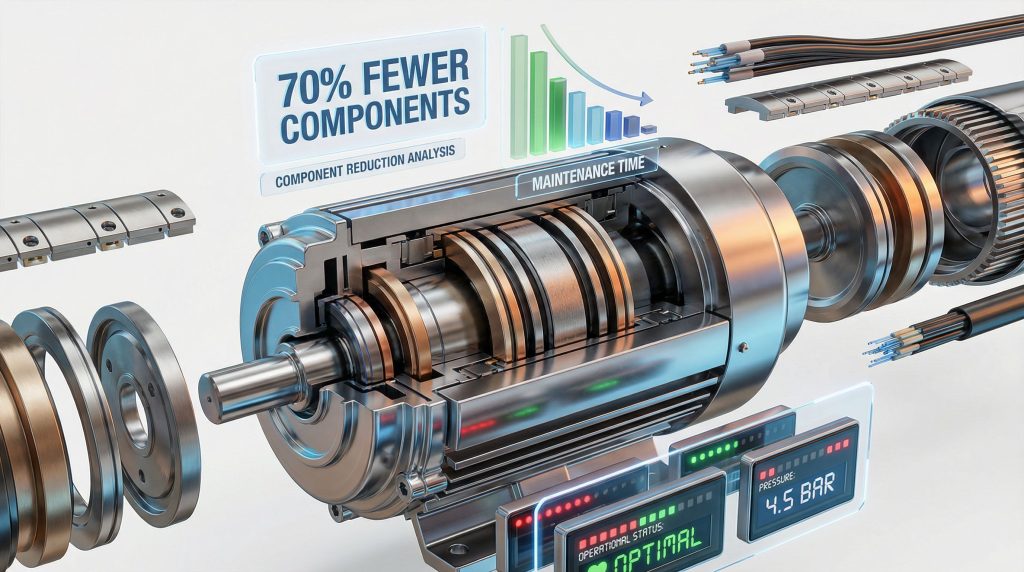
Traditional GMD motor sealing systems typically incorporate over 100 individual components requiring sequential disassembly during maintenance interventions. The modular approach achieves a 70% reduction in components requiring disassembly, streamlining maintenance procedures while maintaining equivalent or superior sealing performance. Consequently, this component reduction directly translates to decreased maintenance complexity and reduced opportunities for reassembly errors.
The dedicated service positioning mechanism represents the core innovation enabling simplified access. Through mechanical retraction of seal holder segments, maintenance personnel can access critical sealing components without removing heavy stator covers or disconnecting primary electrical connections. This positioning system accommodates equipment of varying scales, from standard installations to large-scale grinding operations exceeding 20 MW capacity.
Integration with Gearless Mill Drive Systems
GMD motor applications present unique sealing challenges due to their low-speed, high-torque operational characteristics and direct coupling to grinding mills. The absence of intermediate gearing systems eliminates traditional lubrication pathways while exposing sealing systems directly to mill-generated contamination. Moreover, modular sealing designs address these challenges through enhanced contamination exclusion protocols and simplified maintenance access that aligns with mill shutdown windows, supporting broader industry evolution trends.
When big ASX news breaks, our subscribers know first
Operational Demands Driving Sealing Innovation
Mining grinding operations subject equipment to contamination levels that would compromise most industrial sealing systems within weeks of installation. Concentrator plants processing copper, gold, and other mineral commodities generate continuous exposure to abrasive particles, corrosive process water, and variable pH conditions that accelerate seal degradation through multiple failure mechanisms.
Environmental Severity and Contamination Characteristics
The grinding environment presents a combination of contamination sources that traditional sealing approaches struggle to manage effectively:
• Abrasive particulate matter ranging from sub-micron dust to millimeter-scale grinding debris
• Process water ingress containing dissolved minerals and suspended solids
• Chemical exposure from flotation reagents and pH adjustment chemicals
• Thermal cycling from equipment startup/shutdown and seasonal temperature variations
• Vibration and mechanical stress from mill operation and material impact
Unplanned maintenance events in large-scale grinding operations can result in production losses exceeding $100,000 per hour when factoring direct labour costs, equipment rental, and lost production revenue. These economic pressures drive the adoption of maintenance strategies that maximise equipment availability while minimising intervention complexity.
Maintenance Window Coordination
Mining operations typically coordinate major maintenance activities with planned mill relines, which occur every 6-12 months depending on ore characteristics and grinding intensity. Traditional sealing system maintenance requires complete mill shutdown and extensive equipment disassembly, creating scheduling conflicts between mechanical maintenance and mill reline activities. However, this coordination challenge often forces operations to accept degraded sealing performance rather than extend shutdown windows.
The integration of modular sealing maintenance with existing shutdown schedules enables optimised resource allocation and reduced total maintenance time. By eliminating heavy lifting requirements and simplifying component access, maintenance teams can complete sealing interventions within existing reline windows without extending overall shutdown duration, addressing many safety and operational challenges.
Architectural Innovations in Modular Design
The fundamental distinction between traditional and modular sealing systems lies in their approach to maintenance accessibility. Traditional designs require systematic disassembly of multiple system layers to reach sealing components, while modular architectures enable direct access through dedicated service positions.
Retractable Segment Technology
The core innovation enabling simplified maintenance access involves mechanically retractable seal holder segments that can be positioned to provide direct access to sealing components. This positioning system eliminates the need to remove stator covers, which typically weigh several tonnes and require specialised lifting equipment and extended rigging time.
The retraction mechanism operates through a dedicated positioning system that maintains alignment tolerances while enabling segment movement. This approach preserves the structural integrity of the sealing assembly while creating the access clearances necessary for component replacement and inspection procedures.
| Traditional System Characteristics | Modular System Advantages | Improvement Factor |
|---|---|---|
| Complete stator cover removal | Retractable segment access | 70% fewer components |
| Heavy lifting equipment required | Manual positioning capability | Eliminated heavy lifting |
| Extended rigging and preparation time | Direct component access | Reduced setup time |
| Multiple skilled trades required | Simplified skill requirements | Streamlined labour needs |
Four-Barrier Protection Architecture
The modular sealing system maintains comprehensive contamination exclusion through a layered barrier approach that provides redundant protection against multiple failure modes. Each barrier layer serves a specific function while contributing to overall system reliability:
Primary External Barrier (T-Seal Configuration):
- Initial contamination exclusion at the motor-mill interface
- Designed for coarse particulate and bulk water exclusion
- Replaceable without internal system access
Secondary Internal Barrier (Main Seal Assembly):
- Fine particulate and moisture exclusion
- Pressure differential management across the sealing interface
- Integrated wear monitoring capability
Tertiary Protection (Barrier Gas System):
- Positive pressure maintenance to prevent contamination ingress
- Continuous purge flow to remove accumulated particulates
- Integration with plant compressed air systems
Quaternary Monitoring (Detection and Response):
- Real-time wear detection through embedded sensors
- Anomaly identification and trending analysis
- Predictive maintenance scheduling integration
How Does Design Enhance Safety?
Traditional sealing maintenance procedures expose personnel to multiple injury risks through heavy component handling, elevated work platforms, and extended exposure to confined spaces. The elimination of stator cover removal requirements directly addresses several categories of workplace safety concerns:
Mechanical Injury Prevention:
- Elimination of multi-tonne component lifting operations
- Reduced crane and rigging requirements
- Minimised exposure to pinch points and crush hazards
Ergonomic Improvements:
- Ground-level access to sealing components
- Reduced repetitive lifting and positioning activities
- Simplified tool requirements and manual handling
Time-Based Risk Reduction:
- Shortened maintenance duration reduces exposure time
- Simplified procedures reduce opportunity for procedural errors
- Faster completion enables earlier return to normal operations
Predictive Monitoring and Intelligence Integration
The transition from reactive to predictive maintenance strategies requires continuous monitoring capabilities that provide early warning of degradation conditions. Furthermore, modular sealing systems incorporate sensor integration that enables real-time wear detection and performance trending analysis.
Sensor Integration and Data Collection
Embedded monitoring systems within the sealing assembly provide continuous measurement of key performance parameters that indicate seal condition and remaining service life. These measurements include:
• Pressure differential monitoring across sealing interfaces
• Temperature measurement at critical sealing points
• Vibration analysis for bearing condition assessment
• Contamination detection through particle counting and moisture measurement
The integration of these monitoring systems with plant maintenance management software enables automated work order generation and maintenance scheduling optimisation. Advanced analytics can identify degradation patterns and predict remaining service life with sufficient accuracy to enable proactive maintenance planning.
Anomaly Detection and Response Protocols
Real-time monitoring enables the identification of anomalous operating conditions before they progress to equipment failure. Early detection capabilities provide operations personnel with sufficient advance warning to plan maintenance interventions within existing shutdown schedules rather than responding to emergency failure conditions.
"Predictive seal monitoring enables maintenance planning integration within asset lifecycle management, optimising resource allocation and minimising unscheduled shutdowns while extending overall equipment reliability periods."
The transition to predictive maintenance strategies requires integration with existing maintenance management systems and development of appropriate response protocols. Operations teams must establish threshold parameters for various monitored conditions and develop escalation procedures that balance early intervention with operational continuity requirements.
Maintenance Planning Optimisation
The availability of continuous condition monitoring data enables optimisation of maintenance schedules based on actual equipment condition rather than calendar-based intervals. This approach maximises equipment utilisation while ensuring intervention occurs before degradation reaches failure levels.
Planning optimisation considers multiple factors:
• Production schedule coordination with planned shutdown windows
• Parts inventory management based on predicted replacement requirements
• Labour resource allocation aligned with maintenance complexity
• Equipment rental scheduling for specialised tools and lifting equipment
Performance Benefits and Operational Impact
The implementation of modular sealing systems generates measurable improvements across multiple operational performance categories. These benefits accumulate over equipment lifecycles to provide significant total cost of ownership advantages.
Quantified Maintenance Improvements
Modular sealing systems for GMD motors reduce maintenance time by 70% through simplified component access, eliminate heavy lifting risks, and enable real-time monitoring for predictive maintenance scheduling.
The elimination of heavy component handling requirements directly improves maintenance efficiency while reducing safety risks. Traditional maintenance procedures requiring stator cover removal typically involve multiple skilled trades and extended preparation time for rigging and lifting operations. Modular designs enable completion of sealing maintenance by smaller teams with simplified tool requirements, supporting comprehensive safety training essentials.
Cost-Benefit Analysis Framework
The economic advantages of modular sealing systems extend beyond direct maintenance cost reductions to include:
Direct Cost Reductions:
• Decreased maintenance labour hours per intervention
• Eliminated heavy equipment rental requirements
• Reduced spare parts inventory complexity
• Lower skilled trade requirements for routine maintenance
Indirect Value Creation:
• Increased equipment availability through shorter maintenance windows
• Reduced unplanned downtime through predictive maintenance capabilities
• Improved personnel safety metrics and reduced injury risk
• Enhanced maintenance scheduling flexibility aligned with production demands
Equipment Availability Optimisation
Mining operations measure success through equipment availability metrics that directly correlate to production throughput and revenue generation. Modular sealing systems contribute to improved availability through multiple mechanisms:
Planned Maintenance Efficiency:
- Reduced shutdown duration for sealing maintenance
- Improved coordination with mill reline schedules
- Simplified maintenance procedures reducing procedural complexity
Unplanned Event Prevention:
- Predictive monitoring enables proactive intervention
- Early warning systems prevent catastrophic seal failures
- Condition-based maintenance reduces premature replacements
Comparative Analysis of Sealing Technologies
The mining equipment industry offers multiple approaches to sealing system design, each with distinct advantages and limitations depending on application requirements and operational priorities. Understanding these differences enables informed equipment selection and upgrade planning decisions.
Technology Classification and Characteristics
Mining equipment sealing systems can be categorised based on their architectural approach and maintenance requirements:
| System Type | Modularity Level | Maintenance Access | Monitoring Capability |
|---|---|---|---|
| Traditional Assembly | Component-level | Full disassembly required | Limited |
| Semi-Modular | Sub-system level | Partial disassembly | Basic monitoring |
| Full Modular | Complete system | Simplified access | Advanced analytics |
Application-Specific Selection Criteria
The optimal sealing system selection depends on multiple operational and economic factors that vary between mining operations:
Operational Considerations:
• Equipment age and condition influencing retrofit feasibility
• Production schedule flexibility for maintenance planning
• Environmental severity determining sealing performance requirements
• Maintenance team capabilities and available skill levels
Economic Evaluation Factors:
• Initial implementation costs for system upgrade or replacement
• Ongoing maintenance expenses including labour and parts
• Downtime cost implications based on production value
• Equipment lifecycle considerations and replacement planning
Performance Benchmarking
Comparative performance evaluation requires consideration of multiple metrics that reflect both technical capabilities and operational impact:
Technical Performance Metrics:
- Contamination exclusion effectiveness under specified conditions
- Sealing system service life under normal operating parameters
- Maintenance intervention frequency and complexity requirements
- Integration compatibility with existing equipment configurations
Operational Impact Assessment:
- Total maintenance time requirements per intervention
- Personnel safety improvements and risk reduction
- Equipment availability improvements and downtime reduction
- Total cost of ownership optimisation over equipment lifecycle
The next major ASX story will hit our subscribers first
Implementation Strategy and Planning Considerations
The successful deployment of modular sealing technology requires comprehensive planning that addresses technical compatibility, organisational readiness, and economic optimisation objectives. Implementation approaches vary significantly between retrofit applications and new equipment installations.
Retrofit Feasibility Assessment
Existing GMD motor installations require detailed compatibility evaluation before modular sealing system implementation. Key assessment areas include:
Mechanical Compatibility:
• Mounting interface specifications and dimensional requirements
• Clearance analysis for retractable segment operation
• Structural modifications required for service positioning mechanism
• Integration requirements with existing electrical and control systems
Operational Integration:
• Maintenance procedure modifications and training requirements
• Spare parts inventory transitions and obsolescence management
• Performance validation during initial implementation phases
• Documentation updates for operational and maintenance procedures
Investment Timing and Economic Optimisation
The economic justification for modular sealing system for GMD motors implementation depends on multiple factors that influence return on investment calculations:
Financial Analysis Components:
• Capital investment requirements for equipment purchase and installation
• Implementation costs including training, procedure development, and startup
• Operational savings through reduced maintenance time and improved availability
• Risk mitigation value from improved safety and predictive maintenance capabilities
The optimal implementation timing often aligns with planned major maintenance events or equipment lifecycle milestones that provide natural opportunities for system upgrades without additional shutdown requirements.
Training and Competency Development
Successful modular sealing system implementation requires development of appropriate maintenance competencies and procedural knowledge:
Core Training Elements:
• System architecture understanding including component relationships and operation principles
• Maintenance procedure execution for routine and corrective interventions
• Diagnostic and monitoring system operation for condition assessment and trending analysis
• Safety protocol compliance specific to modular system maintenance requirements
Training programmes must address both technical competency development and procedural compliance to ensure safe and effective system operation throughout its service lifecycle.
Future Technology Evolution and Industry Integration
The mining industry's progression toward digital operations and autonomous systems creates opportunities for enhanced integration of sealing system monitoring and maintenance capabilities. Future developments will likely focus on increased automation in mining, improved predictive accuracy, and seamless integration with broader plant automation systems.
Digital Mining Platform Integration
The evolution toward comprehensive digital mining platforms requires sealing system monitoring integration with plant-wide data collection and analysis systems. This integration enables:
Cross-System Analytics:
- Correlation analysis between sealing performance and mill operating parameters
- Integration of sealing condition data with production optimisation algorithms
- Predictive modelling incorporating multiple equipment systems and operational variables
Automated Response Systems:
- Integration with plant control systems for automated parameter adjustment
- Predictive maintenance scheduling coordination with production planning systems
- Automated parts ordering and inventory management based on wear predictions
Advanced Monitoring Technology Development
Emerging sensor technologies and analytical capabilities will enhance the precision and scope of sealing system condition monitoring:
• Advanced particle detection for contamination ingress measurement
• Spectroscopic analysis for seal material degradation assessment
• Wireless sensor networks for simplified installation and data collection
• Machine learning algorithms for pattern recognition and failure prediction
These advances in modular sealing solutions continue to drive innovation across the mining equipment sector.
Market Adoption and Competitive Response
The mining industry's adoption of advanced sealing technologies will likely accelerate as operations recognise the economic and safety benefits of improved maintenance accessibility and predictive monitoring capabilities. This adoption will drive competitive responses from equipment manufacturers and technology developers seeking to address similar operational challenges.
Adoption Drivers:
- Increasing focus on operational safety and personnel protection
- Economic pressures for improved equipment availability and reduced maintenance costs
- Regulatory requirements for enhanced monitoring and reporting capabilities
- Competitive advantages from improved operational efficiency
The successful implementation of modular sealing technology establishes a foundation for continued innovation in mining equipment maintenance and monitoring systems, contributing to the industry's broader digital transformation objectives.
Disclaimer: This analysis is based on publicly available information and industry knowledge. Specific performance claims and technical specifications should be verified through direct consultation with equipment manufacturers and independent testing data. Investment decisions should consider site-specific operational requirements and comprehensive economic analysis.
Ready to Capitalise on Mining Equipment Innovation Opportunities?
Discovery Alert's proprietary Discovery IQ model provides instant notifications on significant ASX mineral discoveries, including emerging technologies revolutionising mining operations and equipment efficiency. Explore why major mineral discoveries can generate substantial returns by visiting Discovery Alert's dedicated discoveries page, showcasing historic examples of exceptional market outcomes.