May 24, 2026
Understanding Environmental Clearance for Dual-Resource Mining Projects
The Lakhpat–Punrajpur lignite and limestone mine environmental clearance represents a significant milestone in India's mining sector, demonstrating the evolving regulatory landscape for integrated mineral extraction operations. Environmental clearances serve as critical gatekeepers in India's mineral development framework, establishing sustainable parameters for resource extraction across diverse geological formations. Furthermore, understanding these mechanisms becomes essential for stakeholders navigating complex regulatory requirements and industrial growth opportunities.
When big ASX news breaks, our subscribers know first
Understanding India's Environmental Clearance Framework for Mining Projects
India's environmental approval system operates through the Ministry of Environment, Forest and Climate Change (MoEF&CC), which oversees large-scale mining operations under the Environmental Impact Assessment notification of 2006. This regulatory structure requires comprehensive evaluation of projects categorized as Category A operations, mandating central-level scrutiny for significant mineral extraction ventures.
The statutory framework establishes multi-layered assessment protocols through Expert Appraisal Committees (EAC), which evaluate environmental impact assessments before recommending clearance decisions. These committees analyse production capacity proposals, environmental sensitivity classifications, and cumulative impact projections to determine project feasibility within ecological constraints.
Key Regulatory Components:
• Environmental impact assessment submission and review
• Public consultation requirements with affected communities
• Expert committee evaluation and recommendation processes
• Condition-specific clearance issuance with operational parameters
Timeline expectations for integrated mining projects typically range from six months to over 24 months, depending on environmental complexity and permitting guidelines requirements. Projects involving multiple mineral resources often require extended evaluation periods due to compounded environmental considerations and stakeholder consultation requirements.
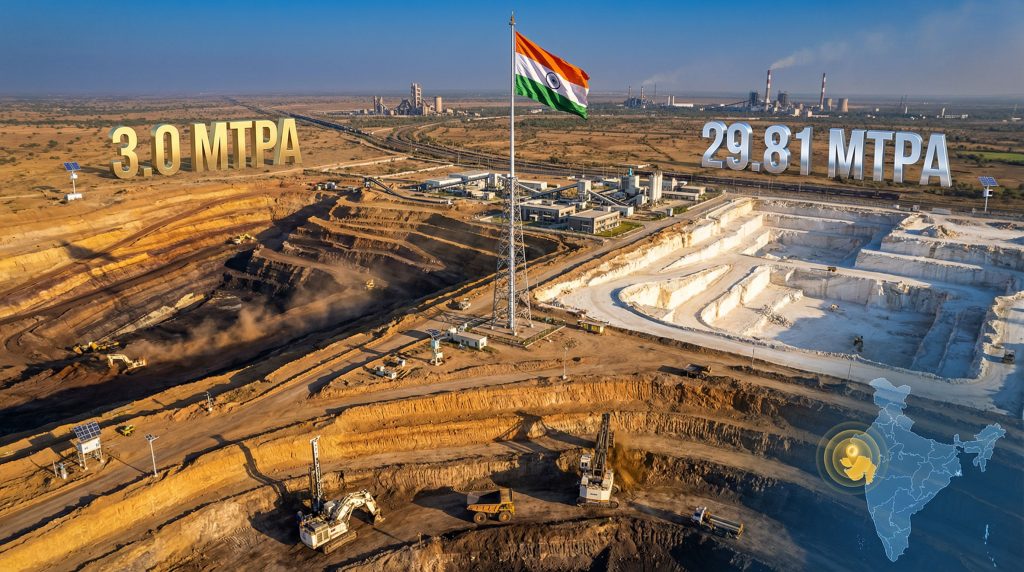
Production capacity thresholds vary significantly based on mineral type, geographic location, and environmental sensitivity rather than universal MTPA benchmarks. The Lakhpat–Punrajpur lignite and limestone mine environmental clearance demonstrates this variability, with approved capacities of 3.0 MTPA lignite and 29.81 MTPA limestone reflecting site-specific assessments rather than standardised thresholds.
Comparative Assessment Framework
| Clearance Component | Single Resource Projects | Dual Resource Operations | Timeline Impact |
|---|---|---|---|
| Environmental Assessment | Focused mineral impact analysis | Integrated extraction evaluation | 6-12 months |
| Stakeholder Consultation | Single commodity discussions | Multi-industry engagement | 3-6 months |
| Infrastructure Planning | Commodity-specific requirements | Shared asset optimisation | 4-8 months |
| Compliance Monitoring | Targeted parameter tracking | Comprehensive system integration | Ongoing |
Strategic Implications of Integrated Lignite-Limestone Operations
Dual-resource mining projects represent evolving approaches to mineral extraction efficiency, combining traditionally separate operations into unified development strategies. This integration addresses fundamental challenges in India's mining sector, where standalone commodity operations often face infrastructure duplication and elevated per-unit costs.
Economic efficiency drivers for co-located mineral extraction include shared infrastructure development, consolidated transportation corridors, and unified workforce management systems. However, understanding mine reclamation importance becomes crucial when planning these integrated operations, as dual-resource projects require comprehensive restoration strategies.
Operational Integration Benefits:
• Reduced capital expenditure through shared equipment deployment
• Optimised transportation networks serving multiple commodity streams
• Consolidated environmental monitoring and compliance systems
• Enhanced market positioning across energy and industrial sectors
Supply chain integration advantages emerge from serving diverse industrial applications through unified extraction operations. Lignite allocation supports power generation and industrial fuel requirements, while limestone production targets cement manufacturing and steel industry applications, creating diversified revenue streams from geological co-location.
Market Positioning Analysis
Integrated operations create competitive advantages through cost structure optimisation and resource security enhancement. Traditional standalone mining faces transportation cost pressures and infrastructure investment duplication, while combined operations achieve economies of scale through consolidated asset utilisation.
The approval of integrated lignite-limestone extraction signals regulatory recognition of operational efficiency benefits in multi-resource geological formations.
Long-term resource security implications extend beyond immediate production capacity, establishing sustained supply relationships with energy generators, cement manufacturers, and steel producers. This positioning reduces supply chain vulnerability for downstream industries while creating stable revenue foundations for mining operations.
Regional Development Impact Assessment
Gujarat's industrial landscape benefits from strategic mineral resource development, particularly in regions like Kutch district where geological diversity supports multiple commodity extraction. The state's mineral resource diversification strategy emphasises maximising economic returns from geological endowments while supporting downstream manufacturing sectors.
Kutch district's geographic positioning provides strategic advantages for bulk commodity operations, including proximity to major cement manufacturing clusters and established transportation networks. The region's mineral reserves, including both lignite and limestone deposits, position it as a significant contributor to Gujarat's industrial mineral supply chains.
Infrastructure Development Requirements:
• Haul road construction and internal transportation network establishment
• Power infrastructure installation for large-scale extraction operations
• Water supply and treatment facility development
• Administrative and workforce accommodation infrastructure
Employment generation potential in large-scale mining operations typically creates 100-500+ direct positions, with indirect employment in supply chains and service sectors often exceeding direct employment by 2-3 times. The 32.81 MTPA combined capacity suggests substantial workforce requirements across operational phases.
Transportation infrastructure considerations become critical for bulk commodity movement, requiring well-developed corridors connecting remote extraction sites to consumption centres. Gujarat's strategic positioning provides access to rail networks, road systems, and GMDC's latest project developments demonstrate the potential for enhanced connectivity.
Geographical Competitive Advantages
| Location Factor | Strategic Benefit | Industrial Impact |
|---|---|---|
| Cement Cluster Proximity | Reduced limestone transportation costs | Enhanced supply chain efficiency |
| Energy Infrastructure Access | Direct lignite supply to power generation | Regional energy security contribution |
| Transportation Networks | Multi-modal logistics flexibility | Cost optimisation for bulk commodities |
| Port Connectivity Potential | Future export opportunity positioning | Market diversification possibilities |
Regulatory Compliance and Implementation Pathways
Post-clearance obligations establish comprehensive frameworks for environmental monitoring throughout operational phases. Mining companies must adhere to 30-50+ specific conditions typically included in environmental clearances, covering air quality monitoring, water quality management, biodiversity impact assessment, and community engagement protocols.
Environmental monitoring requirements encompass multiple parameters including particulate matter levels (PM10, PM2.5), sulfur dioxide concentrations, nitrogen oxide emissions, water quality indicators (pH, dissolved oxygen, heavy metal content), and noise level measurements. The Central Pollution Control Board establishes baseline standards for environmental quality maintenance across mining operations.
Compliance Framework Components:
• Periodic environmental audit submission to regulatory authorities
• Community grievance redressal mechanism implementation
• Biodiversity conservation measure execution
• Mine closure and reclamation planning adherence
Operational flexibility within approved parameters allows production scaling adjustments while maintaining regulatory compliance. The Lakhpat–Punrajpur lignite and limestone mine environmental clearance provides capacity frameworks enabling operational optimisation within environmental constraints, though significant modifications require additional regulatory approval.
Technology adoption requirements for environmental compliance drive innovation in monitoring systems, emission control technologies, and resource extraction methodologies. Mining companies increasingly implement digital monitoring platforms, automated compliance reporting systems, and advanced environmental management technologies to maintain regulatory standing.
Implementation Timeline Considerations
Environmental clearance recipients must commence project implementation within specified timeframes, typically 3-5 years from clearance issuance, with operational milestone compliance required throughout project execution.
Reclamation planning standards require restoration of mined areas to beneficial land use following extraction completion. The Mineral Conservation and Development Rules (2017) establish restoration frameworks, while state-specific requirements in Gujarat mandate comprehensive mine closure protocols for dual-resource operations.
Market Dynamics and Investment Implications
Environmental clearance announcements generate significant investment signals within India's mining sector, indicating regulatory pathway completion and operational commencement potential. The clearance represents substantial capital deployment opportunity in integrated mineral extraction, with combined capacity suggesting multi-hundred crore investment requirements.
Capital allocation trends increasingly favour integrated mineral projects due to operational efficiency advantages and diversified revenue stream potential. Investors recognise the strategic value of multi-commodity operations that reduce infrastructure investment per unit of production while creating market positioning across multiple industrial sectors.
Investment Attractiveness Factors:
• Reduced regulatory risk through completed clearance processes
• Operational efficiency potential from integrated extraction
• Diversified market exposure across energy and industrial sectors
• Long-term resource security for supply chain partnerships
Risk assessment frameworks for large-scale mining investments emphasise regulatory compliance certainty, operational scalability potential, and market demand sustainability. Environmental clearance completion removes significant development uncertainty, enabling more precise financial modeling and investment decision-making processes.
Timeline predictability improvements through streamlined approval processes enhance project financing accessibility and partnership formation opportunities. Financial institutions and strategic investors demonstrate increased confidence in projects with completed regulatory approvals, facilitating capital mobilisation for implementation phases.
Competitive Response Strategies
Mining sector participants monitor clearance announcements to assess competitive landscape evolution and identify strategic positioning opportunities. The approval of integrated operations may accelerate similar project development approaches among other mining companies seeking operational efficiency improvements.
Technology adoption acceleration in environmental compliance systems reflects industry evolution trends and operational excellence requirements. Companies invest in advanced monitoring technologies, automated reporting systems, and environmental management platforms to maintain competitive compliance capabilities.
The next major ASX story will hit our subscribers first
Future Regulatory Evolution Scenarios
India's environmental clearance framework continues evolving to address emerging challenges in sustainable mineral extraction. Policy developments may introduce enhanced digital monitoring requirements, stricter environmental performance standards, and more comprehensive community engagement protocols for large-scale mining operations.
Regulatory trajectory analysis suggests increasing emphasis on integrated environmental management systems that address cumulative impacts across multiple resource extraction activities. Furthermore, government intervention insights indicate potential policy shifts that may influence future clearance criteria for dual-resource operations.
Potential Regulatory Developments:
• Digital monitoring integration requirements for real-time compliance tracking
• Enhanced community benefit-sharing protocols for mining projects
• Stricter environmental performance benchmarks for clearance maintenance
• Integrated assessment frameworks for multi-commodity operations
Changing industrial demand patterns influence clearance prioritisation and approval criteria. Energy transition policies may affect lignite extraction approval processes, while infrastructure development momentum continues driving limestone demand growth across cement and steel sectors.
Regional industrial policy alignment with mining sector expansion creates opportunities for streamlined clearance processes in strategically important mineral development zones. Gujarat's industrial development policies support mineral resource utilisation for downstream manufacturing enhancement and economic growth acceleration.
Technology Integration Prospects
Future mining operations may require advanced environmental monitoring technologies, automated compliance reporting systems, and integrated resource management platforms as standard clearance conditions.
Environmental standard evolution impacts future clearance criteria through enhanced scientific understanding of ecological impacts and improved assessment methodologies. Mining companies must anticipate regulatory advancement and invest in technologies that exceed current compliance requirements to maintain operational flexibility.
Digital transformation in regulatory oversight may introduce real-time monitoring requirements, automated compliance verification systems, and blockchain-based transparency protocols for mining operations. These developments could reshape clearance conditions and operational compliance frameworks across the mineral extraction sector.
In addition, recent project announcements indicate growing investor confidence in Gujarat's mining sector, reflecting the state's strategic approach to mineral resource development and environmental management.
Disclaimer: This analysis is based on publicly available information and industry trends. Actual regulatory developments, project implementation timelines, and market outcomes may vary significantly. Readers should conduct independent research and consult qualified professionals before making investment or business decisions related to mining sector opportunities.
Considering Opportunities in Small-Cap Mining and Resource Companies?
Discovery Alert's proprietary Discovery IQ model delivers real-time alerts on significant mineral discoveries across the ASX, instantly empowering subscribers to identify actionable opportunities ahead of the broader market. Begin your 14-day free trial today and secure your market-leading advantage in the rapidly evolving mining sector.