
May 22, 2026
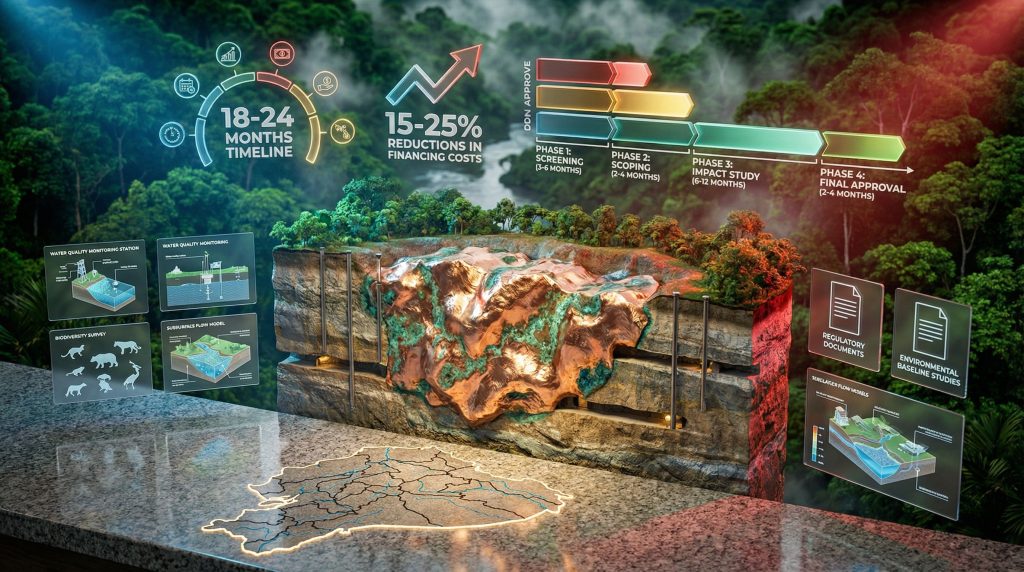
Environmental Impact Assessment Frameworks Transform Mining Investment Landscapes
Modern resource extraction ventures increasingly depend on sophisticated environmental assessment mechanisms that determine project viability across global jurisdictions. The environmental-impact assessment approval for Warintza project in Ecuador exemplifies how these regulatory frameworks have evolved into critical determinants of capital allocation, risk management, and operational success in the mining sector. The complexity of contemporary environmental compliance requirements reflects growing international emphasis on sustainable development principles and stakeholder engagement protocols.
Environmental impact assessment systems function as multifaceted regulatory instruments that integrate technical evaluation, community consultation, and long-term stewardship planning. These frameworks have become essential de-risking mechanisms for institutional investors, providing measurable pathways toward operational certainty in an increasingly regulated global mining environment. Furthermore, the mining permitting basics demonstrate how regulatory compliance intersects with technical excellence.
When big ASX news breaks, our subscribers know first
What Makes Ecuador's Environmental Impact Assessment Process Unique for Mining Projects?
Ecuador's environmental regulatory architecture represents a sophisticated approach to large-scale mining project evaluation, incorporating both technical rigour and extensive stakeholder engagement requirements. The country's Ministry of Environment and Energy operates through a multidisciplinary evaluation system that examines environmental baseline studies, engineering specifications, water management protocols, biodiversity protection measures, infrastructure design parameters, geological characterisation, and community engagement frameworks.
Multi-Tiered Regulatory Architecture and Approval Pathways
The Ecuadorian system distinguishes itself through comprehensive technical evaluation processes that require extensive documentation across multiple environmental and engineering disciplines. Recent project approvals have demonstrated the system's emphasis on rigorous technical evaluation combined with close regulatory collaboration throughout extended review periods.
Environmental assessments in Ecuador typically encompass:
- Environmental baseline establishment through multi-year ecological surveys
- Water quality assessment protocols for watershed protection
- Biodiversity impact evaluation in ecosystem-sensitive regions
- Infrastructure environmental integration for transportation and processing facilities
- Geological stability analysis for long-term operational safety
- Social impact assessment incorporating community development frameworks
The Ministry of Environment and Energy's evaluation approach emphasises collaborative regulatory engagement, enabling project developers to address technical concerns through iterative consultation processes rather than adversarial review mechanisms.
Indigenous Consultation Requirements Under International Standards
Ecuador's environmental approval framework incorporates extensive Indigenous consultation protocols aligned with international standards for Free, Prior, and Informed Consultation. These requirements mandate comprehensive stakeholder engagement with territorial organisations throughout the assessment process.
The consultation framework includes:
- Territorial impact assessment with affected Indigenous communities
- Cultural heritage protection protocols for traditional land use areas
- Benefit-sharing agreement development incorporating community priorities
- Long-term relationship establishment for ongoing project-community engagement
- Traditional knowledge integration in environmental monitoring systems
| Assessment Component | Timeline | Key Requirements | Regulatory Focus |
|---|---|---|---|
| Technical Documentation | 3-6 months | Environmental baselines, engineering designs | Ministry evaluation standards |
| Multidisciplinary Review | 12-18 months | Site assessments, technical analysis | Regulatory collaboration |
| Stakeholder Consultation | 6-12 months | Community engagement, impact mitigation | Indigenous rights compliance |
| Final Evaluation | 2-4 months | Permit conditions, monitoring protocols | Operating approval criteria |
Why Do Environmental Approvals Significantly De-Risk Mining Investments?
Environmental impact assessment approvals function as transformative de-risking events in mining project development, enabling access to capital markets and operational advancement opportunities. These regulatory milestones provide institutional investors with measurable risk reduction metrics that directly impact financing terms and project valuations. Additionally, mining decarbonisation benefits increasingly influence investor decision-making processes.
Capital Market Response to Regulatory Milestone Achievement
Institutional investors increasingly recognise environmental approvals as critical inflection points that substantially reduce regulatory uncertainty and enable project advancement. The achievement of environmental assessment approval typically triggers significant capital deployment mechanisms and reduces risk premiums associated with regulatory uncertainty.
Recent examples demonstrate the tangible financial impact of environmental approvals:
- Milestone-based financing release enabling immediate capital access
- Risk premium adjustments in subsequent funding arrangements
- Institutional investor confidence enhancement through regulatory validation
- Operational timeline acceleration reducing carrying costs and development risks
The Warintza copper project in Ecuador exemplifies this dynamic, where environmental-impact assessment approval for Warintza project in Ecuador enabled immediate access to a $50-million capital tranche under a broader $200-million financing agreement. This milestone-based funding structure demonstrates how environmental approvals serve as practical de-risking mechanisms in project finance arrangements.
Operational Risk Mitigation Through Environmental Compliance
Environmental approvals provide comprehensive operational risk mitigation by pre-addressing potential regulatory challenges and establishing clear compliance frameworks for long-term operations. These approvals function as protective mechanisms against future regulatory disruptions and community relations challenges.
Key operational risk mitigation benefits include:
- Pre-approved water management systems reducing construction delays and operational interruptions
- Biodiversity protection protocols minimising future environmental compliance challenges
- Community engagement frameworks preventing social licence disruptions
- Infrastructure environmental clearance enabling accelerated development timelines
- Waste management pre-approval reducing operational regulatory uncertainty
Industry analysts note that mining projects with comprehensive environmental approvals typically experience significantly reduced operational risk profiles, enabling more favourable financing terms and accelerated development timelines.
How Do Large-Scale Copper Projects Navigate Ecuador's Environmental Framework?
Large-scale copper developments in Ecuador must address complex environmental requirements that encompass massive operational footprints, extensive infrastructure needs, and long-term environmental stewardship obligations. These projects represent some of the most sophisticated environmental assessment challenges in contemporary mining. Moreover, industry innovation trends continuously reshape how companies approach environmental compliance.
Technical Requirements for Multi-Billion Dollar Mining Operations
Major copper projects require environmental documentation that addresses operational scales exceeding 1.3 billion tonnes of mineral reserves with annual production targets approaching 300,000 tonnes of copper-equivalent output. The Warintza project, with its $4.6-billion net present value, demonstrates the scale and complexity of environmental considerations for large-scale developments.
Technical environmental requirements encompass:
- Massive water management systems for processing operations and environmental protection
- Extensive waste rock management for billion-tonne reserve developments
- Tailings facility environmental controls for long-term containment and monitoring
- Processing facility emission management for air quality protection
- Transportation corridor environmental mitigation for heavy equipment and materials movement
Infrastructure Development Environmental Considerations
Large-scale copper projects require substantial infrastructure development that extends environmental impact considerations well beyond immediate mining areas. Environmental assessments must address transportation networks, power transmission systems, and processing facility environmental integration.
Infrastructure environmental components include:
- Transportation corridor ecological assessments for road and rail development
- Power transmission environmental evaluation including renewable energy integration opportunities
- Processing facility environmental controls for emissions, waste management, and water treatment
- Community infrastructure environmental impact for workforce housing and service provision
- Port facility environmental assessment for export infrastructure development
Biodiversity Protection Protocols in Mining Concessions
Ecuador's environmental framework emphasises comprehensive biodiversity protection in regions that often represent critical habitat areas. Large-scale mining projects must demonstrate sophisticated understanding of ecosystem dynamics and implement advanced protection and mitigation measures. Consequently, mine reclamation importance becomes integral to long-term environmental stewardship.
Biodiversity protection requirements encompass:
- Ecosystem impact assessment across multiple habitat types
- Species population monitoring for endemic and threatened species
- Habitat restoration protocols for disturbed areas
- Wildlife corridor preservation maintaining ecosystem connectivity
- Long-term biodiversity monitoring throughout operational and post-closure periods
What Are the Key Success Factors for EIA Approval in Ecuador?
Environmental impact assessment success in Ecuador requires strategic integration of technical excellence, stakeholder engagement, and regulatory collaboration throughout extended evaluation periods. Successful projects demonstrate comprehensive environmental stewardship planning combined with transparent community engagement processes.
Comprehensive Environmental Baseline Documentation
Robust environmental baseline establishment provides the foundation for successful EIA approval through demonstrating thorough understanding of pre-development environmental conditions and potential impact scenarios.
Critical baseline components include:
- Multi-year ecological surveys establishing species populations and habitat utilisation patterns
- Water quality baseline assessment across watershed systems
- Geological characterisation including stability analysis and groundwater evaluation
- Air quality monitoring establishing atmospheric baseline conditions
- Social and economic baseline establishment documenting community conditions and development priorities
The Warintza project's environmental approval success reflects comprehensive baseline documentation that enabled regulatory confidence in impact assessment accuracy and mitigation measure effectiveness.
Stakeholder Engagement Strategy Implementation
Effective stakeholder engagement represents a critical success factor that extends beyond regulatory compliance to establish genuine partnership frameworks with affected communities and regulatory authorities.
Successful engagement strategies incorporate:
- Early consultation initiation before formal assessment submission
- Transparent information sharing regarding project plans and potential impacts
- Community priority integration in project planning and benefit-sharing arrangements
- Ongoing dialogue maintenance throughout assessment and operational periods
- Technical advisory integration including local expertise and traditional knowledge
Technical Design Integration with Environmental Protection
Environmental approval success requires sophisticated integration of mining engineering with environmental protection measures, demonstrating that operational efficiency and environmental stewardship can be mutually reinforcing rather than competing objectives.
Design integration elements include:
- Mine planning optimisation minimising environmental disturbance through efficient extraction sequences
- Processing technology selection emphasising emission reduction and resource efficiency
- Water recycling system integration reducing freshwater consumption and discharge requirements
- Waste management innovation incorporating advanced containment and treatment technologies
- Closure planning integration ensuring long-term environmental protection post-operations
How Does Ecuador's EIA Process Compare Globally for Mining Investment Attraction?
Ecuador's environmental assessment framework positions the country competitively within global mining investment landscapes through predictable timelines, comprehensive technical standards, and clear regulatory coordination mechanisms.
International Best Practice Benchmarking
Comparative analysis of global environmental assessment systems reveals Ecuador's framework incorporates international best practices while maintaining regulatory efficiency and predictability for project developers.
| Jurisdiction | Average Timeline | Primary Regulatory Authority | Distinctive Features |
|---|---|---|---|
| Ecuador | 18-24 months | Ministry of Environment and Energy | Multidisciplinary technical evaluation, comprehensive stakeholder engagement |
| Peru | 15-20 months | SENACE (National Environmental Certification Service) | Streamlined technical review, sectoral coordination |
| Chile | 24-36 months | Environmental Assessment Service (SEA) | Environmental impact study requirements, regional authority coordination |
| Canada (BC) | 20-30 months | Environmental Assessment Office | Indigenous consultation requirements, cumulative effects assessment |
| Australia (WA) | 18-28 months | Environmental Protection Authority | Biodiversity protection emphasis, community consultation protocols |
Competitive Advantages of Ecuador's Regulatory Framework
Ecuador's environmental assessment system offers several competitive advantages that attract international mining investment while maintaining comprehensive environmental protection standards.
Key competitive advantages include:
- Predictable timeline frameworks enabling accurate project planning and financing arrangements
- Technical collaboration opportunities facilitating problem-solving through regulatory engagement
- Comprehensive evaluation standards providing clear approval criteria and assessment expectations
- Stakeholder engagement integration reducing community relations risks through systematic consultation
- International standard alignment facilitating institutional investor confidence and international financing access
The next major ASX story will hit our subscribers first
What Financial Mechanisms Support Projects Through Environmental Review Periods?
Mining companies employ sophisticated financing strategies to maintain operational momentum and project advancement during extended environmental assessment periods. These financial mechanisms recognise the regulatory approval process as an investment phase requiring strategic capital deployment.
Strategic Financing Arrangements During Permitting Phases
Advanced project financing structures increasingly incorporate environmental approval milestones as trigger events for capital release, enabling risk-adjusted funding deployment throughout regulatory review periods.
| Financing Mechanism | Warintza Project Example | Risk Management Function |
|---|---|---|
| Total Agreement Value | $200 million | Comprehensive development funding |
| Milestone-based Release | $50 million (environmental approval trigger) | Regulatory risk mitigation |
| Financing Partner | Royal Gold (streaming agreement) | Institutional investor confidence |
| Capital Deployment Strategy | Systematic tranche releases | Timeline optimisation |
Milestone-based financing arrangements provide several strategic advantages:
- Risk-adjusted capital deployment aligning funding release with de-risking events
- Institutional investor confidence through regulatory milestone validation
- Balance sheet optimisation during extended regulatory review periods
- Development timeline acceleration enabling parallel workstream advancement
- Market confidence enhancement through demonstrated financing capacity
Balance Sheet Strengthening During Regulatory Review
Sophisticated mining companies utilise environmental review periods for strategic balance sheet strengthening and operational preparation, transforming regulatory timelines into competitive advantages through systematic preparation.
Balance sheet optimisation strategies include:
- Working capital enhancement supporting extended development timelines
- Exploration program advancement expanding resource understanding and development options
- Infrastructure planning acceleration preparing for post-approval development
- Technical team development building operational capacity and regulatory expertise
- Community relationship investment establishing long-term partnership frameworks
How Do Environmental Approvals Impact Project Development Timelines?
Environmental approvals function as critical inflection points that enable rapid transition from regulatory compliance to operational development. Successful projects utilise approval achievement as launching platforms for accelerated development timelines and operational preparation. Furthermore, achieving the environmental-impact assessment approval for Warintza project in Ecuador demonstrates how regulatory milestones can unlock significant development potential.
Parallel Permitting Strategy Implementation
Sophisticated project developers implement parallel permitting strategies that advance multiple regulatory workstreams simultaneously, minimising total approval timelines and enabling rapid post-approval development acceleration.
Parallel permitting approaches encompass:
- Construction permit preparation during environmental assessment review
- Equipment procurement planning enabling rapid deployment post-approval
- Infrastructure development coordination with environmental assessment timelines
- Community engagement continuation building long-term partnership foundations
- Technical design advancement integrating regulatory feedback and requirements
Post-Approval Development Acceleration Opportunities
Environmental approval achievement creates immediate opportunities for development acceleration through pre-positioned resources, pre-approved systems, and established regulatory relationships.
Development acceleration mechanisms include:
- Pre-approved water management systems enabling immediate construction commencement
- Established community partnerships facilitating workforce development and local procurement
- Regulatory relationship continuation supporting additional permitting requirements
- Investor confidence enhancement enabling additional capital raising and partnership development
- Operational planning advancement transitioning from assessment to implementation focus
What Environmental Challenges Must Mining Projects Address in Ecuador?
Ecuador's unique ecological characteristics present distinctive environmental challenges that require sophisticated technical approaches and long-term stewardship commitments. These challenges reflect the country's position at the intersection of Amazon rainforest, Andean highlands, and coastal ecosystems. In addition, sustainability transformation initiatives increasingly shape how companies address these challenges.
Ecosystem Protection in Biodiversity Hotspots
Ecuador contains some of the world's most biodiverse ecosystems, requiring mining projects to demonstrate advanced understanding of ecological dynamics and implement comprehensive protection measures that extend well beyond immediate operational areas.
Biodiversity protection challenges include:
- Amazon rainforest edge ecosystem management balancing development with habitat preservation
- Endemic species habitat protection for globally unique flora and fauna
- Watershed protection protocols maintaining water quality across multiple river systems
- Ecosystem connectivity preservation ensuring wildlife corridor functionality
- Traditional land use protection respecting Indigenous territory management systems
Climate Change Adaptation and Mitigation Measures
Contemporary mining projects must address climate change impacts through both adaptation strategies for operational resilience and mitigation measures reducing greenhouse gas emissions and environmental impacts.
Climate considerations encompass:
- Carbon footprint reduction through renewable energy integration and efficiency optimisation
- Climate resilience planning addressing extreme weather events and long-term climate shifts
- Water resource adaptation managing changing precipitation patterns and drought scenarios
- Ecosystem climate protection supporting biodiversity adaptation to changing environmental conditions
- Community climate resilience supporting local adaptation and sustainable development
Long-Term Environmental Stewardship Planning
Environmental assessment frameworks increasingly emphasise long-term stewardship obligations that extend decades beyond operational periods, requiring comprehensive planning for post-mining environmental protection and community development.
Stewardship planning components include:
- Mine closure environmental restoration returning disturbed areas to productive use
- Community environmental monitoring participation building local capacity for long-term oversight
- Post-mining land use transition supporting alternative economic development opportunities
- Water treatment system maintenance ensuring long-term water quality protection
- Biodiversity monitoring continuation tracking ecosystem recovery and adaptation
How Can Mining Companies Optimise Their EIA Success Probability?
Environmental impact assessment success requires strategic integration of technical excellence, stakeholder engagement, and regulatory collaboration throughout comprehensive evaluation processes. Companies that achieve approval demonstrate systematic approaches to environmental stewardship and community partnership development. Additionally, learning from successful cases like the environmental-impact assessment approval for Warintza project in Ecuador provides valuable insights for other projects.
Early Engagement and Relationship Building Strategies
Successful environmental assessment begins with early engagement strategies that establish trust, transparency, and collaborative problem-solving approaches with regulatory authorities and affected communities well before formal assessment submission.
Early engagement strategies include:
- Pre-submission stakeholder consultation building understanding and addressing concerns before formal review
- Technical advisory committee establishment incorporating local expertise and traditional knowledge
- Transparent communication protocols providing regular updates and responding to community questions
- Regulatory relationship development establishing collaborative working relationships with assessment authorities
- Community priority integration incorporating local development goals into project planning
Technical Excellence and Innovation Integration
Environmental approval success requires demonstration of technical excellence through advanced environmental protection technologies, innovative monitoring systems, and cutting-edge impact mitigation approaches.
Technical excellence indicators include:
- Advanced environmental monitoring technology providing real-time data and early warning systems
- Best-in-class waste management design incorporating proven technologies and innovative approaches
- Water treatment and recycling innovation minimising freshwater consumption and discharge requirements
- Emission control technology integration exceeding regulatory requirements through advanced systems
- Restoration technology advancement demonstrating effective ecosystem recovery techniques
Continuous Improvement and Adaptive Management
Environmental stewardship excellence requires commitment to continuous improvement and adaptive management approaches that respond to new scientific understanding, community feedback, and changing environmental conditions.
Adaptive management frameworks encompass:
- Regular environmental performance monitoring tracking effectiveness of protection measures
- Stakeholder feedback integration incorporating community input into operational improvements
- Scientific research collaboration contributing to broader environmental understanding and protection
- Technology advancement adoption implementing new environmental protection innovations
- Regulatory compliance enhancement exceeding minimum requirements through voluntary improvement commitments
Frequently Asked Questions about Environmental Impact Assessment in Ecuador:
How long does environmental impact assessment approval typically require for large-scale mining projects in Ecuador?
Environmental impact assessment approval for major mining projects in Ecuador generally requires 18-24 months, incorporating comprehensive technical review by the Ministry of Environment and Energy, extensive stakeholder consultation including Indigenous communities, and detailed evaluation of environmental baseline studies, water management systems, biodiversity protection measures, and community engagement frameworks.
What are the key benefits of achieving environmental approval for mining investment attraction?
Achieving environmental approval provides multiple investment benefits including immediate access to milestone-based financing, reduced regulatory risk premiums, enhanced institutional investor confidence, and accelerated development timelines. The Warintza project's successful approval demonstrates how environmental milestones can unlock significant capital deployment opportunities.
Additional Resources:
Companies and investors seeking deeper understanding of environmental assessment frameworks can explore government regulatory guidance, international best practice documentation, and industry case studies for comprehensive perspective on environmental stewardship requirements and investment implications across global mining jurisdictions.
Interested in the Next Major Copper Discovery?
Discovery Alert's proprietary Discovery IQ model delivers instant notifications when significant copper discoveries hit the ASX, enabling subscribers to capitalise on environmental milestone achievements before broader market awareness develops. See how major mineral discoveries can generate substantial returns by exploring Discovery Alert's dedicated discoveries page, then begin your 14-day free trial today to position yourself ahead of the market.