May 23, 2026
Understanding Federal Arctic Energy Development Policies
The intersection of energy security and environmental protection creates complex policy frameworks that shape how federal agencies approach resource development in sensitive regions. Arctic territories present unique challenges where legislative mandates, market dynamics, and regulatory requirements converge to determine the viability of large-scale energy projects. Understanding these mechanisms provides insight into how government policy translates into practical development outcomes across vast frontier regions.
Federal leasing programs in remote areas operate under specific congressional directives that establish minimum offering requirements and development timelines. The current legislative framework requires agencies to conduct multiple oil and gas lease sale in Alaska's Arctic Wildlife Refuge operations through 2035, with each sale offering at least 400,000 acres of available territory. These mandates reflect broader policy objectives aimed at expanding domestic energy production while managing environmental considerations in ecologically sensitive areas.
When big ASX news breaks, our subscribers know first
Legislative Requirements and Implementation Timelines
Congressional mandates establish the foundation for Arctic energy development through specific acreage requirements and scheduling obligations. Current legislation requires federal agencies to offer substantial acreage blocks in each leasing cycle, creating predictable opportunities for industry participation while maintaining government oversight of development activities.
The Bureau of Land Management operates under strict timeline requirements that govern the entire leasing process from initial nominations through final lease awards. Recent implementation schedules demonstrate this systematic approach:
- February 2026: Call for nominations period
- June 3, 2026: Sealed bid submission deadline
- June 5, 2026: Public opening of results in Anchorage
- 2035: Final deadline for completing mandated lease sales
These structured timelines ensure transparency while providing industry participants sufficient time to evaluate opportunities and prepare competitive bids. The BLM manages approximately 245 million acres of public land and administers 700 million acres of subsurface mineral estate across the United States, making it one of the largest land management agencies globally.
Federal Agency Coordination in Energy Development
Multiple federal agencies collaborate to implement Arctic energy policies, with the Bureau of Land Management serving as the primary leasing authority while other departments provide specialised oversight. Environmental impact assessments require coordination between Interior Department agencies, while national security considerations involve Defense Department input on strategic resource development.
The complexity of multi-agency coordination becomes particularly evident in Arctic regions where extreme weather conditions, wildlife protection requirements, and indigenous community considerations create overlapping regulatory jurisdictions. Successful implementation requires sustained coordination across agency boundaries to ensure compliance with both energy development mandates and environmental protection standards.
Furthermore, the recent implementation of mining permit orders has streamlined certain aspects of federal resource development authorisations. However, these changes primarily affect mineral extraction rather than oil and gas development in sensitive Arctic regions.
The Strategic Importance of Alaska's Arctic National Wildlife Refuge
Alaska's Coastal Plain represents a convergence of energy resource potential and environmental protection priorities that has shaped federal policy for decades. The 1.56-million-acre Coastal Plain designation encompasses territory that federal agencies have identified as having significant potential for contributing to domestic energy supply objectives.
Historical protection status for this region reflected environmental priorities, but legislative changes have opened development opportunities while maintaining specific operational constraints. This evolution demonstrates how policy frameworks adapt to changing national priorities while attempting to balance competing interests.
Geographic and Resource Characteristics
The Arctic National Wildlife Refuge encompasses vast territory with diverse ecological characteristics and varying resource development potential. The Coastal Plain portion represents the primary focus area for energy development activities, distinguished by its geological formations and accessibility considerations.
Federal policymakers have long recognised this region's prospective value for oil and gas development, citing its potential contribution to domestic energy supply security. However, the remote location and extreme operating conditions create unique technical and logistical challenges that influence development economics and industry participation levels.
Key geographic factors affecting development include:
- Remote location requiring specialised logistics and transportation infrastructure
- Extreme weather conditions limiting operational windows and increasing costs
- Sensitive wildlife habitats requiring seasonal operating restrictions
- Limited existing infrastructure necessitating substantial capital investment
Policy Evolution and Development Authorisation
The transition from protection status to development authorisation reflects changing national energy priorities and legislative approaches to resource management. This evolution demonstrates how federal policy adapts to shifting economic and security considerations while maintaining environmental oversight mechanisms.
Recent leasing activity illustrates the practical challenges of implementing development policies in frontier regions. Historical data reveals significant variation in industry participation and economic outcomes across different market conditions and regulatory environments.
Meanwhile, the broader energy sector has seen significant shifts, particularly regarding OPEC production impact on global markets. These international dynamics influence domestic development priorities and investment decisions in challenging frontier regions like Arctic Alaska.
Federal Lease Auction Mechanics and Procedures
The Bureau of Land Management operates sophisticated auction systems designed to ensure competitive bidding while maintaining transparency and regulatory compliance. These procedures have evolved to accommodate the unique characteristics of Arctic development while protecting federal interests in resource management.
Bidding Process and Timeline Requirements
The federal leasing process follows established protocols that provide industry participants with clear guidelines and sufficient time to evaluate opportunities. The systematic approach ensures fair competition while enabling thorough technical and economic analysis of available acreage.
Sealed bid submission protocols maintain competitive integrity by preventing premature disclosure of bidding strategies. Results are opened publicly to ensure transparency and enable verification of the auction process. This approach has proven effective across various resource development regions and market conditions.
The nomination process enables industry participants to identify specific areas of interest, allowing the BLM to focus auction activities on territories with demonstrated commercial potential. This targeting mechanism improves auction efficiency while reducing administrative costs associated with offering uncommercial acreage.
Competitive Dynamics in Arctic Leasing
Market participation in Arctic lease sales reflects complex interactions between resource potential, development costs, regulatory requirements, and broader economic conditions. Historical data demonstrates significant variation in bidding activity across different time periods and market environments.
Recent lease sale results reveal the challenging economics of Arctic development:
| Sale Year | Revenue Generated | Acres Leased | Successful Bidders | Average Price/Acre |
|---|---|---|---|---|
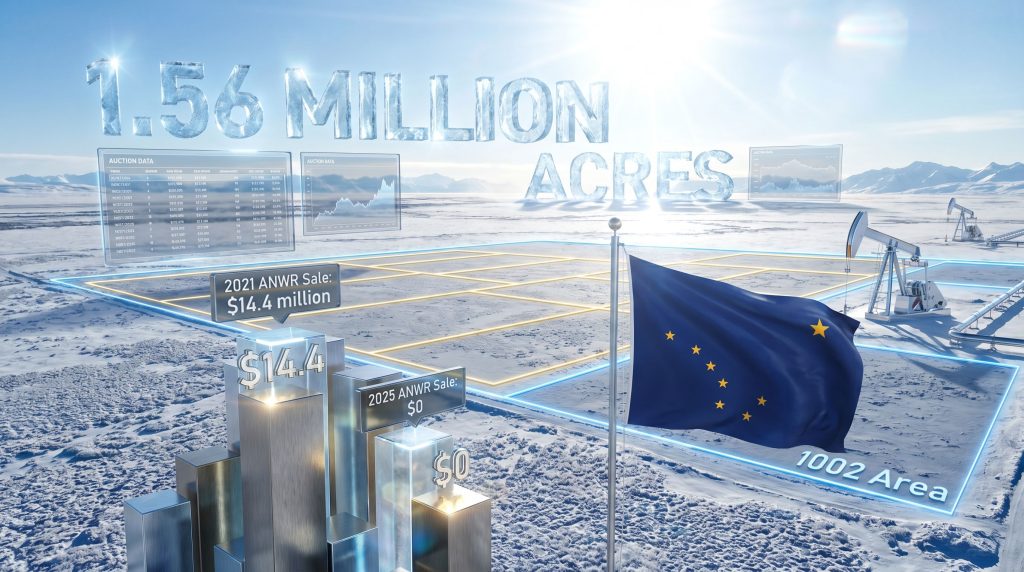
| 2021 | $14.4 million | 437,804 | 9 entities | $33 |
| 2025 | $0 | 0 | 0 | N/A |
The dramatic difference between 2021 and 2025 results illustrates how rapidly market conditions can change in frontier development regions. Multiple factors contribute to these variations, including oil price volatility, regulatory uncertainty, and environmental compliance costs.
Industry participation patterns reflect sophisticated risk assessment processes that evaluate long-term development potential against substantial upfront investment requirements. Companies must consider not only resource potential but also infrastructure development needs, regulatory compliance costs, and market access challenges.
Consequently, investors must carefully evaluate investment risk red flags when considering participation in high-risk frontier development projects with extended payback periods.
Risk Assessment and Capital Requirements
Arctic energy development requires substantial capital commitments with extended payback periods and significant technical risks. Successful bidders must demonstrate financial capacity to complete development projects under challenging conditions while meeting stringent environmental and operational requirements.
The remote location and extreme operating conditions create unique cost structures that distinguish Arctic projects from conventional development opportunities. These factors influence bidding strategies and help explain the significant variation in auction participation across different market cycles.
Economic Factors Shaping Lease Sale Outcomes
The economics of Arctic energy development involve complex interactions between resource potential, development costs, regulatory requirements, and market conditions. Understanding these relationships provides insight into the factors that determine auction success and long-term project viability.
Revenue Generation and Distribution Mechanisms
Federal lease sales generate revenue through competitive bidding processes that reflect industry assessments of resource potential and development economics. The significant variation in historical auction results demonstrates how market conditions and regulatory environments influence bidding behaviour.
The $14.4 million generated in the 2021 oil and gas lease sale in Alaska's Arctic Wildlife Refuge represented interest from 9 successful bidders across 437,804 acres of leased territory. The average price of $33 per acre reflected industry assessments of development potential under prevailing market conditions.
"The complete absence of bids in the 2025 sale demonstrates how rapidly Arctic development economics can change based on regulatory constraints and market conditions."
Revenue distribution between federal and state governments follows established formulas that provide both levels of government with financial incentives to support responsible development. These mechanisms help align policy objectives while ensuring adequate funding for regulatory oversight and environmental monitoring.
Market Volatility and Investment Decisions
Oil price fluctuations significantly impact the economics of high-cost Arctic development projects. Break-even calculations must account for extended development timelines, substantial infrastructure requirements, and ongoing operational costs in extreme environments.
Transportation infrastructure limitations create additional cost pressures that distinguish Arctic projects from conventional development opportunities. Pipeline capacity, port facilities, and specialised equipment requirements all contribute to capital intensity that influences investment decisions.
Climate policy considerations add another layer of uncertainty to long-term investment planning. Companies must evaluate potential regulatory changes and market demand shifts when making substantial capital commitments to frontier development projects.
State and Federal Interest Alignment
Alaska state government has significant economic incentives to support federal leasing activities that generate local employment and state revenue. However, the absence of bids in recent sales demonstrates that policy support alone cannot overcome unfavourable market conditions and regulatory uncertainty.
Federal energy security objectives sometimes conflict with state economic development priorities, creating tension in policy implementation. Successful leasing programs must balance these competing interests while maintaining environmental protection standards.
In addition, the broader context of US oil production decline has heightened federal interest in developing domestic resources, particularly in frontier regions like Arctic Alaska.
Environmental and Social Considerations in Arctic Development
Environmental protection requirements and social considerations significantly influence the structure and outcomes of Arctic energy development projects. These factors create operational constraints while providing important safeguards for ecosystem integrity and community interests.
Stakeholder Engagement and Opposition Dynamics
Arctic energy development generates diverse stakeholder responses that reflect different priorities and interests. Understanding these perspectives provides insight into the political and social factors that influence leasing outcomes and long-term project viability.
Environmental organisations typically oppose Arctic development based on climate change concerns and potential ecosystem impacts. Their advocacy efforts focus on litigation strategies, public awareness campaigns, and political pressure to restrict or eliminate leasing opportunities.
Indigenous communities have complex relationships with energy development that reflect both economic opportunities and cultural protection concerns. Traditional land use patterns and subsistence activities create important considerations that must be addressed in development planning.
Industry supporters emphasise economic benefits including employment opportunities, state and local tax revenue, and contributions to energy security objectives. These arguments focus on responsible development practices and technological capabilities that minimise environmental impacts.
Regulatory Compliance and Environmental Protection
Arctic energy development operates under comprehensive regulatory frameworks designed to protect sensitive ecosystems while enabling responsible resource development. These requirements create specific operational constraints that influence project economics and development timelines.
Environmental impact assessment requirements ensure thorough evaluation of potential ecological effects before development authorisation. These processes typically involve extensive technical studies and public consultation periods that can extend project timelines significantly.
Wildlife protection measures include seasonal operating restrictions designed to minimise disturbance during sensitive periods such as migration or breeding seasons. These constraints require careful project planning and may limit operational efficiency in some circumstances.
Furthermore, many energy companies are exploring renewable energy solutions to reduce operational emissions and environmental impact in remote development projects.
The next major ASX story will hit our subscribers first
Long-Term Strategic Implications of Arctic Energy Development
Arctic energy development represents a long-term strategic commitment that extends far beyond individual lease sales or development projects. Understanding the broader implications provides insight into how current decisions may influence future energy security and environmental outcomes.
Infrastructure Development and Supply Chain Requirements
Successful Arctic energy development requires substantial infrastructure investments that extend well beyond individual project boundaries. Pipeline systems, port facilities, transportation networks, and support infrastructure all contribute to the capital intensity of frontier development.
The remote location of Arctic resources necessitates specialised supply chain arrangements that can operate effectively under extreme conditions. Equipment durability, personnel logistics, and material transportation all require careful planning and substantial investment.
Workforce development needs include both technical specialists capable of operating in Arctic conditions and broader support personnel for remote operations. Housing, transportation, and communications infrastructure must all be developed to support sustained operations.
Technology Requirements and Innovation Opportunities
Arctic energy development drives technological innovation in areas such as cold weather operations, remote monitoring systems, and environmental protection technologies. These advances often have broader applications that benefit the entire energy industry.
Advanced drilling and production technologies specifically designed for Arctic conditions continue to evolve, improving both operational efficiency and environmental performance. These innovations help reduce development costs while enhancing safety and environmental protection.
Digital technologies including remote monitoring, predictive maintenance, and automated systems provide opportunities to improve operational efficiency while reducing personnel requirements in challenging environments.
Strategic Energy Security Considerations
Arctic energy resources contribute to broader national energy security objectives by diversifying supply sources and reducing dependence on imports. However, the high costs and long development timelines associated with Arctic projects limit their near-term contribution to energy supply.
Federal policy initiatives that support domestic energy development reflect strategic priorities that extend beyond immediate economic considerations. These policies recognise the importance of maintaining domestic production capacity even when international alternatives may be more economical in the short term.
International cooperation through forums such as the Arctic Council provides mechanisms for coordinating development standards and environmental protection measures across Arctic regions. These collaborative approaches help ensure responsible development practices while maintaining competitive opportunities for domestic industry.
Investment Risk Assessment and Project Viability
Arctic energy development involves unique risk profiles that distinguish these projects from conventional investment opportunities. Political stability, regulatory consistency, and long-term market demand all influence investment decisions in high-capital, long-payback frontier projects.
Environmental litigation exposure creates ongoing uncertainty that must be factored into investment analysis. Even successful lease acquisitions may face legal challenges that delay or prevent development activities.
Permitting timeline uncertainty affects project scheduling and capital deployment strategies. Extended regulatory review processes can significantly impact project economics by delaying revenue generation and increasing carrying costs.
Federal agency coordination requirements across multiple departments create additional complexity in project development and ongoing operations. Successful navigation of these requirements demands specialised expertise and sustained management attention.
Market Psychology and Future Development Prospects
The psychology of Arctic energy investment reflects broader industry sentiment about frontier development opportunities and long-term energy demand patterns. Understanding these dynamics provides insight into likely future participation levels and policy effectiveness.
Industry Sentiment and Bidding Behaviour
The dramatic shift from 9 bidders generating $14.4 million in 2021 to zero bids in 2025 illustrates how rapidly industry sentiment can change regarding Arctic development opportunities. This volatility reflects the marginal economics of high-cost frontier projects under changing market conditions.
Bidding behaviour in frontier regions tends to be highly sensitive to regulatory uncertainty and policy stability. Companies making substantial long-term investments require confidence in consistent policy frameworks that will persist throughout development and production phases.
Risk tolerance for Arctic projects varies significantly across different types of companies and investment strategies. Major integrated oil companies may have different risk appetites and time horizons compared to independent producers or private equity-backed entities.
Policy Stability and Investment Confidence
Sustained investment in Arctic energy development requires policy frameworks that provide long-term stability and predictable regulatory processes. The absence of bids in recent sales suggests that current policy uncertainty may be deterring industry participation.
Political transitions and changing administration priorities create additional uncertainty that influences investment decisions in long-term frontier projects. Companies must evaluate potential policy changes when making substantial capital commitments.
International climate agreements and evolving environmental regulations add another dimension of uncertainty that affects long-term investment planning for fossil fuel development projects.
Future Outlook and Development Scenarios
The success of future Arctic lease sales will depend on multiple factors including oil prices, regulatory stability, infrastructure development, and broader energy market dynamics. Current market conditions suggest continued challenges for generating substantial industry interest.
Technological advances that reduce development costs or improve operational efficiency could enhance the attractiveness of Arctic projects under certain market conditions. However, the fundamental challenges of remote location and extreme operating conditions will continue to influence project economics.
Energy transition considerations may further complicate long-term investment decisions as companies evaluate the role of new oil and gas development in evolving energy portfolios and climate commitments.
The oil and gas lease sale in Alaska's Arctic Wildlife Refuge program continues to face significant headwinds from multiple directions. While federal mandates require continued offering of these opportunities through 2035, market response remains uncertain given current economic and regulatory conditions.
Recent developments include new lease sales being scheduled despite ongoing litigation challenges. Additionally, the Harvard Environmental & Energy Law Program continues to track regulatory developments that may influence future auction outcomes and development prospects.
Investment decisions in Arctic energy development involve significant financial risk and uncertainty. This analysis is for informational purposes only and should not be considered investment advice. Potential investors should conduct thorough due diligence and consult qualified professionals before making investment decisions.
Keen to Spot the Next Energy Discovery?
Discovery Alert's proprietary Discovery IQ model delivers immediate notifications on significant ASX mineral discoveries, including energy commodities, helping subscribers identify actionable trading opportunities before the broader market responds. Explore how major mineral discoveries can generate substantial returns by visiting Discovery Alert's dedicated discoveries page and begin your 14-day free trial today.