
June 9, 2026
Understanding the Global Energy Landscape Amid Regional Tensions
The petroleum industry operates within a complex web of supply chains, demand cycles, and geopolitical pressures that can shift market dynamics within weeks. When regional conflicts emerge in energy-producing areas, the ripple effects extend far beyond immediate production zones, influencing everything from quarterly consumption patterns to long-term investment strategies.
The interconnected nature of global oil markets means that even localized disruptions can trigger worldwide reassessments of energy security, pricing mechanisms, and strategic reserve management. Furthermore, understanding geopolitical oil supply dynamics becomes crucial for market participants.
This intricate relationship between geopolitics and energy economics became particularly evident in April 2026, when OPEC lowers oil demand forecast on Iran war concerns, demonstrating how regional instability threatens established consumption patterns and supply routes. The resulting market adjustments highlight how quickly energy analysts must adapt their models when tensions escalate.
When big ASX news breaks, our subscribers know first
OPEC's Quarterly Assessment Methodology Under Pressure
The Organization of the Petroleum Exporting Countries employs sophisticated forecasting frameworks that integrate multiple variables, from seasonal consumption patterns to macroeconomic indicators. When OPEC released its monthly report on April 13, 2026, the organization demonstrated how rapidly these models can incorporate emerging geopolitical developments.
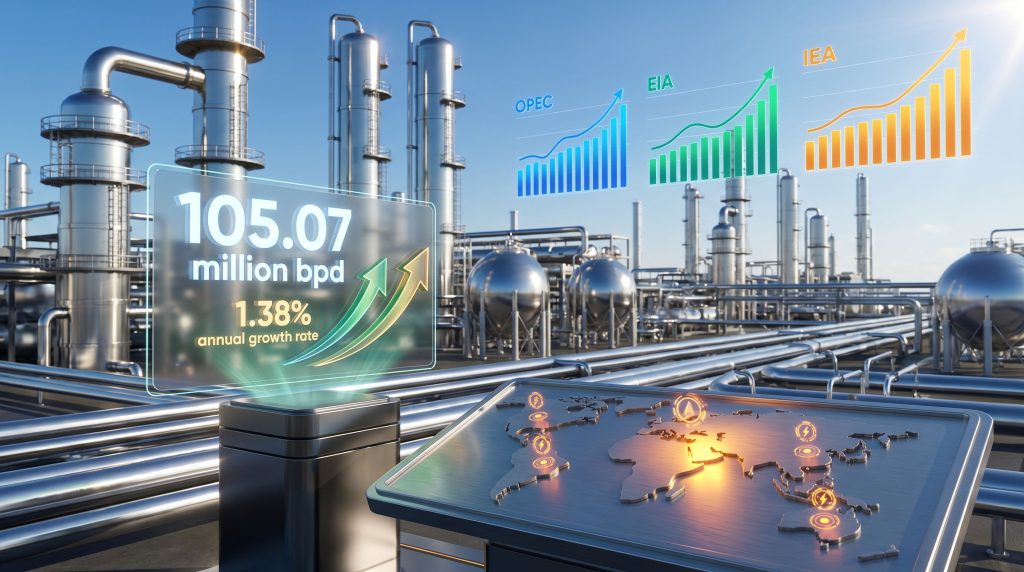
OPEC's revised global oil demand forecast for the second quarter reflected a 500,000 barrel per day downward adjustment, bringing projected consumption to 105.07 million barrels per day compared to the previous month's estimate of 105.57 million barrels per day. This revision specifically targeted the second quarter of 2026, acknowledging what OPEC characterized as temporary market disruption.
The organization's forecasting methodology distinguishes between demand patterns across different economic regions, tracking both OECD and non-OECD consumption separately. Consequently, OPEC meeting insights provide valuable context for understanding these adjustments.
Regional Impact Analysis Across Economic Zones
OPEC's assessment indicated that demand weakness would affect both developed and developing economies, though the organization expects this disruption to remain temporary. The forecasting framework's ability to separate short-term crisis effects from structural demand trends becomes crucial during periods of regional instability.
The methodology incorporates several key factors:
• Economic activity indicators from major consuming regions
• Transportation fuel demand tracking across commercial and residential sectors
• Industrial consumption patterns during periods of supply uncertainty
• Strategic purchasing behavior by government and corporate buyers
This comprehensive approach allows OPEC to maintain unchanged full-year growth projections despite quarterly volatility, suggesting confidence that second-half recovery will offset spring weakness.
Production Resilience Amid Infrastructure Targeting
One of the most significant insights from current market conditions involves the demonstrated resilience of major oil-producing nations despite direct infrastructure attacks. Russian production data for March 2026 reveals remarkable stability in output levels, even as the country faces continued Western sanctions.
Russian oil production reached 9.167 million barrels per day in March 2026, representing only a modest 3,000 barrel per day increase from February levels. This stability occurred despite Ukrainian drone attacks on critical energy infrastructure, including primary oil export terminals in the Baltic and Black Sea regions.
Russia maintains its position as the world's third-largest oil producer behind the United States and Saudi Arabia, while simultaneously holding the planet's largest natural gas reserves. However, oil price movements remain influenced by this dual energy dominance.
Kazakhstan's Tengiz Field Recovery Contributions
In contrast to Russia's stable production, Kazakhstan demonstrated significant output growth during the same period. The country's March 2026 production jumped by 251,000 barrels per day to reach 1.733 million barrels per day, driven primarily by recovery operations at the Tengiz oilfield.
The Tengiz field represents Kazakhstan's largest oil production asset, and its recovery contributed meaningfully to global supply stability during heightened geopolitical uncertainty. This 16.9% monthly production increase demonstrates how technical field operations can proceed despite broader regional tensions.
Key production metrics for major suppliers:
• Russia: 9.167 million bpd (March 2026)
• Kazakhstan: 1.733 million bpd (March 2026)
• Regional stability: Maintained despite infrastructure targeting
• Export capacity: Continued operation of Baltic and Black Sea terminals
Economic Recovery Signals for Energy Markets
OPEC's confidence in second-half 2026 demand recovery reflects underlying economic assumptions about both geopolitical resolution and consumer behavior adaptation. The organization's statement that quarterly weakness would be offset later suggests specific economic indicators support this optimistic projection.
The maintenance of unchanged full-year growth projections despite a 500,000 barrel per day quarterly revision indicates OPEC's assessment that current demand weakness represents temporary market disruption. For instance, when OPEC lowers oil demand forecast on Iran war concerns, this reflects short-term volatility rather than structural changes.
Demand Recovery Pathway Analysis
OPEC's recovery expectations likely incorporate multiple economic factors:
- Seasonal consumption patterns that typically drive higher third and fourth quarter demand
- Consumer adaptation mechanisms that restore normal purchasing behavior as markets adjust
- Industrial restocking cycles that resume once supply uncertainty diminishes
- Transportation sector recovery as logistics networks adapt to new routes
The organization's unchanged annual growth projection suggests confidence that these recovery mechanisms will more than compensate for second-quarter weakness. Additionally, OPEC price stagnation concerns may influence these projections.
Geopolitical Risk Integration in Energy Planning
The current market environment demonstrates how geopolitical developments immediately influence energy planning across both producing and consuming nations. The ability of major suppliers to maintain production despite direct infrastructure attacks reveals the resilience built into global energy systems.
Russia's continued production stability despite sanctions and infrastructure targeting illustrates several key aspects of modern energy geopolitics:
Infrastructure redundancy: Multiple export routes and production facilities provide backup capacity during attacks
Rapid repair capabilities: Technical expertise allows quick restoration of damaged facilities
Alternative market development: Sanctions drive diversification of customer bases and payment systems
Resource leverage: Large reserves provide negotiating power even under international pressure
Supply Chain Adaptation Strategies
The petroleum industry has developed sophisticated mechanisms for maintaining operations during regional conflicts. These include:
• Route diversification away from high-risk transportation corridors
• Strategic inventory management to buffer temporary supply disruptions
• Technical cooperation between producing nations to share expertise and capacity
• Alternative payment systems that bypass traditional financial networks
These adaptation strategies explain how global supply has remained relatively stable despite ongoing Middle Eastern tensions and infrastructure attacks on major producing facilities.
Market Mechanisms During Crisis Periods
Energy markets employ several automatic stabilisation mechanisms during periods of geopolitical uncertainty. Price discovery processes become more volatile, but underlying supply-demand balancing continues through multiple channels.
The petroleum market's response to current Middle Eastern tensions demonstrates these mechanisms in action. While current conditions show volatility, production from other major suppliers continues at stable levels, helping maintain overall market balance.
Price Volatility and Market Adaptation
Current market conditions reveal how price movements serve multiple functions during crisis periods:
- Demand destruction at higher price levels reduces consumption to match available supply
- Strategic buying acceleration as consumers build inventory before further price increases
- Alternative supply activation as higher prices make previously marginal production economical
- Conservation behaviour across industrial and transportation sectors
Market reports from the International Energy Agency indicate oil prices jumped nearly 8% to above $102 per barrel during this period, demonstrating immediate response to supply uncertainty concerns.
The next major ASX story will hit our subscribers first
Strategic Implications for Global Energy Security
The current market environment provides valuable insights for long-term energy security planning. The demonstrated resilience of major suppliers, combined with OPEC's confidence in demand recovery, suggests global energy systems possess more flexibility than often assumed.
However, the 500,000 barrel per day quarterly revision also highlights how quickly regional conflicts can impact global consumption patterns. This volatility creates both challenges and opportunities for different market participants.
Implications for Energy Producers
Major oil-producing nations have demonstrated several strategic capabilities during the current crisis:
• Production maintenance despite infrastructure attacks
• Market share protection through continued export operations
• Technical recovery of damaged facilities within short timeframes
• Alternative market development to replace restricted customers
These capabilities suggest producers have invested significantly in resilience infrastructure and operational flexibility, reducing the long-term impact of geopolitical disruptions. Moreover, US natural gas outlook considerations remain relevant for energy planning.
Considerations for Energy Consumers
Consuming nations face different strategic challenges during periods of energy market volatility:
Price management: Balancing strategic reserve deployment against long-term inventory needs
Supply diversification: Reducing dependence on single suppliers or transportation routes
Efficiency acceleration: Implementing conservation measures to reduce overall demand
Alternative energy investment: Accelerating renewable capacity development
The current environment demonstrates how quickly energy security considerations can shift from theoretical planning exercises to immediate operational challenges.
Long-Term Energy Transition Implications
Current market volatility may accelerate certain aspects of global energy transition planning. Higher petroleum prices and supply uncertainty often drive increased investment in alternative energy sources, while also highlighting the continued importance of fossil fuel security.
OPEC's revised quarterly forecast, combined with maintained annual growth projections, suggests the organisation expects global petroleum demand to remain robust despite current volatility. This perspective indicates continued relevance for oil market dynamics even as renewable energy deployment accelerates.
Supply Chain Evolution Priorities
The demonstrated importance of supply chain resilience during current market conditions will likely influence long-term energy infrastructure development:
- Geographic diversification of production capacity across multiple regions
- Transportation route redundancy to reduce chokepoint vulnerabilities
- Strategic reserve expansion to provide larger buffers during disruption periods
- Technology integration for rapid response to infrastructure damage
These priorities reflect lessons learned from current market volatility and will likely shape energy security planning for the remainder of the decade.
The petroleum industry's response to current Middle Eastern tensions demonstrates both the vulnerabilities and resilience mechanisms built into global energy systems. While OPEC lowers oil demand forecast on Iran war concerns acknowledge short-term disruption effects, the organisation's confidence in annual growth projections suggests underlying market fundamentals remain strong.
This combination of immediate adaptability and long-term stability provides important insights for energy security planning across both producing and consuming nations. Furthermore, the ability to maintain production despite infrastructure targeting demonstrates the sophisticated risk management capabilities developed by major energy suppliers.
Disclaimer: This analysis is based on publicly available market data and forecasts as of April 2026. Energy market projections involve significant uncertainty, and actual outcomes may differ substantially from current forecasts. Readers should consult multiple sources and consider professional advice before making investment or policy decisions based on energy market analysis.
Ready to Capitalise on Energy Market Volatility?
Discovery Alert's proprietary Discovery IQ model delivers real-time alerts on significant ASX mineral discoveries, including critical energy transition metals, instantly empowering subscribers to identify actionable opportunities ahead of broader market movements. Begin your 14-day free trial today and position yourself to benefit from the next major discovery in Australia's evolving energy landscape.