May 24, 2026
Understanding Global LPG Supply Chain Vulnerabilities
The modern energy landscape reveals critical interdependencies that extend far beyond traditional oil price movements, creating cascading vulnerabilities across entire economic systems. The Iran war impact on India's LPG supply demonstrates how seemingly secondary energy sources can become systemic chokepoints when geopolitical tensions disrupt established supply corridors. Contemporary energy security frameworks must account for these multi-layered dependencies, particularly as developing economies transition from coal-dominant systems toward cleaner fuel alternatives.
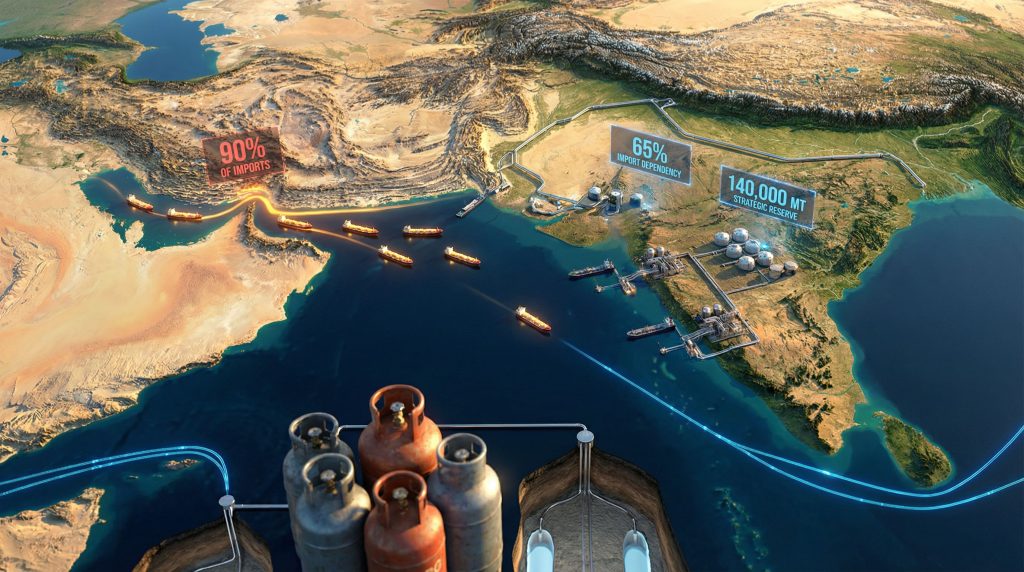
India's energy infrastructure exemplifies this complexity, with approximately 65% of domestic LPG requirements sourced through imports, creating exposure to external supply disruptions that can rapidly cascade through commercial and industrial sectors. The concentration of these imports through singular geographic chokepoints amplifies systemic risk beyond what traditional energy security models anticipated.
Geographic Chokepoint Dependencies
The Strait of Hormuz functions as a critical arterial pathway for global energy flows, handling roughly 27% of worldwide LPG movements. This concentration creates vulnerability cascades that extend throughout consuming economies, particularly those with limited strategic reserve capacity.
India's import structure demonstrates this vulnerability acutely, with 90% of LPG imports traversing the Strait of Hormuz. Unlike oil storage systems that can utilise rock cavern facilities, LPG requires specialised super-cooled tanks or pressurised vessels, creating substantially higher infrastructure costs and technical complexity for equivalent storage capacity.
The nation's domestic production meets approximately 40% of total demand, whilst strategic reserve facilities provide only 140,000 MT of underground storage capacity. This translates to roughly 40-45 days of consumption coverage, significantly below the 6+ month reserves maintained by advanced economies like Japan and China.
Infrastructure Investment Disparities
Strategic gas storage requires fundamentally different technological approaches compared to conventional petroleum reserves. Super-cooled storage systems demand continuous energy inputs and specialised materials, creating ongoing operational costs that traditional rock cavern oil storage does not require.
Regional distribution patterns compound these challenges, with storage capacity concentrated primarily in western states, creating additional logistics constraints for eastern and central regional markets. This geographic concentration limits rapid redistribution capabilities during supply disruptions.
When big ASX news breaks, our subscribers know first
Commercial Sector Impact Analysis
Supply disruptions reveal hierarchical allocation systems that prioritise essential services whilst constraining commercial operations. Under India's Essential Commodities Act framework, household cylinders receive highest priority, followed by essential services like hospitals and schools, with commercial kitchens receiving discretionary treatment.
Food Service Industry Constraints
Commercial cooking operations face immediate operational limitations as gas allocations shift toward residential use. Traditional cooking processes requiring continuous high-energy applications become economically unviable under rationed supply conditions.
Restaurant adaptation strategies include:
- Menu modifications eliminating gas-intensive preparation methods
- Technology substitution toward electric cookware systems
- Operational hour reductions to minimise energy consumption
- Alternative fuel exploration including wood and coal reversion
The seasonal Ramadan delicacy haleem preparation in Hyderabad illustrates this adaptation complexity. The crisis has forced many restaurants to modify their traditional cooking methods, whilst primary cooking continues through traditional wood-fired kilns, secondary processes like onion garnishing face constraints due to LPG-dependent frying requirements.
Industrial Manufacturing Disruptions
Specialised manufacturing processes dependent on precise gas-based heating face production halts due to supply constraints. Karnataka's micro-distillery sector exemplifies these challenges, where operations like Huli Spirits face complete shutdowns rather than expensive retrofitting for alternative fuel sources.
The economic impact extends beyond immediate production losses. Licensing costs, environmental permit requirements, and infrastructure modifications create barriers that smaller operations cannot absorb during supply disruptions. Monthly licensing costs of $9,000 combined with three-month retrofitting timelines create existential challenges for niche manufacturers.
Essential Services Adaptation
Municipal facilities demonstrate forced technological transitions under supply constraints. 22 LPG-operated crematoriums across Pune, Maharashtra have closed indefinitely, creating shifts toward electric alternatives or traditional wooden pyres.
This transition carries environmental implications, as traditional wooden pyre preferences contribute to the annual felling of an estimated 50-60 million trees nationwide. Municipal authorities follow petroleum ministry directives prioritising household gas conservation over public facility operations.
Historical Energy Crisis Comparisons
Structural Economic Transformations
The 1973 energy crisis occurred within a fundamentally different economic structure, where India's industry relied heavily on coal with limited petroleum exposure. LPG cylinders functioned as rationed luxury items, whilst middle-class households utilised kerosene stoves for cooking needs.
Contemporary energy dependencies reveal reversed structural relationships. Urban transportation systems including buses, taxis, and auto-rickshaws have transitioned toward gas-based fuels as pollution mitigation strategies, creating new vulnerability pathways absent during earlier energy shocks.
Historical vs. Contemporary Energy Matrix:
| Period | Primary Residential Fuel | Industrial Base | Storage Infrastructure | Recovery Options |
|---|---|---|---|---|
| 1973 Crisis | Kerosene/coal dominant | Coal-based industrial | Rock cavern oil storage | Fuel substitution viable |
| 2026 Crisis | Gas transitioning | Gas-dependent processes | Limited gas storage | Substitution constrained |
Economic Exposure Evolution
The shift from coal-dominant to gas-transitioning energy systems creates path dependencies that constrain rapid adaptation during supply disruptions. Infrastructure investments in gas-based systems represent sunk costs that cannot be quickly pivoted toward alternative energy sources.
Subsidised cylinder programmes extending to 100 million new connections created structural dependencies that transformed LPG from luxury commodity to essential household requirement, fundamentally altering the economic impact profile of supply disruptions. Furthermore, these geopolitical trade impacts demonstrate how energy dependencies can become strategic vulnerabilities.
Strategic Reserve Infrastructure Gaps
International Benchmarking Analysis
Advanced economies maintain strategic gas reserves providing substantially longer consumption coverage than India's current capacity. This infrastructure gap represents not merely insufficient storage but fundamental vulnerability in energy security architecture.
Global Strategic Reserve Comparison:
| Country | Strategic Reserve Coverage | Storage Technology | Geographic Distribution |
|---|---|---|---|
| Japan | 6+ months | Super-cooled facilities | Multiple regions |
| China | 6+ months | Pressurised systems | Distributed network |
| India | 1.5 months | Underground caverns | Western concentration |
Infrastructure Investment Requirements
Achieving adequate strategic reserve capacity requires substantial capital commitments beyond conventional energy infrastructure. Super-cooled LPG storage demands continuous operational energy inputs and specialised maintenance capabilities that traditional petroleum storage does not require.
Geographic distribution improvements necessitate east coast terminal development, pipeline network expansion, and port capacity enhancements to accommodate larger vessels from diversified supply sources.
Alternative Supply Route Economics
Geographic Diversification Costs
Supply route diversification creates significant cost and time implications that cascade through the entire LPG value chain. Extended shipping distances from alternative suppliers generate inflationary pressures across commercial and residential sectors.
Route Economics Comparison:
| Origin Region | Transit Duration | Shipping Distance | Insurance Premium | Operational Complexity |
|---|---|---|---|---|
| Qatar via Hormuz | 4 days | Shortest | High (conflict zone) | Established infrastructure |
| US Gulf Coast | 30+ days | Maximum | Moderate | New relationship building |
| Australian suppliers | 12-15 days | Medium | Low | Moderate infrastructure |
| Norwegian sources | 20-25 days | Extended | Low | European coordination |
Currency and Financial Implications
Diversified sourcing creates currency hedging requirements for suppliers outside traditional Gulf relationships. US and European suppliers demand different payment structures, creating foreign exchange exposure that Gulf suppliers historically did not require.
Extended shipping routes necessitate higher freight costs, increased insurance premiums, and port congestion management fees that compound the delivered cost structure for imported LPG. Additionally, these challenges affect broader energy exports challenges across the region.
Energy Transition Strategy Implications
Gas-Based Economic Modernisation Challenges
India's planned transition toward increased natural gas trends faces credibility challenges from current supply vulnerabilities. The $107 billion regional investment in LNG terminal capacity expansion across South Asia demonstrates the scale of commitment toward gas-based energy systems.
This transition strategy positions liquefied natural gas as an interim solution bridging current pollution concerns with long-term renewable energy deployment. However, supply security vulnerabilities may accelerate alternative energy adoption timelines beyond original planning frameworks.
Renewable Energy Acceleration Potential
Supply disruptions create market incentives for domestic renewable alternative adoption, potentially advancing energy independence objectives ahead of scheduled deployment timelines. Consequently, solar cooking technology, electric vehicle infrastructure, and battery storage systems receive enhanced economic viability during gas supply constraints.
The Iran war impact on India's LPG supply has accelerated discussions around the renewable energy transition, highlighting the urgency of diversifying energy sources.
Alternative Energy Investment Priorities:
- Solar cooking technology deployment in commercial kitchens
- Electric vehicle infrastructure acceleration for public transportation
- Battery storage system development for residential applications
- Green hydrogen production capacity as industrial fuel substitute
The next major ASX story will hit our subscribers first
Agricultural Sector Cascading Effects
Fertiliser Production Disruptions
LPG supply constraints extend beyond cooking fuel applications to affect fertiliser manufacturing, creating secondary economic impacts across agricultural sectors. Qatari LNG supply stoppages halt urea production at fertiliser plants, threatening crop nutrient availability for upcoming growing seasons.
This agricultural input chain disruption creates food price inflation through reduced crop productivity, compounding the direct economic impacts of commercial cooking fuel shortages. The ongoing conflict has disrupted critical supply chains, affecting multiple sectors of the economy.
Rural Economic Stress Patterns
Agricultural productivity constraints from fertiliser shortages create rural economic stress that may drive reverse migration from urban centres. If migrant workers and students cannot access affordable meals in cities due to commercial kitchen disruptions, historical patterns suggest potential exodus toward rural areas.
Economic Adaptation Mechanisms
Market-Driven Response Strategies
Private sector adaptation reveals economic resilience mechanisms across different industries. Electric cookware sales demonstrate immediate substitution effects as consumers and businesses seek alternatives to gas-dependent cooking methods.
Business Continuity Measures:
- Technology adoption for energy efficiency optimisation
- Supply chain diversification toward domestic alternatives
- Inventory management strategies for extended disruption periods
- Menu and operational model adaptations reducing energy requirements
Government Intervention Effectiveness
Multi-pronged policy responses demonstrate both capabilities and limitations in managing acute supply disruptions. Domestic production maximisation through refinery optimisation provides temporary relief whilst strategic rationing implementation maintains essential service continuity.
Alternative supplier negotiations focus on non-Hormuz routes, though extended shipping times and higher costs create inflationary pressures throughout the supply chain. In addition, the Iran war impact on India's LPG supply has prompted emergency measures to ensure uninterrupted supplies.
Long-Term Strategic Implications
Infrastructure Development Priorities
Current vulnerabilities reveal the necessity for comprehensive infrastructure investment extending beyond immediate supply security concerns. East coast LNG terminal development, strategic reserve facility construction, and pipeline network expansion represent fundamental requirements for economic resilience.
Investment Priority Framework:
- Strategic reserve capacity expansion to 6+ month coverage
- Geographic distribution improvements across multiple regions
- Alternative supplier relationship development beyond Gulf sources
- Renewable energy infrastructure acceleration for domestic alternatives
Energy Security Integration
The experience demonstrates that energy transition goals must integrate geopolitical risk assessment into planning processes. Future policy frameworks require systematic evaluation of supply concentration risks rather than purely economic or environmental optimisation.
Supply source diversification, infrastructure redundancy, and domestic alternative development represent essential components of sustainable energy transition strategies that maintain economic stability during geopolitical disruptions. Furthermore, the Iran war impact on India's LPG supply serves as a critical case study for other emerging economies facing similar vulnerabilities.
This analysis is for informational purposes only and does not constitute investment advice. Energy market conditions and geopolitical situations can change rapidly, affecting supply chains and economic impacts in unpredictable ways. Readers should consult with qualified professionals before making investment or business decisions based on energy market analysis.
Are You Seeking Opportunities in Energy and Resource Markets?
The Iran war impact on India's LPG supply and resulting market disruptions demonstrate how geopolitical events create significant opportunities across energy and resource sectors. Discovery Alert's proprietary Discovery IQ model delivers instant notifications on ASX mineral discoveries, helping investors identify actionable opportunities in critical materials like lithium, rare earths, and energy metals that become increasingly valuable during supply chain disruptions.