May 24, 2026
The Evolution of Global Steel Industry Sustainability Standards
Modern industrial sectors face unprecedented pressure to demonstrate environmental responsibility while maintaining operational efficiency. The steel industry, responsible for approximately seven to nine percent of global carbon dioxide emissions, stands at the forefront of this transformation. As governments implement carbon border adjustments and institutional investors prioritise ESG criteria, steel producers worldwide must navigate increasingly complex sustainability requirements to remain competitive in evolving global markets.
The emergence of rigorous third-party certification programs represents a fundamental shift from voluntary environmental reporting toward mandatory, standardised performance measurement. These frameworks enable meaningful comparison across producers while establishing clear benchmarks for industry leadership in sustainable operations.
When big ASX news breaks, our subscribers know first
Understanding Global Steel Industry Sustainability Certification
The worldsteel Association's Market Influence
The World Steel Association operates as the industry's primary coordinating body, uniting major steel producers, sector associations, and research institutions that collectively represent approximately 85 percent of global steel production. This extensive coverage positions worldsteel as the authoritative voice for establishing industry-wide sustainability standards and benchmarking protocols.
With global crude steel production reaching approximately 1.927 billion tonnes in 2023, the association's influence extends across virtually all major steel-producing regions. The organisation's membership structure encompasses both traditional steel powerhouses and emerging market producers, creating a comprehensive framework for global sustainability governance.
| Regional Steel Production Leaders | 2023 Production (Million Tonnes) | Global Market Share |
|---|---|---|
| China | 1,019 | 53% |
| India | 140 | 7% |
| Japan | 87 | 5% |
| United States | 81 | 4% |
| Russia | 76 | 4% |
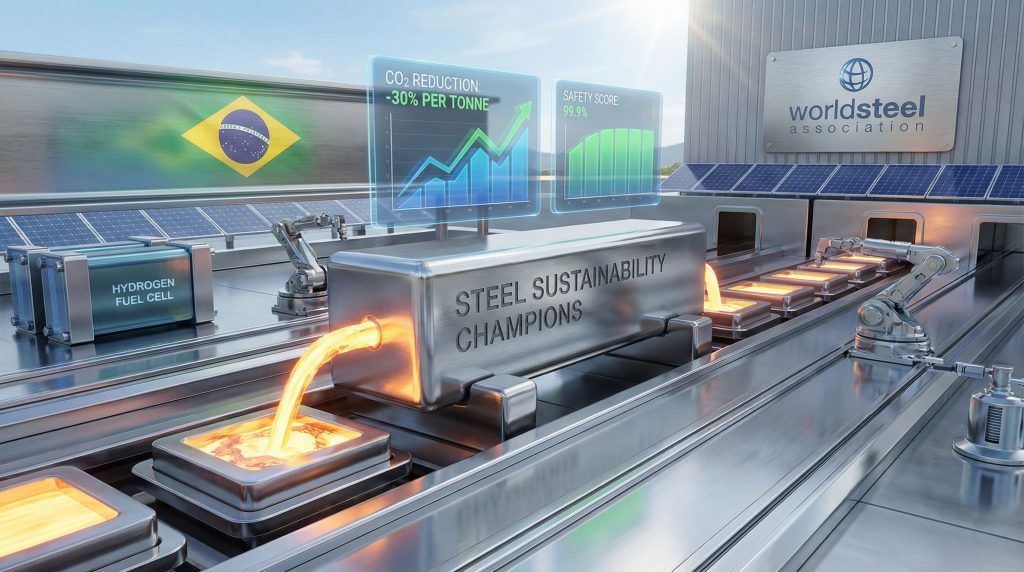
The association's Steel Sustainability Champions program emerged as a response to growing demand for standardised environmental performance measurement across the global steel sector. Unlike voluntary reporting initiatives, this certification requires comprehensive data disclosure and third-party verification across multiple performance dimensions.
Comprehensive ESG Assessment Framework
Steel producers seeking sustainability champion recognition must satisfy stringent requirements across five distinct categories:
• Worldsteel Sustainability Charter adherence – Formal commitment to industry-wide environmental principles
• Twenty ESG indicator compliance – Quantitative performance metrics across environmental, social, and governance dimensions
• Life Cycle Inventory data submission – Comprehensive operational transparency including supply chain impacts
• Global transparency initiative participation – Active engagement in industry-wide evaluation and benchmarking programs
• Excellence recognition pathway – Either finalist status in one of six Steelie Awards categories or recognition from worldsteel's Health and Safety Program
This multi-dimensional assessment prevents companies from achieving certification through excellence in isolated areas, instead requiring balanced performance improvement across operational, environmental, and governance metrics.
The twenty ESG indicators encompass critical performance areas including greenhouse gas emissions intensity, water consumption efficiency, waste management practices, worker safety metrics, board composition diversity, and stakeholder engagement protocols. This comprehensive approach aligns with emerging regulatory frameworks while providing investors with standardised comparison metrics.
Technical Requirements for Industry Leadership Recognition
Environmental Performance Benchmarking
Steel production environmental impact varies significantly based on production methodology and operational efficiency. Global average carbon dioxide intensity for crude steel production stands at approximately 1.9 tonnes CO2 per tonne of steel produced, with significant variation across production routes.
| Production Route | Typical CO2 Intensity (tonnes CO2/tonne steel) | Key Characteristics |
|---|---|---|
| Electric Arc Furnace | 0.3 – 0.5 | Primarily recycled steel input |
| Blast Furnace/Basic Oxygen | 1.9 – 2.2 | Iron ore reduction process |
| Direct Reduction + EAF | 1.0 – 1.5 | Natural gas-based reduction |
Water consumption represents another critical environmental metric, with global average steel production requiring 20-25 cubic metres per tonne of crude steel. Leading producers achieve significantly lower consumption through closed-loop systems and advanced water recycling technologies.
Companies achieving sustainability champion status typically demonstrate performance in the lower quartile for their respective production routes, indicating substantial operational efficiency improvements beyond industry averages.
Life Cycle Assessment Data Transparency
The Life Cycle Inventory requirement represents a significant advancement in industry transparency standards. Companies must document comprehensive environmental impacts across their entire operational scope, following ISO 14040 and ISO 14044 international standards for life cycle assessment methodologies.
Required LCI Components:
• Raw material sourcing documentation – Iron ore extraction location and methodology, coal sourcing, scrap metal percentage utilisation
• Energy consumption tracking – Direct fuel consumption by type, indirect electricity sourcing with grid carbon intensity factors
• Emissions reporting across three scopes – Direct process emissions, purchased electricity emissions, and value chain impacts including transportation and waste management
• Water and waste flow documentation – Consumption patterns, recycling rates, and disposal methodologies
• Third-party verification protocols – External audit by accredited verification bodies aligned with GHG Protocol Corporate Standards
This comprehensive data requirement enables meaningful environmental performance comparison while supporting emerging carbon trading mechanisms and regulatory compliance frameworks such as the European Union's Carbon Border Adjustment Mechanism.
Brazilian Steel Industry's Sustainability Evolution
Market Position and Regional Leadership
Brazil maintains its position as the ninth-largest global crude steel producer with approximately 35 million tonnes of annual production. The country dominates Latin American steel production, accounting for the largest regional market share and establishing Brazilian producers as key players in global supply chains.
The Brazilian steel sector's evolution toward sustainability leadership reflects broader industrial transformation trends across emerging markets. Legacy producers with multi-decade operational histories face unique challenges in retrofitting existing infrastructure while maintaining competitive cost structures.
Gerdau's achievement of Steel Sustainability Champion recognition in 2026 represents a significant milestone for both the company and the broader Brazilian steel industry. Despite the company's 125-year operational history, this certification marks the first time Gerdau has achieved this specific recognition, highlighting either the programme's recent establishment or the rigorous nature of certification requirements.
Furthermore, achieving the gerdau steel sustainability award demonstrates the company's commitment to implementing comprehensive decarbonisation benefits across its operations.
Corporate Governance and Strategic Integration
The integration of sustainability metrics into corporate governance structures represents a critical evolution for traditional industrial companies. Gerdau's board-level endorsement of sustainability initiatives, as demonstrated through leadership statements, indicates strategic-level commitment rather than departmental initiatives.
According to André Bier Gerdau Johannpeter, President of Gerdau's Board of Directors, the recognition places Gerdau among an exclusive group of companies globally and reinforces sustainability as a comprehensive commitment across the organisation.
This governance integration enables long-term strategic planning that incorporates environmental performance alongside traditional financial metrics. For family-controlled companies like Gerdau, multi-generational perspectives on industrial transformation provide unique advantages in implementing sustainable operational practices.
In addition, this recognition aligns with the broader sustainability transformation occurring across the mining and metals sector.
Global Market Implications and Investment Considerations
ESG Investment Flow Trends
Institutional investor preferences increasingly favour companies with verified sustainability credentials, particularly in carbon-intensive sectors like steel production. Sustainability champion certification provides portfolio managers with standardised metrics for ESG investment decisions while reducing due diligence requirements.
The certification's third-party verification and comprehensive data requirements address investor concerns about greenwashing while enabling meaningful peer comparison. This transparency supports premium valuation multiples for certified companies in markets with strong ESG investment mandates.
Moreover, the recognition contributes to positive energy transition outlook across the metals industry.
Regulatory Compliance and Market Access
The European Union's Carbon Border Adjustment Mechanism, implemented in 2023, creates significant compliance advantages for companies with verified emissions data. Steel producers with comprehensive Life Cycle Inventory documentation can demonstrate actual carbon intensity rather than default values, potentially reducing CBAM obligations and maintaining competitive positioning in European markets.
Key Regulatory Frameworks Affecting Steel Trade:
• EU CBAM Implementation – Carbon border adjustments for steel imports beginning 2026
• California Cap-and-Trade Program – Emissions trading system affecting steel imports to California
• UK Carbon Pricing – Domestic carbon pricing mechanisms affecting import competitiveness
• Japan Voluntary Carbon Credit System – Market-based mechanisms supporting certified sustainable steel
These regulatory developments create market segmentation between certified and non-certified producers, with sustainability champions gaining preferential access to premium markets while avoiding compliance penalties.
The next major ASX story will hit our subscribers first
Technology Investment and Future Industry Positioning
Emerging Production Technologies
Steel sustainability champions typically demonstrate leadership in emerging production technologies that reduce environmental impact while maintaining operational efficiency. Hydrogen-based steel production represents the most significant technological shift, with pilot projects achieving 80-95 percent reduction in CO2 emissions compared to traditional blast furnace operations.
Carbon capture and utilisation technologies offer intermediate solutions for existing infrastructure, potentially reducing emissions by 15-30 percent while requiring lower capital investment than complete production route changes.
| Technology Category | Emissions Reduction Potential | Commercial Timeline |
|---|---|---|
| Hydrogen Direct Reduction | 80-95% | 2030-2035 |
| Carbon Capture + Storage | 15-30% | 2025-2030 |
| Electric Arc Furnace Optimisation | 10-20% | Currently Available |
| Process Integration Improvements | 5-15% | Currently Available |
The gerdau steel sustainability award recognises companies implementing these innovative approaches as part of broader industry innovation trends.
Competitive Positioning for Carbon-Neutral Goals
Companies achieving sustainability champion status position themselves advantageously for industry-wide carbon neutrality targets. The International Energy Agency projects global steel sector carbon neutrality requirements by 2050, necessitating substantial technology investment and operational transformation.
Early certification demonstrates operational capability to implement comprehensive sustainability metrics while maintaining production efficiency. This operational experience provides competitive advantages as regulatory requirements expand globally and customer preferences shift toward verified sustainable steel products.
The certification also enables participation in emerging carbon credit markets, potentially generating additional revenue streams from verified emissions reductions. Companies with comprehensive LCI data can monetise sustainability improvements through carbon trading while building strategic partnerships with environmentally conscious industrial customers.
Investment Implications:
- Premium market access in sustainability-focused regions with stringent environmental regulations
- Reduced regulatory compliance costs through proactive sustainability metric implementation
- Partnership opportunities with automotive, construction, and infrastructure customers requiring verified sustainable materials
- Technology investment readiness for next-generation production methods
- Carbon credit revenue potential from verified emissions reduction programmes
The gerdau steel sustainability award represents a broader shift toward recognising companies that successfully integrate environmental performance with operational excellence, particularly those developing a sustainable iron project approach.
Furthermore, Gerdau's recognition at the global steel industry's premier Steelie Awards for multiple consecutive years demonstrates consistent commitment to sustainability leadership across the organisation.
This recognition framework represents the steel industry's evolution toward standardised sustainability measurement, creating clear differentiation between industry leaders and traditional producers while providing investors and customers with reliable performance comparison metrics.
Investment decisions should consider company-specific factors, market conditions, and individual risk tolerance. This analysis is for informational purposes and does not constitute investment advice.
Ready to Capitalise on Metals Industry Sustainability Transformations?
Discovery Alert's proprietary Discovery IQ model delivers real-time alerts on significant metals and mining discoveries across the ASX, instantly empowering subscribers to identify actionable opportunities ahead of the broader market. Understand why historic discoveries can generate substantial returns and begin your 14-day free trial today to position yourself ahead of evolving sustainability-focused investment opportunities.