May 21, 2026
Global Steel Market Transformation: Understanding China's Export Surge and Industry Disruption
The global steel industry faces unprecedented structural shifts as overcapacity issues and changing demand patterns reshape international trade flows. China steel exports record highs reflect broader macro-economic forces that converge at a critical juncture where regulatory changes, technological advancement, and geopolitical tensions influence strategic positioning. Furthermore, tariffs impact considerations increasingly shape international trade decisions for the next decade.
When big ASX news breaks, our subscribers know first
What's Driving China's Historic Steel Export Boom?
Domestic Market Contraction Forces International Focus
China's domestic steel consumption experienced a sharp 5.4% decline in 2025, with projections indicating a further 1% decrease in 2026 according to state-backed research forecasts. This dramatic reduction primarily stems from the ongoing property sector crisis, which traditionally consumed substantial steel volumes for construction projects.
The collapse in real estate development created a massive void in domestic demand, forcing producers to pivot toward international markets for revenue stability. Steel mills responded to this challenge by maintaining production levels while redirecting output toward export channels.
This strategic shift allowed manufacturers to preserve operational capacity and workforce levels despite weakened internal consumption. The property market downturn fundamentally altered demand patterns, making export markets essential for industry survival.
Strategic Front-Loading Ahead of Regulatory Changes
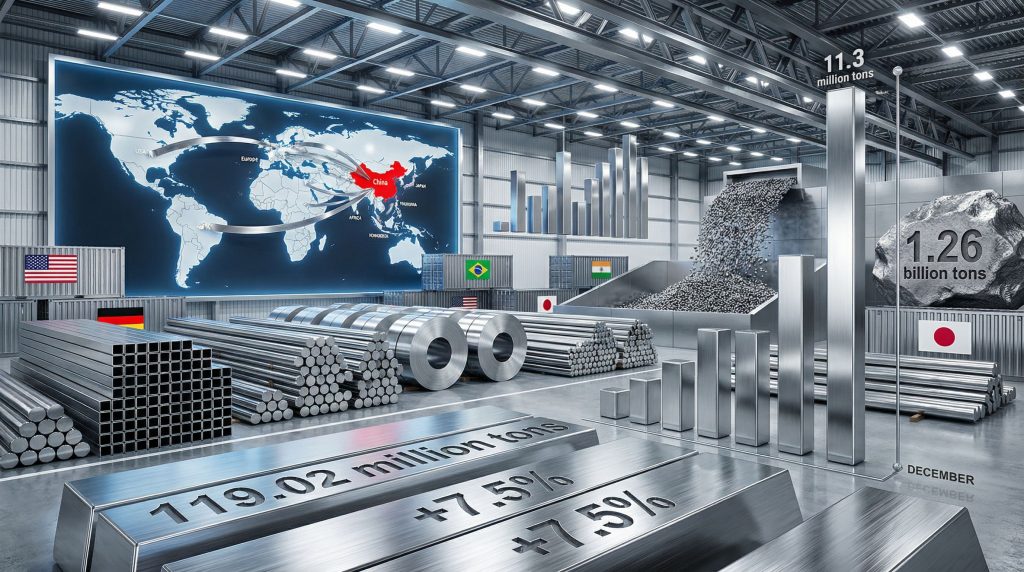
December 2025 witnessed an extraordinary surge in steel exports, reaching a monthly record of 11.3 million metric tons. This peak coincided with Beijing's announcement of new export licensing requirements beginning in 2026, creating urgency among exporters to maximise shipments.
The front-loading phenomenon demonstrates sophisticated market timing by Chinese exporters who recognised the regulatory arbitrage opportunity. Companies accelerated production schedules and logistics operations to capture maximum export volumes under existing frameworks.
This behaviour indicates deep market awareness of how administrative barriers can impact future trade flows. The full-year 2025 exports totalled 119.02 million tons, representing a 7.5% year-over-year increase despite growing international trade tensions.
How Do Record Export Volumes Impact Global Steel Markets?
Market Displacement and Competitive Dynamics
The massive export volume creates significant displacement pressure across established steel-producing regions. Traditional suppliers face direct competition from Chinese producers who leverage cost advantages and production scale to penetrate international markets.
This displacement affects pricing structures and market share distribution across multiple continents. Regional steel industries experience varying degrees of impact based on their proximity to Chinese exports and existing trade relationships.
European, Southeast Asian, and Latin American markets face particular pressure as Chinese steel flows increase through established shipping routes and trade partnerships. Consequently, market volatility hedging strategies become increasingly important for regional producers.
| Regional Impact Analysis | Primary Effects | Market Response |
|---|---|---|
| European Union | Price compression, market share loss | Anti-dumping investigations |
| Southeast Asia | Direct competition in construction steel | Regional trade cooperation |
| Latin America | Infrastructure project pricing pressure | Import substitution policies |
| North America | Indirect pressure through third-country routes | Tariff barrier reinforcement |
Trade Protection Escalation
International response to the export surge involves escalating trade protection mechanisms across multiple jurisdictions. Countries implement anti-dumping investigations targeting specific steel product categories while developing broader safeguard measures.
These defensive strategies create complex regulatory landscapes for international steel trade. The growing protectionist backlash reflects genuine concerns about domestic manufacturing competitiveness and employment preservation.
Steel-producing nations view China steel exports record highs as threatening industrial capacity and technological advancement in their domestic sectors. Trade barriers evolve from simple tariff measures toward sophisticated compliance requirements and quality standards.
What Role Does Iron Ore Demand Play in This Export Strategy?
Raw Material Import Surge Supporting Production Scale
China achieved record iron ore imports of 1.26 billion tons in 2025, marking an 1.8% increase from the previous year. December alone accounted for 119.65 million tons, representing 8.2% month-over-month growth that directly correlates with the simultaneous steel export peak.
This raw material demand surge demonstrates the direct connection between export production and input requirements. Chinese steelmakers maintain aggressive import schedules to support sustained export-oriented operations, creating ripple effects through global iron ore markets.
The low-inventory strategy adopted by Chinese mills since late 2022 reflects cash flow optimisation during property market challenges. Producers minimise working capital tied up in stockpiles while maintaining sufficient raw materials for responsive production scaling.
Moreover, understanding iron ore price trends becomes crucial for forecasting future market dynamics. In addition, iron ore demand insights reveal how sustained Chinese demand affects global supply chains.
Supply Chain Optimisation and Market Implications
Global iron ore supply projections indicate 2.5% growth in 2026, with 36-38 million additional tons expected to flow toward China. This supply increase, combined with sustained Chinese demand, creates mathematical pressure on pricing dynamics.
The just-in-time manufacturing approach applied to bulk commodities enables Chinese producers to optimise logistics costs through continuous smaller batch imports. This strategy maintains production flexibility for rapid export response while reducing inventory carrying costs.
Resource allocation shifts affect global mining operations as suppliers adjust production schedules and shipping logistics to accommodate Chinese demand patterns. This reallocation influences pricing, availability, and strategic planning across the international iron ore industry.
Which Economic Factors Sustain China's Steel Export Competitiveness?
Integrated Production Advantages
Chinese steel producers benefit from comprehensive supply chain integration spanning mining operations through final product manufacturing. This vertical integration reduces transaction costs, improves quality control, and enables rapid response to market changes.
Geographic concentration within major industrial regions creates logistics optimisation opportunities unavailable to dispersed global producers. Transportation costs, infrastructure utilisation, and workforce coordination advantages compound to create sustainable cost leadership positions.
Scale economics play crucial roles in competitive positioning. Chinese producers operate facilities with production capacities that enable per-unit cost reductions through fixed cost spreading, bulk purchasing power, and specialised equipment utilisation.
Strategic Industrial Policy Framework
Government support systems provide structural advantages through coordinated industrial development policies. Regional authorities align infrastructure investment, workforce development, and technology advancement programs to support steel industry competitiveness.
Export facilitation mechanisms, including trade financing, logistics coordination, and diplomatic trade promotion, create enabling environments for international market penetration. These support structures reduce barriers and transaction costs associated with global market entry.
Currency policy coordination allows strategic positioning during international market cycles. Exchange rate management and export credit facilities provide stability during volatile periods while supporting aggressive pricing strategies in target markets.
How Will New Export Licensing Affect Future Trade Flows?
Regulatory Implementation Timeline and Market Response
The 2026 licensing system represents Beijing's response to growing international trade tensions and domestic capacity management requirements. Implementation aims to regulate export quality standards while moderating volume growth that triggers protectionist responses globally.
Administrative requirements will likely create selective constraints on different product categories and destination markets. Higher-value steel products may receive preferential treatment while commodity-grade exports face stricter controls.
This differentiation encourages technological advancement and product mix optimisation. Industry consolidation effects emerge as compliance requirements favour larger, more sophisticated producers capable of meeting administrative and quality standards.
Strategic Adaptation and Market Evolution
Producer responses to licensing constraints involve several strategic adaptations. Product portfolio elevation shifts toward higher-value specialty steels with superior margins while geographic diversification expands into emerging markets.
Technology investment upgrading production capabilities to meet enhanced quality standards becomes essential. Partnership development through joint ventures and strategic alliances provides alternative market access routes.
The licensing system may paradoxically strengthen Chinese competitiveness by forcing efficiency improvements and quality advancement while reducing lower-margin commodity competition. This evolution reflects broader commodity trading insights affecting global markets.
The next major ASX story will hit our subscribers first
What Are the Long-Term Global Steel Industry Implications?
Structural Market Transformation Patterns
Traditional steel trade patterns undergo permanent reconfiguration as Chinese export capacity reshapes global supply chains. Established regional suppliers face sustained pressure to differentiate through technology, quality, or specialised market focus.
Investment flows redirect toward regions offering competitive advantages in energy costs, raw material access, or technological capabilities. This reallocation accelerates industry modernisation in some regions while creating capacity reduction pressures in others.
Supply chain resilience considerations gain prominence as steel-importing economies recognise dependency risks associated with concentrated sourcing. Alternative supplier development initiatives emerge across multiple regions seeking strategic independence from dominant export sources.
Risk Management and Strategic Planning
Steel-importing nations implement strategic stockpiling policies to mitigate supply disruption risks during trade disputes or geopolitical tensions. These buffer stock programs create additional demand volatility while providing security against supply interruptions.
Industrial policy evolution incorporates steel security considerations into broader economic planning frameworks. Countries develop domestic capacity preservation strategies balanced against cost competitiveness and international trade obligations.
The transformation from price-based competition toward quality, technology, and strategic positioning indicates fundamental industry evolution beyond traditional commodity dynamics. However, China steel exports record highs continue to influence global market structures.
Investment and Market Outlook Through 2026
Price Trajectory and Margin Pressure Analysis
Iron ore pricing faces downward pressure from increased global supply capacity coinciding with Chinese demand patterns. The 36-38 million ton increase in China-bound shipments creates supply-demand imbalances affecting pricing across international markets.
Steel export pricing dynamics evolve as trade restrictions limit market access while licensing requirements potentially reduce commodity-grade competition. Premium product segments may maintain stronger pricing power compared to basic construction steel categories.
Margin compression risks affect global steel producers differently based on their cost structures, product mix, and geographic positioning. Integrated producers with raw material advantages demonstrate greater resilience compared to merchant steel operations.
Strategic Investment Opportunities
Alternative steel supplier development presents investment potential in regions offering competitive advantages. Countries with favourable energy costs, raw material access, and modern infrastructure attract capital seeking alternatives to Chinese supply dependence.
Technology advancement requirements create opportunities in steel production efficiency, quality control systems, and specialised product development. Innovation investments become essential for competitive differentiation in evolving market structures.
Raw material security considerations drive investment toward diversified supply sources and strategic stockpiling capabilities. Mining sector expansion in non-Chinese regions receives enhanced attention from strategic investors.
Market Intelligence and Strategic Considerations
Understanding Export Surge Dynamics
Export markets provide essential revenue alternatives as property sector decline eliminates traditional demand sources. Overcapacity created by infrastructure buildout requires international outlet to maintain operational viability.
Competitive pricing enables global market penetration while preserving production levels and employment. Quality controls will likely reduce low-grade product exports while favouring higher-value steel categories.
Administrative requirements may moderate overall volumes but encourage product mix improvements. Licensing costs and complexity could consolidate the export industry among larger, more capable producers.
Forward-Looking Industry Assessment
The steel industry transformation extends beyond cyclical supply-demand adjustments toward fundamental structural change. Traditional competitive advantages face challenges from technological advancement, environmental regulations, and geopolitical considerations affecting international trade.
Market participants require sophisticated strategic planning incorporating regulatory evolution, technology development, and supply chain resilience factors. Simple cost-based competition becomes insufficient for sustainable competitive positioning in evolving global markets.
For instance, steel market analysis from Bloomberg demonstrates how China steel exports record highs persist despite international resistance. This trend reflects deeper structural changes requiring comprehensive strategic responses from global industry participants.
Disclaimer: This analysis involves market projections and industry assessments based on current trends and available data. Steel market dynamics can change rapidly due to policy shifts, economic conditions, and geopolitical developments. Investment decisions should consider multiple factors beyond the trends discussed in this analysis.
Want to Capitalise on Global Steel Market Disruptions?
Discovery Alert's proprietary Discovery IQ model delivers real-time alerts on significant ASX mineral discoveries, including opportunities in steel-related commodities like iron ore that are reshaping global markets. Explore our discoveries page to understand how major mineral discoveries can generate substantial returns, then begin your 30-day free trial to position yourself ahead of market-moving announcements.