
May 22, 2026
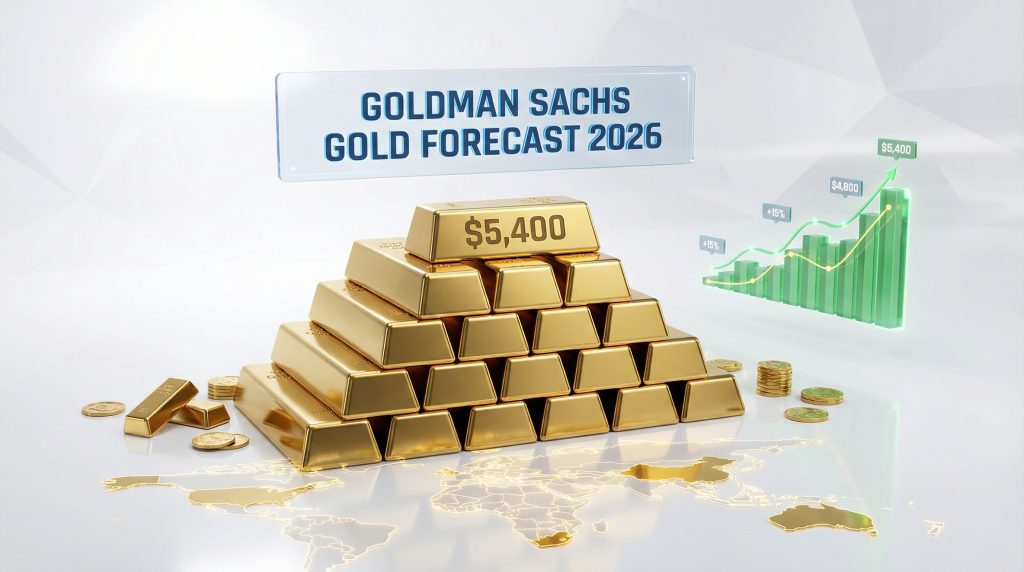
What Drives Goldman Sachs' Bullish $5,400 Gold Price Target?
Strategic scenario modeling reveals that precious metals markets operate within complex frameworks where institutional behavior patterns create sustained price momentum. When major investment banks revise their gold forecasts upward by over 10% in a single adjustment, the underlying drivers typically extend beyond traditional supply-demand mechanics into structural portfolio allocation shifts that can persist for extended periods.
Goldman Sachs raises gold price forecast from $4,900 to $5,400 per ounce for their 2026 year-end target, reflecting a fundamental reassessment of how private-sector entities and central banking institutions approach risk management through precious metals exposure. This $500 increase represents more than a technical adjustment—it signals recognition of behavioral patterns that may define gold market dynamics throughout the remainder of 2026. Furthermore, these record-high gold prices continue to attract institutional interest as a hedge against policy uncertainty.
Institutional Portfolio Diversification Trends
Private-sector allocation strategies have undergone significant transformation as organisations increasingly view gold holdings as essential hedging mechanisms against policy uncertainty rather than speculative investments. This behavioural shift creates sustained demand pressure that differs markedly from cyclical commodity purchasing patterns.
The persistence of private-sector diversification buying represents a departure from historical patterns where such demand typically proved transitory. Moreover, the comprehensive gold market outlook suggests these buyers will maintain their positions throughout 2026 without liquidation, effectively creating a higher baseline price floor for the precious metal.
Corporate treasury management strategies have evolved to incorporate precious metals as portfolio stabilisers, particularly among multinational enterprises exposed to currency volatility and regulatory shifts. This trend spans multiple sectors, from technology companies concerned about trade policy impacts to energy firms hedging against transition-related uncertainties.
Risk management frameworks increasingly recognise gold's correlation benefits during periods of financial market stress, leading institutional investors to maintain permanent allocations rather than tactical positions. This structural change in institutional behaviour underpins Goldman's assumption that defensive holdings will persist without significant unwinding.
Central Bank Reserve Rebalancing Strategies
Emerging market central banks are projected to average 60 tonnes monthly in gold purchases throughout 2026, representing approximately 720 tonnes annually. This sustained accumulation reflects strategic reserve diversification efforts that extend beyond short-term market timing considerations.
Reserve management strategies among developing economies increasingly emphasise reducing dependence on traditional currency holdings, particularly as geopolitical tensions create uncertainties around established financial frameworks. Gold's role as a neutral reserve asset becomes more pronounced in this environment.
Central banking institutions view precious metals acquisitions as long-term strategic positioning rather than opportunistic purchasing, creating predictable demand streams that support elevated price levels. The consistency of this demand provides market stability that enables higher sustainable price targets.
Sovereign wealth management approaches have shifted toward incorporating gold as a foundational component of reserve portfolios, with emerging market economies leading this transition due to their desire for financial system independence and risk diversification.
When big ASX news breaks, our subscribers know first
How Do Current Gold Market Fundamentals Support Higher Valuations?
Market structure analysis reveals multiple converging factors that create an environment conducive to sustained price appreciation beyond traditional cyclical patterns. Understanding these fundamentals requires examining both supply constraints and demand evolution across various market segments. Additionally, analysing the current gold-silver ratio insights provides valuable context for precious metals investment decisions.
Supply-Side Constraints and Production Dynamics
Global mining output faces structural limitations as existing operations encounter declining ore grades whilst new project development timelines extend due to increasingly complex regulatory environments. Major gold-producing regions report capital expenditure requirements growing faster than production capacity additions.
Environmental regulatory frameworks impose additional constraints on mining expansion projects, creating supply inelasticity that supports higher price sustainability. Mining companies increasingly focus on optimising existing operations rather than pursuing aggressive expansion strategies.
Production cost inflation across the mining sector, driven by energy price volatility and equipment costs, establishes higher floor prices for sustainable operations. This cost base elevation provides fundamental support for Goldman's elevated price targets.
Project development lead times for significant new gold mines now typically extend 7-10 years from initial discovery to commercial production, limiting supply responsiveness to current price signals and supporting extended periods of elevated valuations.
Demand Structure Analysis Across Market Segments
Western exchange-traded fund (ETF) inflow patterns demonstrate sustained institutional adoption rates that differ from previous precious metals investment cycles. These flows reflect permanent portfolio allocation adjustments rather than momentum-driven speculation.
Asian market consumption continues expanding beyond traditional cultural demand factors, incorporating investment demand from growing middle-class populations seeking inflation protection and currency diversification. This broadening demand base creates multiple support levels for elevated pricing.
Industrial and technology sector gold consumption experiences steady growth driven by electronics manufacturing expansion and emerging applications in renewable energy systems. This industrial demand provides non-cyclical support for precious metals pricing.
The convergence of investment, industrial, and cultural demand streams creates a more resilient demand structure that can sustain higher price levels without triggering significant demand destruction across any single segment.
What Are the Key Risk Factors That Could Challenge Goldman's Forecast?
Strategic scenario analysis requires examining potential disruption factors that could invalidate the assumptions underlying Goldman's bullish outlook. These risk factors span monetary policy shifts, market behaviour changes, and structural economic transitions.
Monetary Policy Scenarios and Interest Rate Sensitivity
Federal Reserve policy trajectories represent the most significant variable affecting gold's opportunity cost calculations. Real interest rate movements directly impact precious metals attractiveness relative to yield-bearing alternatives, creating sensitivity to monetary policy shifts.
According to Goldman Sachs' latest analysis, currency strength dynamics, particularly US dollar fluctuations, influence international gold demand patterns. Sustained dollar appreciation could pressure gold prices denominated in the reserve currency whilst potentially supporting demand in other currency zones.
Central bank policy coordination across major economies affects global liquidity conditions that influence precious metals investment flows. Synchronised monetary tightening could challenge the assumptions underlying sustained institutional demand for gold holdings.
Interest rate normalisation scenarios could trigger portfolio rebalancing away from non-yielding assets, potentially undermining the private-sector diversification trends that Goldman's forecast assumes will persist throughout 2026.
Speculative Market Behaviour and Volatility Patterns
Leveraged position unwinding in commodity markets poses risks to sustained price appreciation, particularly if systematic fund redemptions create cascading selling pressure. Historical precedents demonstrate how momentum reversals can quickly alter precious metals pricing dynamics.
Retail investor sentiment shifts could impact market liquidity and price stability, especially during periods when institutional demand patterns change. Social media-driven investment trends create additional volatility factors that may influence short-term price movements.
Correlation breakdowns between gold and traditional safe-haven indicators could signal changing market structure dynamics that challenge established pricing relationships. These structural shifts might invalidate historical performance patterns that support bullish forecasts.
High-frequency trading impacts on precious metals markets introduce volatility factors that can amplify both upward and downward price movements, creating risks to sustained directional trends assumed in Goldman's analysis.
How Does Goldman's Outlook Compare to Competing Wall Street Forecasts?
Investment bank forecasting methodologies reveal significant variance in approach and assumptions, creating a range of price targets that reflect different analytical frameworks and risk assessments for precious metals markets. However, Goldman Sachs raises gold price forecast expectations more aggressively than most competitors.
Investment Bank Price Target Analysis
Goldman Sachs' $5,400 target represents the most aggressive among major investment banks, reflecting their emphasis on private-sector diversification sustainability and central bank demand persistence. Their methodology focuses on structural demand changes rather than cyclical factors. In contrast, the gold price forecast from other analysts shows more conservative projections.
Financial analysts at Bloomberg report that Commerzbank recently established a $4,900 end-2026 target, citing increased safe-haven demand but taking a more conservative approach to demand sustainability assumptions. Their analysis emphasises short-term momentum factors over structural behavioural changes.
Forecast dispersion among major institutions reflects uncertainty about the persistence of current demand drivers and the responsiveness of supply to elevated price levels. This dispersion creates opportunities for significant forecast revisions as market conditions evolve.
Analytical confidence levels vary significantly across institutions, with some banks expressing greater certainty about central bank demand patterns whilst others remain cautious about private-sector allocation sustainability throughout the forecast period.
Consensus Formation and Analyst Confidence Levels
Historical accuracy analysis of precious metals forecasts reveals that institutional predictions tend to underestimate the magnitude of sustained directional moves whilst overestimating short-term volatility impacts. This pattern suggests potential upside risk to current consensus estimates.
Market maker positioning data indicates institutional investors maintain longer-term perspectives on gold holdings compared to historical patterns, supporting the structural demand thesis underlying higher price forecasts.
Derivatives pricing patterns in options markets suggest elevated implied volatility expectations, indicating market participants anticipate significant price movements that could exceed current forecast ranges in either direction.
What Investment Strategies Align with Higher Gold Price Scenarios?
Portfolio construction approaches must adapt to accommodate potential gold price appreciation whilst managing the specific risks associated with precious metals investments across different market environments. Understanding the various bull market catalysts can help investors position appropriately.
Portfolio Construction Considerations for Precious Metals Exposure
Asset allocation models incorporating gold price appreciation scenarios suggest optimal portfolio weightings depend on investor risk tolerance, currency exposure, and correlation assumptions with other asset classes during stress periods.
Currency hedging strategies become particularly relevant for international investors seeking gold exposure, as precious metals pricing involves both underlying commodity price risk and currency translation effects that can significantly impact total returns.
Correlation benefits during market stress periods provide portfolio protection value that extends beyond absolute return considerations, justifying permanent allocations even when opportunity costs appear elevated relative to yield-bearing alternatives.
Risk-adjusted return calculations must incorporate gold's volatility characteristics and its tendency toward extended directional moves that differ from normal distribution assumptions used in traditional portfolio optimisation models.
Mining Equity vs. Physical Gold Investment Trade-offs
Leverage characteristics of gold mining stocks during price rallies typically provide amplified exposure to precious metals price movements, but introduce operational risks and management execution factors that physical gold holdings avoid.
Geographic diversification across major gold-producing regions offers exposure to different regulatory environments, cost structures, and development pipelines that can provide portfolio resilience during regional market disruptions.
Operational risk factors affecting mining company valuations include labour relations, environmental compliance costs, and resource depletion rates that may not correlate directly with underlying gold prices, creating additional analytical complexity.
Streaming company investments provide alternative exposure to mining sector returns whilst avoiding direct operational risks, though these structures introduce counterparty risks and revenue sustainability questions over extended periods.
How Might Macroeconomic Scenarios Impact Gold's 2026 Performance?
Economic scenario analysis reveals multiple pathways through which broader macroeconomic conditions could either support or challenge Goldman's price targets, requiring consideration of various monetary and fiscal policy outcomes.
Inflation Expectations and Real Return Analysis
Consumer price index projections directly influence gold's effectiveness as an inflation hedge, with sustained inflation expectations supporting precious metals demand whilst deflationary scenarios could challenge current pricing levels.
Wage growth dynamics affect purchasing power preservation strategies among individual and institutional investors, with accelerating wage inflation potentially increasing demand for inflation-protective assets including gold.
Energy price volatility creates both direct and indirect impacts on precious metals markets through production cost effects and broader inflationary pressures that influence monetary policy responses and investment demand patterns.
Real return calculations across asset classes determine gold's relative attractiveness, with negative real yields on government bonds historically supporting precious metals investment whilst positive real yields create opportunity costs.
Global Trade and Currency Market Implications
US dollar strength scenarios affect international gold pricing and demand patterns, with dollar appreciation typically pressuring gold prices whilst potentially increasing demand in other currency zones as a hedge against currency weakness.
Trade policy uncertainty effects on safe-haven demand could support continued precious metals accumulation among private-sector entities seeking hedges against policy-driven market disruptions and regulatory changes.
Emerging market currency stability influences central bank demand patterns, with currency pressures potentially accelerating gold accumulation as reserve diversification strategies whilst stable currencies might reduce such demand.
International payment system developments, including central bank digital currency initiatives and alternative payment mechanisms, could affect gold's role as a neutral reserve asset over the forecast period.
The next major ASX story will hit our subscribers first
What Technical and Market Structure Factors Support Goldman's Thesis?
Market microstructure analysis provides insights into the sustainability of current price levels and the likelihood of continued appreciation through various technical and structural market characteristics.
Trading Volume and Market Liquidity Analysis
Institutional flow patterns in gold futures and spot markets demonstrate sustained buying interest that extends beyond speculative positioning into structural allocation changes among long-term investors.
Exchange-traded fund creation and redemption dynamics indicate persistent net inflows that support physical gold demand and reduce available supply for other market participants, creating upward pressure on pricing.
Options market positioning reveals elevated demand for call options relative to historical patterns, suggesting market participants position for upside scenarios whilst hedging against potential downside risks.
Over-the-counter market volumes in precious metals show increased institutional participation, indicating deeper and more diverse investor interest that supports market liquidity at higher price levels.
Seasonal and Cyclical Demand Patterns
Historical price performance during similar market conditions suggests that combinations of monetary policy uncertainty, geopolitical tensions, and inflation concerns create environments conducive to sustained gold price appreciation.
Wedding season and cultural demand cycles in major consuming regions, particularly India and China, provide predictable demand floors that support seasonal price patterns and create opportunities for sustained appreciation during favourable periods.
Investment calendar effects, including year-end portfolio rebalancing and quarterly institutional allocation reviews, create recurring demand patterns that may amplify underlying structural demand trends.
Cyclical analysis indicates that current market conditions share characteristics with previous periods of extended gold price appreciation, suggesting potential for sustained directional moves rather than cyclical peaks.
Frequently Asked Questions About Goldman's Gold Forecast
Why Did Goldman Raise Their Target from $4,900 to $5,400?
The $500 upward revision primarily reflects Goldman's assessment that private-sector diversification buyers will maintain their gold holdings throughout 2026 without liquidation. This assumption effectively raises the baseline from which their price forecast operates, as defensive positioning remains intact. Consequently, when Goldman Sachs raises gold price forecast expectations, it signals confidence in structural demand persistence.
Central bank purchasing pattern revisions also contribute to the higher target, with emerging market central banks expected to continue averaging 60 tonnes monthly in gold acquisitions as part of ongoing reserve diversification strategies away from traditional currency holdings.
Market structure changes affecting price discovery mechanisms include increased institutional participation and reduced speculative trading volatility, creating an environment where sustained demand can translate more directly into price appreciation.
What Could Cause Gold Prices to Exceed or Fall Short of $5,400?
Upside scenarios include accelerated institutional adoption rates beyond Goldman's current assumptions, particularly if corporate treasury diversification accelerates or if additional central banks begin significant gold accumulation programmes.
Downside risks centre on policy normalisation that reduces uncertainty-driven demand, or systematic unwinding of defensive positions if geopolitical tensions decrease and financial market stability improves significantly.
Black swan events could drive prices substantially higher through crisis-driven demand or lower through forced liquidations, though Goldman's analysis focuses on base case scenarios rather than tail risk outcomes.
How Should Investors Position for Goldman's Forecast Scenario?
Direct exposure strategies through physical gold holdings and precious metals ETFs provide the most straightforward method to benefit from price appreciation whilst avoiding company-specific risks associated with mining equity investments.
Indirect exposure through mining equity positions and precious metals streaming companies offers leveraged participation in gold price movements but introduces operational and management risks that require additional due diligence.
Risk management approaches should consider gold's portfolio concentration limits, correlation assumptions during stress periods, and the potential for extended periods of price volatility that characterise precious metals markets.
Strategic Implications of Goldman's Bullish Gold Outlook
Key Takeaways for Investment Decision-Making
Timeline considerations for achieving Goldman's $5,400 target suggest that structural demand factors may support sustained appreciation rather than speculative spikes, indicating potential for gradual but persistent price increases throughout 2026.
Risk-adjusted return expectations across different gold investment vehicles must account for volatility characteristics, liquidity differences, and tax implications that vary significantly between physical holdings, ETFs, and mining equities.
Portfolio integration strategies should consider gold's role as both an investment asset and a portfolio hedging mechanism, with optimal allocation percentages depending on investor risk profiles and broader portfolio construction principles.
Monitoring Framework for Forecast Validation
Leading indicators for tracking forecast accuracy include central bank purchasing data, ETF flow patterns, and private-sector allocation surveys that provide early signals about demand sustainability.
Central bank purchasing data requires monitoring on a monthly basis to validate Goldman's 60 tonnes average assumption, with significant deviations potentially indicating forecast revision requirements.
Policy development markers that could alter the investment thesis include Federal Reserve communication about long-term policy frameworks, international monetary system developments, and regulatory changes affecting precious metals markets. Furthermore, when Goldman Sachs raises gold price forecast projections, it typically reflects comprehensive analysis of these fundamental factors.
Disclaimer: This analysis presents forecasts and market assessments that involve inherent uncertainties. Gold prices may fluctuate significantly based on various economic, political, and market factors. Past performance does not guarantee future results, and investors should consider their individual financial situations and consult appropriate professionals before making investment decisions. The forecasts discussed are subject to revision and should not be considered as investment advice.
Ready to Capitalise on the Next Major Gold Discovery?
Goldman Sachs raises gold price forecast targets to $5,400, highlighting the increasing institutional recognition of precious metals' strategic value, but individual gold discoveries can deliver even more dramatic returns for positioned investors. Discovery Alert's proprietary Discovery IQ model delivers instant notifications when significant ASX mineral discoveries are announced, transforming complex geological data into actionable investment insights that help subscribers identify potentially transformative opportunities before broader market recognition develops.