May 22, 2026
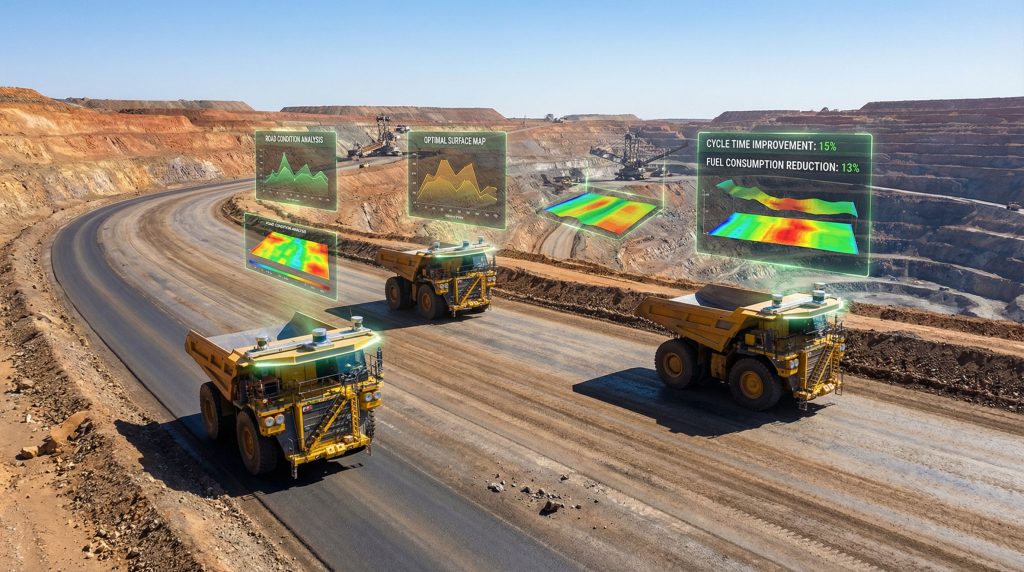
Modern mining operations are increasingly recognising that comprehensive haul road condition monitoring represents a fundamental shift from traditional reactive maintenance to predictive infrastructure management systems. This evolution moves beyond equipment-focused approaches to address the foundational network that connects every aspect of surface operations, creating new opportunities for operational efficiency and cost reduction.
Understanding the Technology Stack Behind Advanced Monitoring Systems
Haul road condition monitoring systems integrate multiple sensor technologies to create comprehensive infrastructure awareness across mining operations. These platforms combine LiDAR sensors for millimetre-precision surface mapping with high-resolution cameras for visual hazard identification, whilst vibration sensors measure truck response to road conditions and GPS tracking correlates specific issues to precise locations.
The technological approach transforms existing haul trucks into mobile monitoring platforms, eliminating the need for dedicated inspection vehicles. Furthermore, edge computing capabilities process sensor data directly on vehicles, enabling instant hazard detection and classification without requiring data transmission to central servers.
Table: Sensor Technology Integration
| Technology Component | Detection Capability | Operational Advantage |
|---|---|---|
| LiDAR mapping systems | Surface elevation changes down to millimetre precision | Early detection of developing undulations and settlement |
| Computer vision cameras | Visual hazard classification including rocks and spillage | Real-time identification of debris and surface damage |
| Vibration monitoring sensors | Impact force measurement and frequency analysis | Quantifies road roughness effects on equipment |
| GPS coordinate systems | Precise location mapping of identified issues | Enables targeted maintenance interventions |
Advanced systems deploy artificial intelligence algorithms to automatically categorise detected conditions into actionable classifications. For instance, AI in drilling & blasting applications demonstrate how machine learning can revolutionise traditional mining practices through intelligent automation.
Fleet Integration and Data Collection Methodologies
The integration of monitoring systems with existing haul truck fleets creates continuous data collection during normal operations. This approach provides comprehensive network coverage whilst maintaining operational efficiency, as trucks serve dual roles as production assets and infrastructure monitoring platforms.
Consequently, edge computing implementation ensures that computational analysis occurs on vehicles rather than through cloud transmission, reducing response times for critical hazard detection. This capability becomes particularly important for autonomous haulage systems where immediate system response may be required for safety protocols.
When big ASX news breaks, our subscribers know first
Converting Raw Data Into Operational Intelligence
The transformation of sensor data into actionable maintenance decisions represents the critical success factor for haul road condition monitoring implementations. Advanced systems integrate with tyre and operations management platforms to automatically generate priority-based work orders, ensuring that identified issues translate directly into scheduled maintenance activities.
Machine learning algorithms process incoming data-driven operations streams to automatically classify road conditions across multiple categories:
- Surface deterioration patterns: Developing potholes, rutting, and gradual undulations
- Immediate hazard detection: Rock debris, material spillage, and foreign objects
- Structural integrity issues: Soft spots, erosion patterns, and foundation settlement
- Drainage-related problems: Water accumulation and associated surface deterioration
Rather than generating generic alerts that create information overload, sophisticated systems prioritise maintenance actions based on operational impact assessment. This approach ensures maintenance resources focus on issues with the highest productivity and safety implications.
"The real operational value emerges when technology systems prioritise maintenance work instead of simply providing dashboard visualisations."
Managed Service Integration Models
Leading implementations deploy haul road condition monitoring as part of managed services rather than standalone technology products. This approach incorporates human expertise to analyse incoming data, assess priority levels, and communicate directly with site personnel for optimal resource allocation.
However, the managed service model addresses a critical implementation challenge discovered during early deployments: automated email alerts generated lower operational engagement than human-mediated communication. Site personnel preferred receiving maintenance instructions from technical specialists rather than automated systems, leading to improved adoption rates.
Economic Impact Analysis of Road Condition Management
Poor road conditions create cascading financial effects across multiple operational categories, with impacts extending far beyond visible equipment damage. Research indicates that haul truck operations can account for up to 50% of total operating costs at surface mining operations, making road condition optimisation a critical factor in cost-per-tonne performance.
Table: Quantified Cost Impact of Road Deterioration
| Impact Category | Performance Degradation | Annual Cost Per Truck |
|---|---|---|
| Tyre life reduction | 30% decrease in service life | $50,000 – $100,000 |
| Fuel consumption increase | 2-3% rise per 1% rolling resistance increase | $25,000 – $40,000 |
| Maintenance acceleration | 15-25% increase in component wear | $30,000 – $50,000 |
| Productivity reduction | 5-10% decrease in cycle efficiency | $75,000 – $150,000 |
The cumulative energy transfer mechanism explains why subtle road defects create dramatic equipment failures. Each time haul trucks traverse uneven terrain, kinetic energy transfers through vehicle structures with tyres absorbing the majority of impact forces.
The Battery Analogy for Understanding Cumulative Damage
Tyre degradation from road conditions functions similarly to battery discharge through repeated energy storage and release cycles. Minor road defects that appear insignificant during visual inspection create measurable energy transfer events that accumulate over time.
These micro-events progressively weaken rubber compounds and structural components, increasing risks of sudden failures including separations and thermal incidents. Studies confirm that poorly maintained haul roads can reduce tyre service life by 30% or more, whilst rolling resistance increases of just 1% can raise fuel consumption by 2-3% across haul truck fleets.
Autonomous Haulage and Behavioral Pattern Detection
The expansion of autonomous haulage systems creates unique opportunities for haul road condition monitoring through consistent operational parameters. Unlike human operators who instinctively adjust speed for road conditions, autonomous vehicles maintain programmed velocities unless detecting specific physical obstacles.
This behavioural consistency enables more precise measurement of road impact on vehicle performance. Additionally, monitoring systems can detect subtle changes in autonomous truck behaviour that indicate developing road problems:
- Unexpected speed variations during normal haul cycles
- Modified braking patterns in previously smooth road sections
- Increased steering corrections for straight-line travel
- Altered suspension response patterns under consistent payload conditions
Predictive Maintenance Integration Capabilities
Advanced haul road condition monitoring platforms correlate road condition data with comprehensive fleet telemetry to predict maintenance requirements weeks in advance. This predictive capability allows operations to schedule interventions during planned maintenance windows rather than responding to emergency repairs.
In addition, the integration of infrastructure monitoring with fleet performance data creates opportunities for dynamic route optimisation based on real-time road conditions. Future systems may automatically adjust haul routes to balance production requirements with infrastructure preservation, extending road service life whilst maintaining operational efficiency.
The implementation of AI-powered efficiency boost technologies demonstrates how artificial intelligence can enhance traditional mining operations through intelligent automation and predictive analytics.
Numbered List: Autonomous System Integration Benefits
- Consistent baseline measurement: Eliminates human variable factors in road condition assessment
- Continuous data collection: Provides comprehensive network monitoring during all operational periods
- Behavioural change detection: Identifies developing issues through vehicle response pattern analysis
- Predictive failure modelling: Correlates road conditions with equipment performance trends
Implementation Strategies and Deployment Considerations
Successful haul road condition monitoring implementation requires careful integration with existing maintenance workflows rather than creating parallel information systems. The technology must enhance established decision-making processes without overwhelming operational teams with additional data streams.
Early deployments focus on building comprehensive baseline understanding of haul network conditions rather than immediate productivity optimisation. Large-scale operations including Canadian oil sands projects have prioritised detailed mapping of severe road events and their correlation with tyre wear patterns, fuel consumption metrics, and cycle time variations.
Change Management and User Adoption Protocols
Implementation success depends heavily on user adoption among maintenance and operations teams. Training programmes must address both technical system operation and interpretation of monitoring data for maintenance decision-making. Clear communication protocols ensure that system alerts translate into appropriate response actions.
Critical Success Factors:
- Workflow integration: Seamless connection with existing maintenance management systems
- Performance metrics alignment: Clear correlation between monitoring data and operational KPIs
- User training programmes: Comprehensive education on system capabilities and limitations
- Communication protocols: Established procedures for responding to system alerts and recommendations
Measuring Return on Investment and Performance Metrics
Haul road condition monitoring systems demonstrate measurable benefits across multiple operational categories within 3-6 months of deployment. Productivity improvements include reduced cycle times through optimised road surfaces, decreased unplanned downtime from equipment failures, and enhanced fuel efficiency across truck fleets.
Cost reductions manifest through extended tyre service life via proactive road maintenance, lower suspension and drivetrain repair expenses, and reduced emergency maintenance requirements. Furthermore, safety enhancements include earlier detection of hazardous conditions, improved visibility into high-risk road segments, and reduced incident rates through predictive interventions.
Table: ROI Timeline and Expected Benefits
| Implementation Phase | Duration | Primary Benefits |
|---|---|---|
| Baseline establishment | Months 1-3 | Initial hazard mapping and system calibration |
| Optimisation initiation | Months 4-6 | Maintenance workflow improvements and early productivity gains |
| Full integration achievement | Months 7-12 | Sustained performance improvements and cost reductions |
Long-Term Strategic Value Creation
Beyond immediate operational improvements, haul road condition monitoring creates strategic value through data-driven infrastructure management capabilities. Operations can optimise capital allocation for road construction and maintenance based on comprehensive performance data rather than reactive decision-making.
The technology enables evidence-based discussions about infrastructure investment priorities, supporting budget justification for proactive maintenance programmes versus reactive repair costs. This analytical foundation helps operations demonstrate the financial impact of infrastructure condition on overall productivity metrics.
The next major ASX story will hit our subscribers first
Future Technology Evolution and Industry Trends
Next-generation haul road condition monitoring systems will transition from reactive monitoring to predictive infrastructure management through integration of historical pattern analysis, weather data correlation, and traffic load forecasting. These platforms will predict road deterioration before it occurs, enabling preventive interventions.
Integration with mine planning software represents a significant evolution opportunity, allowing real-time route optimisation based on infrastructure conditions. Consequently, this integration will enable dynamic haul route adjustment that balances production requirements with road preservation, extending infrastructure service life whilst maintaining operational targets.
The broader industry innovation trends demonstrate how technological advancement continues to reshape traditional mining practices through intelligent automation and data-driven decision making.
Autonomous Maintenance Coordination Vision
Advanced future systems may coordinate autonomous maintenance equipment including graders and water trucks based on continuous condition monitoring data. This integration could direct maintenance assets to specific locations without human intervention, creating fully automated infrastructure management capabilities.
"Infrastructure maintenance decisions will increasingly rely on performance impact assessment rather than traditional inspection schedules, fundamentally reshaping how mining operations manage their haul networks."
Technology Selection and Implementation Framework
Organisations evaluating haul road condition monitoring systems must assess compatibility with existing fleet management platforms, scalability across different operation sizes, and integration capabilities with established maintenance workflows. Support for multiple truck manufacturers and models ensures comprehensive fleet coverage.
Success metrics should include reduction in unplanned maintenance events, improvement in average haul cycle times, decrease in tyre-related incidents, and enhanced overall equipment effectiveness scores. Moreover, regular system optimisation based on operational feedback ensures continued performance improvement and user adoption.
Advanced 3D mapping technologies complement road condition monitoring by providing detailed geological context that helps predict infrastructure performance and maintenance requirements.
Implementation Checklist:
- Technology platform compatibility assessment
- Integration requirements with existing systems
- Training programme development for operational teams
- Performance baseline establishment for ROI measurement
- Communication protocol development for alert response
- Vendor support evaluation for ongoing optimisation
The transformation of mining operations through advanced haul road condition monitoring represents a fundamental shift from reactive maintenance to predictive infrastructure management. As autonomous haulage systems expand across the industry, the integration of comprehensive road monitoring becomes essential for optimising both productivity and equipment longevity whilst maintaining operational safety standards.
Finally, specialised solutions like road analysis and control systems demonstrate how industry-specific technology platforms continue to evolve, providing increasingly sophisticated capabilities for infrastructure management across mining operations.
Ready to Invest in the Next Major Mining Infrastructure Innovation?
Discovery Alert instantly alerts investors to significant ASX mineral discoveries using its proprietary Discovery IQ model, turning complex mineral data into actionable insights for both technology-focused mining companies and traditional operations embracing digital transformation. Understand why major mineral discoveries can lead to substantial market returns and begin your 14-day free trial today to position yourself ahead of the market.