May 19, 2026
Understanding HPHT Reservoir Systems and European Energy Infrastructure
High-pressure, high-temperature reservoir systems represent one of the most technically challenging frontiers in modern hydrocarbon exploration. These extreme environments, characterized by subsurface conditions exceeding conventional operational parameters, demand specialized drilling technologies and sophisticated reservoir management approaches. The recent HPHT gas and condensate discoveries in North Sea demonstrate how these findings are reshaping regional energy production capabilities.
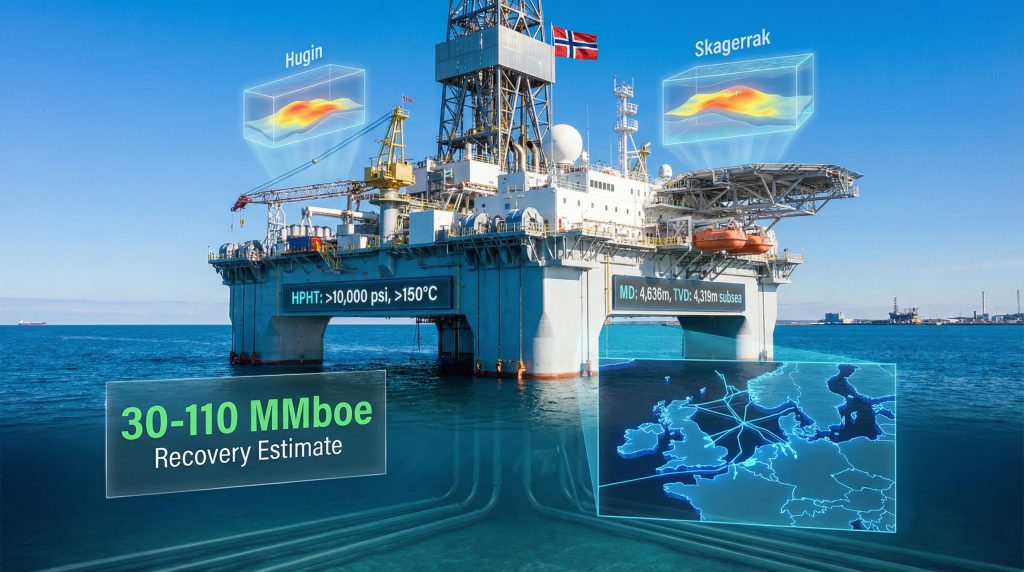
The geological complexity of HPHT systems stems from their formation in deep burial environments where prolonged exposure to extreme heat and pressure has altered rock properties and fluid characteristics. These conditions create unique challenges for exploration teams but also present significant opportunities for substantial hydrocarbon accumulations. Furthermore, the technical threshold for HPHT classification typically involves pressures surpassing 10,000 psi combined with temperatures exceeding 150°C, though specific operational parameters vary by regional regulatory frameworks.
European energy security considerations have intensified focus on domestic hydrocarbon resources, particularly natural gas supplies that can support industrial demand and heating requirements. The strategic importance of North Sea discoveries extends beyond immediate production volumes to encompass long-term supply chain resilience and reduced dependency on volatile international markets. Consequently, ai drilling innovations are becoming increasingly vital in optimizing these complex extraction operations. Infrastructure connectivity becomes critical in these calculations, as new discoveries must integrate with existing processing and transportation networks to achieve commercial viability.
When big ASX news breaks, our subscribers know first
Geological Formation Analysis: Middle Jurassic and Triassic Systems
The Hugin Formation represents a premier Middle Jurassic reservoir system throughout the Norwegian Continental Shelf, distinguished by its sandstone-dominated lithology and proven hydrocarbon retention capabilities. Recent exploration results from the Sleipner area demonstrate remarkable variation in reservoir quality within this formation, with quality sandstone intervals ranging from 31 meters to 36 meters across adjacent wells. These thickness variations reflect complex depositional environments that create both opportunities and challenges for field development planning.
Hugin Formation Characteristics:
• Lofn Well Performance: 116-meter total thickness with 36 meters of quality sandstone exhibiting moderate to very good reservoir properties
• Langemann Well Results: 125-meter total thickness containing 31 meters of quality sandstone with moderate to good characteristics
• Hydrocarbon Contacts: Gas-water contacts remain unencountered in some intervals, suggesting additional recovery potential below current well depths
• Pressure Regimes: Both wells classified as HPHT environments requiring specialised completion equipment and safety protocols
The Skagerrak Formation, representing Triassic-age deposits, presents a more complex reservoir scenario with significant aquifer interactions that complicate production planning. This formation demonstrates substantial thickness variations between wells, ranging from 95 meters in Langemann to 173 meters in Lofn, though reservoir quality remains consistently challenging across both penetrations.
| Formation Parameter | Lofn Results | Langemann Results |
|---|---|---|
| Skagerrak Total Thickness | 173 m | 95 m |
| Quality Sandstone Volume | 59 m | 17 m |
| Reservoir Quality Assessment | Moderate to very poor | Very poor |
| Water Contact Status | Aquiferous throughout | Aquiferous throughout |
The aquiferous nature of Skagerrak intervals represents both a technical challenge and a potential drive mechanism for hydrocarbon recovery. Water-bearing formations can provide natural pressure support for overlying gas and condensate accumulations, though they also require careful completion design to prevent water coning during production operations. In addition, modern 3d geological modelling techniques are enhancing our understanding of these complex reservoir systems.
Trap effectiveness analysis reveals successful hydrocarbon retention across both formations, confirming adequate seal rock integrity and structural closure mechanisms. The absence of gas-water contacts in some Hugin intervals suggests either incomplete reservoir filling or contacts below current well penetrations, indicating potential for additional reserves through deeper drilling or step-out exploration.
Advanced Drilling Technologies for Extreme Environments
Modern HPHT exploration relies on sophisticated drilling systems capable of maintaining wellbore stability under extreme pressure and temperature conditions. The successful completion of wells reaching measured depths exceeding 4,600 meters in North Sea deepwater environments demonstrates significant technological advancement in extreme environment operations.
Technical Specifications for Recent Discoveries:
• Lofn Well (15/5-8 S): Measured depth 4,636 meters, true vertical depth subsea 4,319 meters
• Langemann Well (15/5-8 A): Measured depth 4,932 meters, true vertical depth subsea 4,357 meters
• Water Depth: 107 meters requiring deepwater drilling capabilities
• Drilling Platform: Deepsea Atlantic rig with HPHT operational specifications
The variance between measured depth and true vertical depth subsea in both wells indicates significant directional drilling requirements to reach target formations while avoiding geological hazards and optimising reservoir contact. This technical complexity demands advanced wellbore positioning systems and real-time geological steering capabilities to ensure accurate target penetration.
Pressure management systems for HPHT wells require specialised blowout prevention equipment rated for extreme conditions, along with drilling fluids engineered to maintain wellbore stability under high-pressure, high-temperature exposure. The successful data acquisition from both wells, despite their technical complexity, demonstrates the effectiveness of current HPHT drilling technologies in challenging North Sea conditions.
However, formation evaluation in HPHT environments presents unique challenges as conventional logging tools may operate beyond their design specifications. Nevertheless, extensive data and sample collection from both wells indicates successful adaptation of formation evaluation techniques to extreme condition requirements, enabling comprehensive reservoir characterisation despite challenging operational parameters.
Resource Volume Assessment and Recovery Optimisation
The combined discovery potential of 30-110 million barrels of oil equivalent represents substantial hydrocarbon accumulations for the Norwegian Continental Shelf, particularly given the mature exploration status of North Sea basins. These volume ranges reflect inherent uncertainties in early-stage reservoir assessment, where limited well control and incomplete formation testing create wide estimation brackets.
Individual Well Recovery Projections:
"Lofn Prospect Analysis: Estimated recoverable volumes between 22-63 MMboe based on 116-meter total Hugin thickness and favourable reservoir quality distribution across 36 meters of quality sandstone intervals."
Recovery Optimisation Factors:
• Gas-Water Contact Management: Lofn well showed no encountered gas-water contact in primary reservoir intervals, suggesting potential for additional reserves
• Completion Strategy: Quality sandstone distribution requires selective completion techniques to maximise hydrocarbon recovery while minimising water production
• Pressure Depletion: HPHT conditions provide natural drive mechanisms but require careful pressure management to optimise recovery efficiency
• Condensate Banking: High-pressure gas condensate systems risk liquid dropout in near-wellbore regions, requiring pressure maintenance strategies
The Langemann prospect presents more constrained recovery potential with 6-50 MMboe estimates, reflecting the interpreted gas-water contact between 4,141-4,148 meters subsea that limits accessible hydrocarbon column height. This contact interpretation, while not definitively confirmed through formation testing, provides crucial input for completion design and production forecasting.
Development economics for HPHT discoveries depend heavily on infrastructure utilisation strategies. The proximity to existing Sleipner area facilities enables potential tie-in development approaches that significantly reduce capital expenditure requirements compared to standalone field developments. This infrastructure advantage becomes particularly important for discoveries in the lower end of volume estimation ranges where standalone development economics may prove challenging.
Economic Development Frameworks for HPHT Operations
Capital expenditure considerations for HPHT field development encompass specialised equipment requirements that exceed conventional hydrocarbon production systems. High-pressure wellheads, enhanced metallurgy for extreme temperature service, and advanced safety systems create significant upfront investment requirements that must be balanced against projected recovery volumes and commodity pricing scenarios.
Infrastructure Integration Benefits:
• Processing Capacity: Existing Sleipner hub facilities provide gas processing and condensate separation capabilities
• Export Systems: Established pipeline connections to European gas markets reduce transportation infrastructure requirements
• Operational Support: Shared vessel services and helicopter support systems lower ongoing operational costs
• Maintenance Synergies: Combined facility maintenance programs achieve economies of scale across multiple developments
The Sleipner area's established role as a Norwegian gas export hub creates strategic development opportunities for new HPHT gas and condensate discoveries in North Sea. This regional infrastructure approach enables smaller discoveries to achieve commercial viability through shared facilities and reduced standalone development costs.
Furthermore, operational expenditure projections for HPHT production must account for enhanced maintenance requirements, specialised personnel training, and elevated safety protocols. Corrosion management becomes particularly critical in high-temperature environments where conventional materials may experience accelerated degradation, requiring advanced metallurgy and frequent inspection protocols.
Additionally, these developments align with broader industry evolution trends that emphasise efficiency and technological advancement in resource extraction operations.
Regional Strategic Impact and Future Development Plans
The Sleipner area's emergence as a focus region for continued exploration reflects both geological prospectivity and infrastructure advantages that support multi-discovery development strategies. Equinor's recent North Sea discoveries represent significant additions to the regional development portfolio, with plans for five additional exploration wells demonstrating sustained commitment to unlocking the area's hydrocarbon potential through systematic exploration programs.
Exploration Program Expansion Drivers:
• Geological Validation: Successful discovery of gas and condensate in Middle Jurassic and Triassic formations confirms petroleum system effectiveness
• Infrastructure Leverage: Existing processing and export facilities enable economic development of smaller discoveries
• Risk Diversification: Multiple exploration targets reduce overall program risk through portfolio effects
• Technology Refinement: HPHT drilling experience improves operational efficiency for future wells
The strategic positioning between existing Gudrun and Eirin fields creates additional development synergies through potential shared infrastructure and coordinated production planning. This regional approach maximises resource utilisation whilst minimising environmental impact through consolidated operations.
European gas market integration represents a crucial component of development planning, as Norwegian Continental Shelf production provides supply security for European industrial and residential consumers. The established export infrastructure through Sleipner facilities ensures reliable market access for new production volumes.
The next major ASX story will hit our subscribers first
Technical Innovation and Operational Excellence
HPHT reservoir management requires continuous technological innovation to optimise recovery whilst maintaining operational safety standards. Advanced completion techniques, including selective perforating and intelligent well systems, enable precise control over production zones and fluid contacts.
Emerging Technology Applications:
• Artificial Intelligence Integration: Real-time reservoir monitoring and production optimisation through machine learning algorithms
• Enhanced Materials Science: High-performance alloys and composite materials for extreme environment service
• Digital Twin Technology: Virtual reservoir models for predictive maintenance and production forecasting
• Remote Operations: Unmanned platform technologies reducing personnel exposure in HPHT environments
The successful data acquisition from both exploration wells provides comprehensive datasets for advanced reservoir modelling and development planning. These datasets enable sophisticated simulation studies that optimise well placement, completion design, and production strategies for maximum recovery efficiency.
However, formation testing limitations in HPHT wells, as evidenced by the decision not to conduct pressure transient analysis in either well, highlight ongoing technical challenges in extreme environment operations. Future technological developments may enable more comprehensive downhole testing in HPHT conditions, improving reservoir characterisation accuracy.
Environmental Considerations and Sustainable Development
HPHT operations present unique environmental challenges requiring enhanced monitoring and mitigation strategies. High-pressure systems demand robust containment technologies to prevent uncontrolled releases, whilst elevated temperatures may impact surrounding ecosystems through thermal effects.
Environmental Management Protocols:
• Emissions Control: Advanced flare systems and vapour recovery units minimise atmospheric releases
• Water Management: Aquifer protection protocols prevent contamination during drilling and completion operations
• Waste Heat Recovery: Thermal energy utilisation systems capture waste heat for beneficial applications
• Biodiversity Protection: Marine environment monitoring programs track ecosystem impacts throughout project lifecycle
The integration of carbon capture and storage technologies with HPHT gas production offers potential for reduced overall carbon footprint through captured CO₂ reinjection into depleted reservoir intervals. This approach transforms environmental challenges into carbon management opportunities, reflecting sustainable development practices being adopted across the energy sector.
Decommissioning planning for HPHT wells requires specialised techniques due to extreme downhole conditions that complicate conventional abandonment procedures. Advanced well plugging technologies and enhanced monitoring systems ensure long-term environmental protection after production cessation.
What Are the Key Environmental Mitigation Strategies?
Environmental mitigation for HPHT operations focuses on preventing thermal pollution, managing high-pressure releases, and protecting marine ecosystems. Advanced monitoring systems track environmental parameters in real-time, enabling immediate response to any deviations from acceptable limits.
Market Dynamics and Strategic Positioning
The timing of these HPHT gas and condensate discoveries in North Sea aligns with evolving European energy market dynamics where supply security concerns drive increased valuation of domestic hydrocarbon resources. Norwegian Continental Shelf production provides strategic energy security benefits beyond pure commodity value through reliable supply arrangements and political stability.
Market Integration Factors:
• Seasonal Demand Optimisation: Flexible production profiles matching European heating demand cycles
• Industrial Supply Contracts: Long-term agreements supporting manufacturing and chemical industry requirements
• Storage System Integration: Coordination with underground storage facilities for demand balancing
• Renewable Energy Support: Backup power generation capabilities supporting intermittent renewable energy systems
The condensate component of these discoveries provides additional value streams through refined product markets, particularly in European petrochemical feedstock applications where quality specifications favour North Sea condensate properties. Furthermore, US natural gas forecast trends influence global pricing dynamics that affect Norwegian production economics.
Price volatility mitigation becomes crucial for HPHT project economics, as elevated development costs require stable revenue streams to achieve acceptable investment returns. Long-term supply contracts and hedging strategies help manage commodity price risks inherent in capital-intensive developments.
How Do These Discoveries Affect European Energy Security?
These discoveries significantly enhance European energy security by providing domestic hydrocarbon resources that reduce dependency on volatile international markets. The established infrastructure enables rapid integration into existing supply networks, offering immediate benefits for energy supply reliability.
The success of these initial discoveries positions the Sleipner area as a strategic focus region for continued Norwegian Continental Shelf development, demonstrating how systematic exploration programs can unlock substantial hydrocarbon resources in mature basins through advanced technologies and integrated development approaches. These achievements validate the continued importance of HPHT gas and condensate discoveries in North Sea operations in European energy supply security and technological advancement within extreme environment hydrocarbon operations.
Consequently, Aker BP's exploration success exemplifies how sustained investment in HPHT technologies continues to yield significant discoveries across the Norwegian Continental Shelf, reinforcing the region's position as a crucial energy supplier for European markets.
Looking for Investment Opportunities in Energy Infrastructure Development?
Discovery Alert's proprietary Discovery IQ model delivers real-time alerts on significant energy and mineral discoveries across Australian markets, instantly empowering subscribers to identify actionable opportunities ahead of the broader market. Understand why major mineral discoveries can lead to substantial market returns by exploring historic examples of exceptional outcomes, then begin your 30-day free trial today to position yourself ahead of the market.