May 22, 2026
Hydrogeological Complexity in Industrial Mining Operations
Modern bauxite extraction presents intricate challenges for regional water systems, particularly in Western Australia's unique geological landscape. The farmers South32 bauxite mine water issues have highlighted the complex relationship between large-scale mining operations and agricultural water security. Understanding these complexities requires examining the fundamental mechanisms of groundwater disruption, surface water contamination pathways, and the engineering solutions designed to minimise agricultural impacts.
Bauxite mining operations fundamentally alter local hydrology through systematic overburden removal and ore body extraction. These processes create cascading effects throughout interconnected aquifer systems, requiring sophisticated monitoring and management protocols to protect surrounding land uses.
When big ASX news breaks, our subscribers know first
Core Water Management Challenges in Large-Scale Bauxite Mining
Hydrogeological Disruption Mechanisms
Underground water systems experience significant alterations when mining operations commence. Excavation activities create preferential flow pathways that redirect groundwater movement patterns, often causing unexpected impacts kilometres from extraction sites.
Furthermore, data-driven mining operations are becoming essential for understanding and managing these complex hydrogeological changes.
Key disruption factors include:
• Removal of natural clay barriers that previously contained aquifer flow
• Creation of artificial drainage networks that accelerate water movement
• Alteration of natural recharge zones affecting long-term water availability
• Development of cone-shaped depression zones around active mining areas
The geological structure of bauxite deposits, typically found in lateritic profiles, creates unique hydrogeological conditions. These formations often act as natural water retention systems, and their removal can trigger rapid changes in local water table elevations.
Surface Water Quality Control Systems
Managing surface water contamination represents one of the most technically challenging aspects of bauxite mining operations. Heavy rainfall events, common in Western Australia's winter months, can overwhelm containment systems and transport sediment-laden runoff into nearby waterways.
Critical control mechanisms include:
• Engineered sediment ponds designed for 100-year rainfall events
• Real-time turbidity monitoring systems with automated response protocols
• Constructed wetland systems for biological treatment of contaminated runoff
• Strategic placement of erosion control structures throughout active mining areas
Recent investigations into mining operations near agricultural properties have highlighted the importance of robust monitoring systems. A farmer adjacent to South32's major bauxite operation has reported growing concerns about water quality impacts, with claims of rising salinity and reduced water availability now under investigation by Western Australia's environmental regulator.
Water Balance Calculations in Mining Operations
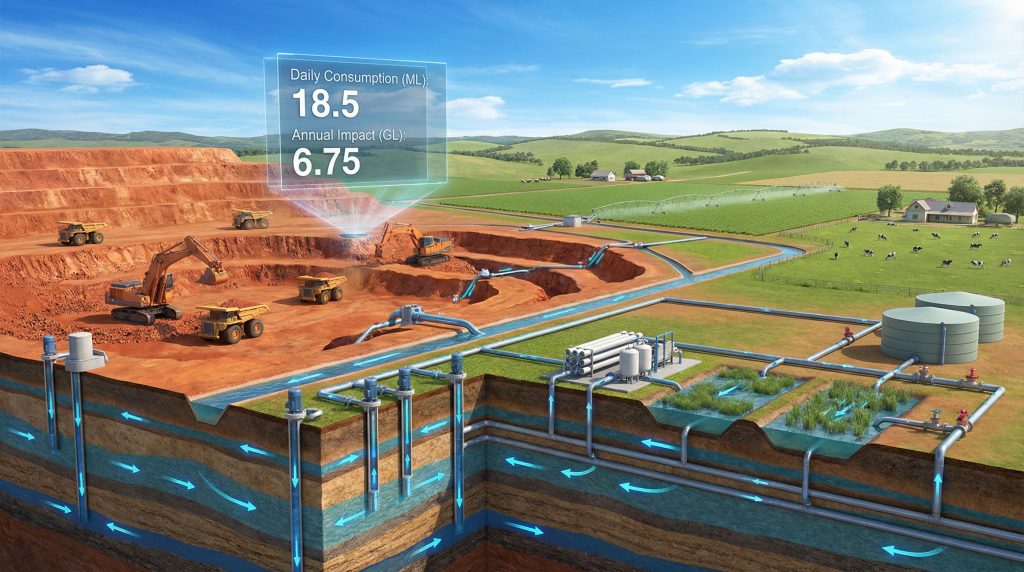
Accurate water accounting forms the foundation of sustainable mining operations. Companies must track every litre consumed, treated, and discharged to demonstrate regulatory compliance and environmental stewardship.
| Operation Category | Typical Daily Usage | Primary Recovery Method | Efficiency Rate |
|---|---|---|---|
| Ore washing and processing | High volume requirement | Settling pond recovery | Variable seasonal performance |
| Dust suppression activities | Continuous application | No recovery possible | Complete consumption |
| Equipment cooling systems | Closed-loop preferred | Heat exchange recovery | Technology dependent |
| Site rehabilitation | Seasonal requirement | Natural infiltration | Long-term soil integration |
Note: Specific consumption figures vary significantly based on ore characteristics, processing methods, and seasonal conditions. Companies must establish site-specific baselines through comprehensive monitoring programmes.
Agricultural Water System Impacts from Mining Activities
Groundwater Depletion Patterns Around Extraction Sites
Agricultural properties located near bauxite mining operations face complex groundwater challenges that extend far beyond simple water table lowering. The radius of influence from major extraction sites can extend several kilometres, affecting shallow bore performance across multiple farming properties.
Moreover, the Western Yilgarn bauxite benefits must be balanced against potential agricultural impacts to ensure sustainable development.
Primary depletion mechanisms include:
• Progressive drawdown of shallow aquifers used for stock watering
• Seasonal variation amplification during dry periods when agricultural demand peaks
• Interference effects between multiple bore installations serving different purposes
• Long-term aquifer recovery challenges following mining completion
Understanding cone of depression formation requires sophisticated hydrogeological modelling. These invisible underground impacts often surprise agricultural operators who may not observe surface disturbances but experience declining bore yields or increased pumping costs.
Salinity Migration and Agricultural Soil Health
Salt mobilisation represents a particularly insidious threat to agricultural sustainability. Mining activities can disrupt natural salt storage layers, allowing previously immobilised salts to migrate into productive soil zones and freshwater aquifers.
Migration pathways include:
• Preferential flow along newly created fracture networks
• Upward movement from deeper saline layers following pressure changes
• Lateral transport through disturbed soil profiles during heavy rainfall
• Contamination of surface water bodies used for irrigation
Soil conductivity monitoring becomes critical in areas surrounding active mining operations. Agricultural producers must implement regular testing protocols to detect early signs of salinity intrusion before crop productivity declines become irreversible.
The South32 investigation currently underway exemplifies these concerns, with agricultural stakeholders reporting observable changes in water quality that may indicate broader hydrogeological disruption.
Surface Water Availability for Farming Operations
Farming operations traditionally rely on predictable seasonal water flows for irrigation planning and stock management. Mining activities can significantly alter these natural patterns through stream diversion, increased sedimentation, and changes to catchment hydrology.
However, mining sustainability transformation initiatives are increasingly addressing these challenges through innovative water management approaches.
Key availability impacts include:
• Reduced baseflow during critical dry season periods
• Reservoir capacity losses from accelerated sedimentation rates
• Water quality degradation requiring alternative treatment before agricultural use
• Timing disruptions affecting seasonal irrigation scheduling
Environmental regulators increasingly require mining companies to demonstrate no net impact on agricultural water security through comprehensive offset programmes and alternative supply arrangements.
Regulatory Frameworks Governing Mining-Agriculture Water Conflicts
Environmental Protection Authority Assessment Protocols
Western Australia's regulatory framework requires detailed water management planning before mining approvals. These assessments must demonstrate understanding of potential agricultural impacts and propose specific mitigation measures.
Assessment requirements typically include:
• Comprehensive baseline hydrogeological studies covering all potentially affected areas
• Predictive modelling of water table changes under various extraction scenarios
• Agricultural stakeholder consultation and impact assessment documentation
• Long-term monitoring network design with clearly defined trigger thresholds
The regulatory process acknowledges that water impacts may not become apparent for several years following mining commencement, requiring adaptive management approaches that can respond to emerging issues.
Compensation Mechanisms for Affected Landholders
When mining operations demonstrably impact agricultural water resources, compensation frameworks provide financial remediation and alternative water supply options.
Available compensation typically covers:
• Replacement water supply infrastructure installation and ongoing costs
• Property value impacts from permanent water resource degradation
• Crop loss compensation for demonstrable salinity or quantity impacts
• Legal and technical assessment costs for proving causation
Establishing causation between mining activities and agricultural water impacts requires sophisticated technical analysis, often involving independent hydrogeological assessments and long-term monitoring data.
Inter-Agency Coordination Requirements
Effective water conflict resolution requires coordination between multiple regulatory bodies, each with distinct responsibilities and expertise areas. Additionally, community concerns about mining demonstrate the importance of transparent stakeholder engagement.
Key coordinating agencies include:
• Department of Water and Environmental Regulation for water allocation and quality oversight
• Environmental Protection Authority for mining approval conditions and compliance
• Department of Primary Industries for agricultural impact assessment and support
• Local government authorities for land use planning and community consultation
The current South32 investigation demonstrates this multi-agency approach, with the state's regulator coordinating technical assessment and stakeholder consultation processes.
Technical Solutions to Minimise Agricultural Water Impacts
Advanced Water Treatment and Recycling Systems
Modern mining operations increasingly adopt closed-loop water management systems designed to minimise freshwater consumption and eliminate agricultural competition.
Proven treatment technologies include:
• Reverse osmosis systems achieving 85-95% water recovery from process streams
• Constructed wetland systems providing biological treatment for complex contamination
• Advanced oxidation processes for removing dissolved metals and organics
• Membrane bioreactor systems combining biological treatment with physical separation
Implementation costs for comprehensive treatment systems typically represent 3-8% of total project capital expenditure but provide long-term operational benefits and regulatory compliance assurance.
Groundwater Management Technologies
Protecting agricultural groundwater resources requires proactive management technologies that maintain aquifer pressure and prevent contamination migration.
Effective management approaches include:
• Injection well networks for maintaining aquifer pressure during extraction phases
• Selective pumping strategies that minimise agricultural bore interference
• Real-time monitoring networks with automated response protocols
• Groundwater modelling software for predictive impact assessment and optimisation
Digital monitoring systems now enable continuous assessment of groundwater conditions across large areas, allowing operators to adjust extraction rates and pumping patterns to minimise agricultural impacts in real-time.
Alternative Water Sourcing Strategies
Reducing competition for freshwater resources requires developing alternative supply sources that meet mining operational requirements without affecting agricultural availability.
Alternative sourcing options include:
• Seawater desalination for coastal operations with sufficient energy infrastructure
• Recycled water partnerships with municipal treatment authorities
• Atmospheric water generation during high humidity periods
• Brackish groundwater treatment from non-agricultural aquifer zones
The economic viability of alternative water sources continues improving as technology costs decline and water scarcity increases across agricultural regions.
Industry Water Stewardship and Corporate Responsibility
Best Practice Water Management Standards
Leading mining companies implement comprehensive water stewardship programmes that exceed regulatory requirements and demonstrate community responsibility.
Consequently, mining industry evolution increasingly emphasises sustainable water management as a core operational priority.
Industry best practices typically include:
• ISO 14001 environmental management system certification with water-specific protocols
• Transparent water accounting and public reporting of consumption and discharge volumes
• Proactive stakeholder engagement with agricultural communities and regular consultation
• Investment in research and development for water efficiency improvements
Corporate water stewardship increasingly focuses on achieving net-positive water impact through conservation projects and infrastructure development that benefit local communities.
Technology Investment Trends in Water Efficiency
Mining companies allocate increasing capital toward water efficiency technologies that reduce operational costs while minimising environmental impact.
Emerging investment areas include:
• Digital twin modelling for optimising complex water system performance
• Artificial intelligence applications for predicting consumption patterns and optimising treatment
• Sensor network deployment for real-time water quality monitoring across large areas
• Automated control systems that adjust operations based on environmental conditions
Technology investments typically demonstrate positive return on investment through reduced water procurement costs, regulatory compliance assurance, and improved community relations.
Corporate Water Security Risk Assessment
Advanced risk modelling now incorporates 30-year climate projections and extreme weather scenarios to assess long-term water security challenges facing both mining operations and surrounding agricultural communities.
Key risk assessment factors include:
• Climate change impacts on regional water availability and seasonal patterns
• Regulatory evolution toward stricter environmental protection requirements
• Community relations challenges from perceived or actual water conflicts
• Financial exposure from compensation claims and alternative water supply requirements
The next major ASX story will hit our subscribers first
Long-Term Water Security Implications
Climate Change Amplification Effects
Projected climate changes across Western Australia intensify existing water management challenges, requiring adaptive strategies that account for increased variability and extreme weather events.
Critical climate considerations include:
• Reduced average annual rainfall increasing competition for remaining water resources
• More frequent extreme weather events overwhelming existing containment infrastructure
• Temperature increases accelerating evaporation rates and changing seasonal patterns
• Shifting precipitation timing affecting agricultural irrigation requirements
Water management plans must incorporate climate resilience planning that protects both mining operations and agricultural activities under various future scenarios.
Cumulative Impact Assessment Methodologies
Assessing multiple mining operations within single catchments requires sophisticated modelling approaches that account for interactive effects and cumulative stress on water systems.
In addition, mine reclamation innovation plays a crucial role in restoring water systems following extraction activities.
Assessment methodologies include:
• Integrated catchment modelling incorporating all significant water users
• Ecosystem service valuation for quantifying broader environmental impacts
• Stakeholder impact assessment covering agricultural, environmental, and community concerns
• Adaptive management frameworks allowing for operational adjustments based on monitoring results
Cumulative impact assessment becomes increasingly important as mining activity intensifies across Western Australia's agricultural regions.
Future Water Governance Frameworks
Emerging governance approaches emphasise collaborative management and real-time allocation systems that balance competing water demands.
Future governance elements include:
• Integrated catchment management bringing together all water users for coordinated planning
• Water trading mechanisms enabling market-based allocation between mining and agricultural sectors
• Technology-enabled real-time monitoring and allocation systems
• Collaborative research programmes developing innovative solutions for water challenges
Current Case Study: South32 Investigation and Lessons Learned
Ongoing Regulatory Investigation
The current investigation into farmers South32 bauxite mine water issues provides insight into how regulatory systems respond to agricultural concerns about mining impacts.
Investigation components likely include:
• Independent hydrogeological assessment of claimed impacts
• Review of existing monitoring data and compliance with approved water management plans
• Stakeholder consultation including affected agricultural operators
• Assessment of potential remediation and compensation requirements
This case demonstrates the importance of proactive monitoring and rapid response to community concerns about water resource impacts.
Collaborative Monitoring Network Development
Effective water conflict resolution increasingly relies on collaborative monitoring programmes that build trust between mining companies, agricultural stakeholders, and regulatory authorities.
Successful collaboration typically includes:
• Joint funding and oversight of independent water quality monitoring programmes
• Shared access to real-time monitoring data through transparent reporting systems
• Regular community meetings for discussing monitoring results and addressing concerns
• Agreed protocols for responding to trigger threshold exceedances
Economic Considerations and Mitigation Success
Resolving water conflicts requires balancing economic impacts on both mining operations and agricultural activities while protecting long-term environmental sustainability.
Economic mitigation approaches include:
• Alternative water supply infrastructure development funded by mining companies
• Soil remediation programmes for addressing salinity-affected agricultural areas
• Economic diversification support for farming operations facing permanent water resource changes
• Compensation mechanisms that reflect both immediate and long-term agricultural impacts
Frequently Asked Questions About Mining and Agricultural Water Issues
What Rights Do Farmers Have When Mining Affects Their Water?
Agricultural operators possess legal rights to water resources that existed before mining operations commenced. These rights provide foundation for compensation claims when demonstrable impacts occur.
Legal protections typically include:
• Existing water allocation rights that cannot be arbitrarily reduced by third-party activities
• Property rights protection requiring compensation for diminished water resource value
• Access to dispute resolution mechanisms including independent assessment and mediation
• Rights to alternative water supply provision when existing sources become unusable
How Can Water Quality Impacts Be Detected Early?
Early detection systems provide crucial warning of developing water quality problems before agricultural productivity suffers permanent damage.
Early detection methods include:
• Regular baseline monitoring establishing normal water quality parameters before mining commences
• Automated monitoring systems with real-time alert capabilities for rapid response
• Independent third-party testing options for concerned agricultural operators
• Community reporting networks encouraging early notification of observable changes
What Technologies Are Emerging to Reduce Water Conflicts?
Advancing technology provides new solutions for minimising water resource conflicts between mining and agricultural activities.
Emerging technologies include:
• Precision water application systems reducing mining water consumption by 20-40%
• Advanced membrane technologies achieving higher recovery rates from contaminated water
• Predictive modelling tools for accurate impact assessment before mining commencement
• Autonomous monitoring systems providing continuous environmental assessment
Balancing Resource Extraction with Agricultural Sustainability
Integrated Water Management Principles
Sustainable coexistence between mining and agricultural activities requires adopting integrated management approaches that consider entire catchment systems rather than individual operations.
Integration principles include:
• Holistic catchment-scale planning incorporating all water users and environmental requirements
• Multi-stakeholder governance models ensuring agricultural representation in mining decisions
• Adaptive management frameworks allowing adjustment based on monitoring results and changing conditions
• Long-term sustainability planning extending beyond individual mining operation lifecycles
Innovation Pathways for Sustainable Coexistence
Continued technological and policy innovation provides pathways for achieving sustainable coexistence between resource extraction and agricultural activities.
Priority innovation areas include:
• Water efficiency technology development reducing per-unit mining water requirements
• Collaborative research programmes bringing together mining companies, agricultural stakeholders, and academic institutions
• Policy framework evolution supporting balanced outcomes between competing economic interests
• Community engagement processes building trust and shared understanding of water management challenges
Disclaimer: This analysis discusses ongoing regulatory investigations and potential future scenarios that involve uncertainty. Water management challenges vary significantly between different geological settings and operational contexts. Readers should consult current regulatory guidance and seek professional advice for specific situations involving mining and agricultural water conflicts.
The resolution of farmers South32 bauxite mine water issues and similar conflicts between mining and agricultural activities requires sustained commitment to technological innovation, regulatory evolution, and collaborative governance approaches that protect both economic interests and environmental sustainability for future generations.
Looking to Stay Ahead of Mining Developments That Could Impact Regional Resources?
Discovery Alert's proprietary Discovery IQ model delivers instant notifications on significant ASX mineral discoveries, helping investors understand how major resource developments might affect local communities and agricultural regions. Transform complex mining announcements into actionable investment insights whilst staying informed about industry developments across Western Australia's resource corridor through Discovery Alert's discoveries page.