June 9, 2026
Regulatory Frameworks and Environmental Protection in Southeast Asian Resource Governance
Resource-rich nations across Southeast Asia face mounting pressure to balance economic development with environmental stewardship as global supply chains increasingly demand sustainable sourcing practices. This tension becomes particularly acute in forest-rich archipelagic states where extractive industries operate within some of the world's most biodiverse ecosystems. When Indonesia sets rules to fine miners operating in forest areas, the intersection of mining operations and forest conservation has emerged as a critical governance challenge, requiring sophisticated regulatory mechanisms that can effectively deter environmental violations while maintaining economic competitiveness in global commodity markets.
The complexity of forest-mining interface management reflects broader shifts in international environmental law, where traditional sovereignty-based resource extraction models increasingly encounter multilateral climate commitments and market-driven sustainability requirements. Understanding these evolving dynamics requires examination of specific policy innovations, enforcement mechanisms, and their implications for regional resource governance standards.
When big ASX news breaks, our subscribers know first
Understanding Indonesia's Forest Protection Regulatory Framework
Presidential Regulation No. 5 of 2025 – Legal Foundation and Scope
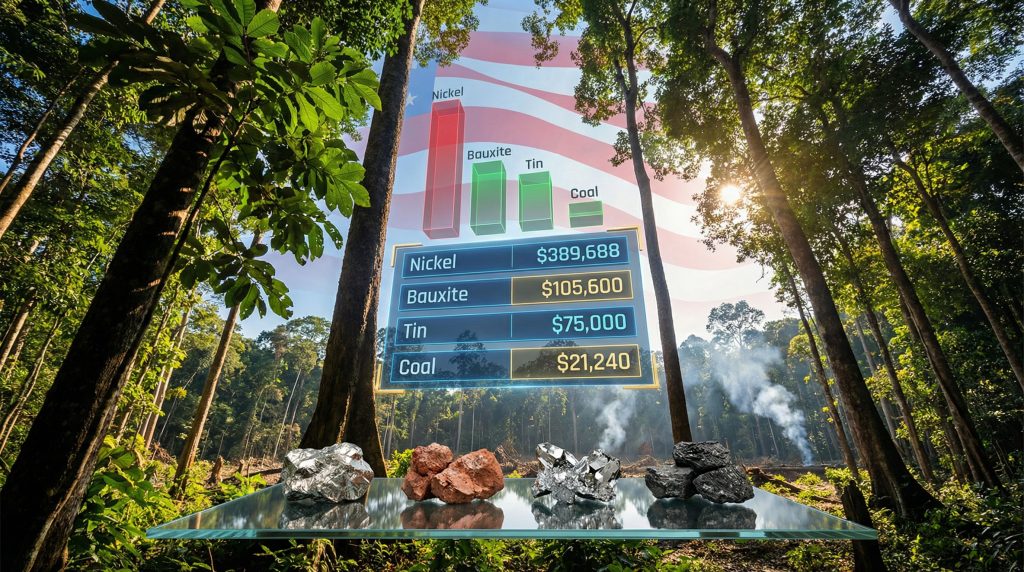
Indonesia's latest forest protection initiative establishes a comprehensive penalty structure targeting mining operations in protected forest areas. The regulatory framework introduces commodity-specific fines designed to reflect both environmental impact severity and economic deterrent effectiveness. Under this system, nickel mining violations incur fines of 6.5 billion rupiah ($389,688) per hectare, representing the highest penalty tier due to nickel's critical role in battery supply chains and associated ecosystem disruption potential.
The penalty structure demonstrates graduated enforcement based on commodity type and perceived environmental risk. Bauxite operations face fines of 1.76 billion rupiah ($105,600) per hectare, while tin mining violations result in 1.25 billion rupiah ($75,000) per hectare penalties. Coal mining operations, despite their scale, receive comparatively lower fines of 354 million rupiah ($21,240) per hectare, reflecting the government's calibrated approach to different mineral extraction impacts.
This differentiated penalty approach suggests sophisticated policy analysis connecting specific mining activities to ecosystem vulnerability assessments. Furthermore, the significant variance between commodity penalties indicates regulatory recognition that different extraction methods and minerals pose varying degrees of environmental threat to forest ecosystems. The new mining claims framework demonstrates how jurisdictions worldwide are implementing more sophisticated governance structures.
Institutional Architecture of Forest Law Enforcement
The enforcement mechanism operates through a specialised government forestry task force comprising military personnel and law enforcement officials. This institutional design reflects Indonesia's recognition that effective environmental protection requires coordinated authority spanning multiple government sectors. The task force structure enables rapid response capabilities and comprehensive investigation protocols for forest area violations.
Recent enforcement demonstrates the system's operational capacity, with the task force collecting 38.62 trillion rupiah in fines from dozens of companies in palm oil cultivation and mining sectors during early December 2025. This substantial fine collection indicates both the scale of illegal forest area operations and the government's commitment to systematic enforcement.
The integration of military and civilian law enforcement personnel creates a hybrid governance model that combines environmental expertise with enforcement authority. This approach addresses previous challenges in forest protection where regulatory agencies lacked sufficient authority or resources to effectively monitor and penalize violations across Indonesia's extensive forest areas. Meanwhile, Indonesia's comprehensive forest protection enforcement has established new benchmarks for environmental governance in the region.
Economic Implications of Indonesia's Mining Fine Structure
Commodity-Specific Penalty Framework Analysis
The economic logic underlying Indonesia's penalty structure reveals strategic considerations beyond simple environmental protection. The eighteen-fold difference between nickel and coal fines suggests policy makers view nickel mining as requiring stronger deterrent measures, potentially due to its higher profit margins and critical importance in global energy transition supply chains.
| Mineral Type | Fine Per Hectare (IDR) | Fine Per Hectare (USD) | Enforcement Ratio |
|---|---|---|---|
| Nickel | 6.5 billion | $389,688 | 18.4x coal penalty |
| Bauxite | 1.76 billion | $105,600 | 5.0x coal penalty |
| Tin | 1.25 billion | $75,000 | 3.5x coal penalty |
| Coal | 354 million | $21,240 | Base penalty level |
This penalty hierarchy correlates with Indonesia's position in global commodity markets and the relative scarcity of different minerals. Consequently, nickel, essential for electric vehicle batteries and renewable energy infrastructure, commands premium pricing that potentially makes high environmental fines economically absorbable for major operations. Conversely, coal's lower penalty may reflect both its lower profit margins and the government's gradual transition away from fossil fuel dependency.
The evolution towards mining electrification & decarbonisation creates additional pressure for sustainable mining practices. In addition, the decarbonisation benefits demonstrate how environmental compliance can generate economic advantages.
Revenue Generation vs. Deterrent Effect Assessment
The substantial fine collection achieved in December 2025 raises questions about whether current penalty levels function primarily as revenue generation mechanisms or effective behavioural deterrents. The 38.62 trillion rupiah collected represents significant government income that could fund forest restoration programmes or environmental monitoring infrastructure.
However, the deterrent effectiveness depends on mining companies' cost-benefit analysis comparing fine payments against compliance investments. For instance, for high-value commodities like nickel, operations generating substantial profits per hectare might absorb fines as operational costs rather than modify extraction practices. This potential challenge suggests the need for ongoing penalty adjustment based on market conditions and compliance outcomes.
The concentration of initial enforcement on "dozens of companies" indicates selective targeting rather than comprehensive sector-wide auditing. This approach may reflect resource constraints in enforcement capacity or strategic focus on major violators to establish credible deterrent threats for the broader industry. Indonesia's palm oil and mining fines enforcement demonstrates the scale of the government's commitment to environmental protection.
Forest Mining Violations and Environmental Commitments
International Climate Agreement Compliance
When Indonesia sets rules to fine miners operating in forest areas, this enforcement aligns with broader international environmental commitments, particularly under the Paris Agreement framework where forest conservation plays a crucial role in national emissions reduction strategies. The mining fine system represents a concrete policy mechanism for protecting carbon storage capacity in forest ecosystems while maintaining economic development objectives.
The European Union's Deforestation Regulation, which became effective in January 2025, creates additional incentives for Indonesian mining companies to demonstrate forest-compatible operations. Companies exporting minerals to EU markets must provide supply chain documentation proving commodities were not produced through deforestation activities. Therefore, Indonesia's domestic enforcement serves dual purposes of environmental protection and market access preservation.
However, the effectiveness of this alignment depends on coordination between domestic enforcement and international reporting mechanisms. Mining companies operating under the new fine system must demonstrate compliance not only to Indonesian authorities but also to international buyers requiring detailed environmental impact documentation. The integration with renewable energy mining solutions creates additional opportunities for sustainable operations.
Biodiversity Conservation and Mining Permit Revocation Cases
The forest protection system operates alongside existing environmental impact assessment requirements and biodiversity conservation protocols. Mining operations in forest areas must navigate multiple regulatory frameworks, including species habitat protection requirements and ecosystem restoration mandates following extraction activities.
The substantial financial penalties create strong incentives for mining companies to invest in forest-compatible extraction technologies and comprehensive environmental management systems. Furthermore, companies may find it economically advantageous to develop innovative mining methods that minimise forest clearing rather than accept ongoing fine liabilities.
The implementation of green transition regulations provides additional framework for sustainable mining practices. Disclaimer: The specific implementation of biodiversity conservation measures and their integration with the fine system requires further documentation from Indonesian environmental agencies to assess comprehensive effectiveness.
Enforcement Mechanisms and Industry Response Patterns
Task Force Implementation Strategy
The operational success of Indonesia's forest protection system depends heavily on the task force's investigation capabilities and fine collection procedures. The integration of military personnel suggests the government views environmental violations as serious security concerns requiring robust enforcement authority.
The task force's ability to collect 38.62 trillion rupiah in a short timeframe demonstrates sophisticated financial investigation capabilities. This collection rate suggests the enforcement system includes mechanisms for asset seizure, payment scheduling, or other coercive measures beyond simple penalty notification.
The focus on both palm oil cultivation and mining sectors indicates the task force operates across multiple industries rather than targeting mining exclusively. This comprehensive approach may enhance deterrent effectiveness by demonstrating consistent enforcement across all forest area users.
Industry Adaptation and Compliance Investment Trends
Mining companies facing the new penalty structure must evaluate compliance investments against potential fine liabilities. For major operations, implementing comprehensive forest management systems, satellite monitoring technologies, and environmental impact mitigation measures may prove more cost-effective than accepting ongoing violation penalties.
The commodity-specific penalty structure creates different incentive frameworks for different mining sectors. Consequently, high-penalty commodities like nickel may drive rapid technology adoption and operational modification, while lower-penalty sectors might accept occasional fines as acceptable business costs.
Industry consultation and financial disclosure analysis would provide valuable insights into actual company responses and investment patterns following the regulation's implementation.
Regional Governance Comparison and Global Best Practices
ASEAN Mining Regulation Benchmarking
Indonesia's forest protection fine system represents a relatively aggressive approach compared to other Southeast Asian nations' environmental enforcement mechanisms. The specific penalty amounts and systematic enforcement through military-civilian task forces exceed typical regulatory frameworks in neighbouring countries.
Malaysia's forest reserve mining restrictions operate primarily through permit denial rather than post-violation fining systems. The Philippines emphasises environmental impact assessments and compliance monitoring but lacks comparable penalty structures for forest area violations. In addition, Thailand's protected area mining prohibitions rely heavily on administrative enforcement rather than financial deterrents.
This regional comparison suggests Indonesia's approach may establish new benchmarks for Southeast Asian environmental governance, particularly if enforcement proves effective in reducing forest area mining violations.
Global Best Practices in Mining-Forest Interface Management
International experience with mining-forest regulation provides mixed lessons for Indonesia's approach. Brazil's Amazon mining regulation emphasises indigenous territory protection and environmental licensing but has struggled with enforcement consistency. Canada's boreal forest mining impact assessment requirements focus on prevention rather than penalty-based deterrence.
Australia's native vegetation clearing controls for mining projects operate through state-level regulatory frameworks with significant variation in enforcement effectiveness. European Union due diligence regulations for commodity imports create market-based incentives for environmental compliance but rely primarily on supply chain documentation rather than direct penalties.
However, Indonesia's commodity-specific fine structure represents a relatively novel approach that combines financial deterrence with enforcement authority integration. The system's effectiveness compared to global alternatives will require ongoing monitoring and assessment.
The next major ASX story will hit our subscribers first
Long-Term Implications for Indonesia's Resource Sector
Investment Climate and Foreign Direct Investment Considerations
The forest protection fine system creates new risk parameters for international mining investment in Indonesia. Foreign investors must incorporate potential environmental penalties into project economics and operational planning. The substantial fine amounts may require enhanced due diligence and environmental compliance budgeting.
However, effective environmental enforcement may also enhance Indonesia's attractiveness for investors prioritising ESG (Environmental, Social, Governance) compliance. Companies facing pressure from stakeholders and financial markets to demonstrate sustainable operations may prefer jurisdictions with clear environmental standards and consistent enforcement.
The penalty system's impact on foreign direct investment will depend partly on enforcement predictability and transparency. Consistent application of known penalty structures creates manageable business risks, while arbitrary or unpredictable enforcement could discourage investment.
Strategic Resource Management and Economic Diversification
Indonesia's forest protection approach reflects broader economic strategy balancing resource extraction revenue with environmental sustainability. The differentiated penalty structure suggests recognition that different commodities contribute differently to economic development objectives and environmental impacts.
The focus on high penalties for nickel mining aligns with Indonesia's strategic emphasis on downstream processing and value-added manufacturing in critical mineral sectors. By raising environmental compliance costs, the system may encourage more efficient resource utilisation and technology innovation.
Long-term success requires coordination between forest protection enforcement and broader economic diversification goals. Furthermore, the revenue generated through fines could fund alternative economic development in forest-adjacent communities, supporting transition away from extraction-dependent livelihoods.
Frequently Asked Questions
What Happens to Existing Mining Operations in Forest Areas?
The implementation of Indonesia's forest protection fine system raises important questions about existing operations and transition procedures. Companies currently operating in forest areas must rapidly assess their compliance status and potential fine liability under the new regulatory framework.
The system appears to focus on violations discovered through task force investigations rather than automatic penalties for all forest-adjacent operations. This approach suggests some grandfathering or transition period may exist, though specific provisions require clarification through official government documentation.
Companies may need to demonstrate efforts toward compliance or forest restoration to mitigate penalty exposure. The substantial fine amounts create strong incentives for rapid operational modification rather than continuing violations.
How Are Fines Calculated and Collected?
The hectare-based penalty calculation system requires sophisticated monitoring and measurement capabilities. The government forestry task force must determine violation scope through satellite monitoring, ground surveys, or other assessment methods to establish penalty amounts.
The successful collection of 38.62 trillion rupiah suggests the system includes effective enforcement mechanisms, potentially including asset seizure, permit suspension, or other coercive measures beyond simple billing procedures. Payment collection procedures and timeline requirements warrant further documentation from Indonesian authorities.
Revenue allocation between central and regional governments, and reinvestment in forest restoration programmes, represents important policy questions affecting system sustainability and effectiveness.
Indonesia's Forest Mining Policy as Regional Governance Model
Policy Innovation and Regional Leadership Implications
When Indonesia sets rules to fine miners operating in forest areas, this comprehensive forest protection fine system represents significant policy innovation in Southeast Asian environmental governance. The combination of commodity-specific penalties, military-civilian enforcement integration, and systematic fine collection creates a potentially replicable model for other resource-rich nations.
The system's emphasis on financial deterrence rather than purely administrative enforcement addresses common challenges in environmental regulation where violations continue despite permit revocation or administrative sanctions. The substantial penalty amounts create economic incentives for compliance that may prove more effective than traditional regulatory approaches.
Regional influence depends on the system's demonstrated effectiveness in reducing forest area violations and protecting ecosystem integrity. Successful implementation could encourage similar approaches across ASEAN member states facing comparable forest conservation challenges.
Future Policy Development Trajectories
The forest mining fine system establishes a foundation for potential expansion to other land use sectors and environmental challenges. The institutional capacity developed through task force operations could address illegal logging, agricultural encroachment, or other forest area violations.
Integration with carbon pricing mechanisms and international environmental markets represents a significant opportunity for policy evolution. Forest protection enforcement could generate carbon credits or ecosystem service payments that supplement fine revenue and create positive economic incentives for conservation.
The development of circular economy principles in resource extraction, supported by strong environmental enforcement, could position Indonesia as a leader in sustainable mining practices. This evolution would require ongoing policy refinement based on implementation experience and industry response patterns.
Disclaimer: This analysis is based on limited available information about Indonesia's forest protection fine system. Comprehensive assessment requires additional documentation from Indonesian government sources, industry analysis, and international comparative research. The system's long-term effectiveness and broader implications remain subject to ongoing monitoring and evaluation.
The evolution of Indonesia's forest protection enforcement represents a significant development in regional environmental governance, with potential implications extending far beyond national boundaries. The system's success or failure will likely influence environmental policy development across Southeast Asia and provide valuable lessons for sustainable resource management in forest-rich developing nations. Consequently, when Indonesia sets rules to fine miners operating in forest areas, it establishes precedents that could reshape regional environmental governance standards.
Seeking Opportunities in Indonesian Resource Markets?
Discovery Alert's proprietary Discovery IQ model delivers real-time alerts on significant ASX mineral discoveries, instantly empowering subscribers to identify actionable opportunities ahead of the broader market as regulatory changes reshape global resource sectors. Begin your 30-day free trial today and secure your market-leading advantage in an evolving investment landscape.