May 23, 2026
How Industrial Development Creates Grid Infrastructure Investment Opportunities
The transition toward energy-intensive manufacturing represents one of the most significant shifts in Australia's economic landscape, fundamentally reshaping how electricity networks are planned, financed, and operated. Furthermore, mining electricity demand south australia exemplifies this transformation, which extends far beyond simple capacity additions, creating complex interdependencies between industrial development, renewable energy deployment, and regional economic growth that require sophisticated analysis to understand their full implications.
Traditional electricity demand patterns, dominated by residential and commercial consumption, are giving way to industrial anchor loads that operate continuously, require substantial baseload capacity, and create opportunities for long-term power purchase agreements that support renewable energy investment. Consequently, this shift challenges conventional grid planning assumptions while opening new pathways for infrastructure development and economic diversification.
When big ASX news breaks, our subscribers know first
What Drives Large-Scale Industrial Electricity Demand Growth in Regional Australia?
The Economic Foundation Behind Energy-Intensive Industrial Expansion
Industrial electricity demand growth stems from fundamental changes in global supply chains, with manufacturers seeking locations that offer reliable energy supply, competitive pricing, and strategic access to raw materials and export infrastructure. For instance, the growing mining electricity demand south australia demonstrates how resource processing operations require substantial power inputs while generating sufficient revenue to support major infrastructure investments.
Moreover, the australian energy exports sector continues to drive significant infrastructure development across the nation. Resource processing industries create what economists term anchor demand, providing utilities and grid operators with predictable, long-term electricity consumption that justifies transmission upgrades and generation capacity expansions.
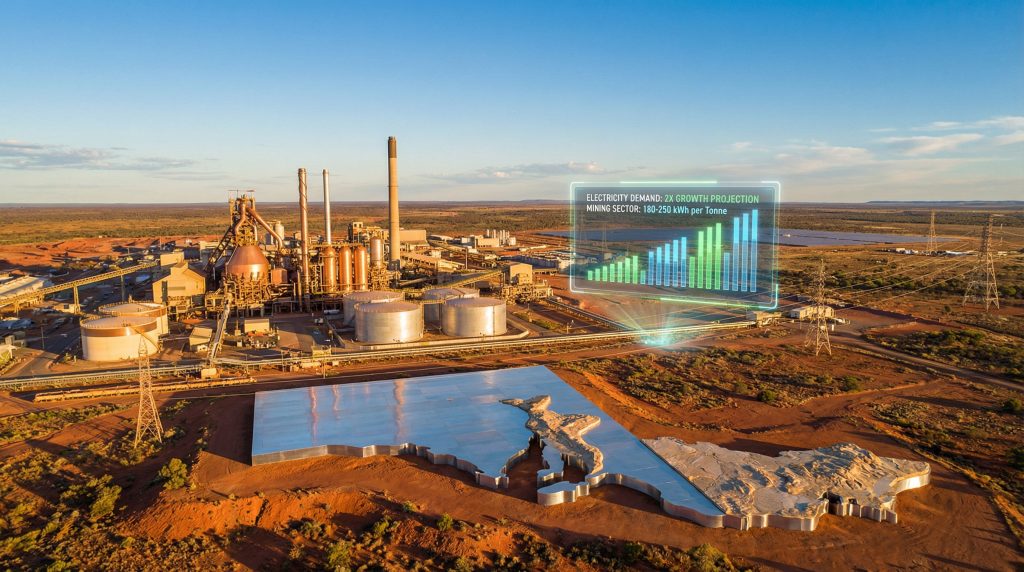
Unlike residential demand, which varies seasonally and daily, industrial operations often require continuous power supply, creating opportunities for grid optimisation and renewable energy integration through complementary demand patterns. Additionally, according to ElectraNet's latest analysis, South Australia's electricity demand will double within 15 years driven by mining, defence, and other industrial opportunities.
The economic multiplier effects of energy-intensive industries extend throughout regional economies, supporting employment in construction, maintenance, transportation, and professional services. These industries typically pay premium rates for electricity while contributing to grid stability through demand response capabilities and, increasingly, on-site generation and storage resources.
Regional Development Catalysts and Infrastructure Synergies
Regional areas benefit disproportionately from large-scale industrial development because these projects often require infrastructure investments that serve broader community needs. However, transmission line upgrades, substation expansions, and grid reliability improvements necessary for industrial operations simultaneously enhance electricity supply security for residential and commercial users throughout affected regions.
The concentration of multiple industrial projects within geographic corridors creates infrastructure synergies that reduce per-unit development costs while maximising economic benefits. Consequently, this clustering effect explains why certain regions experience rapid transformation from agricultural or service-based economies to diversified industrial centres within relatively short timeframes.
Strategic location advantages, including proximity to ports, rail infrastructure, and raw material sources, amplify the attractiveness of specific regions for energy-intensive development. In addition, these locational factors create positive feedback loops where initial industrial investment attracts additional projects, creating industrial ecosystems that support sustained economic growth.
Which Industrial Sectors Generate the Highest Electricity Demand Intensities?
Energy Consumption Patterns Across Resource Processing Industries
Resource processing operations exhibit varying electricity intensity profiles depending on the specific minerals being processed, the technologies employed, and the level of value-added manufacturing incorporated into operations. Understanding these consumption patterns is essential for grid planning and renewable energy project development, particularly as the mining industry evolution continues to reshape energy requirements.
Metal processing and refining operations typically require continuous, high-voltage electricity supply for smelting, electrowinning, and purification processes. These operations often consume electricity equivalent to small cities, with consumption measured in hundreds of megawatts for large-scale facilities.
Mineral concentration and beneficiation processes involve crushing, grinding, flotation, and separation technologies that require substantial electricity inputs, particularly for fine particle processing and magnetic separation systems used in various mineral processing applications. Furthermore, modern facilities are increasingly adopting automated systems that optimise energy consumption.
Chemical processing facilities associated with mineral extraction and purification often exhibit the highest electricity intensities due to electrochemical processes, heating requirements, and continuous operation necessities that create steady baseload demand profiles.
| Processing Type | Typical Load Profile | Grid Requirements | Demand Characteristics |
|---|---|---|---|
| Primary Metal Processing | 150-300 MW continuous | High voltage, stable supply | Baseload, minimal variation |
| Mineral Beneficiation | 50-150 MW variable | Medium voltage, flexible | Semi-continuous operation |
| Chemical Processing | 100-250 MW continuous | High voltage, quality sensitive | Critical reliability needs |
| Value-Added Manufacturing | 25-100 MW variable | Standard voltage, efficient | Flexible demand response |
Technology Evolution and Efficiency Improvements
Technological advancement in industrial processing continues to influence electricity consumption patterns, with newer facilities often incorporating energy recovery systems, process optimisation technologies, and integrated renewable energy solutions that reduce grid dependency while maintaining production capacity. The energy transition in mining is driving many of these innovations.
Modern processing facilities increasingly incorporate waste heat recovery systems that capture thermal energy from high-temperature processes for electricity generation or heating applications, improving overall energy efficiency and reducing grid electricity requirements per unit of production.
Process automation and optimisation technologies enable more precise control of electricity consumption, allowing facilities to adjust power usage in response to grid conditions, electricity pricing signals, or renewable energy availability without compromising production quality or throughput.
How Do Grid Infrastructure Networks Respond to Industrial Development?
Transmission System Upgrades and Capacity Expansion
Grid infrastructure adaptation to accommodate large-scale industrial development involves complex technical and economic considerations that extend far beyond simple capacity additions. However, transmission networks must balance reliability, cost-effectiveness, and future growth potential while maintaining system stability during construction and commissioning phases.
High-voltage transmission line construction represents the most visible aspect of grid upgrades, often requiring new corridors, upgraded conductors, and enhanced protection systems to safely deliver substantial power volumes to industrial load centres. These projects typically involve multi-year development timelines and significant capital investments.
Substation infrastructure expansion includes transformer upgrades, switching equipment installation, and control system modernisation necessary to safely manage increased power flows and provide adequate protection for both industrial customers and the broader grid system.
Grid stability and power quality improvements become critical when accommodating large industrial loads, particularly those with variable consumption patterns or specialised power quality requirements that could affect other grid users without appropriate mitigation measures. Furthermore, as reported by AEMO's South Australian Electricity Report, strategic planning is essential for managing this growth effectively.
Renewable Energy Integration and Industrial Demand
Industrial electricity demand creates opportunities for renewable energy development by providing long-term purchase agreements that support project financing while offering industrial customers access to cost-competitive clean energy supplies. This symbiotic relationship drives innovation in renewable energy integration and storage technologies, particularly highlighting the decarbonisation benefits available to forward-thinking operations.
Behind-the-meter renewable installations allow industrial facilities to directly consume solar, wind, or other renewable energy sources, reducing grid dependency while providing backup power capabilities during outages or maintenance periods.
Hybrid renewable-storage systems enable industrial operations to optimise electricity costs by storing excess renewable generation during low-demand periods and dispatching stored energy during peak pricing periods or when renewable resources are unavailable.
Grid-scale renewable partnerships involve industrial customers entering long-term agreements with renewable energy developers, providing revenue certainty that supports project development while securing predictable electricity costs for industrial operations.
What Economic Impacts Result from Industrial Electricity Demand Growth?
Direct Economic Benefits and Employment Creation
Industrial electricity demand growth generates substantial economic benefits through direct employment, capital investment, supply chain development, and tax revenue generation that support regional development and economic diversification strategies. Consequently, mining electricity demand south australia has become a significant driver of regional prosperity.
Construction phase economic activity includes substantial employment in electrical contracting, equipment installation, civil construction, and professional services required for grid infrastructure development and industrial facility construction.
Operational employment opportunities encompass specialised technical positions in facility operation, maintenance, and management, typically offering higher wages than regional averages and requiring ongoing training and skill development programmes.
Supply chain development creates opportunities for regional businesses to provide goods and services to industrial operations, generating multiplier effects that extend economic benefits throughout regional economies. Furthermore, insights from the innovation expo insights demonstrate how technological advancement supports these economic benefits.
Infrastructure Investment and Long-Term Economic Development
The infrastructure investments required to support industrial electricity demand create lasting economic benefits that extend far beyond individual projects, establishing foundations for continued regional development and economic growth.
Industrial electricity demand growth requiring substantial grid infrastructure investment can generate economic multiplier effects equivalent to 2.5-3.5 times the direct project investment, supporting thousands of direct and indirect employment opportunities across construction, operation, and supply chain activities.
Grid infrastructure improvements benefit all electricity users within affected regions, improving supply reliability, power quality, and capacity for future development while reducing long-term electricity costs through economies of scale and improved efficiency.
Regional development catalysts include improved transportation infrastructure, telecommunications upgrades, and industrial site preparation that make regions more attractive for additional investment and development.
Skills development and training programmes associated with industrial projects create human capital benefits that support long-term regional competitiveness and employment opportunities beyond individual project lifecycles.
Which Specific Development Projects Drive Current Demand Growth?
Major Industrial Developments and Associated Infrastructure Requirements
Current industrial development projects across Australia demonstrate the scale and complexity of electricity demand growth, requiring coordinated infrastructure planning and investment to ensure adequate supply capacity and system reliability. For instance, mining electricity demand south australia continues to drive major infrastructure upgrades across the state.
Resource processing expansions involve existing facilities increasing capacity or upgrading processing technologies, creating incremental electricity demand that often requires transmission system upgrades to accommodate higher power flows.
New industrial facility development includes greenfield projects that require entirely new grid connections, often necessitating transmission line extensions, new substations, and grid stability enhancements to serve previously undeveloped areas.
Value-added manufacturing initiatives represent industrial diversification strategies that add processing stages to raw material extraction, increasing electricity intensity while creating opportunities for higher-value employment and export revenue generation.
Development Timeline Analysis and Grid Planning Coordination
Understanding the relationship between industrial project development timelines and grid infrastructure requirements is essential for ensuring electricity supply availability coincides with project commissioning and operational commencement.
Short-term demand increases typically result from facility expansions or process modifications at existing sites, requiring grid capacity assessments and potential transformer or distribution system upgrades within 1-3 year timeframes.
Medium-term development projects involve new facility construction with 3-7 year development cycles, allowing coordination between industrial project schedules and transmission infrastructure development timelines to optimise investment timing and cost-effectiveness.
Long-term growth planning considers exploration and development pipelines extending 5-15 years, enabling strategic grid planning that anticipates future industrial electricity demand while avoiding over-investment in infrastructure that may not be utilised for extended periods.
The next major ASX story will hit our subscribers first
How Does Australian Industrial Electricity Demand Compare Across States?
Interstate Industrial Development Patterns and Grid Implications
Australian states exhibit different industrial electricity demand patterns based on resource endowments, existing infrastructure, policy frameworks, and economic development strategies that influence both the scale and timing of grid infrastructure requirements.
Western Australia's established mining sector provides benchmarks for industrial electricity consumption, demonstrating how mature resource processing industries create stable electricity demand that supports long-term infrastructure planning and renewable energy integration.
Queensland's integrated resource and manufacturing sector illustrates how diversified industrial development creates complex electricity demand patterns requiring sophisticated grid management and flexible supply arrangements.
New South Wales manufacturing and processing capabilities demonstrate the importance of existing grid infrastructure and industrial expertise in attracting energy-intensive development projects.
Competitive Advantages in Energy-Intensive Industrial Development
Different regions compete for energy-intensive industrial investment based on electricity costs, supply reliability, renewable energy access, and infrastructure development capacity that influence project location decisions and long-term competitiveness.
Renewable energy cost advantages enable regions with superior solar, wind, or other renewable resources to offer competitive electricity pricing for industrial operations while supporting emissions reduction objectives.
Grid stability and reliability benefits become critical factors for industries requiring continuous operation, making regions with robust transmission infrastructure and diverse generation portfolios more attractive for industrial investment.
Strategic location and logistics advantages include proximity to ports, rail connections, and raw material sources that complement competitive electricity supply in creating attractive conditions for industrial development.
What Challenges Emerge from Substantial Industrial Electricity Demand Growth?
Grid Stability and System Management Complexities
Accommodating substantial industrial electricity demand creates technical challenges that require sophisticated grid management strategies, advanced forecasting capabilities, and flexible system operations to maintain reliability and power quality for all users.
Load balancing and frequency management become more complex when large industrial loads represent significant portions of total grid demand, requiring enhanced prediction capabilities and rapid response resources to maintain system stability.
Transmission congestion and bottlenecks may develop when industrial development concentrates in areas with limited existing transmission capacity, requiring strategic infrastructure investment to avoid constraining economic development opportunities.
Power quality and harmonic management issues can arise from large industrial loads with specialised electrical characteristics, necessitating grid infrastructure modifications and protection system upgrades to maintain service quality for other users.
Infrastructure Investment Requirements and Financing Challenges
The scale of infrastructure investment required to support substantial industrial electricity demand growth creates financing challenges that require innovative approaches to project development and risk allocation among stakeholders.
| Infrastructure Category | Investment Scale | Development Timeline | Primary Beneficiaries |
|---|---|---|---|
| Transmission Upgrades | $500M – $1.5B | 4-7 years | Regional grid users |
| Generation Capacity | $1.5B – $3.5B | 3-6 years | Industrial customers |
| Distribution Networks | $200M – $600M | 2-4 years | Local communities |
| Control Systems | $100M – $300M | 1-3 years | System operators |
Capital allocation coordination requires balancing immediate industrial project needs with long-term grid development objectives, ensuring infrastructure investments provide benefits beyond individual project requirements.
Risk management and cost recovery involve developing financing mechanisms that fairly distribute infrastructure costs among beneficiaries while providing appropriate returns for infrastructure investors and operators.
What Strategic Opportunities Emerge from Industrial Electricity Demand Growth?
Export Development and Value-Added Processing Opportunities
Industrial electricity demand growth creates opportunities for developing export-oriented manufacturing and processing capabilities that capture greater value from domestic resource endowments while supporting employment and regional development objectives.
Energy-intensive value-added processing enables transformation of raw materials into higher-value products for export markets, supporting employment in technical and professional roles while generating increased export revenue per unit of resource extracted.
Strategic supply chain positioning allows regions to become critical links in global manufacturing and processing networks, creating opportunities for long-term industrial development and economic growth.
Technology development and innovation hubs emerge around successful industrial clusters, supporting research and development activities that enhance competitiveness and create intellectual property assets.
Renewable Energy Leadership and Grid Modernisation
Industrial electricity demand provides anchor loads that support renewable energy development and grid modernisation initiatives that position regions as leaders in clean energy transition and sustainable industrial development.
Large-scale renewable energy projects become economically viable when supported by long-term industrial demand, creating opportunities for renewable energy leadership and technological advancement.
Grid modernisation and smart systems development receives justification and funding support from industrial demand growth, creating infrastructure that supports broader economic development and energy transition objectives.
Energy storage and flexibility services markets develop around industrial demand patterns, creating new revenue streams and business opportunities while enhancing grid stability and renewable energy integration.
How Can Industrial Operations Optimise Electricity Consumption and Grid Integration?
Demand Management and Operational Efficiency Strategies
Industrial operations can implement sophisticated demand management strategies that reduce electricity costs while supporting grid stability and renewable energy integration through flexible consumption patterns and active participation in electricity markets.
Load scheduling and process optimisation enable industrial facilities to shift electricity-intensive operations to periods of low grid demand or high renewable energy availability, reducing costs while supporting grid balance and renewable energy utilisation.
Energy efficiency technologies and process improvements continuously reduce electricity consumption per unit of production, improving competitiveness while reducing grid infrastructure requirements and environmental impacts.
Demand response participation allows industrial operations to provide grid services by adjusting electricity consumption in response to system needs, creating additional revenue streams while supporting grid reliability.
Integrated Energy Systems and Storage Solutions
Advanced industrial operations increasingly integrate renewable energy generation, energy storage, and grid connections to optimise electricity costs, improve supply security, and provide flexibility services that support both facility operations and grid stability.
Hybrid renewable-grid systems combine on-site renewable generation with grid connectivity and energy storage to optimise electricity costs while maintaining operational flexibility and supply security during outages or maintenance periods.
Industrial energy storage applications include battery systems for demand management, mechanical storage for process optimisation, and thermal storage for heat recovery and utilisation in manufacturing processes.
Microgrid and islanding capabilities enable industrial facilities to operate independently during grid disturbances while providing emergency power and grid support services during normal operations.
Strategic Framework for Energy-Industrial Integration Success
Industrial electricity demand growth represents a fundamental transformation in how regional economies develop and how electricity systems are planned and operated. The doubling of electricity demand in regions like South Australia demonstrates both the scale of opportunity and the complexity of challenges associated with energy-intensive industrial development.
Success in managing this transformation requires coordinated planning among industrial developers, grid operators, renewable energy providers, and government agencies to ensure infrastructure development matches industrial project timelines while creating lasting economic benefits for regional communities.
The strategic implications extend beyond immediate electricity supply considerations, encompassing regional economic development, export competitiveness, renewable energy leadership, and technological innovation that positions regions for sustained growth in the global energy transition economy.
Industrial electricity demand growth creates opportunities for innovative business models, advanced technologies, and integrated energy systems that support both industrial competitiveness and broader energy system transformation. Organisations that successfully navigate these complexities will establish competitive advantages that support long-term success in increasingly energy-intensive global markets.
Understanding these dynamics enables stakeholders to make informed decisions about infrastructure investment, technology adoption, and strategic positioning that maximises economic benefits while supporting sustainable industrial development and energy system transformation.
This analysis is based on publicly available information and industry research. Readers should conduct independent research and seek professional advice before making investment or business decisions related to industrial electricity demand or energy infrastructure development.
Ready to Capitalise on Australia's Energy Infrastructure Boom?
Discovery Alert's proprietary Discovery IQ model delivers real-time alerts on significant ASX mineral discoveries powering this industrial transformation, instantly identifying companies positioned to benefit from Australia's massive energy infrastructure investments. Begin your 14-day free trial today and gain the market-leading advantage needed to identify actionable opportunities before the broader market recognises their potential.