May 22, 2026
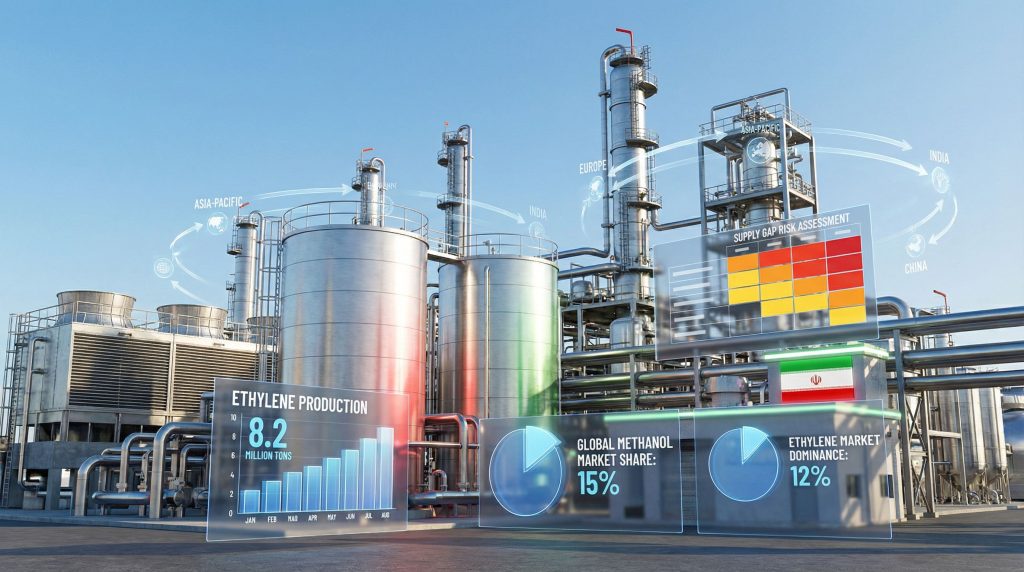
Understanding Iran's Strategic Export Controls Framework
Iran halts petrochemical exports as a direct response to unprecedented regional instability and infrastructure damage. The global petrochemical industry operates through a complex web of regional production hubs, supply chains, and price mechanisms that can be rapidly disrupted during periods of geopolitical instability. Furthermore, when major producing nations implement emergency trade restrictions, the ripple effects extend far beyond immediate supply shortages, fundamentally altering market structures and forcing strategic recalibrations across multiple sectors.
Understanding how these disruptions unfold requires analysing the regulatory frameworks governing export controls, the vulnerability patterns in global supply networks, and the adaptive responses emerging across different regions. In addition, the current situation demonstrates how quickly established trade relationships can be severed when national security concerns take precedence over commercial obligations.
What Triggered Iran's Comprehensive Petrochemical Trade Moratorium?
Iran's decision to halt petrochemical exports represents a convergence of infrastructure protection imperatives and domestic economic stabilisation policies. The National Petrochemical Company issued comprehensive export suspension orders on April 13, 2026, following military strikes that damaged critical production facilities in Asaluyeh and Mahshahr. These attacks specifically targeted utility companies providing essential feedstock for petrochemical plants, creating cascading production disruptions throughout Iran's chemical manufacturing sector.
The export moratorium encompasses Iran's entire 29 million tonnes of annual petrochemical production, valued at approximately $13 billion in global trade. This substantial volume represents a significant portion of global petrochemical supply across multiple product categories. Consequently, the suspension aims at maintaining domestic price stability while infrastructure repairs proceed.
Key Infrastructure Damage Factors:
- Strategic production hub targeting in Asaluyeh and Mahshahr regions
- Utility infrastructure disruption affecting feedstock supply chains
- Transportation network complications from regional military activities
- Port access restrictions limiting export capabilities
The domestic price protection mechanism implemented alongside the export ban maintains petrochemical product prices at pre-conflict levels despite rising global market values. This policy framework demonstrates Iran's prioritisation of internal economic stability over international trade revenues during the current crisis period.
How Do Export Suspension Policies Function in Crisis Scenarios?
Emergency export restrictions operate through centralised government authority over industrial production allocation. Iran's National Petrochemical Company possesses comprehensive oversight powers over downstream industries, enabling rapid implementation of trade suspension directives without requiring legislative approval. This regulatory structure allows for immediate market intervention during crisis situations.
The implementation mechanism involves direct communication to petrochemical firms, instructing complete export suspension until further notice. This indefinite duration structure provides maximum flexibility for government officials to adjust trade policies based on evolving security and economic conditions.
Regulatory Control Mechanisms:
- Centralised Authority: National Petrochemical Company oversight of all export decisions
- Firm-Level Implementation: Direct instructions to individual petrochemical companies
- Price Control Integration: Coordination between export restrictions and domestic pricing policies
- Emergency Powers Framework: Utilisation of existing crisis management authorities
The suspension operates under principles of domestic supply prioritisation, effectively redirecting international export volumes toward internal consumption. This approach aims to prevent domestic shortages while maintaining industrial input availability for local manufacturing sectors dependent on petrochemical feedstocks.
When big ASX news breaks, our subscribers know first
Global Petrochemical Market Disruption Analysis
What Are the Immediate Supply Chain Vulnerabilities?
The suspension of Iran halts petrochemical exports creates immediate supply gaps across multiple product categories critical to global manufacturing. While specific product-level export volumes require additional verification, the aggregate 29 million tonnes of annual production represents substantial market displacement that global suppliers must address through alternative sourcing arrangements.
Regional shipping disruptions compound the supply challenges beyond Iran's voluntary export restrictions. According to Reuters, U.S. military operations blocking shipping traffic at Iranian ports during the week of April 14, 2026, created additional logistical barriers that affected broader Middle Eastern trade flows through the strategically vital Strait of Hormuz.
Supply Chain Pressure Points:
- Transportation Bottlenecks: Strait of Hormuz shipping restrictions affecting regional export capacity
- Alternative Sourcing Delays: Time required for buyers to identify and qualify replacement suppliers
- Inventory Management: Existing stockpile depletion rates across consuming industries
- Contract Renegotiation: Force majeure claims and alternative supply agreement negotiations
The broader regional context shows additional supply chain stress indicators. UAE Fujairah marine fuel sales experienced documented declines following the US-Iran conflict escalation, while Qatar considers extending force majeure provisions on gas deliveries. These patterns suggest supply chain disruptions extending beyond Iran's specific petrochemical export restrictions.
Which Industries Face the Most Severe Input Shortages?
Manufacturing sectors with high petrochemical input dependencies face the most immediate operational challenges from Iran's export suspension. Plastic manufacturing operations require consistent ethylene and propylene feedstock supplies, while automotive component producers depend on polyethylene and specialised chemical intermediates for parts production.
Pharmaceutical packaging industries rely heavily on petrochemical-derived materials for sterile container manufacturing, creating potential supply bottlenecks for healthcare sector operations. Similarly, construction material manufacturers depend on polymer-based products derived from petrochemical feedstocks for various building applications.
Critical Sector Dependencies:
- Automotive Manufacturing: Plastic component production requiring consistent petrochemical inputs
- Healthcare Packaging: Pharmaceutical container manufacturing dependent on specialised polymers
- Construction Industry: Building material production utilising petrochemical-derived components
- Consumer Electronics: Manufacturing processes requiring various chemical intermediates
Regional energy infrastructure damage assessments indicate broader supply chain vulnerabilities. Research firm Rystad estimates Middle East war damage to energy assets may reach $58 billion, suggesting extensive infrastructure repair requirements that could prolong supply disruptions across multiple product categories.
Regional Economic Consequences and Policy Responses
The tariffs impact on markets demonstrates how trade disruptions can cascade through global financial systems. However, the current petrochemical crisis operates through different mechanisms than traditional protectionist policies.
How Are Neighbouring Economies Adapting to Supply Disruptions?
Gulf Cooperation Council economies face complex adaptation challenges as regional petrochemical supply chains experience widespread disruption. ADNOC's chemicals division reports delivery reductions due to Strait of Hormuz closure impacts, indicating operational constraints even for major regional producers attempting to fill supply gaps.
Saudi Arabia's chemical sector response demonstrates the complexity of rapid capacity expansion during crisis periods. The Aramco-Dow joint venture SADARA halted production operations due to Middle East turmoil rather than increasing output. Consequently, this suggests regional producers prioritise operational security over market opportunity capture during periods of heightened geopolitical risk.
Qatar's economic officials have issued warnings regarding major economic downturn risks if the Iran conflict persists. This indicates preference for diplomatic resolution over long-term supply chain restructuring initiatives. Furthermore, this perspective suggests GCC economies view rapid de-escalation as preferable to sustained alternative sourcing arrangements.
Regional Response Patterns:
- Operational Constraint Management: Existing producers managing delivery disruptions rather than expanding capacity
- Security-First Positioning: Production facility protection prioritised over market share gains
- Diplomatic Solution Preference: Regional emphasis on conflict resolution rather than permanent supply restructuring
- Infrastructure Protection Focus: Safeguarding existing facilities during regional instability
What Emergency Procurement Policies Are Emerging?
International procurement responses vary significantly based on existing supply dependencies and alternative sourcing capabilities. Pakistan has implemented dual-track strategies involving spot LNG purchases while accelerating domestic oil and gas production development to reduce import dependency during the crisis period.
The broader energy sector shows force majeure considerations becoming more widespread. Qatar may extend force majeure provisions on gas contracts while evaluating US LNG as potential replacement sourcing. This indicates contractual flexibility mechanisms activating across multiple energy product categories.
Procurement Adaptation Strategies:
- Spot Market Utilisation: Short-term purchase arrangements to address immediate supply gaps
- Domestic Production Acceleration: Increased investment in local production capacity development
- Alternative Supplier Qualification: Expedited evaluation of non-traditional sourcing partners
- Contract Flexibility Implementation: Force majeure clause activation and renegotiation processes
Regional capital markets reflect the broader economic stress from supply disruptions. Dollar-denominated GCC ESG sukuk issuance has stalled due to geopolitical tensions, indicating investor uncertainty about regional economic stability during the crisis period.
Investment and Market Structure Implications
The US–China trade war effects provide valuable context for understanding how geopolitical tensions reshape global supply chains. Additionally, global recession insights help frame the broader economic implications of such disruptions.
How Do Export Restrictions Affect Global Petrochemical Valuations?
Capital market responses to Iran halts petrochemical exports reflect broader uncertainty about global petrochemical supply chain resilience and pricing stability. The magnitude of Iran's $13 billion annual petrochemical export value creates substantial market displacement that requires alternative production capacity activation or demand reduction across consuming sectors.
Regional financial markets show immediate stress indicators beyond petrochemical-specific impacts. GCC sukuk issuance markets have experienced stalling in dollar-denominated ESG instruments due to geopolitical risk concerns. This suggests investor appetite for regional exposure has declined during the crisis period.
Market Valuation Factors:
- Supply-Demand Rebalancing: Global markets adjusting to sudden supply reduction
- Risk Premium Integration: Higher uncertainty costs incorporated into pricing mechanisms
- Alternative Capacity Evaluation: Market assessment of non-Iranian production potential
- Contract Renegotiation Impacts: Force majeure claims affecting long-term price agreements
Infrastructure damage assessments provide context for potential market restructuring timelines. Research estimates suggest Middle East energy asset damage may reach $58 billion, indicating substantial capital investment requirements for supply chain normalisation across the region.
What Long-Term Market Structural Changes Are Anticipated?
The temporary export suspension may catalyse permanent shifts in global petrochemical sourcing patterns, particularly if conflict duration extends beyond short-term resolution timeframes. Historical precedents suggest major supply disruptions often accelerate pre-existing trends toward supply chain diversification and regional production hub development.
Technology transfer and domestic production capability development may accelerate in consuming regions seeking to reduce dependence on Middle Eastern petrochemical exports. The Wall Street Journal notes this pattern aligns with broader geopolitical trends emphasising supply chain resilience over cost optimisation in strategic industrial sectors.
"Extended supply disruptions could fundamentally alter global petrochemical trade patterns, with consuming regions prioritising supply security through diversified sourcing arrangements and enhanced domestic production capabilities."
Structural Evolution Drivers:
- Supply Security Prioritisation: Risk management superseding cost optimisation in sourcing decisions
- Regional Production Hub Development: Investment in alternative geographic production centres
- Technology Transfer Acceleration: Knowledge sharing to develop domestic production capabilities
- Trade Relationship Diversification: Reduced concentration in Middle Eastern supply dependencies
Regulatory Compliance and Trade Policy Framework
The US economic tariffs and Canada's energy challenges demonstrate how national policies can reshape global trade flows.
How Do International Sanctions Interact with Voluntary Export Restrictions?
Iran's voluntary export suspension operates alongside existing international sanctions frameworks, creating complex legal and compliance considerations for global buyers and intermediaries. The combination of self-imposed trade restrictions and external sanctions creates multiple layers of regulatory complexity affecting contract performance and alternative sourcing arrangements.
Force majeure provisions in existing supply contracts provide legal protection mechanisms for Iranian exporters unable to fulfil delivery obligations due to infrastructure damage and government policy decisions. These contractual protections typically cover both voluntary government actions and external circumstances beyond supplier control.
Regulatory Interaction Framework:
- Voluntary vs. Imposed Restrictions: Distinguishing between self-imposed and externally mandated trade limitations
- Contract Law Applications: Force majeure clause interpretation under multiple jurisdictional frameworks
- Sanctions Compliance Requirements: Ongoing adherence to existing international trade restrictions
- Dispute Resolution Mechanisms: Arbitration processes for contract non-performance claims
WTO compliance considerations arise under emergency trade restriction provisions, which allow temporary export limitations during national crisis situations. These international trade law frameworks provide legal justification for Iran's export suspension while maintaining compliance with global trade agreements.
What Precedents Exist for Similar Export Control Measures?
Historical analysis reveals multiple precedents for emergency export restrictions during periods of national crisis or resource security concerns. Russia's 2022 energy export policies during geopolitical conflicts provide recent examples of major producing nations prioritising domestic supply security over international trade commitments.
China's rare earth export quota systems demonstrate how strategic resource producers can utilise export controls for domestic economic objectives while managing international supply relationships. These precedents suggest export restrictions can be maintained for extended periods when supported by national security or economic stability rationales.
Historical Export Control Examples:
- Russia Energy Exports (2022): Strategic export restrictions during international conflicts
- China Rare Earth Quotas: Long-term export management for strategic resource control
- OPEC Production Coordination: Multilateral supply management through coordinated export policies
- Argentina Agricultural Exports: Temporary restrictions for domestic price stabilisation
OPEC production cut coordination provides models for how major commodity exporters can collectively manage global supply levels while maintaining international market relationships. These precedents suggest Iran halts petrochemical exports could evolve into broader regional coordination if crisis conditions persist.
The next major ASX story will hit our subscribers first
Future Policy Scenario Modelling
Under What Conditions Might Export Restrictions Be Lifted?
Infrastructure restoration timelines represent the most concrete factor influencing Iran's export suspension duration. The extent of damage to utility companies supplying feedstock to petrochemical plants in Asaluyeh and Mahshahr will likely determine minimum timeframes for production capacity restoration and export resumption.
Geopolitical de-escalation scenarios could accelerate export restriction removal if broader regional conflicts resolve through diplomatic channels. However, domestic economic considerations may maintain some export limitations even after infrastructure repairs complete, particularly if domestic demand growth continues during the suspension period.
| Scenario | Probability Assessment | Estimated Timeline | Primary Triggers |
|---|---|---|---|
| Infrastructure Restoration | Moderate-High | 6-12 months | Utility repair completion |
| Conflict Resolution | Moderate | 3-8 months | Diplomatic breakthrough |
| Economic Pressure Relief | Moderate | 9-15 months | Alternative revenue development |
| Domestic Demand Saturation | Low-Moderate | 12-18 months | Internal market fulfilment |
Economic pressure factors may influence policy timeline adjustments as Iran evaluates the trade-offs between domestic price stability and international revenue generation. The $13 billion annual export value represents substantial foreign currency earnings that Iran may need to restore for broader economic stability objectives.
How Might Global Supply Chain Architecture Evolve?
Accelerated development of alternative production hubs outside the Middle East could fundamentally reshape global petrochemical supply patterns. This trend aligns with broader supply chain resilience initiatives that prioritise geographic diversification over cost optimisation in strategic industrial sectors.
Technology innovation in alternative feedstock utilisation may accelerate as consuming regions seek to reduce dependence on traditional petrochemical imports. These developments could include bio-based chemical production, recycling technologies, and synthetic feedstock alternatives that reduce reliance on conventional petroleum-derived inputs.
Supply Chain Evolution Pathways:
- Geographic Diversification: Production capacity development in multiple regional hubs
- Feedstock Innovation: Alternative raw material utilisation reducing petroleum dependency
- Strategic Stockpile Expansion: Enhanced inventory management across major consuming economies
- Regional Self-Sufficiency Initiatives: Domestic production capability development programmes
Strategic stockpile policies may expand across major consuming economies as governments recognise the vulnerability of concentrated supply sources during crisis periods. These inventory management approaches could provide buffer capacity for future supply disruptions while supporting domestic price stability objectives.
The current crisis demonstrates how rapidly global supply chains can be disrupted through the combination of infrastructure damage, policy decisions, and regional conflicts. Long-term adaptation strategies will likely emphasise supply security and resilience over traditional cost optimisation approaches. Consequently, this fundamentally alters the risk-return calculations underlying global petrochemical sourcing decisions.
Disclaimer: This analysis is based on publicly available information and industry reports. Petrochemical market conditions are highly volatile and subject to rapid change due to geopolitical developments, infrastructure damage assessments, and policy decisions. Readers should conduct independent research and consult qualified professionals before making investment or business decisions based on this information. Export suspension timelines and market impact projections are speculative and may not reflect actual future outcomes.
Ready to Navigate Complex Market Disruptions?
Discovery Alert's proprietary Discovery IQ model instantly identifies mining and exploration opportunities that can provide portfolio stability during global supply chain crises, helping investors spot resilient resource companies positioned to benefit from commodity price volatility. Explore Discovery Alert's historic discoveries to understand how major mineral finds have delivered exceptional returns during periods of market uncertainty, and begin your 14-day free trial today to gain actionable insights ahead of market movements.