May 22, 2026
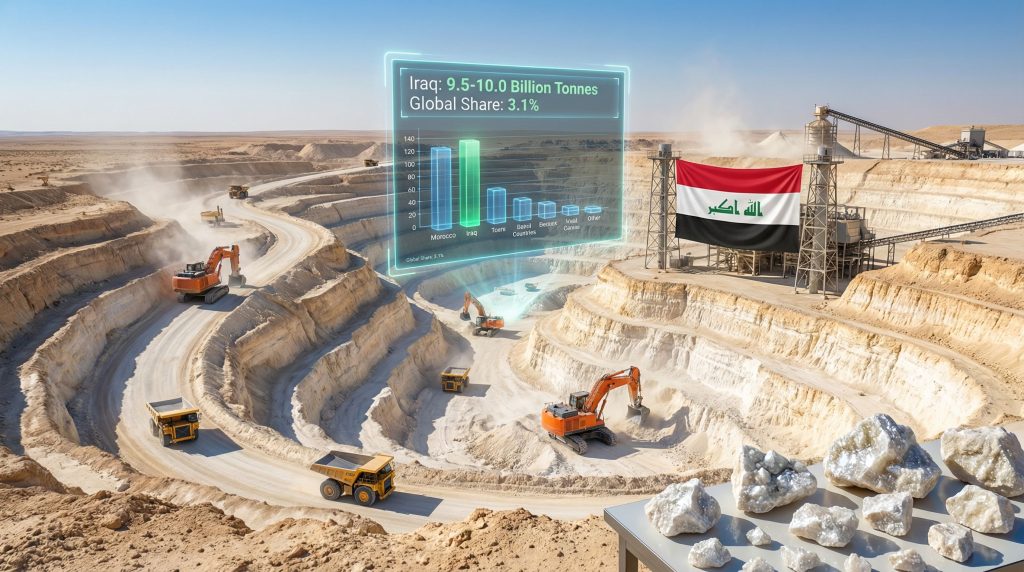
Global agriculture faces mounting pressure from expanding populations, climate variability, and soil degradation across key growing regions. Within this context, mineral resources that support fertiliser production have become strategic assets for food security planning. Iraq phosphate rock reserves represent particularly valuable formations due to their accessibility and processing characteristics compared to igneous alternatives found in other geological settings.
Strategic Position in Global Phosphate Markets
Iraq's mineral endowments extend significantly beyond petroleum resources, encompassing substantial phosphate formations that position the nation prominently within global agricultural supply chains. According to Iraq's Ministry of Industry, the country ranks second worldwide in Iraq phosphate rock reserves, with estimated quantities reaching approximately 10 billion tonnes, primarily concentrated in Anbar Province.
These geological formations represent a cornerstone of potential agricultural sustainability, particularly as global fertiliser markets face increasing concentration risks. The Western Desert regions of Iraq contain sedimentary phosphate deposits that formed through marine processes over millions of years, creating relatively uniform ore bodies with consistent mineral characteristics.
Regional Mineral Resource Distribution:
- Sulphur reserves: 600 million tonnes (first globally)
- Phosphate rock: 10 billion tonnes (second globally)
- High-purity silica sand: 350+ million tonnes
- Limestone formations: 8+ billion tonnes
The concentration of these resources within Iraq's Western Desert creates potential synergies for integrated mineral processing operations. Furthermore, limestone and sulphur availability supports downstream fertiliser production chemistry, while silica sand deposits offer industrial applications complementing phosphate development strategies.
When big ASX news breaks, our subscribers know first
Geological Characteristics and Formation Processes
Iraq phosphate rock reserves formed through sedimentary processes during marine transgression cycles, creating laterally continuous ore bodies with predictable characteristics. Unlike igneous phosphate formations found in some other regions, sedimentary deposits typically offer more uniform mineral distribution and simplified extraction methodologies.
The primary phosphate-bearing formations occur within the Western Desert's geological structure, where ancient marine environments deposited phosphorus-rich sediments over extensive periods. These processes resulted in ore bodies containing phosphorus pentoxide (P₂O₅) concentrations that can be economically processed through established beneficiation techniques.
Processing Enhancement Potential:
- Raw ore P₂O₅ content: Variable based on deposit location
- Beneficiation target levels: Industry-standard commercial grades
- Processing methods: Flotation, washing, chemical treatment
- Product applications: Fertiliser manufacturing, industrial phosphates
Sedimentary phosphate formations typically require less complex extraction methods compared to hard rock mining operations. The relatively soft nature of these deposits allows for conventional open-pit techniques, reducing initial capital requirements for extraction infrastructure.
Geographic Concentration and Logistics
Anbar Province's Western Desert contains the overwhelming majority of Iraq's mineral wealth, creating both opportunities and challenges for development planning. This geographic concentration allows for focused infrastructure investment but requires substantial transportation networks to connect remote deposits with processing facilities and export markets.
The distance between phosphate formations and existing industrial centres necessitates careful logistics planning for economically viable operations. In addition, transportation costs represent significant factors in phosphate project overview economics, particularly given the relatively low value-to-weight ratio of raw phosphate rock compared to processed fertiliser products.
Infrastructure Development Requirements:
- Road networks connecting deposit areas to processing sites
- Railway capacity for bulk mineral transportation
- Port facilities for international export operations
- Power grid extensions to support processing operations
- Water supply systems for beneficiation processes
Anbar's arid climate presents both advantages and challenges for phosphate operations. Low rainfall reduces weather-related disruptions but creates water scarcity issues for processing operations that require significant water volumes for ore beneficiation and dust control.
Processing Technologies and Value Addition
Modern phosphate beneficiation employs flotation separation techniques to remove impurities and concentrate phosphorus content to commercial specifications. These processes typically involve crushing, grinding, chemical conditioning, and flotation stages designed to achieve target P₂O₅ concentrations for fertiliser production.
Beneficiation Process Stages:
- Primary crushing: Size reduction for handling and transport
- Grinding operations: Particle size optimisation for separation
- Chemical conditioning: Reagent addition for flotation selectivity
- Flotation separation: Phosphate concentration through bubble attachment
- Dewatering processes: Moisture removal from concentrate products
- Product handling: Storage and transportation preparation
The efficiency of beneficiation processes directly impacts the economic viability of phosphate operations. However, higher-quality concentrates command premium pricing in fertiliser markets, while processing costs must remain competitive with established global producers.
Water management represents a critical consideration for Iraqi phosphate operations, given the arid environment of Anbar Province. Consequently, environmental management insights regarding recycling systems and water conservation technologies become essential for sustainable processing operations in water-scarce regions.
International Development Partnerships
Large-scale phosphate development typically requires substantial capital investment and technical expertise, leading many nations to pursue international partnerships for project implementation. These mining joint ventures can provide access to proven technologies, financing mechanisms, and global market networks essential for successful phosphate operations.
Partnership structures often involve technology transfer components, enabling domestic capacity building in mining, processing, and fertiliser production capabilities. Furthermore, such arrangements can establish long-term foundations for integrated phosphate value chains serving both domestic agricultural needs and export market opportunities.
Partnership Benefits:
- Access to proven processing technologies
- International financing and investment capital
- Technical expertise and operational know-how
- Global marketing and distribution networks
- Risk sharing for large-scale development projects
International partnerships also provide credibility for projects seeking additional financing from development banks and commercial lenders. Established mining companies bring operational track records that can facilitate project financing and regulatory approvals.
Agricultural Security and Market Dynamics
Phosphate rock serves as the primary raw material for phosphorus-based fertilisers essential to modern agricultural productivity. Global food security increasingly depends on reliable access to phosphate supplies, as phosphorus cannot be substituted in biological processes and phosphate rock represents the only significant source of new phosphorus inputs to agricultural systems.
Current global phosphate production concentrates heavily in Morocco and Western Sahara, creating supply concentration risks for importing regions. Consequently, diversification of phosphate sources has become a strategic priority for major agricultural nations seeking to reduce dependency on concentrated supply sources.
Market Growth Drivers:
- Expanding global population requiring increased food production
- Soil phosphorus depletion in intensive agricultural regions
- Agricultural modernisation in developing nations
- Climate adaptation requiring optimised fertiliser applications
- Sustainable agriculture practices emphasising soil health
Price volatility in phosphate markets reflects the interaction of geological constraints, geopolitical factors, and agricultural demand cycles. For instance, weather patterns affecting crop planting decisions can create significant short-term demand fluctuations, while long-term trends show steady growth aligned with global food requirements.
The next major ASX story will hit our subscribers first
Economic Diversification Opportunities
Iraq's broader mineral portfolio, including substantial Iraq phosphate rock reserves, represents potential pathways for economic diversification beyond petroleum dependency. The Ministry of Industry reported cement production reaching 37 million tonnes in 2025, demonstrating existing industrial capacity for large-scale mineral processing operations.
Phosphate development offers opportunities for value-added manufacturing through integrated fertiliser production facilities. Rather than exporting raw phosphate rock, domestic processing capabilities can capture additional value while serving regional agricultural markets with growing fertiliser demand.
Economic Development Benefits:
- Employment generation in mining and processing sectors
- Technology transfer and skills development programmes
- Regional industrial cluster development
- Export revenue diversification
- Domestic fertiliser security for agricultural development
The geographic proximity of Iraq's phosphate reserves to major agricultural regions in South Asia and the Middle East provides natural market access advantages. Transportation costs to these markets could prove competitive with traditional suppliers, particularly as regional demand continues expanding.
Environmental and Regulatory Considerations
Modern phosphate operations must address environmental management protocols throughout the extraction and processing lifecycle. These considerations include water resource management, waste stream handling, land rehabilitation, and air quality protection in accordance with international mining standards.
Phosphate processing generates various waste streams, including phosphogypsum byproducts that require appropriate management strategies. However, advanced operations increasingly focus on beneficial utilisation of these materials rather than simple disposal, creating additional economic opportunities while addressing environmental concerns.
Environmental Management Requirements:
- Water conservation and recycling systems
- Tailings management and containment
- Air quality monitoring and dust control
- Land rehabilitation and vegetation restoration
- Waste minimisation and byproduct utilisation
- Community impact assessment and mitigation
Regulatory frameworks governing mining operations continue evolving to attract international investment while ensuring appropriate environmental protection and community benefits. Modern mining regulations typically require comprehensive environmental impact assessments and long-term monitoring programmes.
What Investment Considerations Apply?
Phosphate project development requires substantial capital investment across multiple phases, from exploration and resource definition through construction and operational ramp-up. Investment timelines typically span several years, requiring patient capital and staged development approaches.
Development Phase Requirements:
- Detailed geological surveys and resource classification
- Feasibility studies and engineering design
- Environmental permitting and regulatory approvals
- Infrastructure development and construction
- Processing facility construction and commissioning
- Market development and offtake arrangements
Risk factors affecting phosphate investments include commodity price volatility, regulatory changes, infrastructure availability, and market access considerations. In addition, capital raising strategies require diversified funding sources and comprehensive risk management strategies for successful projects.
International development finance institutions increasingly support mineral sector projects that contribute to food security objectives. These funding sources can provide attractive financing terms for projects demonstrating clear development benefits and environmental compliance.
Regional Market Integration
Iraq's strategic location provides natural access to growing Middle Eastern and South Asian fertiliser markets, where agricultural intensification drives increasing phosphate demand. Regional demographic trends and dietary transitions support long-term fertiliser consumption growth in these accessible markets.
Transportation infrastructure connecting Iraq to regional markets offers competitive advantages for phosphate exports. Proximity to major agricultural regions reduces logistics costs compared to distant traditional suppliers, potentially creating sustainable market positioning.
Market Access Advantages:
- Geographic proximity to growing agricultural regions
- Existing transportation infrastructure and trade routes
- Regional economic integration and trade agreements
- Currency and payment system compatibility
- Cultural and commercial relationship foundations
Furthermore, regional fertiliser market development creates opportunities for specialised phosphate products targeting specific crop requirements and soil conditions prevalent in Middle Eastern and South Asian agriculture.
Technology and Innovation Opportunities
Modern phosphate operations increasingly incorporate advanced technologies for resource optimisation, environmental management, and operational efficiency. These innovation trends in mining can improve project economics while reducing environmental impacts compared to traditional mining approaches.
Digital technologies enable precise resource modelling, optimised extraction planning, and real-time process control for beneficiation operations. Remote monitoring systems can enhance safety while reducing operational costs through automated process management.
Technological Applications:
- Automated mining equipment and remote operation capabilities
- Advanced process control systems for beneficiation optimisation
- Environmental monitoring and management systems
- Predictive maintenance and asset optimisation
- Supply chain integration and logistics optimisation
Research and development initiatives focus on enhanced phosphate utilisation, slow-release fertiliser formulations, and integrated nutrient management systems that optimise phosphorus efficiency in agricultural applications.
This analysis is provided for informational purposes only and does not constitute investment advice. Mineral development projects involve substantial risks, including commodity price volatility, regulatory changes, and operational challenges. Prospective investors should conduct independent due diligence and consult qualified advisors before making investment decisions. Market projections and resource estimates referenced herein require verification through independent geological and economic assessments.
Ready to Capitalise on Strategic Mineral Opportunities?
Discovery Alert's proprietary Discovery IQ model delivers real-time alerts on significant mineral discoveries across the ASX, instantly empowering subscribers to identify actionable opportunities in critical sectors like fertiliser minerals and strategic resources. Understand why major mineral discoveries can lead to substantial market returns by exploring Discovery Alert's dedicated discoveries page, showcasing historic examples of exceptional outcomes, and begin your 30-day free trial today to position yourself ahead of the market.