May 21, 2026
Egypt's emergence as a significant player in metallic silicon production reflects a broader transformation occurring across global manufacturing landscapes. The nation's strategic approach to industrial diversification demonstrates how emerging economies can leverage substantial geological advantages to establish sophisticated manufacturing capabilities in critical materials sectors.
The development represents more than simple import substitution; it embodies a comprehensive strategy connecting upstream mineral extraction with downstream value-added manufacturing. This positioning enables Egypt to participate actively in the mining industry evolution while addressing multiple economic objectives including export revenue generation and industrial ecosystem development.
Understanding Egypt's Silicon Production Infrastructure Development
Egypt's entry into metallic silicon production represents a calculated industrial diversification strategy built upon substantial geological advantages and systematic technological validation. The nation's approach demonstrates how emerging markets can leverage natural resource endowments to establish manufacturing capabilities in strategic materials sectors.
The Alamein for Silicon Product Company complex serves as the cornerstone of this initiative, secured through a comprehensive financing structure totaling $140 million in syndicated debt funding. This arrangement involves major financial institutions including Qatar National Bank Egypt, Commercial International Bank, and Banque du Caire, with National Bank of Egypt providing financial advisory services.
Project Infrastructure Framework:
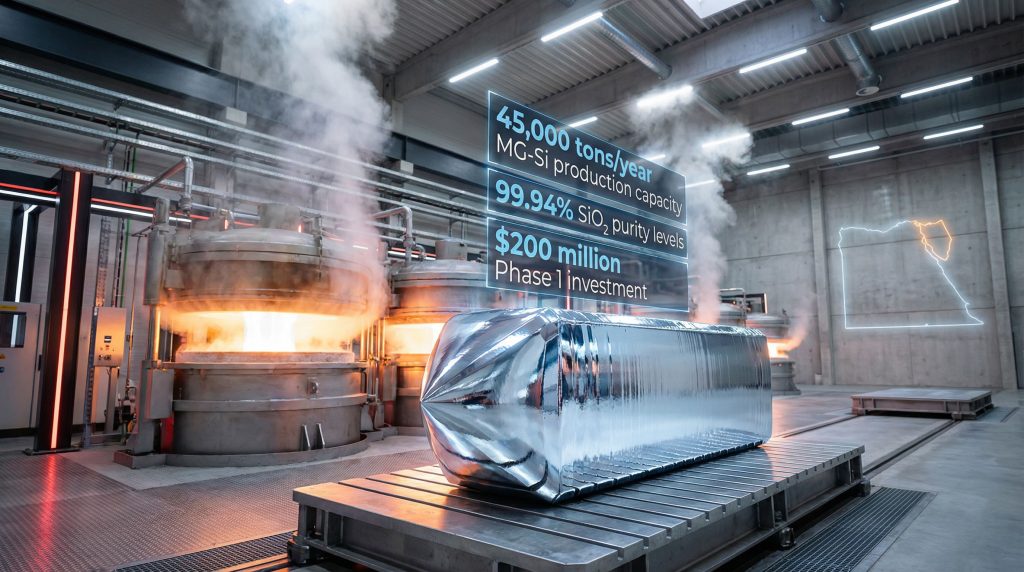
- Total Phase 1 Investment: $200 million
- Debt-to-Equity Ratio: 70% debt financing
- Regulatory Authorization: Egyptian Cabinet Golden License
- Development Timeline: Four-phase expansion strategy
- Geographic Location: New Alamein industrial zone
The project's integration within Egypt's broader industrial ecosystem reflects sophisticated planning that connects upstream mineral extraction with downstream manufacturing applications. Furthermore, this positioning enables potential linkages to renewable energy integrations, electronics manufacturing, and specialty chemical production.
Research conducted by the Central Metallurgical Research and Development Institute has validated technical feasibility through semi-pilot scale demonstrations using submerged arc furnace technology. These validation studies provide the technological foundation for commercial-scale production implementation.
When big ASX news breaks, our subscribers know first
Egypt's Quartz Resource Advantages for Silicon Manufacturing
Egypt's geological profile includes exceptionally pure silica deposits concentrated in the Eastern Desert and Sinai Peninsula regions. These formations provide the fundamental feedstock required for high-quality metallurgical-grade silicon production through carbothermic reduction processes.
Resource Characteristics:
- Silica Purity: Exceeding 99% SiO₂ content in premium deposits
- Geographic Distribution: Al Faleg area, Marsa Alam, Eastern Desert
- Processing Accessibility: Proximity to transportation networks and industrial infrastructure
- Reserve Status: Substantial deposits relative to current production planning
The exceptional purity levels of Egyptian quartz deposits provide significant advantages in metallic silicon production Egypt operations. High-purity feedstock reduces processing complexity, improves energy efficiency, and enables consistent product quality across production cycles.
Pure silica feedstock minimises impurity management during reduction processes, leading to higher recovery rates and reduced operational costs compared to lower-grade alternatives used in some global production facilities.
Moreover, Egypt's resource positioning becomes particularly advantageous when considering global silicon purity requirements. Metallurgical-grade silicon typically requires 96-99% purity, while electronics applications demand significantly higher specifications exceeding 99.9% purity levels.
The strategic utilisation of domestic quartz resources eliminates feedstock transportation costs while providing supply chain security for long-term production planning. Consequently, this geographic advantage supports competitive cost structures compared to producers dependent on imported raw materials.
Production Technology Benchmarking and Performance Metrics
Egypt's metallic silicon production capabilities centre on proven carbothermic reduction technology implemented through submerged arc furnace systems. This approach aligns with global industry standards while incorporating process optimisations developed through domestic research initiatives.
Comparative Performance Analysis:
| Performance Parameter | Egyptian Research Results | Global Industry Range |
|---|---|---|
| Silicon Recovery Rate | 75% | 70-85% |
| Product Purity Level | 97% | 96-99% |
| Carbon-to-Silica Ratio | 0.39 | 0.35-0.45 |
| Processing Cycle Time | 80 minutes | 60-120 minutes |
The research validation demonstrates competitive performance metrics across critical operational parameters. Silicon recovery rates of 75% position Egyptian production within established industry benchmarks, while product purity levels meet metallurgical-grade specifications.
Submerged arc furnace technology represents the dominant global approach for silicon production, utilised by major producers in China, Norway, Brazil, and Russia. This technology selection provides access to established operational knowledge while enabling performance optimisation through local adaptations.
Process Optimisation Factors:
- Energy Efficiency: Optimised furnace design for local power grid characteristics
- Raw Material Utilisation: Tailored reduction processes for Egyptian quartz composition
- Quality Control: Systematic monitoring protocols for consistent output specifications
- Environmental Compliance: Emissions management aligned with international standards
The transition from semi-pilot to commercial scale requires careful attention to process scaling factors, particularly furnace design modifications and heat management systems. Successful implementation depends on maintaining performance consistency while achieving target production volumes.
Economic Drivers and Market Positioning Strategy
Egypt's silicon industry development addresses multiple economic objectives including import substitution, export revenue generation, and industrial diversification. Current market dynamics provide favourable conditions for domestic production establishment and regional market penetration.
Import Substitution Analysis:
Egypt currently imports approximately 3,000 tons annually of metallurgical-grade silicon, representing an estimated market value of $6-9 million based on prevailing global pricing structures. The planned production capacity of 45,000 tons per year in Phase 1 significantly exceeds domestic consumption requirements.
This capacity planning indicates strategic positioning for export markets rather than purely domestic supply. The 15-fold excess over current import levels positions Egypt as a potential net exporter with substantial foreign exchange generation capabilities.
Regional Market Opportunity Assessment:
- MENA Region: Growing industrial sectors across Gulf states, Levant, and North Africa
- Sub-Saharan Africa: Expanding manufacturing capabilities requiring silicon inputs
- Geographic Advantage: Reduced transportation costs compared to Asian suppliers
- Market Penetration Potential: 15-30% regional market share achievable
The economic rationale extends beyond immediate revenue considerations to encompass strategic industrial positioning. In addition, silicon serves as a fundamental input for multiple downstream industries including solar panel manufacturing, electronics assembly, and specialty chemical production.
Phase 1 production capacity could generate approximately $100-115 million in annual export revenues based on current metallurgical-grade silicon pricing of $2,200-2,500 per ton.
Investment Structure and Financial Framework Analysis
The project's financial architecture demonstrates sophisticated risk management through diversified funding sources and phased development implementation. The $140 million syndicated financing represents 70% of Phase 1 capital requirements, with remaining equity financing provided through the Egyptian Petrochemicals Holding Company structure.
Banking Consortium Composition:
- Qatar National Bank Egypt: Lead arranger and primary lender
- Commercial International Bank: Co-financing partner
- Banque du Caire: Syndicate member
- National Bank of Egypt: Financial advisory and structuring services
The involvement of multiple banking institutions spreads financing risk while providing access to diverse funding capabilities. This approach enables optimal capital cost management while maintaining financial flexibility for subsequent development phases.
Phased Development Strategy:
| Development Phase | Target Output | Investment Focus | Timeline |
|---|---|---|---|
| Phase 1 | 45,000 tons/year MG-Si | Core production facility | 2026-2027 |
| Phase 2 | 25,000 tons/year polysilicon | High-purity processing | 2028-2029 |
| Phase 3 | Intermediate silicon products | Value-added manufacturing | 2030+ |
| Phase 4 | Finished derivatives | Silicone rubber, oils | 2032+ |
The phased approach enables progressive risk management while building operational capabilities systematically. Each phase provides revenue generation to support subsequent development stages, reducing dependency on external financing for long-term expansion.
The Egyptian Cabinet Golden License provides streamlined regulatory approval, reducing bureaucratic delays and enabling accelerated project implementation. This regulatory framework demonstrates government commitment to industrial diversification initiatives.
Regional Supply Chain Impact and Market Integration
Egypt's silicon production development carries significant implications for regional supply chain structures, particularly considering current dependency on Asian suppliers for metallurgical-grade silicon throughout the Middle East and Africa.
Supply Chain Transformation Potential:
The establishment of significant production capacity within the MENA region reduces geographic concentration risk for regional manufacturers while providing cost advantages through reduced transportation expenses. Current supply chains typically involve shipments from China, Norway, or Brazil to regional markets.
However, Egypt's approach aligns with broader global mining landscape insights that emphasise the importance of regional supply chain development and reduced dependency on distant suppliers.
Production Scaling Timeline:
Phase 1 implementation targets 45,000 tons annually of metallurgical-grade silicon, representing substantial capacity relative to regional demand patterns. This output level positions Egypt among significant global producers while serving as a foundation for subsequent expansion phases.
The progression toward polysilicon production in Phase 2 addresses higher-value market segments including electronics manufacturing and solar panel production. Polysilicon commands significantly higher pricing, typically $40-60 per kilogram compared to metallurgical-grade silicon at $2.2-2.5 per kilogram.
Regional Integration Benefits:
- Reduced Import Dependency: Lower regional reliance on distant suppliers
- Supply Chain Resilience: Geographic diversification of silicon sources
- Cost Competitiveness: Transportation cost advantages for regional customers
- Quality Assurance: Proximity enabling better quality control and customer service
The integration with Egypt's broader industrial development creates potential synergies across multiple sectors. Furthermore, the New Alamein industrial zone provides infrastructure for complementary industries while enabling shared logistics and utilities.
Employment Generation and Industrial Ecosystem Development
The metallic silicon production complex generates employment across multiple skill levels while contributing to broader industrial ecosystem development. Direct employment creation represents only a portion of total economic impact through multiplier effects across supporting industries.
Employment Impact Analysis:
- Direct Employment (Phase 1): 300 positions
- Indirect Employment: Approximately 3,000 positions across supply chains
- Skill Requirements: Metallurgical engineering, process control, quality assurance
- Training Partnerships: Technical institutes and international technology transfer
The employment structure encompasses both technical and operational positions, requiring collaboration with educational institutions for workforce development. Specialised training programmes become essential for building capabilities in metallurgical processes and furnace operations.
Industrial Ecosystem Effects:
The silicon production facility creates demand for supporting services including logistics, maintenance, testing laboratories, and specialised equipment suppliers. These secondary industries contribute to regional industrial development beyond the primary manufacturing operation.
International partnerships for technology transfer provide opportunities for local skill development in advanced metallurgical processes, potentially benefiting other mineral processing industries within Egypt.
The establishment of silicon production capabilities creates potential foundations for related industries including specialty alloys, chemical processing, and advanced materials manufacturing. This clustering effect amplifies economic benefits through industrial synergies.
Technical and Operational Implementation Challenges
The transition from research validation to commercial production presents multiple technical challenges requiring systematic addressing for successful project implementation. Process scaling, quality consistency, and operational optimisation represent primary areas of focus.
What are the critical technical considerations for scaling production?
Furnace Scaling Challenges:
Moving from semi-pilot to commercial-scale operations requires significant furnace design modifications. Heat management, electrode positioning, and material flow dynamics change substantially at higher production volumes.
Quality Consistency Requirements:
Maintaining product specifications across continuous production cycles demands sophisticated process control systems. Temperature management, feedstock quality control, and timing precision become critical success factors.
Energy Efficiency Optimisation:
Silicon production is energy-intensive, typically requiring 11-13 MWh per ton of metallurgical-grade silicon. Energy cost management directly impacts production economics and competitive positioning, particularly in the context of energy transition strategies.
Environmental Compliance Framework:
- Emissions Control: CO and particulate matter management systems
- Waste Heat Recovery: Utilisation systems for overall plant efficiency
- Water Management: Cooling and process water recycling capabilities
- Waste Material Processing: Silicon dust and byproduct utilisation strategies
The operational complexity of continuous furnace operations requires experienced management and systematic maintenance protocols. For instance, equipment reliability becomes crucial for meeting production targets and maintaining cost competitiveness.
Market Positioning and Competitive Strategy Analysis
Egypt's entry into global silicon markets requires strategic positioning relative to established producers while leveraging unique competitive advantages. Cost structure optimisation and market differentiation strategies become essential for sustainable operations.
Competitive Landscape Context:
Global Production Distribution:
- China: Dominant market share (~60%) with cost leadership
- Norway: Technology leadership and high-quality production
- Brazil: Resource-based competitive advantages
- Russia: Integrated industrial capabilities
Egypt's competitive positioning centres on several key advantages: high-purity feedstock, strategic geographic location for regional markets, and lower labour costs compared to established producers in Norway and other developed countries.
Differentiation Strategies:
- Quality Premium: High-purity feedstock enabling superior product specifications
- Regional Market Access: Geographic advantages for MENA and African customers
- Supply Chain Reliability: Reduced dependency on long-distance shipping
- Customer Service: Proximity enabling responsive technical support
The progression through development phases enables market positioning evolution from basic metallurgical-grade supply toward higher-value polysilicon and specialty products. This value ladder approach maximises revenue potential while building market presence.
Competitive Cost Analysis:
Egyptian production benefits from several cost advantages including domestic raw materials, competitive energy pricing, and lower labour costs. However, operational efficiency and technology optimisation remain crucial for maintaining competitiveness against established producers.
Long-term Industrial Development Implications
The silicon production complex represents a foundational element in Egypt's broader industrial transformation strategy, with implications extending across multiple sectors and contributing to economic diversification objectives.
How does silicon production integrate with renewable energy development?
Integration with Renewable Energy Sector:
Phase 2 polysilicon production directly supports Egypt's renewable energy development through domestic supply for solar panel manufacturing. This vertical integration reduces dependency on imported polysilicon while supporting the country's renewable energy expansion goals, reflecting broader sustainable mining practices.
Electronics Industry Linkages:
High-purity silicon production enables potential electronics assembly operations, particularly for regional markets. The availability of domestic silicon supply provides cost advantages for electronics manufacturers considering regional operations.
Chemical Processing Expansion:
Phases 3 and 4 focus on silicon derivatives including silicone rubber and specialty chemicals. These higher-value products command premium pricing while serving diverse industrial applications across construction, automotive, and consumer products sectors.
Regional Hub Development Strategy:
Egypt's geographic position between Europe, Africa, and Asia provides strategic advantages for regional hub development. The combination of production capabilities, logistics infrastructure, and market access positions Egypt as a potential regional centre for silicon-based industries.
Technology Transfer and Innovation:
International partnerships for technology transfer create opportunities for domestic innovation capabilities. Research and development investments in silicon processing technologies could benefit other mineral processing industries within Egypt's industrial sector.
The silicon complex represents more than metals production; it demonstrates Egypt's capability to transform raw material advantages into sophisticated manufacturing operations with regional and global market reach.
The next major ASX story will hit our subscribers first
Future Market Evolution and Investment Opportunities
The global silicon market continues evolving with increasing demand from renewable energy, electronics, and specialty chemical applications. Egypt's production development positions the country to participate in these growth segments while building industrial capabilities for future opportunities.
Market Growth Drivers:
- Solar Industry Expansion: Growing global demand for polysilicon in photovoltaic applications
- Electronics Sector Growth: Increasing silicon demand for semiconductor applications
- Specialty Chemicals: Expanding applications in automotive, construction, and consumer products
- Regional Industrialisation: Growing manufacturing capabilities across MENA and Africa
The phased development approach enables Egypt to adapt production capabilities based on market evolution and technological advances. This flexibility provides strategic advantages for responding to changing market conditions and opportunities.
Investment in silicon production capabilities creates foundations for potential expansion into related materials including silicon carbide, specialty alloys, and advanced ceramics. These materials serve growing markets in electronics, aerospace, and industrial applications.
The success of Egypt's metallic silicon production Egypt initiative will influence broader industrial policy approaches across emerging economies with similar resource endowments. This project serves as a demonstration of how strategic industrial development can transform natural resource advantages into sustainable competitive positions in global markets.
Looking to Stay Ahead in the Evolving Metals Market?
Discovery Alert's proprietary Discovery IQ model delivers instant notifications on significant ASX mineral discoveries, empowering subscribers to identify actionable opportunities ahead of the broader market. Position yourself for success by exploring Discovery Alert's discoveries page to understand how major mineral discoveries can generate substantial returns, then begin your 30-day free trial today to secure your market-leading advantage.