June 8, 2026
Mining infrastructure faces unprecedented scrutiny as global extraction operations wrestle with escalating regulatory demands and evolving safety protocols. Modern tailings management has transformed from routine operational concern into critical infrastructure risk assessment, demanding sophisticated monitoring systems and proactive intervention strategies. Furthermore, the convergence of technological advancement, regulatory evolution, and financial pressure creates complex decision-making environments where traditional mining permitting basics require fundamental restructuring.
What Defines Critical Infrastructure Risk in Modern Mining Operations?
Critical infrastructure risk in contemporary mining encompasses multifaceted threat assessment extending beyond traditional operational hazards into systemic failure scenarios with cascading consequences. The regulatory landscape has fundamentally shifted following high-profile infrastructure collapses, establishing new baseline requirements for risk classification and monitoring protocols.
Regulatory Framework Evolution Post-Brumadinho
The Brazilian Brumadinho tailings dam collapse in January 2019 created an industry inflection point, resulting in approximately 270 fatalities and triggering mandatory international reassessment of tailings management protocols. This catastrophic event established new regulatory benchmarks requiring enhanced disclosure requirements, accelerated reporting timelines, and third-party infrastructure assessment mandates.
Chilean mining regulatory bodies, particularly Sernageomin, have implemented complaint-based investigation protocols allowing workers to trigger immediate regulatory inspections. The Quebrada Blanca case demonstrates this mechanism in action, where worker complaints filed between July 28 and August 8, 2025 resulted in comprehensive regulatory assessment within four days of initial notification.
International tailings management standards now incorporate community impact zone identification protocols and mandatory incident classification systems. These frameworks establish specific measurement thresholds triggering escalation procedures, transforming reactive maintenance approaches into proactive risk mitigation strategies.
Risk Classification Systems for Tailings Storage Facilities
Modern risk classification employs sophisticated probability matrices assessing catastrophic failure potential through quantifiable measurement parameters. The Chilean regulatory framework designates facilities with "extreme" consequence potential, requiring enhanced monitoring and immediate incident reporting protocols.
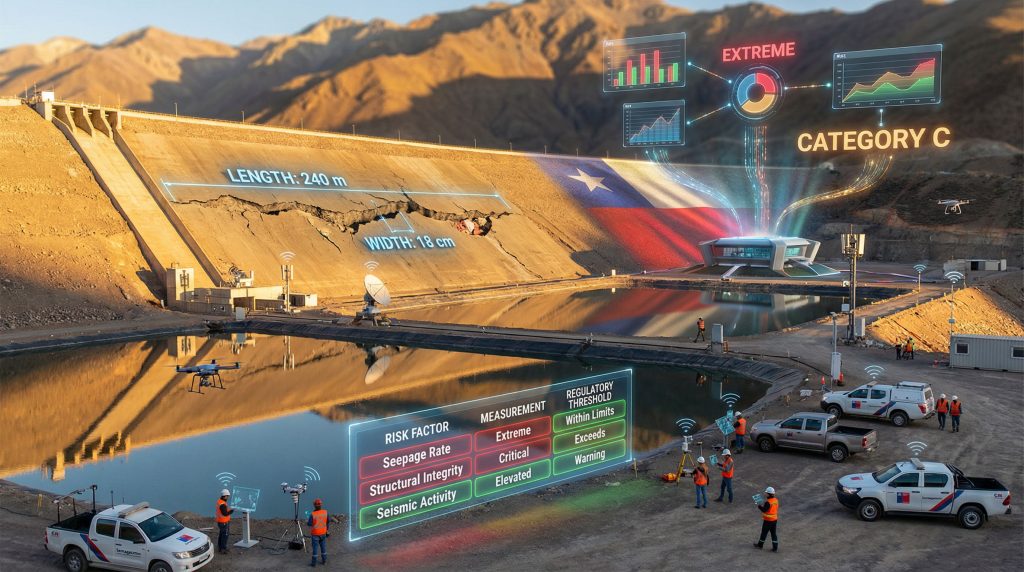
Category C classification implications in Chilean mining operations establish specific thresholds for structural integrity assessment:
- Horizontal crack length exceeding 240 metres requires immediate regulatory notification
- Gap width measurements of 18 centimetres trigger mandatory engineering assessment
- Water seepage presence demands root cause identification and remediation planning
- Structural deformation patterns activate enhanced monitoring protocols
The risk at Quebrada Blanca dam illustrates these classification systems in practice, where documented structural defects exceeded regulatory concern thresholds, prompting immediate inspection and ongoing oversight requirements including weekly monitoring reports to regulatory authorities.
When big ASX news breaks, our subscribers know first
How Do Regulatory Bodies Monitor Large-Scale Mining Infrastructure?
Regulatory monitoring systems integrate multiple oversight mechanisms combining routine inspection schedules with complaint-driven investigation protocols. Modern regulatory frameworks establish dual-track monitoring approaches incorporating both proactive assessment and reactive response capabilities.
Sernageomin's Inspection Authority and Protocols
Sernageomin's response to worker complaints demonstrates sophisticated regulatory oversight capabilities. The agency conducted comprehensive inspections on August 1-2, 2025 following worker notifications, establishing a protocol where personnel concerns trigger immediate investigation within 72-hour response windows.
Inspection findings documented specific deficiencies:
| Parameter | Measurement | Regulatory Response |
|---|---|---|
| Crack Length | 240 metres horizontal | Immediate assessment required |
| Gap Width | 18 centimetres | Engineering evaluation mandatory |
| Water Pooling | Present at dam base | Root cause analysis demanded |
| Reporting Compliance | Delayed notification | Formal regulatory rebuke |
The regulatory authority identified company failure to provide immediate incident notification, resulting in formal compliance directive. "The company must immediately or promptly notify the service of any incidents." This enforcement mechanism demonstrates regulatory emphasis on transparency and immediate disclosure requirements.
Worker Protection Rights in High-Risk Mining Environments
Anonymous complaint procedures provide workers with protected channels for flagging safety concerns without retaliation risk. The Quebrada Blanca case involved five separate worker complaints between July 28 and August 8, 2025, addressing both structural concerns and personal protective equipment deficiencies.
Worker communications documented operational priority conflicts, with one complaint stating: "Teck personnel ignore everything that's happening and just don't want to stop producing." These mechanisms create accountability structures enabling frontline personnel to escalate concerns directly to regulatory authorities when internal reporting proves ineffective.
Emergency response plan requirements mandate companies maintain current evacuation procedures and downstream impact assessments. For instance, regulatory frameworks require regular drill exercises and scenario planning to ensure operational readiness during infrastructure emergency situations.
What Are the Technical Indicators of Tailings Dam Instability?
Technical instability indicators encompass measurable physical manifestations signalling potential structural compromise requiring immediate assessment and intervention. Modern monitoring protocols establish specific threshold measurements triggering escalated response procedures and enhanced surveillance requirements, which are increasingly important in boosting safety operations.
Structural Warning Signs and Monitoring Parameters
The risk at Quebrada Blanca dam provides concrete examples of technical warning indicators requiring regulatory attention:
Horizontal crack formation patterns: A 240-metre continuous crack running horizontally across the dam crest represents significant structural concern. The crack's location on the top embankment surface indicates potential crest integrity compromise requiring immediate engineering assessment.
Gap width measurements: The documented 18-centimetre separation width exceeds normal settling tolerances for tailings infrastructure. This measurement represents quantifiable evidence of structural movement demanding root cause analysis and remediation planning.
Water seepage analysis: Multiple pooling locations identified at the dam base indicate potential compromised embankment permeability. Consequently, concurrent pipeline leaks resulting in water discharge compound structural integrity concerns through increased saturation pressure.
According to Chilean regulators and worker complaints, these indicators function as diagnostic symptoms potentially signalling underlying structural pathology requiring systematic investigation rather than isolated evaluation of individual manifestations.
Emergency Response Protocols for Infrastructure Failures
Mine Emergency Response Plan (MERP) activation criteria establish clear protocols for infrastructure failure scenarios. Companies must conduct structural collapse scenario drills and maintain current evacuation procedures addressing downstream impact zones.
Real-time monitoring systems require continuous surveillance capabilities tracking:
- Structural deformation patterns through automated measurement systems
- Water level fluctuations and seepage rate monitoring
- Crest integrity assessment through periodic surveying
- Weather impact evaluation during extreme precipitation events
Teck responded to regulatory concerns by implementing enhanced monitoring frequency, transitioning from standard routine monitoring to weekly written reports submitted to Sernageomin. This escalated surveillance demonstrates regulatory expectation for increased transparency following identified deficiencies.
How Do Production Pressures Impact Safety Compliance?
Production target achievement creates inherent tension with comprehensive safety protocol implementation, particularly when infrastructure concerns require operational modifications or temporary suspensions. Financial constraints and operational deadlines influence management decision-making regarding safety concern prioritisation and resource allocation.
Economic Incentives vs. Safety Protocol Adherence
The risk at Quebrada Blanca dam case illustrates this dynamic tension through documented worker observations regarding production priority. Anonymous complaints indicated management reluctance to halt operations despite emerging infrastructure concerns, with workers reporting: "Teck personnel ignore everything that's happening and just don't want to stop producing."
Financial implications demonstrate competing pressures:
- Production guidance reductions implemented throughout 2024 due to tailings dam infrastructure challenges
- $420 million commitment for 2025-2026 facility improvements representing significant capital expenditure
- Operational continuity pressure maintaining extraction schedules despite emerging structural defects
However, regulatory findings confirmed delayed incident disclosure, suggesting company prioritisation of operational continuity over immediate safety protocol compliance. This pattern indicates systematic organisational bias toward production maintenance rather than proactive safety concern escalation.
Corporate Disclosure Requirements for Infrastructure Issues
Financial reporting obligations mandate disclosure of material risks affecting operational capacity and future performance projections. Companies must communicate infrastructure challenges impacting production capabilities while maintaining investor confidence through transparent risk assessment communication, often requiring understanding of management red flags.
Teck addressed infrastructure concerns through production guidance adjustments and capital expenditure commitments without detailed disclosure of specific structural defects identified during regulatory inspections. This approach demonstrates corporate strategy balancing transparency requirements with operational reputation management.
Regulatory compliance requires immediate notification protocols for infrastructure incidents, establishing legal obligations superseding internal corporate communication preferences. The enhanced weekly reporting requirement following August 2025 inspections represents regulatory enforcement mechanism ensuring ongoing transparency.
What Role Do Mergers Play in Risk Management Strategy?
Strategic consolidation provides opportunities for enhanced risk management through shared operational expertise, infrastructure investment diversification, and standardised safety protocol implementation. Furthermore, merger activities enable resource pooling for complex infrastructure challenges requiring substantial capital expenditure and technical expertise.
Anglo American's Experience with Similar Infrastructure Challenges
Anglo American's operational history with complex tailings management provides relevant experience for infrastructure risk mitigation. The company's Quellaveco mine operations in Peru encountered similar tailings dam management challenges, developing specialised expertise in complex mining environment navigation.
Shared operational expertise benefits include:
- Technical knowledge transfer regarding tailings management best practices
- Consolidated engineering assessment capabilities for infrastructure evaluation
- Enhanced financial capacity for substantial remediation project investment
- Standardised safety protocol implementation across merged operations
The proposed merger enables risk diversification through portfolio consolidation, potentially reducing individual facility impact on overall operational performance. Combined operations provide alternative production sources during infrastructure remediation periods.
Collahuasi Integration Opportunities and Challenges
Neighbouring mine operational synergies create opportunities for shared infrastructure management approaches and coordinated emergency response protocols. The Collahuasi mine's proximity to Quebrada Blanca enables potential integrated monitoring systems and combined technical assessment capabilities.
Teck shareholders were scheduled to vote on the Anglo American merger proposal on December 10, 2025, with analysts emphasising infrastructure performance importance for merged company valuation success. Failure to achieve operational stability within projected timelines could significantly impact combined entity market assessment.
Regulatory approval considerations require demonstration of enhanced safety protocol implementation and improved infrastructure management capabilities through merger completion, reflecting broader industry consolidation insights.
How Do International Standards Shape Local Mining Practices?
Global regulatory harmonisation drives local implementation of international best practices through standardised assessment methodologies and technology advancement requirements. Cross-border regulatory standard adoption creates consistent evaluation frameworks transcending individual national regulatory approaches.
Canadian Dam Association Guidelines in Chilean Operations
Technical assessment methodology alignment enables Chilean operators to implement internationally recognised evaluation protocols developed through global expertise and historical incident analysis. The Canadian Dam Association guidelines provide standardised frameworks for tailings infrastructure assessment applicable across diverse geological and operational conditions.
International best practice implementation includes:
- Standardised monitoring frequency requirements exceeding local minimum standards
- Enhanced incident classification systems incorporating global catastrophic failure analysis
- Technology integration requirements for continuous surveillance capabilities
- Third-party assessment mandates ensuring independent technical evaluation
International expertise integration, including perspectives from institutions like the Colorado School of Mines, influences how Chilean operators evaluate and communicate infrastructure safety concerns to regulatory authorities and stakeholder communities.
Global Tailings Management Evolution Since 2019
Industry-wide safety standard improvements following the Brumadinho collapse created mandatory enhancement requirements affecting global mining operations. Technology advancement in monitoring systems provides real-time assessment capabilities previously unavailable for continuous infrastructure surveillance.
Enhanced monitoring technology requirements encompass:
- Automated structural deformation measurement systems
- Real-time seepage rate monitoring and alert protocols
- Weather impact assessment integration for precipitation event evaluation
- Continuous data transmission capabilities for regulatory oversight
Regulatory harmonisation across jurisdictions creates consistent international frameworks enabling knowledge transfer and standardised risk assessment approaches. This evolution establishes baseline requirements applicable regardless of individual national regulatory variations.
The next major ASX story will hit our subscribers first
What Are the Long-Term Implications for Mining Industry Risk Management?
Enhanced regulatory scrutiny and evolving international standards reshape industry operational requirements, demanding substantial infrastructure investment and comprehensive risk management protocol implementation. In addition, ESG framework integration creates investor expectations for proactive safety protocol adherence and transparent incident communication.
Investor Confidence and Valuation Impacts
Market response to infrastructure disclosure gaps influences company valuation through heightened due diligence requirements and enhanced ESG evaluation criteria. Mining investments now require comprehensive infrastructure risk assessment as standard due diligence component rather than secondary consideration.
Investor confidence factors include:
- Infrastructure maintenance capital expenditure planning and budget allocation
- Regulatory compliance history and incident response protocol effectiveness
- Technology integration capabilities for enhanced monitoring and assessment
- Stakeholder communication transparency during operational challenge periods
The risk at Quebrada Blanca dam infrastructure concerns coinciding with merger timing demonstrates how operational challenges influence strategic transaction completion and valuation assessment. Analysts emphasise infrastructure performance importance for merged entity success within competitive timeframes.
Future Regulatory Landscape for Critical Mining Infrastructure
Stricter reporting and transparency mandates require immediate incident disclosure and enhanced monitoring frequency regardless of operational impact preferences. International cooperation on mining safety standards creates global baseline requirements superseding individual national regulatory approaches, which align with industry innovation trends.
Enhanced regulatory requirements encompass:
- Mandatory third-party infrastructure assessment for independent technical evaluation
- Accelerated incident reporting timelines eliminating corporate discretion regarding disclosure timing
- Community notification procedures addressing downstream impact zone populations
- Worker complaint investigation protocols with protected anonymous reporting mechanisms
Future regulatory frameworks emphasise prevention through continuous monitoring rather than reactive response following infrastructure failure events.
How Can Mining Companies Build Resilient Risk Management Systems?
Proactive infrastructure monitoring protocols extending beyond regulatory minimum requirements create early warning systems enabling intervention before critical failure development. Worker engagement in safety observation programmes provides frontline intelligence regarding emerging operational concerns requiring management attention.
Proactive Infrastructure Monitoring Best Practices
Continuous assessment protocols establish baseline measurement systems tracking structural integrity through quantifiable parameters rather than subjective visual inspection approaches. Technology integration provides real-time risk detection capabilities enabling immediate response to emerging infrastructure concerns.
Monitoring system components include:
- Automated crack measurement systems tracking length and width progression over time
- Seepage rate monitoring establishing acceptable baseline parameters and escalation thresholds
- Weather integration protocols assessing precipitation impact on structural stability
- Continuous data transmission enabling real-time regulatory oversight and immediate alert capabilities
Worker engagement programmes create multiple reporting channels ensuring frontline observations reach management attention without administrative filtering. Anonymous complaint mechanisms provide protected channels for safety concern escalation when internal processes prove inadequate.
Stakeholder Communication During Crisis Management
Community notification procedures address downstream impact zone populations requiring evacuation planning and emergency response coordination. Transparent communication protocols balance operational reputation management with regulatory compliance requirements and public safety obligations.
Effective stakeholder communication encompasses:
- Immediate regulatory notification following infrastructure defect identification
- Community impact assessment communication addressing downstream population safety
- Investor relations transparency regarding operational challenge resolution timelines
- Worker safety protocol communication ensuring comprehensive emergency response awareness
Regulatory cooperation strategies emphasise proactive engagement rather than reactive compliance following enforcement action. Enhanced transparency creates accountability structures preventing delayed incident disclosure and maintaining ongoing oversight relationships.
According to Teck's official disclosure, the company has implemented comprehensive monitoring protocols to address identified deficiencies and maintain regulatory compliance standards.
Risk Assessment Framework: Tailings dam instability indicators including horizontal crack formation, water seepage, and structural deformation require immediate reporting to regulatory authorities. Inspection protocols activate through worker complaints or routine monitoring, with emergency response plans addressing evacuation procedures and downstream impact assessments for comprehensive crisis management.
Disclaimer: This analysis incorporates technical and regulatory information for educational purposes. Mining infrastructure assessment requires professional engineering evaluation and regulatory consultation. Specific operational decisions should involve qualified technical experts and appropriate regulatory authority coordination.
Ready to Navigate Mining Infrastructure Risks and Investment Opportunities?
Discovery Alert's proprietary Discovery IQ model monitors ASX announcements for significant mining infrastructure developments and discoveries, providing instant alerts that help investors understand market-moving events before broader awareness develops. Explore the potential of major historical discoveries and start your 30-day free trial today to stay ahead of critical mining sector developments.