
May 23, 2026
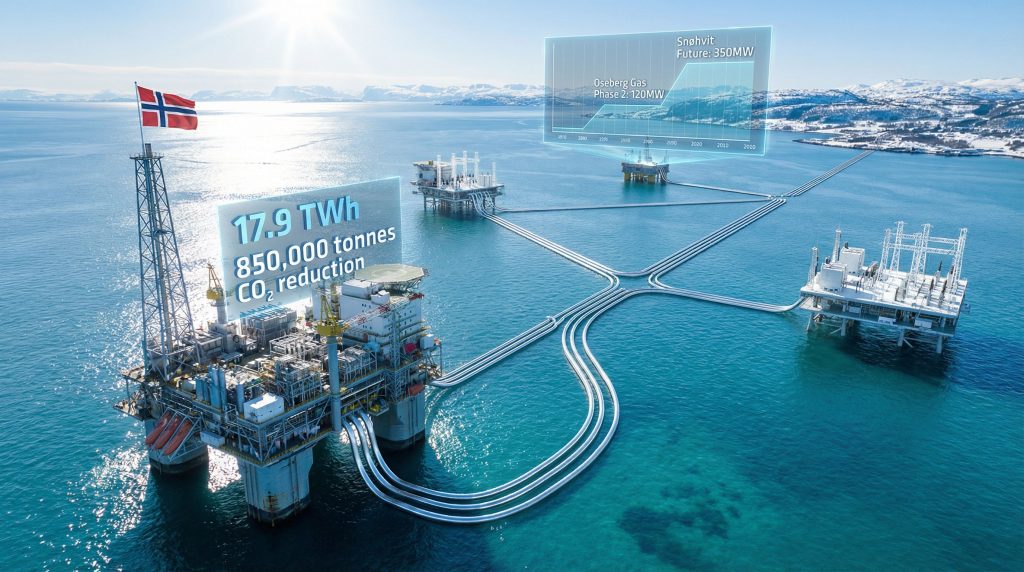
Norway oil and gas electrification 2030 represents one of the most ambitious industrial transformation initiatives in global energy markets today. While the petroleum sector traditionally relied on gas turbines for offshore operations, mounting carbon costs and EU emissions trading system pressures are fundamentally reshaping how operators approach power generation across the Norwegian Continental Shelf (NCS).
The transition involves replacing carbon-intensive offshore power systems with shore-based electricity connections, creating unprecedented demand for grid infrastructure while simultaneously testing the limits of Norway's electrical capacity. Furthermore, this transformation reflects broader industry dynamics where carbon pricing mechanisms increasingly dictate operational decisions rather than purely technical or cost considerations, as seen in Canada energy transition challenges.
Understanding Norway's Regulatory Framework for Offshore Electrification
Complex Jurisdictional Overlaps Drive Investment Uncertainty
Norway's offshore electrification strategy operates within a multifaceted regulatory environment where petroleum, energy, and offshore legislation intersect. The Norwegian Petroleum Act governs field development approvals, while the Energy Act determines grid access rights and capacity allocation procedures. These overlapping frameworks create complexity for operators seeking long-term investment certainty.
Multi-user grid regulations present particular challenges for project economics. Unlike dedicated point-to-point connections, shared infrastructure requires complex cost recovery mechanisms and capacity sharing agreements between multiple operators. This regulatory complexity contributes to the 901 MW total petroleum industry grid reservations across four bidding areas, representing significant infrastructure investment requirements.
Tax treatment differentials between electrified and conventional installations add another layer of regulatory consideration. Operators must navigate carbon tax implications, EU ETS compliance costs, and potential future policy changes when evaluating electrification investments.
Carbon Pricing Mechanisms Force Operational Changes
Norwegian operators face substantially higher carbon costs compared to international competitors, creating economic pressure for electrification adoption. State Secretary Snorre Skjevrak noted that Norwegian operators encounter carbon pricing much higher than in other oil and gas-producing countries, making selective electrification economically rational.
The regulatory framework centres on Norway's carbon taxation and EU ETS compliance requirements, though specific current pricing levels require verification from Norwegian Ministry of Petroleum and Energy documentation. These cost pressures explain why operators have systematically assessed which installations are best suited for shore power conversion, with the most economically viable projects already operational or in execution phases.
Key Economic Drivers:
• Carbon tax differential: Significant cost advantage for electrified operations
• EU ETS compliance: Additional regulatory burden for carbon-intensive installations
• Operational cost savings: Reduced fuel consumption from gas turbine replacement
• Extended field life: Electrification enables economical tie-ins of new discoveries
• Grid infrastructure costs: High capital requirements for subsea cable systems
When big ASX news breaks, our subscribers know first
Strategic Project Portfolio Defining Norway's 2030 Energy Landscape
Hammerfest LNG Terminal Leads Electrification Capacity
The 350 MW Hammerfest LNG terminal electrification represents Norway's single largest climate initiative according to industry association KonKraft. This project alone targets 850,000 tonnes CO₂/year reduction and completion by 2030, though it faces significant political opposition despite government approval in 2023.
Parliamentary energy committee motions emerged in late 2025 seeking to halt or delay the Hammerfest project, citing concerns over Norway's tightening power situation. These political challenges highlight the tension between climate objectives and energy security considerations as electrification demands reach 18 TWh consumption by 2032, equivalent to 11% of national output.
The project's technical specifications involve complex grid integration requirements, though specific engineering details regarding subsea cable routing, converter specifications, and redundancy systems require supplementary documentation from Equinor and grid operator Statnett.
Comprehensive Project Portfolio Analysis
| Project | Capacity (MW) | CO₂ Reduction (tonnes/year) | Timeline | Status |
|---|---|---|---|---|
| Snøhvit Future (Hammerfest) | 350 | 850,000 | 2030 | Approved |
| Oseberg Gas Phase 2 | 120 | 300,000 | End-2027 | Under Construction |
| Grane-Balder | 120 | 380,000 | TBD | Planning Phase |
| Draugen | 85 | 180,000 | 2023 | Operational |
| Njord | 65 | 120,000 | 2023 | Operational |
According to Norwegian Offshore Directorate data, only one electrification project remains in the planning phase: Equinor's Grane-Balder project targeting 120 MW grid connection for two offshore oil and gas fields. This represents a significant contraction from earlier expectations, with 39 fields now having shore power or final investment decisions, up from 16 in 2020.
Current operational consumption from fully or partially electrified production reached approximately 10 TWh in 2025, with growth averaging 670 GWh/year in new operational capacity through 2029. The substantial leap to 17.9 TWh/year by 2030 depends heavily on major projects like Hammerfest proceeding as scheduled, particularly given global market pressures similar to OPEC production impact.
Economic Realities Behind Major Project Cancellations
Equinor's Strategic Retreat from Electrification Commitments
Equinor's decision to cancel electrification work on Snorre A/B, Heidrun, Aasgard B, and Kristin fields in late 2025 demonstrates how project economics ultimately determine deployment rather than climate policy objectives. These cancellations were included in Offshore Norway's 2025 modelling, indicating rapid shifts in project viability assessments.
CEO Anders Opedal characterised the situation as requiring stable framework conditions to deliver a balanced energy transition. The cancellation decisions reflect fundamental economics: when carbon tax thresholds fail to justify capital investment requirements for electrification infrastructure, projects do not proceed regardless of climate targets.
Impact on National Climate Targets:
• Original 2030 target: 50% emissions reduction compared to 2005 baseline
• Current projected achievement: 47% reduction
• Shortfall attribution: 3 percentage points from project cancellations and delays
• Electrification contribution by 2030: 3 million tonnes CO₂e reduction
Grid Competition Between Sectors Intensifies
Petroleum industry enquiries represent only a fraction of total grid reservation requests, with Norwegian grid operator Statnett data showing the sector trailing behind data centres and heavy industry in both firm reservations and project queues. By 2040, petroleum sector power consumption is forecast to fall to fourth largest position, overtaken by data centres and hydrogen production by 2050.
Grid Queue Analysis by Sector:
• Data centres: Leading reservation requests with rapid growth projections
• Heavy industry: Second-largest demand category
• Hydrogen production: Fastest-growing segment with significant 2030+ expansion
• Petroleum sector: Fourth position by 2040 despite current electrification efforts
KonKraft had previously forecast an additional 2 TWh/year in incremental demand from power-from-shore projects approaching final investment decisions. However, two of three projects in this pipeline have since been cancelled, representing a 66.7% cancellation rate of near-FID electrification projects.
Critical Market Insight: The petroleum industry's grid competition position indicates that electrification success depends more on favourable economics relative to other sectors than on climate policy mandates alone.
Technical Challenges of Replacing 13.6 Million Tonnes of CO₂ Emissions
Gas Turbine Replacement Strategies
Norway's petroleum sector has reduced greenhouse gas emissions from 13.6 million tonnes CO₂e in 2005 to approximately 11 million tonnes CO₂e in 2024, achieving an 18.9% reduction. Gas turbines, responsible for approximately 80% of sector emissions, represent the primary target for electrification efforts.
The remaining 7.2 million tonnes CO₂e projected by 2030 (based on 47% reduction target) requires comprehensive technical solutions beyond simple shore power connections. Subsea cable infrastructure for 901 MW total capacity involves complex engineering challenges including voltage requirements, installation methodology, and operational maintenance protocols.
Engineering Requirements for Norway Oil and Gas Electrification 2030:
• Voltage specifications: Typically 66-220 kV for subsea power cables
• Cable route complexity: Multi-field connections requiring sophisticated routing
• Installation methodology: Specialised vessels and weather window constraints
• Grid stability considerations: Intermittent offshore demand management
• Backup systems: Redundancy requirements for critical production facilities
Comparative Technology Performance Analysis
| Technology Approach | CO₂ Intensity (kg/bbl) | Capital Cost | Operational Reliability |
|---|---|---|---|
| Traditional gas turbines | 9.0 (NCS average) | Low | High |
| Shore power (Johan Sverdrup) | 0.67 | High | Medium |
| Offshore wind integration | 2.5-4.0 | Very High | Low |
| Hybrid solutions | 3.5-5.5 | Medium | Medium |
Johan Sverdrup's operational shore power system demonstrates the technical feasibility of large-scale offshore electrification, achieving 0.67 kg CO₂/bbl intensity compared to the NCS average of 9.0 kg CO₂/bbl for traditional gas turbine operations. This performance represents a critical benchmark for energy transition and security initiatives.
Parliamentary Opposition Creates Political Risk for Investment
Energy Security Concerns Override Climate Commitments
Parliamentary energy committee motions to halt Hammerfest LNG electrification reflect growing concerns over Norway's power balance as electrification demands compete with domestic consumption needs. Committee members questioned whether tightening power situations justify continued offshore electrification, particularly given that 18 TWh consumption by 2032 represents 11% of national output.
The proposed initiatives would have:
• Ended electrification at Hammerfest LNG terminal
• Blocked further NCS electrification with mainland power
• Required oil and gas producers to use offshore wind and carbon capture
• Fundamentally altered the economics of approved projects
Industry opposition to these proposals emphasised the need for stable framework conditions. Equinor's leadership argued that regulatory uncertainty risks delivering a balanced energy transition, highlighting the tension between long-term climate objectives and short-term energy security concerns.
Regulatory Uncertainty Impact on Future Investment
The political intervention attempts demonstrate how rapidly changing policy environments can affect multi-billion NOK projects even after government approval. Offshore Norway acknowledged that remaining electrification projects depend on cost efficiency, directly tying future development to economic performance rather than regulatory mandates.
This explicit linkage indicates that without either higher carbon pricing or subsidy mechanisms, electrification expansion faces significant headwinds regardless of climate policy objectives. Moreover, the situation contrasts with international energy markets where policy frameworks show greater consistency, as evidenced in the US natural gas forecast.
National Power Balance Implications of 18 TWh Demand Target
Grid Infrastructure Investment Requirements
The projected 18 TWh annual consumption by Norway oil and gas electrification 2030 requires substantial grid infrastructure expansion beyond current capacity. This demand level necessitates equivalent renewable capacity additions of 2-3 large wind farms or significant hydroelectric expansion to maintain national power balance.
Scenario Modelling Results:
• Base case: 17.2 TWh operational capacity with existing grid reservations
• Optimistic case: Full 17.9 TWh if all planned projects proceed
• Conservative case: 12-14 TWh accounting for additional potential cancellations
Load balancing challenges during peak offshore production periods require sophisticated grid management protocols, particularly given the intermittent nature of offshore operations and maintenance schedules. In addition, these challenges mirror broader global patterns in green transition materials supply chain management.
Comparative Nordic Context
Norway's industrial electrification programme scale exceeds comparable initiatives in other Nordic countries, with 11% of total national electricity output dedicated to petroleum sector electrification representing unprecedented sectoral power allocation. Sweden and Denmark's industrial electrification programmes typically involve 3-5% of national output, highlighting the ambitious nature of Norway's approach.
The concentration of demand in specific coastal regions creates additional grid reinforcement requirements beyond simple capacity additions, necessitating transmission infrastructure investments to connect offshore demand centres with inland generation capacity.
The next major ASX story will hit our subscribers first
Global Energy Market Implications of Norwegian Electrification
LNG Export Capacity Liberation Through Domestic Efficiency
Reduced domestic gas consumption from electrification frees Norwegian gas volumes for export markets, particularly benefiting European energy security considerations. Each 1 TWh of electrified offshore capacity potentially liberates substantial gas volumes previously consumed for local power generation.
This dynamic creates complex market feedback effects where Norwegian electrification success enhances European gas supply security whilst simultaneously advancing climate objectives. The timing coincides with European efforts to diversify away from Russian gas supplies, making Norwegian gas exports increasingly valuable, as analysed by Rystad Energy's Arctic policy research.
Market Positioning Advantages:
• Competitive advantage: Lower carbon intensity for Norwegian LNG exports
• Premium pricing potential: Climate-conscious buyers prefer low-carbon production
• Supply reliability: Electrification reduces operational risks from gas supply disruptions
• Technology leadership: Norwegian solutions become exportable to other producers
International Carbon Market Integration
Norway's electrification experience provides valuable precedents for EU Emissions Trading System compliance strategies and carbon border adjustment mechanism preparation. The technical solutions and economic models developed for NCS electrification become transferable to other oil-producing nations facing similar carbon cost pressures.
Technology transfer opportunities extend beyond equipment supply to include operational protocols, grid integration strategies, and regulatory frameworks that balance climate objectives with energy security considerations.
Long-Term Energy Independence and Economic Transition
2040 Energy Mix Transformation Projections
By 2040, petroleum sector power consumption is forecast to decline to fourth-largest position among Norwegian industrial sectors, overtaken by data centres, heavy industry, and hydrogen production. This shift reflects broader economic transition patterns as Norway diversifies beyond petroleum dependence.
Sector Power Consumption Rankings (2040 Projected):
-
Data centres: Dominant growth driver
-
Heavy industry: Expanded electrification adoption
-
Hydrogen production: Emerging major demand source
-
Petroleum sector: Declining relative importance
Grid infrastructure investment requirements extend beyond immediate electrification needs to accommodate this sectoral transformation, requiring flexible systems capable of adapting to changing demand patterns and locations.
Economic Diversification Strategy Assessment
Norway oil and gas electrification 2030 represents both an immediate climate response and a long-term economic diversification strategy. The technical expertise developed through offshore electrification creates exportable competencies in grid integration, subsea power systems, and industrial decarbonisation.
Green technology export potential includes specialised equipment manufacturing, engineering services, and operational expertise that other oil-producing nations will require as global carbon pricing mechanisms expand. This knowledge transfer capability provides post-petroleum economic opportunities aligned with global energy transition trends.
Workforce Transition Planning:
• Technical skills transfer: Offshore engineering expertise applies to renewable energy projects
• Manufacturing opportunities: Subsea cable and converter equipment production
• Service sector expansion: Maintenance and operational support for electrified installations
• International consulting: Norwegian electrification experience becomes globally valuable
Frequently Asked Questions: Norway Oil and Gas Electrification 2030
Will Norway achieve its 50% emissions reduction target by 2030?
Current projections indicate 47% reduction achievement, falling 3 percentage points short of the legislated 50% target due to recent major project cancellations by operators like Equinor.
How will electrification affect Norwegian electricity prices for domestic consumers?
The 18 TWh demand represents 11% of national output, potentially affecting domestic pricing through increased grid infrastructure costs and supply competition, though specific impacts require detailed grid operator analysis.
What happens if additional electrification projects face cancellation?
Further cancellations would widen the gap between climate targets and actual emissions reductions, potentially affecting Norway's international climate commitments and EU energy partnership agreements.
How does Norway's approach compare to other major oil producers?
Norway's electrification scale is unprecedented globally, with most other oil-producing nations focusing on carbon capture technologies or efficiency improvements rather than comprehensive shore power conversion.
Can offshore wind replace shore power for petroleum installations?
Parliamentary proposals suggested requiring offshore wind for new projects, though technical challenges include higher costs, lower reliability, and complex integration requirements compared to established shore power systems.
What role does EU policy play in Norwegian electrification decisions?
EU Emissions Trading System costs and potential carbon border adjustments create economic pressures favouring electrification, though specific compliance mechanisms require ongoing policy development.
Investment Disclaimer: This analysis contains forward-looking projections and policy assessments that involve significant uncertainty. Energy market developments, regulatory changes, and technology costs may differ materially from current expectations. Readers should conduct independent research and consult qualified advisers before making investment decisions based on electrification sector opportunities.
Norway oil and gas electrification 2030 represents a complex intersection of climate policy, energy security, and economic transition that will influence global energy markets well beyond the immediate timeline. The success or failure of this ambitious transformation will provide crucial lessons for other nations balancing industrial decarbonisation with energy independence objectives.
Ready to Capitalise on Energy Transition Opportunities?
Discovery Alert's proprietary Discovery IQ model delivers real-time alerts on significant mineral discoveries across Australia's booming critical minerals sector, helping investors identify electrification and energy transition opportunities before the broader market recognises their potential. With Norway's ambitious 18 TWh electrification programme driving global demand for copper, lithium, and rare earth elements, subscribers gain immediate market advantages through actionable insights powered by advanced AI technology. Begin your 14-day free trial today and position yourself ahead of the energy transition investment wave.