May 23, 2026
Understanding Winter Navigation Challenges on the Ohio River System
Winter navigation along America's inland waterways presents unique operational challenges that can paralyse critical supply chains. The Ohio River system, a vital artery for bulk commodity transport, demonstrates how extreme weather conditions can transform routine shipping operations into complex logistical puzzles requiring sophisticated coordination between federal agencies, lock operators, and commercial vessel traffic. When ohio river ice chokes barge traffic, these disruptions create cascading effects throughout multiple industries dependent on reliable inland waterway transport.
The Ohio River's Role in U.S. Commodity Transport
The Ohio River functions as a strategic transportation corridor connecting industrial centres across multiple states. This waterway system supports the movement of diverse commodity types including coal shipments destined for power generation facilities, petroleum products serving regional refineries, chemical feedstocks supporting manufacturing processes, and agricultural goods moving towards export terminals. However, critical supply chain disruptions can severely impact these vital transport operations.
Commercial barge operations on the Ohio River facilitate approximately 200 million tons of cargo movement annually, generating substantial economic activity across river communities. The system's infrastructure includes 19 locks and dams that enable navigation despite varying water levels and seasonal conditions. Each lock facility represents a critical chokepoint where operational disruptions can cascade throughout the entire transportation network.
Coal transport constitutes a significant portion of Ohio River traffic, with power plants relying on scheduled barge deliveries to maintain electricity generation capacity. Chemical companies depend on consistent river transport for raw materials and finished products, while agricultural exporters utilise the waterway to move grain commodities towards Mississippi River export facilities.
Ice Formation Patterns and Navigation Hazards
Ice accumulation on inland waterways follows predictable meteorological patterns that experienced operators monitor closely. When air temperatures drop below freezing for extended periods, surface water begins forming ice crystals that can rapidly develop into navigation hazards affecting vessel movement and lock operations.
Different types of ice formations present varying degrees of operational difficulty:
-
Frazil ice consists of small crystalline formations that appear in turbulent water areas near lock chambers and dam structures
-
Anchor ice forms on submerged surfaces including lock walls, creating underwater obstacles that interfere with vessel manoeuvring
-
Sheet ice develops as continuous surface layers that can reach significant thickness, requiring specialised ice-breaking procedures
Temperature thresholds below 28°F sustained over multiple days typically trigger significant ice formation that begins affecting navigation safety. Lock operators monitor these conditions through coordinated weather services to anticipate operational impacts and implement appropriate safety measures.
When big ASX news breaks, our subscribers know first
What Causes Lock Systems to Fail During Extreme Cold?
Lock infrastructure vulnerability during winter conditions stems from mechanical systems designed primarily for temperate weather operations. Understanding these failure mechanisms helps explain why relatively modest ice formation can shut down major transportation arteries, particularly when considering broader industry evolution trends affecting infrastructure resilience.
Lock Chamber Ice Mechanics
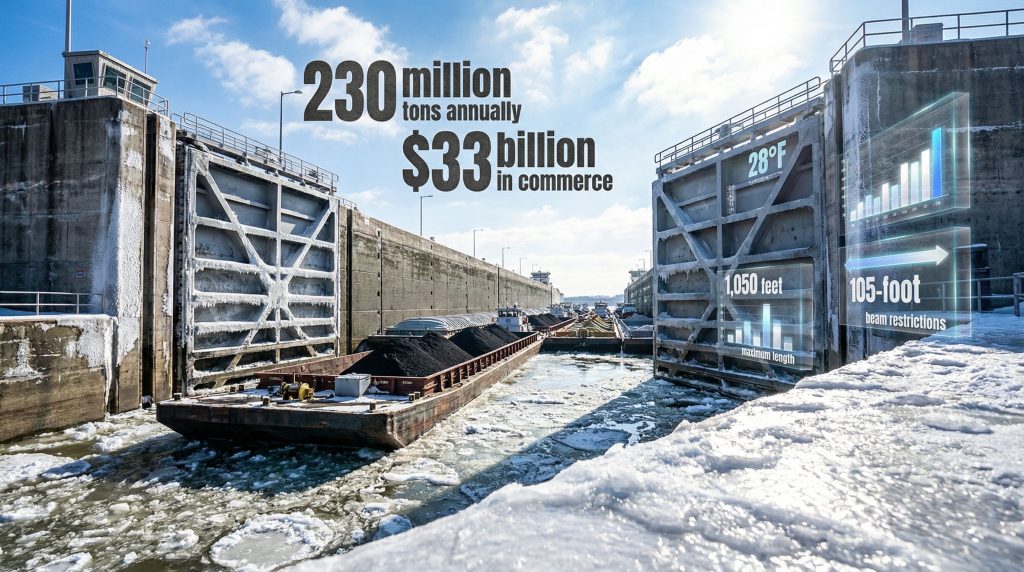
The Willow Island Locks incident in January 2026 illustrates typical ice-induced operational failure. Ice accumulation in the main chamber prevented miter gates from operating properly, effectively closing the facility to commercial traffic. This type of mechanical interference occurs when ice formations physically block gate movement or create hydraulic pressure imbalances within the chamber system.
Miter gates require precise hydraulic pressure to operate correctly, opening and closing to allow vessel passage between different water levels. Ice formations can jam these mechanisms by:
- Creating physical obstructions that prevent complete gate closure
- Generating uneven pressure distributions across gate surfaces
- Interfering with hydraulic control systems through temperature-related equipment failures
- Blocking drainage systems that regulate water levels within lock chambers
Lock operators employ chamber cycling procedures to break ice formations, using water movement to dislodge accumulated ice. However, severe conditions may require mechanical ice removal or extended closure periods until natural thaw occurs, similar to how the prolonged freeze disrupts river traffic across multiple waterway systems.
Engineering Challenges at Critical Chokepoints
Ohio River lock facilities vary in age and cold weather resilience, with older infrastructure typically more vulnerable to ice-related disruptions. The Willow Island facility, like many Ohio River locks, represents mid-20th century engineering that prioritised operational efficiency over extreme weather resistance.
Modern lock design incorporates enhanced ice management features including:
- Improved drainage systems that prevent ice accumulation in critical areas
- Upgraded hydraulic systems with cold weather operational capabilities
- Enhanced gate designs that resist ice-induced mechanical stress
- Advanced monitoring systems that detect ice formation before operational impacts occur
Infrastructure modernisation programmes address these vulnerabilities through targeted upgrades, though budget constraints often limit the pace of improvement across the entire lock system.
Economic Impact Analysis: When Barges Can't Move
Transportation disruptions on the Ohio River create cascading economic effects that extend far beyond immediate shipping delays. Understanding these impacts requires examining both direct costs to vessel operators and broader supply chain consequences affecting dependent industries, particularly in light of existing US economic pressures affecting transportation costs.
Demurrage Costs and Operational Delays
Commercial barge operations face immediate financial consequences when ice conditions prevent normal navigation. Vessel detention costs accumulate daily whilst boats wait for operational restoration, with operators facing demurrage charges that can range from several hundred to over $1,000 per day depending on cargo type and contract terms.
The Willow Island closure created delays of nearly three days as of February 3, 2026, with nine tows processing through the facility following reopening. Queue management becomes critical as multiple vessels compete for limited lock capacity once normal operations resume.
Daily operational impacts include:
- Extended voyage times requiring schedule adjustments across multiple shipping contracts
- Increased fuel consumption as vessels idle waiting for lock access
- Crew overtime costs during extended delays
- Equipment repositioning expenses when alternative routes become necessary
Terminal facilities also experience increased costs through extended cargo handling periods and storage requirements when expected deliveries face delays.
Supply Chain Disruption Metrics
Coal-fired power plants represent particularly vulnerable end users of Ohio River transport services. These facilities maintain carefully calculated fuel inventories designed to balance storage costs with operational security. Extended river closures can force power generators to activate expensive alternative fuel sources or implement emergency supply procedures.
Chemical manufacturing facilities face similar challenges when river transport delays affect raw material deliveries. Process industries often operate with just-in-time inventory management that assumes reliable transportation schedules, making them especially sensitive to unexpected disruptions.
Agricultural commodity movements face timing pressures related to global market conditions and export scheduling. Grain elevators and processing facilities depend on consistent barge availability to maintain competitive pricing in international markets, where tariff impacts on investments can compound transportation-related cost pressures.
Current Operational Status and Traffic Management
River authorities implement comprehensive traffic management protocols during ice events, coordinating between multiple agencies to maintain safe navigation whilst minimising economic disruption. These procedures balance vessel safety requirements with operational efficiency objectives.
Lock-by-Lock Operational Assessment
Ohio River Lock Status During Ice Events
| Lock System | Status | Delay Duration | Vessels Processed |
|---|---|---|---|
| Willow Island | Reopened | 5 days total | 9 tows by Feb 3 |
| System-wide | Restricted | Ongoing | Variable |
The US Army Corps of Engineers maintains real-time monitoring of lock conditions across the Ohio River system, providing regular updates to commercial operators through established communication channels. Lock queue reports track vessel delays and processing times to help operators optimise scheduling decisions.
Following the Willow Island reopening, navigation challenges persisted across the broader Ohio River system due to ice conditions affecting multiple locations simultaneously. This distributed impact requires coordinated management approaches that consider system-wide traffic flow rather than individual facility operations.
Tow Size Restrictions and Safety Protocols
The USACE Huntington District implemented specific dimensional restrictions between river miles 161.7 and 436.2, limiting towboat assemblies to maximum dimensions of 1,050 feet in length and 105 feet in width. These restrictions represent significant operational modifications from standard navigation parameters.
Safety restriction impacts include:
- Reduced cargo capacity per transit, requiring additional voyages to move equivalent tonnage
- Extended overall transit times due to increased number of required passages
- Modified vessel configurations that may affect fuel efficiency and operational costs
- Enhanced safety protocols requiring additional crew training and equipment modifications
The US Coast Guard coordinates with USACE restrictions through safety advisories and additional barge tow limitations across multiple Ohio Valley locations. This multi-agency approach ensures consistent safety standards whilst maintaining operational flexibility where conditions permit, as reported in ice river causing delays for barges.
How Do River Operators Manage Ice-Related Disruptions?
Successful navigation during winter conditions requires sophisticated coordination between weather monitoring services, federal agencies, and commercial operators. These management systems have evolved through decades of operational experience to provide early warning capabilities and coordinated response procedures.
Predictive Weather Monitoring Systems
The National Weather Service provides specialised forecasting for inland waterway operations, including temperature predictions that help operators anticipate ice formation conditions. Recent forecasts indicated "near-normal to below-normal temperatures" across the western Ohio River region from February 8-12, 2026, suggesting continued challenging conditions for navigation.
River-specific weather monitoring incorporates multiple data sources:
- Temperature tracking at lock facilities and major navigation points
- Wind pattern analysis that affects ice formation and movement
- Precipitation forecasts that influence ice accumulation rates
- Long-range seasonal outlooks for strategic planning purposes
Advanced modelling systems help predict ice formation timing and severity, though local conditions can vary significantly from regional forecasts due to factors including water flow rates, depth variations, and infrastructure effects on local temperatures.
Operational Mitigation Strategies
Commercial operators employ various strategies to minimise disruption during ice events, ranging from schedule modifications to route alternatives where feasible. Pre-positioning vessels before anticipated freeze events allows operators to maintain cargo flow through strategic placement of equipment and inventory. Furthermore, implementing sustainable operational strategies helps companies adapt to challenging environmental conditions.
Common mitigation approaches include:
- Accelerated scheduling before predicted ice formation periods
- Alternative routing through tributary systems when available
- Emergency docking arrangements at industrial terminals
- Cargo prioritisation based on end-user criticality and contract terms
The combination of reduced tow sizes, temporary delays, and ice conditions creates congestion that persists even after lock facilities resume operations, requiring extended recovery periods to restore normal traffic flow.
Recovery Timeline and Operational Restoration
Restoration of normal navigation following ice events depends on multiple factors including weather conditions, ice thickness, and infrastructure status. Understanding these recovery processes helps operators plan for extended disruption periods and coordinate with affected customers. Consequently, when ohio river ice chokes barge traffic, the recovery phase becomes as critical as the initial response.
Ice Breakup Processes and Flood Risk Management
Natural ice clearing typically requires sustained temperatures above freezing for several consecutive days, though specific thresholds vary based on ice thickness and local conditions. The Army Corps of Engineers monitors ice conditions to determine when natural breakup will occur versus situations requiring active intervention.
Controlled ice removal techniques may include:
- Mechanical breaking using specialised equipment
- Water level manipulation to stress ice formations
- Coordinated vessel movement to break passage channels
- Chemical treatments in specific circumstances
Rapid ice breakup events create potential flood risks as accumulated ice and water move downstream. River authorities coordinate with local emergency management agencies to monitor conditions and implement flood prevention measures when necessary.
Queue Management and Traffic Flow Restoration
Priority vessel scheduling becomes critical during recovery periods as accumulated traffic backlogs require systematic processing. Lock operators typically prioritise vessels based on cargo type, destination urgency, and vessel efficiency considerations.
Recovery timeline factors include:
- Number of vessels in queue at disruption onset
- Processing capacity of reopened lock facilities
- Continued restrictions affecting vessel size and transit speed
- Weather conditions affecting ongoing operations
The Willow Island facility processed nine tows within the first day following reopening, demonstrating the intensive operations required to clear accumulated backlogs. Full system restoration typically requires five to seven days following initial facility reopening, depending on the scope of the original disruption.
The next major ASX story will hit our subscribers first
Long-term Infrastructure Resilience Planning
Strategic planning for winter navigation challenges incorporates both immediate operational improvements and long-term infrastructure investments designed to enhance system reliability during extreme weather events. Moreover, these planning efforts must consider how ohio river ice chokes barge traffic patterns may evolve with changing climate conditions.
Climate Adaptation Strategies for Inland Waterways
Modern lock modernisation projects increasingly incorporate enhanced cold weather resilience features designed to maintain operations under more severe conditions than historical norms. These improvements address both operational capabilities and structural resistance to ice-induced stress.
Infrastructure adaptation measures include:
- Advanced heating systems for critical mechanical components
- Improved ice detection and monitoring technology
- Enhanced drainage systems that prevent ice accumulation
- Backup power systems for critical operations during winter storms
Climate change projections suggest increasing weather volatility that may include more frequent extreme cold events alternating with rapid warming periods, requiring infrastructure designs that accommodate broader operational ranges.
Industry Preparedness Improvements
Commercial operators continue developing enhanced coordination protocols with federal agencies and weather services to improve response capabilities during ice events. These improvements focus on information sharing, emergency procedures, and alternative routing capabilities.
Standardised emergency response protocols help ensure consistent safety measures across different operators and geographic regions whilst maintaining operational flexibility for specific circumstances. Training programmes prepare crews for winter navigation challenges including ice recognition, equipment operation under extreme conditions, and emergency communication procedures.
Frequently Asked Questions
How long do ice-related delays typically last on the Ohio River?
Major ice events can cause three to seven days of significant delays, with full operational restoration taking up to two weeks depending on weather conditions and ice thickness. The January-February 2026 Willow Island closure lasted five days with additional recovery time needed for queue clearance.
Which commodities are most affected by Ohio River ice disruptions?
Coal shipments to power plants, petroleum products, and time-sensitive chemical deliveries experience the greatest impact due to their reliance on scheduled barge transport. These industries often maintain limited inventory buffers that increase vulnerability to transportation delays.
What temperature conditions are needed to clear river ice naturally?
Sustained temperatures above freezing for three to five consecutive days are typically required for natural ice breakup, though thicker formations may require longer warming periods. Local conditions including water flow, depth, and infrastructure effects can significantly influence clearing timeframes.
How do tow size restrictions affect transportation capacity?
Length limitations to 1,050 feet and width restrictions to 105 feet can reduce cargo capacity per transit by 15-25%, requiring additional voyages to move equivalent tonnage and extending overall delivery schedules. This reduction in efficiency demonstrates how ohio river ice chokes barge traffic affects not just timing but also operational economics.
Disclaimer: This analysis is based on publicly available information and industry observations. Specific operational decisions should be based on current conditions and professional maritime expertise. Weather predictions and operational timelines are subject to change based on evolving conditions.
Need Real-Time Insights on Critical Supply Chain Disruptions?
When major transport arteries like the Ohio River face disruptions, commodity markets can shift rapidly as supply chains adapt. Discovery Alert's proprietary Discovery IQ model delivers instant notifications on significant ASX mineral discoveries, helping investors identify actionable opportunities that emerge when market conditions create unexpected advantages. Begin your 14-day free trial today to position yourself ahead of supply chain disruptions and commodity market volatility.