
May 22, 2026
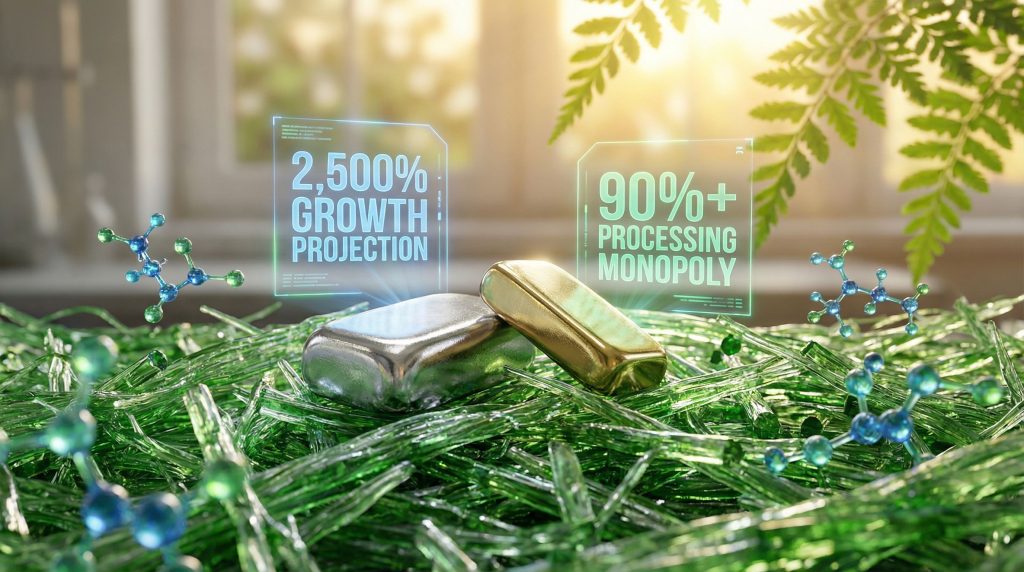
Plant-based rare earths recovery represents a paradigm shift from traditional solvent extraction methods that have dominated the industry since the 1960s. This biomimetic approach leverages natural polymer architectures to create sustainable separation technologies that eliminate the need for complex chemical processes. The global materials science revolution is quietly reshaping how industry approaches resource extraction, moving beyond conventional methods toward advanced nanomaterials derived from abundant biological resources.
Sustainable REE Extraction Technologies
Traditional rare earth element separation has relied on solvent extraction for over six decades, requiring hundreds of sequential processing stages and large volumes of organic solvents to achieve high-purity element isolation. This approach emerged from mid-20th century chemical engineering principles but carries significant environmental and operational complexity burdens. The mining industry evolution toward sustainable practices has accelerated interest in alternative processing methods.
Plant-derived processing methodologies fundamentally alter this approach by utilising modified cellulose – Earth's most abundant natural polymer – to selectively capture rare earth ions through adsorption mechanisms. The process eliminates organic solvent requirements entirely, operating instead within aqueous solutions that dramatically reduce chemical waste generation and processing complexity. Furthermore, these methods align with broader decarbonisation benefits being pursued across the extractive industries.
Key Advantages of Bio-Based Methods
The environmental impact advantages are substantial:
- Reduced chemical waste: Elimination of organic solvent cascades
- Lower energy consumption: Ambient temperature processing versus industrial heating
- Water compatibility: Aqueous solutions replace hazardous chemical systems
- Processing simplification: Single-step versus hundreds of sequential stages
Energy consumption differences prove particularly significant. Traditional methods require elevated temperatures and pressure conditions to drive solvent-based separation reactions, while plant-based systems operate effectively at standard temperature and pressure conditions.
Molecular Structure and Selective Ion Capture
Modified plant cellulose achieves selective rare earth element capture through engineered surface chemistry that preferentially binds specific ions. The molecular structure modifications create distinct binding sites that demonstrate remarkable selectivity between chemically similar elements.
Cellulose modification techniques transform the basic polymer structure into highly specialised adsorbent materials. Researchers engineer crystalline nanomaterials measuring 1,000 times smaller than human hair width, creating massive surface area enhancements that dramatically improve adsorption capacity.
The adsorption mechanisms target heavy versus light rare earth elements through structural selectivity rather than chemical composition differences. This breakthrough discovery revealed that spatial arrangement of functional groups determines separation efficiency more than the underlying chemical makeup.
When big ASX news breaks, our subscribers know first
Advanced Nanocellulose Engineering for Heavy REE Recovery
Anionic hairy cellulose nanocrystals (AHCNC) represent a revolutionary approach to rare earth element separation, achieving unprecedented selectivity through engineered nanostructures that preferentially capture heavy rare earth elements over lighter counterparts.
Engineering Hairy Nanostructures
The development of "hairy" cellulose nanocrystals involves precise molecular engineering to create hair-like extensions that function as highly selective filters. These nanoscale structures achieve dysprosium separation from neodymium-containing solutions with remarkable efficiency.
Comparison of Cellulose Modification Techniques
| Property | Standard Cellulose | Crystalline Nanomaterial |
|---|---|---|
| Size | Microscopic fibres | 1,000x smaller than hair width |
| Surface Area | Limited | Massively enhanced |
| Selectivity | Non-selective | Element-specific targeting |
| Processing | Multi-step required | Single-addition method |
Surface area enhancement proves critical for improved adsorption capacity. The nanocrystal engineering creates exponentially more binding sites per unit mass compared to unmodified cellulose, enabling efficient rare earth capture from dilute solutions. For instance, research from Penn State University has demonstrated successful dysprosium recovery using these engineered materials.
Structural Selectivity Mechanisms
Research has revealed that structural arrangement, not chemical composition, drives the selective behaviour of modified cellulose nanocrystals. The positioning of functional groups within the "hairy" extensions determines which rare earth elements bind preferentially to the material surface.
Penn State researchers initially hypothesised that chemical makeup would control selectivity but discovered the opposite through systematic testing. According to Dr. Amir Sheikhi, Associate Professor of Chemical Engineering, the research revealed that "structural properties and functional group positioning create the unique separation capabilities".
This finding represents a fundamental shift in understanding cellulose-based separation mechanisms. Rather than relying on chemical affinity differences, the technology exploits structural preferences that favour heavy rare earth elements over lighter ones.
Performance Metrics and Processing Efficiency
Laboratory demonstrations have confirmed selective dysprosium adsorption from mixed rare earth solutions containing both neodymium and dysprosium. The nanocellulose material successfully captured dysprosium ions while leaving neodymium in solution, demonstrating clear element-specific selectivity.
Processing methodology requires only adding engineered nanocellulose to target solutions, followed by separation of the metal-loaded material. Dr. Sheikhi characterises this approach as "very straightforward and efficient" compared to conventional multi-stage extraction processes.
The research team had previously demonstrated successful neodymium recovery from electronic waste using similar cellulose-based compounds, establishing operational precedent for light rare earth element capture. The latest breakthrough extends this capability to heavy rare earth elements, particularly dysprosium.
Breakthrough Discovery: Structure-based separation represents a paradigm shift from traditional chemical composition-based methods. This discovery opens new possibilities for developing highly selective separation materials based on engineered molecular architectures rather than chemical affinities.
Industrial Applications Driving Development
The acceleration of plant-based rare earths recovery development directly correlates with explosive demand growth across high-technology sectors, particularly electric vehicles, renewable energy infrastructure, and advanced electronics manufacturing. As demonstrated at recent innovation expo insights, these technologies are attracting significant industry attention.
Electric Vehicle and Clean Energy Demand
Dysprosium serves a critical role in high-performance permanent magnets that enable electric vehicle motor efficiency and offshore wind turbine operations. Market forecasts suggest dysprosium demand may surge over 2,500% within the next 25 years, driven primarily by clean energy technology adoption.
Dysprosium Demand Drivers by Sector
- Electric Vehicles: High-temperature motor magnet applications
- Offshore Wind: Turbine generator permanent magnets
- Advanced Robotics: Precision motor systems
- Drone Technology: Lightweight, high-efficiency motors
Electric vehicle manufacturing represents the fastest-growing demand segment. EV motors require dysprosium-enhanced permanent magnets capable of maintaining magnetic properties at elevated operating temperatures, making dysprosium availability critical for transportation electrification. Additionally, renewable mining transformations are creating new demand streams for these critical elements.
Strategic Supply Chain Vulnerabilities
China currently controls more than 90% of global rare earth processing and separation capacity, according to International Energy Agency data. This concentration creates significant supply chain risks for countries developing clean energy economies.
Recent export control implementations by Beijing on rare earths and other critical minerals underscore the strategic importance of diversifying processing capabilities. Plant-based separation technologies offer potential pathways for establishing domestic processing capacity outside traditional supply chains.
Dr. Sheikhi frames the strategic imperative: "Advanced technology manufacturers require increasing dysprosium quantities, with demand forecasts indicating massive growth over the next quarter-century. Developing sustainable, environmentally friendly recovery methods could strategically position countries to compete with established processing centres".
Renewable Energy Infrastructure Requirements
Offshore wind turbine installations demand specialised permanent magnets incorporating both light and heavy rare earth elements. Dysprosium additions improve heat resistance and durability for marine environments where turbines operate continuously under demanding conditions.
Grid-scale energy storage systems increasingly rely on rare earth-enhanced magnetic materials for efficient power conversion and storage applications. Advanced robotics applications similarly require high-temperature stable magnets for precision operations.
Comparative Analysis: Plant-Based vs Traditional Methods
The operational differences between plant-based recovery and traditional solvent extraction reveal fundamental advantages in processing architecture, environmental impact, and economic viability for sustainable rare earth element separation.
Processing Architecture Comparison
Traditional solvent extraction requires hundreds of sequential separation stages, each involving organic solvent contact with rare earth-containing solutions. This multi-stage cascade approach emerged from 1960s chemical engineering but creates substantial operational complexity.
Plant-based separation operates through single-step adsorption, where engineered nanocellulose added to target solutions selectively captures desired rare earth elements. The simplified process eliminates sequential stage requirements and associated equipment complexity.
Traditional vs. Plant-Based Processing Methods
| Parameter | Traditional Solvent Extraction | Plant-Based Adsorption |
|---|---|---|
| Processing Stages | Hundreds of sequential stages | Single-step addition |
| Solvent Requirements | Large volumes organic solvents | Water-based solutions |
| Operating Temperature | Elevated industrial heating | Ambient conditions |
| Chemical Waste | High-volume hazardous waste | Minimal waste generation |
| Equipment Complexity | Complex multi-stage systems | Simple addition/separation |
Environmental Impact Assessment
Environmental advantages of plant-based methods prove substantial across multiple impact categories. Water-based processing eliminates organic solvent consumption, dramatically reducing hazardous waste generation compared to conventional approaches.
Energy consumption differences reflect the ambient temperature operation of bio-based systems versus the elevated temperature requirements of traditional solvent extraction. This temperature differential translates into significant energy savings for large-scale processing operations.
Chemical waste generation follows similar patterns, with plant-based methods producing minimal chemical byproducts compared to the substantial organic solvent waste streams characteristic of conventional processing. However, the development of a European CRM facility demonstrates growing interest in sustainable processing alternatives.
Economic Viability Considerations
Processing cost structures differ fundamentally between approaches. Traditional methods require substantial solvent inventories, heating systems, and complex separation equipment, while plant-based systems utilise abundant cellulose feedstocks and simplified processing equipment.
Raw material availability favours plant-based approaches, with cellulose representing the most abundant natural polymer on Earth. Wood pulp, cotton, and agricultural waste provide virtually unlimited feedstock supplies compared to specialty organic solvents required for traditional extraction.
Scalability potential appears favourable for bio-based systems due to feedstock abundance and processing simplicity, though commercial-scale demonstration remains necessary to validate economic projections.
Technology Limitations and Development Challenges
Despite promising laboratory results, plant-based rare earths recovery faces significant scale-up challenges, optimisation requirements, and market readiness hurdles before achieving commercial deployment.
What Are the Scale-Up Challenges for Commercial Implementation?
Current research remains at laboratory scale, successfully demonstrating selective rare earth separation under controlled conditions. However, industrial implementation requires processing complex leach solutions containing multiple competing ions, dissolved solids, and varying pH conditions not present in laboratory testing.
Infrastructure investment requirements for bio-based facilities differ substantially from traditional processing plants. Commercial deployment necessitates specialised equipment for nanocellulose production, solution handling, and materials recovery at industrial scales.
The Penn State research team acknowledges that further development and testing against realistic industrial conditions will determine commercial viability. Complex leach solution compatibility represents a critical validation requirement for technology advancement.
Optimisation Opportunities Under Investigation
Research priorities focus on enhancing separation capabilities and expanding target element ranges:
- Enhanced nanocellulose modification techniques for improved selectivity
- Multiple REE element targeting capabilities beyond dysprosium focus
- Automated plant biomass processing systems for feedstock preparation
- Integrated processing workflows combining multiple bio-based methods
Nanocellulose modification techniques require optimisation to achieve consistent performance across varying solution conditions. Current methods demonstrate proof-of-concept but need refinement for reliable industrial application.
Multiple element targeting represents a significant opportunity, as current research focuses primarily on dysprosium separation. Expanding capabilities to simultaneously recover various rare earth elements would substantially improve economic viability. Research into plant-based extraction mechanisms continues to advance understanding of these processes.
Market Readiness Timeline Projections
Technology maturation phases likely extend from 2026 through 2030, based on typical development timelines for novel separation technologies. Initial commercial applications may target high-value, low-volume markets before expanding to bulk processing.
Regulatory approval pathways for bio-based processing remain undefined, potentially creating additional development timeline uncertainty. Environmental permits and process safety approvals may prove less complex than traditional chemical processing due to reduced hazardous material usage.
Investment requirements for commercial deployment vary significantly depending on scale and integration approaches. Early commercial facilities may require substantial capital for specialised equipment development and process optimisation.
Business Integration and Investment Strategies
Forward-thinking companies can position themselves advantageously by understanding plant-based rare earths recovery development trajectories and preparing for eventual commercial availability of sustainable separation technologies.
Supply Chain Adaptation Strategies
Identifying partnership opportunities with bio-technology developers enables early access to sustainable rare earth processing capabilities. Companies requiring steady rare earth supplies should monitor technology development progress and establish relationships with research institutions advancing plant-based methods.
Raw material sourcing considerations include cellulose feedstock availability and quality requirements. Agricultural waste streams, wood processing byproducts, and dedicated energy crop production could provide sustainable feedstock supplies for bio-based processing facilities.
Quality control systems for bio-based rare earth products require development to ensure consistent purity and performance characteristics. Traditional rare earth specifications may need modification to accommodate bio-based processing characteristics.
Risk Assessment Framework
Hypothetical Scenario: A manufacturing company evaluating bio-based rare earth suppliers must balance technology maturity risks against supply security benefits. Traditional suppliers offer proven quality but limited supply diversification, while bio-based options provide potential supply chain independence with unproven commercial performance.
Technology maturity assessment requires monitoring research publications, patent applications, and pilot project developments. Companies should establish evaluation criteria for determining commercial readiness milestones.
Cost-benefit analysis frameworks should consider not only direct material costs but also supply security premiums, environmental compliance advantages, and potential regulatory preferences for sustainable sourcing.
Sustainability Reporting Advantages
Environmental impact documentation proves substantially easier for bio-based rare earth processing compared to traditional solvent extraction. Water-based processing, minimal chemical waste, and ambient temperature operation provide clear sustainability metrics.
ESG (Environmental, Social, Governance) scoring improvements result from sustainable sourcing strategies that demonstrate environmental responsibility and supply chain innovation. Companies adopting early bio-based sourcing may gain competitive advantages in sustainability reporting.
Carbon footprint reduction quantification becomes straightforward with bio-based processing due to eliminated heating requirements and reduced chemical transportation needs compared to traditional methods.
The next major ASX story will hit our subscribers first
Future Prospects for Sustainable REE Processing
The convergence of environmental necessity, supply chain security concerns, and technological advancement creates favourable conditions for plant-based rare earths recovery commercialisation and integration with circular economy principles.
Circular Economy Integration
Plant-based rare earth processing aligns naturally with circular economy principles by converting agricultural waste into valuable feedstock for critical element recovery. Cellulose sources include forestry residues, agricultural crop waste, and paper recycling streams that would otherwise require disposal.
Waste-to-resource conversion through bio-based methods creates multiple value streams from single feedstock sources. Agricultural operations could generate both traditional crop revenues and rare earth processing feedstock, improving farm economics while supporting critical element supply chains.
Closed-loop processing system development enables continuous material cycling with minimal external inputs. Water recycling, cellulose regeneration, and integrated waste management create self-sustaining processing operations.
Global Supply Chain Diversification Impact
Reduced dependence on single-country processing dominance becomes achievable through distributed bio-based processing facilities. Countries with substantial agricultural or forestry sectors gain potential competitive advantages in rare earth processing capability development.
Regional processing capability development opportunities emerge wherever adequate cellulose feedstock exists. This geographic flexibility contrasts sharply with traditional mining and processing operations that require specific geological conditions and established industrial infrastructure.
Strategic resource security improves through distributed bio-based facilities that reduce transportation vulnerabilities and supply chain concentration risks. Multiple smaller facilities prove less vulnerable to disruption than centralised processing operations.
Technology Convergence Opportunities
Case Study Framework: Combining phytomining with nanocellulose processing could create integrated systems where hyperaccumulator plants extract rare earths from contaminated soils, followed by bio-based separation and purification using plant-derived cellulose materials.
Artificial intelligence optimisation for plant selection and processing offers potential efficiency improvements through predictive modelling of cellulose modification techniques, separation performance optimisation, and feedstock quality assessment.
Automation integration for large-scale bio-based operations reduces labour costs while improving consistency and safety. Robotic systems could handle nanocellulose preparation, solution processing, and materials recovery with minimal human intervention.
The intersection of biotechnology, materials science, and critical element processing creates unprecedented opportunities for sustainable resource recovery that addresses both environmental concerns and supply security challenges facing advanced technology industries.
This article discusses emerging technologies and market forecasts that involve inherent uncertainties. Readers should conduct independent research and consult with qualified professionals before making investment or business decisions based on the information presented.
Ready to Capitalise on Critical Materials Breakthroughs?
Discovery Alert's proprietary Discovery IQ model delivers real-time alerts on significant ASX mineral discoveries, instantly empowering subscribers to identify actionable opportunities in critical materials companies ahead of the broader market. Understand why major mineral discoveries can lead to substantial market returns by exploring Discovery Alert's dedicated discoveries page, showcasing historic examples of exceptional outcomes, then begin your 14-day free trial today to position yourself ahead of the market.