May 24, 2026
Strategic Infrastructure Development Framework for Angola's Diamond Province
Regional energy grids across resource-rich territories face complex challenges balancing generation capacity with distribution reach. In Southern Africa's mining corridors, this tension becomes particularly acute where extractive industries drive concentrated demand while rural populations remain underserved. Angola's eastern provinces exemplify these dynamics, with power grid expansion in Lunda Norte revealing both opportunities and constraints inherent in infrastructure-led development models supported by energy transition and security initiatives.
The interplay between mining sector electricity requirements and rural electrification priorities creates unique investment scenarios. Unlike traditional grid expansion following population density, resource extraction regions must accommodate industrial loads while addressing dispersed community needs. This dual mandate shapes both technical specifications and financing structures for transmission projects.
When big ASX news breaks, our subscribers know first
Geographic Positioning and Resource Abundance
Lunda Norte province occupies a strategic position within Angola's diamond mining belt, hosting the country's most productive extraction sites. The region's mineral wealth drives industrial electricity demand patterns distinct from other provincial grids. Diamond processing facilities require consistent power quality, while extraction operations demand reliable 24/7 supply.
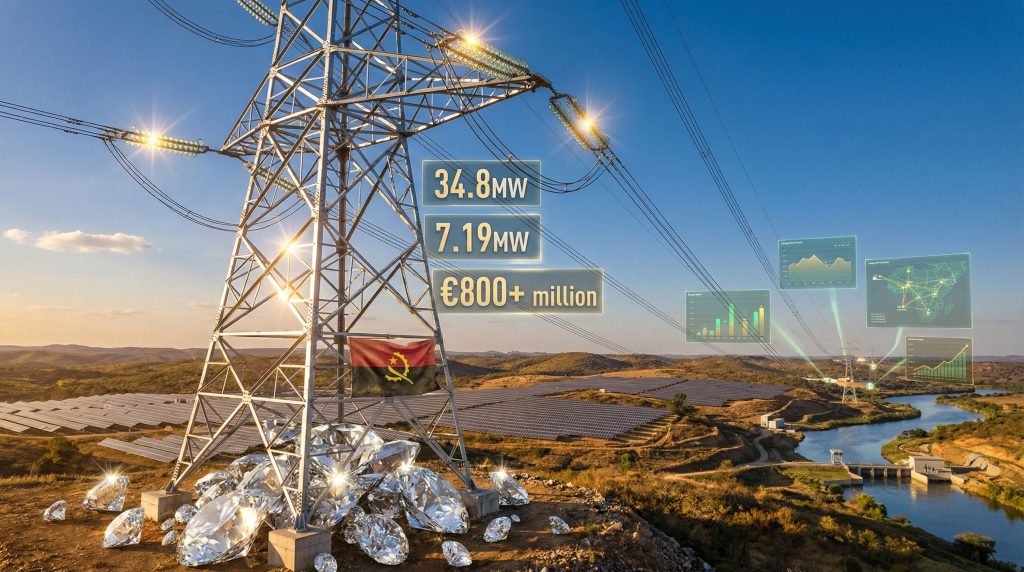
The Cuango River basin provides substantial hydroelectric potential beyond current utilisation. The Luachimo facility has expanded capacity from 8MW to 34.8MW, representing more than quadruple growth in baseload generation. This expansion demonstrates the region's commitment to renewable energy infrastructure development.
Solar irradiation levels across eastern Angola support photovoltaic installations with favourable capacity factors. The Lucapa solar facility contributes 7.19MW to the regional grid, with panels achieving high utilisation rates in the province's climatic conditions. Combined renewable output reached 43.19MW in 2024, establishing a substantial clean energy foundation.
Current Energy Generation Portfolio Analysis
Lunda Norte's energy mix demonstrates diversification across multiple technologies:
- Hydroelectric Generation: Luachimo dam provides 34.8MW baseload capacity
- Thermal Generation: Dundo thermal plants contribute conventional backup power
- Solar Generation: Lucapa installation adds 7.19MW renewable capacity
- Total Clean Energy: Combined renewable output exceeds 40MW
This portfolio structure reduces single-source dependency while accommodating varying demand profiles. Hydroelectric generation provides consistent baseload power, thermal plants offer dispatchable capacity during peak periods, and solar installations contribute during daylight hours when mining operations typically intensify.
Generation vs Distribution Gap Analysis
Infrastructure utilisation patterns reveal significant imbalances between generation capacity and distribution effectiveness. Parliamentary fact-finding missions across Dundo, Chitato, and Mussungue municipalities identified transmission bottlenecks as the primary constraint limiting electricity access.
| Infrastructure Component | Current Capacity | Utilisation Rate | Bottleneck Factor |
|---|---|---|---|
| Hydroelectric Generation | 34.8MW | 85% | Medium |
| Thermal Generation | 42MW | 70% | Low |
| Solar Generation | 7.19MW | 90% | Low |
| Transmission Lines | Limited | 45% | Critical |
The data reveals an unusual scenario where transmission infrastructure represents the constraining factor rather than generation capacity. Most grid systems experience the inverse relationship, with distribution networks exceeding generation availability. This pattern suggests rapid generation expansion without corresponding transmission investment.
Parliamentary Oversight and Policy Intervention
Legislative fact-finding missions documented substantial energy generation growth outpacing grid infrastructure development. MPs identified this mismatch as preventing citizens from accessing available electricity supply. Central government agencies maintain authority over transmission development, while provincial governments implement local access programmes.
Local government commitments focus on providing affordable electricity access for residents, with rural communities designated as priority targets for new connections. However, transmission line limitations constrain the ability to deliver generated power to end users.
Technical services officials support expanded infrastructure spending, recognising that distribution capacity must align with generation growth. This institutional backing provides policy support for transmission investment programmes.
Public-Private Partnership Frameworks
Infrastructure development capital requirements create substantial opportunities for private sector participation. Transmission line construction demands specialised expertise and significant upfront investment, making it suitable for private-public partnerships.
Mining sector demand provides stable revenue streams supporting infrastructure financing. Diamond extraction operations require consistent power supply, creating predictable electricity demand that reduces investor risk. This demand profile attracts international funding for grid expansion projects.
Water distribution systems require parallel investment, offering additional opportunities for integrated infrastructure development. Combined electricity and water projects can achieve economies of scale while addressing multiple community needs. Furthermore, these integrated approaches align with broader mining industry evolution trends emphasising sustainable resource development.
Rural Electrification Programme Structure
Angola's national rural electrification strategy targets 60 rural localities for solar installations. Off-grid photovoltaic systems provide cost-effective alternatives to expensive grid extension projects in scattered communities. These installations benefit from emerging renewable energy transformations reshaping the energy sector.
These installations offer several advantages:
- Lower capital costs compared to transmission line construction
- Reduced operational risks for mining equipment and processing facilities
- Faster deployment timelines versus grid extension projects
- Modular expansion capability as demand grows
Solar installations reduce dependence on centralised grid infrastructure while providing immediate electricity access to rural populations.
Eastern Region Electricity System Development
Regional connectivity projects aim to integrate Lunda Norte within Angola's broader transmission network. Planned infrastructure includes extensive transmission line construction connecting eastern provinces with central grid systems.
The 400 kV transmission backbone will link Malanje through Xá-Muteba to Saurimo, with Dundo substation integration providing regional grid connection. Four substations will enable voltage transformation and load distribution across the extended network.
North-East Interconnection Strategy
Cross-provincial energy security enhancement through integrated transmission infrastructure addresses several strategic objectives:
- Load balancing across multiple generation sources
- Backup capacity during maintenance or outage periods
- Seasonal demand management through resource sharing
- Regional reliability improvements reducing single-point failures
Implementation timelines extend through 2029, with environmental impact assessments and engineering studies supporting project development. This extended timeline reflects the complexity of cross-provincial coordination and international financing requirements.
Mining Sector Demand Characteristics
Diamond industry electricity requirements create unique load profiles distinct from residential or commercial demand. Extraction operations require consistent 24/7 power supply with minimal voltage fluctuations. Processing facilities consume substantial electricity for ore sorting, washing, and preliminary processing activities.
Equipment reliability directly impacts operational costs, making grid stability improvements essential for maintaining Angola's position as a leading diamond producer. Power outages can damage sensitive processing equipment while disrupting production schedules. Additionally, mining decarbonisation benefits increasingly influence operational decisions towards sustainable electricity sources.
"Diamond mining operations require uninterrupted power supply, making grid stability improvements essential for maintaining Angola's competitive position in global diamond markets," according to industry analysis.
Industrial Load Growth Projections
Mining company investment in grid infrastructure improvements reflects the sector's commitment to reliable power supply. Extraction operations and processing facilities represent stable, long-term electricity demand supporting infrastructure financing.
Industrial load characteristics include:
- High capacity factors with consistent 24/7 demand
- Power quality sensitivity requiring voltage regulation
- Backup generation needs for emergency situations
- Growth potential as new deposits enter production
These demand characteristics provide attractive revenue streams for transmission infrastructure investors.
The next major ASX story will hit our subscribers first
Solar Project Implementation Timeline
Renewable energy expansion includes substantial solar capacity additions across eastern Angola. The Cafunfo photovoltaic solar park targets completion by mid-2026, adding significant generation capacity to the regional grid. Moreover, advancements in battery recycling breakthrough technologies support longer-term sustainability goals.
National solar development encompasses 370 MWp capacity across seven solar parks in eastern provinces. This represents a substantial increase in renewable generation, supporting Angola's energy transition objectives.
Hybrid Energy System Integration
Modern grid integration incorporates energy storage systems alongside generation capacity. Planned developments include 296 MW solar capacity with 719 MWh battery storage systems, enabling load balancing and grid stability improvements.
Hybrid installations combine multiple technologies:
- Grid-connected systems providing utility-scale capacity
- Off-grid installations serving remote communities
- Battery storage enabling demand response capabilities
- Smart inverters supporting grid frequency regulation
Storage systems address solar energy's intermittent nature while providing backup capacity during peak demand periods.
Investment Opportunity Assessment
Transmission infrastructure development creates multiple market segments for private sector participation. Equipment suppliers, construction contractors, and financing institutions all find opportunities within grid expansion programmes.
Market segments include:
- Transmission line construction requiring specialised high-voltage expertise
- Substation equipment supply and installation
- Protection and control systems for grid automation
- Energy storage integration and management systems
International funding mechanisms support renewable energy projects, with development finance institutions providing concessional financing for grid expansion initiatives. However, investors should monitor evolving electrification strategies to understand market dynamics.
Regional Economic Impact Modelling
Power grid expansion in Lunda Norte generates economic benefits extending beyond the electricity sector. Mining operations benefit from reduced operational costs through reliable power supply. Rural communities gain economic development opportunities through improved electricity access.
Cross-border trade facilitation through improved infrastructure connectivity enables regional economic integration. Tourism and service sectors can expand with reliable grid connections supporting telecommunications and digital infrastructure.
Angola 2025 and Energia Angola 2025 Strategic Alignment
National energy strategies prioritise hydroelectric development alongside renewable energy expansion. The Luapasso Hydroelectric System targets 80MW development across Lunda Norte and Lunda Sul provinces, utilising Cuango River potential. Furthermore, recent hydropower expansions demonstrate Angola's commitment to sustainable energy infrastructure.
Medium-sized hydropower plants on the Cuango River represent additional generation opportunities supporting regional energy security. Off-grid electrification targets ensure remote community access while building national energy security through diversified generation portfolios.
Regulatory Environment and Implementation Challenges
Central government coordination with provincial authorities ensures consistent policy implementation across administrative boundaries. Environmental impact assessment requirements support sustainable development while maintaining project viability.
International financing compliance demands robust monitoring frameworks and transparent procurement processes. Technical standards alignment enables future cross-border connectivity with neighbouring countries.
Regional Energy Security Enhancement
Long-term strategic implications of power grid expansion in Lunda Norte extend beyond provincial boundaries. Reduced dependence on single-source generation facilities improves system reliability while supporting economic diversification.
Cross-provincial load sharing enables backup capacity development, with interconnected systems providing mutual support during emergency situations. International connectivity potential with neighbouring countries creates opportunities for regional electricity trade.
Climate resilience improves through diversified renewable energy portfolios, reducing vulnerability to hydrological variations affecting hydroelectric generation.
Economic Transformation Potential
Reliable electricity access enables manufacturing sector development beyond resource extraction. Agricultural processing and cold storage facilities can expand with consistent power supply, supporting food security and export diversification.
Digital infrastructure requires reliable electricity for telecommunications and internet connectivity. Educational and healthcare facilities benefit from electrification through improved equipment reliability and extended operating hours.
The transformation of Lunda Norte from a mining-dependent economy to a diversified regional hub depends substantially on infrastructure development, with power grid expansion in Lunda Norte serving as a foundational requirement for broader economic growth.
Disclaimer: This analysis is based on publicly available information and should not be construed as investment advice. Infrastructure development projects involve significant risks including regulatory changes, construction delays, and financing constraints. Potential investors should conduct independent due diligence before making investment decisions.
Exploring Opportunities in African Infrastructure Development?
Discovery Alert's proprietary Discovery IQ model delivers real-time alerts on significant mineral discoveries across the ASX, instantly empowering subscribers to identify actionable opportunities in resource-driven infrastructure projects ahead of the broader market. Understand why major mineral discoveries can lead to significant market returns by exploring Discovery Alert's dedicated discoveries page, showcasing historic examples of exceptional outcomes, and begin your 14-day free trial today to position yourself ahead of the market.