May 23, 2026
The Prairie Lithium direct lithium extraction plant represents a transformative approach to North American battery supply chain independence, as traditional evaporation pond methods face mounting pressures from environmental constraints and extended processing timelines. Furthermore, the emergence of direct lithium extraction (DLE) systems represents a fundamental shift in how lithium carbonate production can be optimised for modern battery manufacturing demands, particularly in regions seeking to enhance their mining sustainability transformation.
Revolutionary Advantages of Direct Lithium Extraction Technology
Direct lithium extraction fundamentally transforms lithium production from a passive, weather-dependent process into an active, controlled industrial operation. Unlike conventional evaporation ponds that require 18-24 months to concentrate lithium-rich brines through solar evaporation, DLE systems can process equivalent volumes within hours to days using selective ion capture technologies.
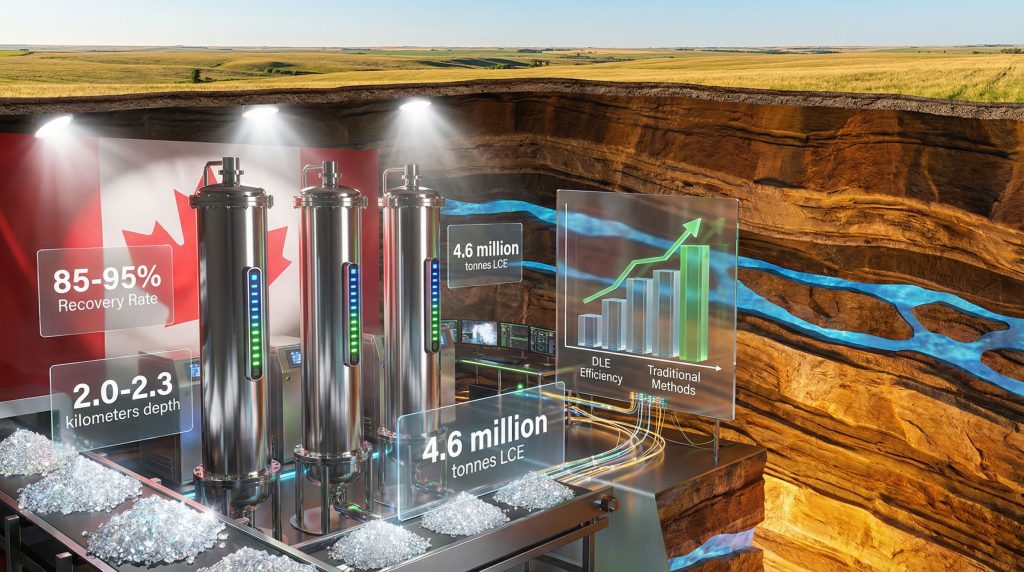
The operational efficiency gains extend beyond processing speed. Traditional evaporation methods typically achieve lithium recovery rates between 30-50%, while modern DLE systems demonstrate recovery rates of 85-95% through precision-engineered sorbent materials that selectively target lithium ions from complex brine chemistry.
Water Conservation and Environmental Impact Reduction
Water management represents perhaps the most significant operational advantage of DLE technology. The International Energy Agency's 2021 assessment of lithium extraction technologies confirmed that DLE systems require 65-80% less freshwater compared to evaporation pond operations, with some configurations achieving up to 90% water usage reduction through brine recycling and reinjection protocols.
DLE Environmental Benefits:
- Eliminates massive evaporation pond infrastructure requirements
- Enables near-complete brine recycling through closed-loop systems
- Reduces surface land disturbance by 70-80% per unit of lithium produced
- Decouples production from precipitation patterns and climate variability
Technology Comparison Matrix
| Processing Parameter | Direct Lithium Extraction | Solar Evaporation | Hard Rock Mining |
|---|---|---|---|
| Processing Duration | Hours to days | 18-24 months | Weeks to months |
| Lithium Recovery Rate | 85-95% | 30-50% | 70-80% |
| Water Consumption | Minimal (recycled) | Extremely high | High |
| Weather Dependency | Independent | High dependency | Low dependency |
| Land Footprint | <5 hectares/ktpa | >500 hectares/ktpa | 50-200 hectares/ktpa |
When big ASX news breaks, our subscribers know first
Saskatchewan's Geological Advantages for DLE Operations
The Western Canadian Sedimentary Basin contains lithium-rich brine formations that provide ideal conditions for DLE implementation. The Duperow Formation, located at depths between 2.0-2.3 kilometres, contains concentrated lithium brines accessible through established drilling techniques developed by Saskatchewan's oil and gas industry.
Subsurface Brine Characteristics
Saskatchewan's geological formations offer several advantages for DLE operations, particularly when considering global lithium brine market insights:
Duperow Formation Specifications:
- Depth range: 2,000-2,300 metres below surface
- Estimated lithium carbonate equivalent resources across regional formations
- Existing wellbore infrastructure reducing development complexity
- Established regulatory framework for subsurface resource extraction
The brine chemistry within these formations demonstrates lithium concentrations suitable for commercial extraction, with supporting ion ratios that enable selective separation through DLE technology. Unlike South American salt flats where high magnesium content complicates lithium recovery, Saskatchewan brines offer more favourable chemistry for efficient extraction.
Regulatory and Infrastructure Framework
Saskatchewan's mining investment environment benefits from established regulatory systems and existing industrial infrastructure. The Fraser Institute's mining jurisdiction assessments consistently rank Saskatchewan among Canada's top provinces for mining investment attractiveness, reflecting streamlined permitting processes and political stability.
The province's oil and gas sector provides transferable expertise in:
- Subsurface drilling and completion techniques
- Brine handling and injection systems
- Environmental monitoring and regulatory compliance
- Skilled workforce with relevant technical capabilities
Commercial-Scale DLE Plant Design and Specifications
Modern DLE facilities utilise modular extraction systems designed for operational flexibility and maintenance efficiency. A typical commercial-scale installation incorporates multiple extraction columns operating in parallel, enabling continuous production while accommodating equipment servicing requirements.
Equipment Configuration Architecture
Primary System Components:
- Multiple extraction columns with selective sorbent materials
- Brine circulation and pressure management systems
- Regeneration circuits for sorbent material recovery
- Product concentration and purification equipment
- Brine reinjection systems for environmental compliance
The modular design approach allows operators to optimise extraction efficiency based on specific brine chemistry characteristics whilst maintaining production flexibility. Each extraction column operates independently, providing operational redundancy and enabling staged capacity expansion.
Production Timeline and Development Phases
Commercial DLE projects typically follow structured development phases:
- Foundation and civil works completion
- Equipment installation and system integration
- Commissioning and performance testing
- Initial production and capacity ramp-up
The transition from pilot-scale testing to commercial operations requires validation of equipment performance at full scale, including verification of lithium recovery rates, product purity specifications, and environmental compliance parameters. This progression aligns with broader lithium industry innovations emerging globally.
Environmental Management and Sustainability Protocols
DLE technology addresses key environmental concerns associated with traditional lithium extraction methods through advanced water management and reduced surface impact. The technology enables operators to maintain environmental stewardship whilst achieving commercial production targets.
Brine Management and Aquifer Protection
Environmental protection protocols for DLE operations focus on groundwater quality maintenance and aquifer isolation. Lithium-depleted brines undergo treatment before reinjection into designated geological formations, ensuring chemical compatibility and preventing cross-contamination between aquifer systems.
Environmental Monitoring Requirements:
- Continuous groundwater quality assessment
- Injection pressure and flow rate monitoring
- Chemical composition tracking of reinjected brines
- Surface water impact evaluation
- Long-term aquifer performance assessment
"DLE systems eliminate the need for large-scale surface evaporation infrastructure, reducing land use intensity by orders of magnitude compared to traditional salt flat operations."
Life Cycle Environmental Impact Assessment
Research by environmental assessment organisations demonstrates that DLE technology offers substantial environmental benefits across multiple impact categories. Water consumption reduction, land use minimisation, and elimination of chemical precipitation processes contribute to lower overall environmental footprint per unit of lithium produced.
The technology's energy requirements, primarily electricity for pumping and processing equipment, can be further optimised through renewable energy integration, particularly in jurisdictions with abundant solar or wind resources.
North American Supply Chain Integration Advantages
The development of domestic North American lithium production capacity addresses strategic supply chain vulnerabilities whilst reducing transportation costs and carbon emissions associated with lithium imports from distant producing regions. This development reflects broader North American mining trends reshaping the continental resource landscape.
Geographic and Logistical Benefits
Saskatchewan's location provides advantageous access to North American battery manufacturing facilities, with transportation distances significantly shorter than imports from South American or Australian sources. This proximity enables:
- Reduced shipping costs and delivery timeframes
- Lower carbon footprint through decreased transportation distances
- Enhanced supply chain security through domestic production
- Simplified quality control and technical support arrangements
Market Demand and Commercial Agreements
North American lithium demand has increased substantially due to electric vehicle manufacturing expansion and energy storage deployment. The U.S. Geological Survey's 2024 Critical Minerals Summary identifies lithium as essential for domestic energy security, with demand projections indicating continued growth through the decade.
Battery Manufacturing Market Drivers:
- U.S. Inflation Reduction Act incentives for domestic supply chains
- Electric vehicle production capacity expansion
- Grid-scale energy storage project development
- Consumer electronics manufacturing requirements
Technical Challenges and Operational Considerations
DLE technology implementation requires addressing several technical and operational challenges to achieve consistent commercial performance. Understanding these factors is essential for evaluating project viability and operational sustainability.
Brine Chemistry Optimisation
Each brine source presents unique chemical composition challenges that affect extraction efficiency and equipment design requirements. Key considerations include:
Chemical Complexity Factors:
- Lithium concentration variability across formations
- Competing ion interference (potassium, sodium, magnesium, calcium)
- pH levels and total dissolved solids content
- Scaling and corrosion potential assessment
- Sorbent material selectivity optimisation
Equipment Reliability and Maintenance Requirements
Commercial-scale DLE operations demand robust equipment design capable of handling corrosive brine chemistry over extended operating periods. Maintenance protocols must address:
- Sorbent material regeneration and replacement cycles
- Corrosion monitoring and prevention systems
- Pump and valve maintenance in brine service
- Process control system calibration and reliability
- Emergency shutdown and safety system testing
The next major ASX story will hit our subscribers first
Economic Analysis and Investment Considerations
DLE project economics depend on multiple factors including capital expenditure requirements, operating cost structure, lithium pricing assumptions, and production capacity utilisation rates. Understanding these economic drivers is essential for investment evaluation.
Capital Expenditure and Operating Cost Structure
DLE projects typically require lower initial capital investment compared to hard rock mining operations, as they eliminate the need for conventional mining equipment, crushing facilities, and flotation circuits. Key cost components include:
Capital Cost Categories:
- Drilling and wellbore completion costs
- DLE equipment and installation
- Electrical and control systems
- Environmental and safety systems
- Site preparation and infrastructure development
Operating Cost Elements:
- Electricity consumption for pumping and processing
- Sorbent material replacement and regeneration
- Labour costs for operations and maintenance
- Environmental monitoring and compliance
- Transportation and logistics
Production Scalability and Expansion Potential
DLE technology offers advantages for phased development and capacity expansion. Initial commercial operations can validate technology performance and market conditions before committing to larger-scale investment. This approach reduces development risk whilst maintaining future growth optionality.
Global Lithium Market Impact and Industry Implications
The successful implementation of DLE technology in North American sedimentary basins could significantly impact global lithium supply dynamics and industry structure. Understanding these broader implications is important for stakeholders across the lithium value chain, particularly in the context of ongoing mining industry evolution.
Supply Security and Geopolitical Considerations
Domestic North American lithium production reduces dependence on imports from regions with different political and regulatory environments. This supply diversification enhances resilience for North American battery manufacturers and electric vehicle producers.
Strategic Supply Chain Benefits:
- Reduced exposure to international trade disruptions
- Enhanced supply chain transparency and traceability
- Simplified regulatory compliance for battery manufacturers
- Improved technical collaboration between producers and end users
Technology Transfer and Industry Development
Successful DLE implementation demonstrates the commercial viability of advanced lithium extraction technologies, potentially accelerating adoption across other sedimentary basins worldwide. This technology transfer could reshape the global lithium industry structure over the next decade.
Performance Metrics and Success Indicators
Evaluating DLE project success requires monitoring multiple performance indicators across technical, environmental, and commercial dimensions. These metrics provide insight into operational efficiency and long-term sustainability.
Technical Performance Benchmarks
Key Performance Indicators:
- Lithium recovery efficiency (target: >85%)
- Product purity specifications (battery-grade requirements)
- Equipment uptime and reliability metrics
- Processing capacity utilisation rates
- Energy consumption per unit of lithium produced
Environmental and Regulatory Compliance Metrics
Environmental performance monitoring ensures compliance with regulatory requirements whilst demonstrating sustainable operational practices:
- Groundwater quality parameters and trends
- Brine reinjection volumes and pressure management
- Surface water impact assessment results
- Air emissions monitoring and reporting
- Waste generation and disposal tracking
Future Outlook and Technology Development
The continued evolution of DLE technology will likely focus on improving extraction efficiency, reducing energy consumption, and expanding applicability to diverse brine chemistry conditions. Research and development efforts target enhanced sorbent materials and process optimisation.
Technology Innovation Pathways
Ongoing research areas include:
- Advanced sorbent material development for improved selectivity
- Process automation and digital optimisation systems
- Energy integration with renewable power sources
- Brine pretreatment technologies for challenging chemistry conditions
- Integration with downstream lithium processing and refining
The successful commercial deployment of the Prairie Lithium direct lithium extraction plant in Saskatchewan represents a significant milestone for North American lithium production capabilities. Furthermore, it demonstrates the technical and commercial viability of advanced extraction technologies in addressing growing battery supply chain demand, marking a pivotal moment for domestic resource development.
For more information about Prairie Lithium's operations and technology, investors and industry stakeholders can access detailed project specifications. Additionally, the company has secured fully-secured offtake agreements positioning the project for commercial success.
Disclaimer: This article contains forward-looking statements and industry analysis that involve inherent risks and uncertainties. Actual results may differ materially from those anticipated. Readers should conduct their own research and seek professional advice before making investment decisions. Information presented is based on publicly available sources and industry research as of the publication date.
Are You Ready to Capitalise on North America's Lithium Revolution?
Discovery Alert's proprietary Discovery IQ model delivers instant notifications on significant ASX mineral discoveries, including breakthrough lithium extraction technologies that could reshape the battery supply chain. Stay ahead of emerging opportunities by exploring Discovery Alert's historic mineral discoveries and begin your 14-day free trial today to position yourself at the forefront of the next major mining breakthrough.