REGENER8 Resources NL
Regener8 Resources Breaks Ground on Maiden Exploration at Srebrenica North — First Systematic Work in Over 50 Years
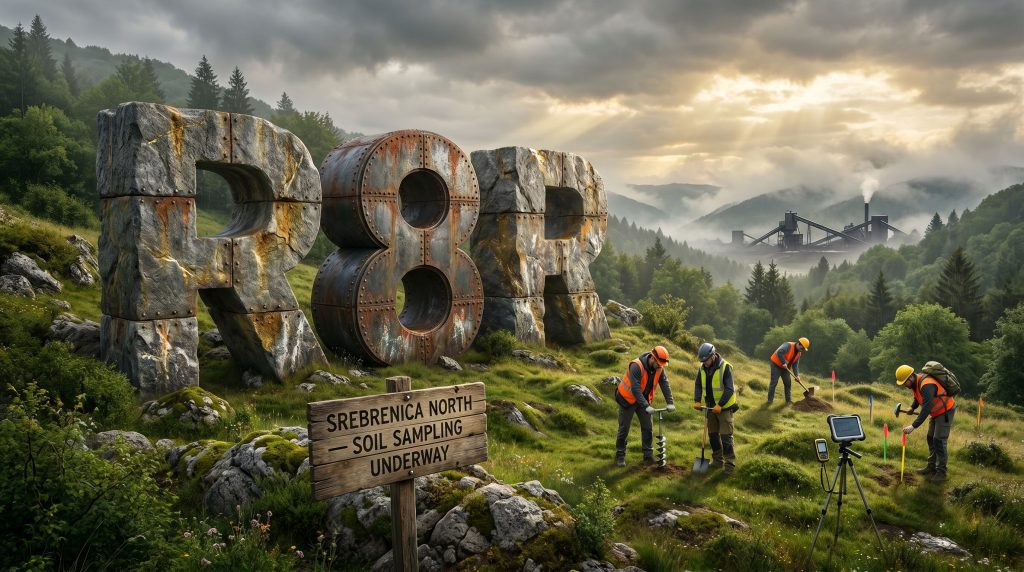
Regener8 Resources NL (ASX: R8R) has wasted no time putting boots on the ground at its newly acquired Srebrenica North project in Bosnia and Herzegovina, announcing the commencement of Regener8 Resources maiden soil sampling at Srebrenica North polymetallic project across two high-priority prospects. The move marks the first systematic exploration conducted across the licence area in more than five decades, coming just days after the Company completed its acquisition of local entity Orichalcum d.o.o.
The exploration is targeting the Zanik and Chaush prospects on the Dolovi Tenement — ground that sits directly adjacent to an operating mine and carries a historical sample suite that would turn heads in any polymetallic district in the world.
When big ASX news breaks, our subscribers know first
What's Happening on the Ground
Phase 1 soil sampling is now underway across the Zanik and Chaush prospects, following a grid spacing of approximately 100 metres along ridgelines and spurs. The programme is designed to systematically define the extent of near-surface mineralisation across two geologically compelling targets that have, until now, gone largely untested with modern exploration methods.
Key features of the current programme include:
- Prospect focus: Zanik (south-western Dolovi Tenement) and Chaush (central Dolovi Tenement)
- Sample spacing: ~100m on ridgelines and spurs
- Follow-up planned: Tenement-wide sampling and ground magnetics in the coming weeks
- In-country team: Regener8 has established a local management presence in Bosnia and Herzegovina to support ongoing operations
Managing Director Stephen Foley commented: "Regener8 has moved quickly to begin exploring the potential of the Srebrenica North Project. The Dolovi tenement was prioritised for soil sampling over the promising Zanik and Chaush prospects — where medieval mining took place, and historical exploration mapped mineralised veins and returned high-grade polymetallic samples. With this tenement bordering the operating Sase polymetallic mine, we're eager to advance exploration and generate targets for testing."
Two Prospects, Two Compelling Stories
Zanik — Medieval Workings and Exceptional Historical Grades
The Zanik Prospect occupies the south-western portion of the Dolovi Tenement and sits within a geological setting of Tertiary dacite-andesite volcanics intruding Carboniferous schists. The historical evidence for mineralisation here is striking on multiple fronts.
Historical sampling results at Zanik (1975 trench grab samples):
| Metal | Peak Historical Result |
|---|---|
| Silver (Ag) | 412 g/t |
| Lead (Pb) | 21.9% |
| Zinc (Zn) | 7.3% |
| Antimony (Sb) | 0.9% |
Beyond the geochemistry, the physical evidence is equally compelling. A ~2 hectare waste rock dump at Zanik points to substantial medieval mining activity, and 1977 stream sediment sampling returned anomalous lead readings of up to 680 ppm downstream and 300 ppm upstream of the historical workings — a geochemical signature suggesting mineralisation extends into the largely unexplored central prospect area.
A recent vendor field visit added further confidence, identifying:
- Hydrothermal alteration across the prospect
- Gossanous breccia veins up to 1–3 metres wide
- Quartz veins with visible galena, sphalerite, and pyrite
These are the kinds of field observations that make geologists take notice. The presence of visible sulphide minerals at surface, combined with multi-century mining heritage and elevated stream sediment anomalies, suggests a mineralised system that remains substantially open to modern exploration.
Chaush — Untested Structures with Magnetic Signature
The Chaush Prospect, sitting in the central portion of the Dolovi Tenement, presents a different but equally interesting opportunity. Despite historical geological maps identifying several mineralised lead-zinc structures within silica-clay-sulphide altered volcanics, there is no evidence of past mining activity at Chaush — meaning any mineralisation here is genuinely virgin ground.
Key observations at Chaush include:
- Multiple mineralised lead-zinc structures mapped within hydrothermally altered volcanics
- Heterogeneous magnetic field that correlates with mapped alteration zones and mineralised structures
- Geological setting mirroring Zanik — Tertiary dacite-andesite intrusives and extrusives cutting Carboniferous schists
The magnetic anomaly correlation with known alteration and mineralised structures is a meaningful indicator of a favourable geological setting, positioning Chaush as a strong candidate for follow-up ground magnetics once the soil programme delivers its results.
Location Context — Sitting Next Door to Production
One of the most significant aspects of the Srebrenica North project is its address. The Dolovi Tenement shares a boundary with Mineco's operating Sase (Gross) lead-zinc-silver mine, one of the region's active polymetallic producers. Furthermore, the tenement is also immediately adjacent to Terra Balcanica's (CSE: TERA) Viogor-Zanik project.
This neighbourhood matters enormously for investors. Proximity to an operating mine is one of the strongest validators an exploration tenement can have — it confirms the district is mineralised at an economic scale, that infrastructure and regulatory pathways exist, and that the geological model being tested is real.
| Neighbour | Status | Relevance to R8R |
|---|---|---|
| Mineco's Sase (Gross) Mine | Operating lead-zinc-silver producer | Confirms economic-scale polymetallic mineralisation on the same ground |
| Terra Balcanica's Viogor-Zanik Project | Active exploration (CSE: TERA) | Independent validation of the district's exploration prospectivity |
Understanding Soil Sampling — What Does It Mean for Investors?
What Is Soil Sampling?
Soil sampling is one of the first tools explorers deploy when assessing a new ground position. It involves collecting samples of near-surface soil at regular intervals and analysing them for trace concentrations of target metals. Over mineralised zones, metals tend to migrate upward through groundwater and weathering processes, leaving detectable geochemical halos in the soil above.
Why Does Spacing Matter?
At 100-metre spacing, the current programme is designed to efficiently cover the Zanik and Chaush prospects and identify anomalous zones. Once anomalies are defined, they can be followed up with tighter-spaced sampling, ground geophysics, and ultimately drilling to test for mineralisation at depth.
For investors, soil sampling is low-cost, rapid, and can deliver powerful target-generation results. A strong anomaly from this programme would give R8R a defined, drill-ready target — the next meaningful step toward understanding whether the high-grade historical results at Zanik represent a larger mineralised system.
Glossary of Key Terms
- Gossan: An iron-bearing weathered zone at surface, often indicating underlying sulphide mineralisation
- Galena: The primary ore mineral of lead, often associated with silver
- Sphalerite: The primary ore mineral of zinc
- Dacite-andesite: Intermediate volcanic rock types that commonly host epithermal and skarn-style polymetallic mineralisation
- Hydrothermal alteration: Changes to rock chemistry caused by hot mineralising fluids — a key indicator of a mineralising system
- Stream sediment anomaly: Elevated metal concentrations in waterway sediments, used to identify upstream mineralisation sources
- ppm: Parts per million — a standard unit for measuring trace metal concentrations in geochemical sampling
What Comes Next — The Exploration Pipeline
The Regener8 Resources maiden soil sampling at Srebrenica North polymetallic project represents just the first phase of a comprehensive exploration campaign. Regener8 has outlined a clear near-term work programme that builds logically from the current Phase 1 soil sampling campaign.
Planned activities in sequence:
- Phase 1 soil sampling — underway now across Zanik and Chaush at ~100m spacing on ridgelines and spurs
- Tenement-wide soil sampling — planned as Phase 2 to extend coverage across the broader Dolovi licence area
- Ground magnetics survey — to follow soil sampling, designed to further define subsurface structural controls on mineralisation
- Target generation and ranking — integration of soil geochemistry with magnetics and historical data to define priority drill targets
- Market updates — the Company has committed to regular releases as exploration data becomes available
The establishment of an in-country management team in Bosnia and Herzegovina is a practical step that positions Regener8 to execute this programme with efficiency and local knowledge, whilst also laying the groundwork for the Company's broader regional ambitions.
The Investment Case — Why Srebrenica North Deserves Attention
Several factors converge to make this a project worth watching closely as the Regener8 Resources maiden soil sampling at Srebrenica North polymetallic project progresses.
1. Historical grades that demand follow-up
Returning 412 g/t silver, 21.9% lead, and 7.3% zinc from trench samples at Zanik is the kind of historical data that justifies serious modern exploration. These are not trace anomalies — they are high-grade results from a system that has never been systematically explored with contemporary techniques.
2. First-mover advantage on decades-old ground
This is the first systematic exploration programme across the Dolovi Tenement licence area in over 50 years. Historical methods were far less sophisticated than what is available today, meaning there is genuine discovery potential in applying modern soil geochemistry and geophysics to a ground position with this level of historical signal.
3. Proximity to an operating mine
Sharing a boundary with an active lead-zinc-silver producer is, arguably, the single strongest geological endorsement an exploration project can carry. It eliminates uncertainty about whether the district can host economic mineralisation — it demonstrably can.
4. Two complementary targets in one tenement
Zanik and Chaush offer different risk-reward profiles within the same tenement. Zanik has a rich historical dataset and visible mineralisation at surface, whilst Chaush is genuinely untested despite mapped structures — a blue-sky target within the same mineralised corridor.
5. A company moving quickly
From acquisition completion to boots-on-ground soil sampling in a matter of days signals a management team that is execution-focused. The establishment of a local in-country team further demonstrates the seriousness of the Company's commitment to the project.
Market Context — Polymetallic Projects in Focus
The timing of this exploration aligns with renewed interest in base and precious metal exploration across Europe. Bosnia and Herzegovina has emerged as an increasingly attractive jurisdiction for mineral exploration, offering established mining frameworks and proximity to major European markets.
The polymetallic nature of the Srebrenica North prospects adds diversification benefits at the project level. With silver, lead, zinc, and antimony all showing elevated historical results, the project is not dependent on a single commodity for economic viability. This multi-metal exposure provides natural hedging against individual commodity price volatility.
Recent market dynamics have also supported base metals pricing, with lead and zinc both benefiting from supply-side constraints and industrial demand recovery. Silver, meanwhile, continues to benefit from both industrial applications and investment demand, whilst antimony has attracted strategic attention due to its critical mineral classification.
The next major ASX story will hit our subscribers first
Technical Validation — Why the Geology Works
The geological setting at Srebrenica North fits established models for high-grade polymetallic mineralisation. The intersection of Tertiary volcanic rocks with Carboniferous basement units creates the structural and chemical conditions that commonly host economically significant base and precious metal deposits.
The historical evidence supports this geological interpretation. The medieval mining activity at Zanik demonstrates that mineralisation was substantial enough to support extraction using primitive methods — typically an indicator of high-grade, near-surface ore bodies. In addition, the stream sediment anomalies extending beyond known workings suggest the mineralised system has scale beyond what was historically exploited.
Modern exploration techniques now being deployed can test these geological concepts systematically. Soil geochemistry will define the surface expression of mineralisation, whilst planned ground magnetics will map subsurface structural controls — providing a clear pathway to drill-ready targets that builds on decades of historical knowledge with contemporary precision.
Regener8 Resources has moved swiftly from acquisition to active exploration at Srebrenica North, deploying soil sampling across two high-priority polymetallic prospects that sit on the doorstep of an operating mine. With historical results that include 412 g/t silver and 21.9% lead, and more than 50 years since the last systematic work was conducted across the licence area, the upcoming soil data could be transformative in defining the scale and continuity of mineralisation. With ground magnetics and further sampling to follow, investors have a series of near-term catalysts to monitor closely.
Ready to Catch the Next Major Polymetallic Discovery Before the Market Does?
Discovery Alert's proprietary Discovery IQ model scans ASX announcements in real time, instantly identifying significant mineral discoveries — including polymetallic projects like Srebrenica North — and delivering actionable alerts directly to subscribers before the broader market has time to react. Explore Discovery Alert's discoveries page to see the historic returns that major ASX mineral discoveries have generated, and begin your 14-day free trial today to position yourself ahead of the next significant find.