May 22, 2026
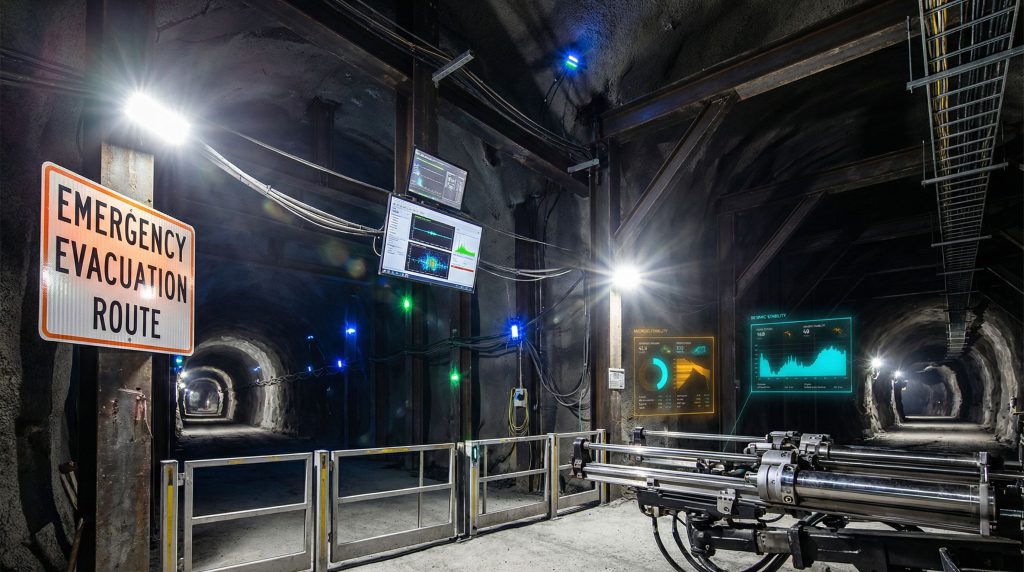
The mining industry faces increasing challenges as operations extend deeper underground, with incidents like the recent rockfall in Boliden's Garpenberg mine highlighting the complex risks associated with extreme-depth extraction. The transition from surface mining to depths exceeding 1,000 meters introduces complex geomechanical phenomena that fundamentally alter traditional safety paradigms. Modern mining ventures operating at extreme depths encounter stress conditions that can trigger catastrophic ground failures, transforming routine extraction into high-stakes geological engineering challenges.
The intersection of advanced metallurgical demands and deep-level extraction creates operational environments where conventional risk assessment frameworks require complete reconceptualization. As mining companies pursue complex polymetallic deposits situated far beneath the earth's surface, the margin between controlled extraction and uncontrolled geological failure narrows dramatically.
What Triggers Catastrophic Rockfall Events in Deep Underground Mining Operations?
Geological Stress Mechanisms at Extreme Depths
Rock mass behaviour undergoes fundamental transformation as mining operations extend beyond 1,000-metre depths. The rockfall in Boliden's Garpenberg mine, occurring at 1,100 metres below surface, demonstrates how extreme depth amplifies geological stress concentrations that can overwhelm traditional support systems. At these depths, virgin rock stress can exceed 30-40 MPa, creating conditions where even minor stress redistributions trigger violent failure mechanisms.
The pressure wave generation observed during the Garpenberg incident illustrates how deep-level rockfalls create secondary hazards extending far beyond the immediate collapse zone. When rock masses fail under extreme stress, the sudden release of stored elastic energy propagates through surrounding geological formations as seismic waves travelling at velocities exceeding 3,000 metres per second.
These pressure waves can affect personnel hundreds of metres from the original failure point, as evidenced by the four workers hospitalised due to wave impact rather than direct rock contact. Furthermore, downhole geophysics techniques are becoming increasingly crucial for understanding these complex subsurface conditions.
Complex ore body geometry compounds stress concentration effects at extreme depths. The Garpenberg mine's extraction of five different metals (zinc, lead, silver, copper, and gold) within interconnected ore zones creates irregular excavation patterns that concentrate stress in unpredictable locations. Unlike single-commodity mines with uniform extraction patterns, polymetallic operations must navigate varying rock competency, ore grade distributions, and structural discontinuities that create three-dimensional stress fields resistant to conventional modelling.
Seismic Activity Correlation with Mining-Induced Events
Deep mining operations generate continuous microseismic activity through stress redistribution, but distinguishing between normal operational seismicity and precursory failure signals requires sophisticated monitoring protocols. The escalation pattern observed at Garpenberg, where seismic activity increased to abnormal levels within hours of the initial rockfall, demonstrates how mining-induced stress changes can accelerate non-linearly toward critical failure thresholds.
Modern seismic monitoring systems in deep mines typically detect events ranging from magnitude -2.0 to +4.0, with networks capable of locating events within 10-50 metre accuracy. However, the challenge lies not in detection capability but in establishing threshold criteria that differentiate between:
- Normal stress adjustment seismicity (magnitude -1.0 to +1.5)
- Elevated activity indicating potential instability (magnitude +1.5 to +2.5)
- Critical precursory patterns requiring immediate response (magnitude >+2.5)
- Post-failure aftershock sequences indicating ongoing instability
The temporal progression from the March 14 rockfall to abnormal seismic escalation by late Saturday evening suggests that initial failures create stress redistribution cascades that can persist for 12-24 hours or longer. This extended instability period explains why evacuation protocols must account for secondary failure potential rather than treating rockfall events as isolated incidents.
When big ASX news breaks, our subscribers know first
How Do Mining Companies Execute Emergency Evacuation Protocols?
Critical Decision-Making Under Seismic Uncertainty
Emergency response protocols in deep mining operations must balance incomplete information against time-critical safety decisions. The Garpenberg response timeline demonstrates how technical monitoring systems drive evacuation decisions rather than relying on subjective management assessment. When seismic activity exceeded predetermined abnormality thresholds, automated protocols likely triggered evacuation procedures regardless of production considerations.
The decision to continue concentrator operations through Sunday while evacuating underground personnel illustrates sophisticated risk segmentation strategies. Boliden's official statement confirmed this approach recognises that surface facilities typically maintain structural integrity during seismic events that would be catastrophic underground.
Critical decision matrices for deep mine evacuations typically evaluate:
- Seismic magnitude trends and acceleration patterns
- Underground personnel distribution and escape route accessibility
- Equipment status and potential secondary hazards (electrical, mechanical)
- Weather conditions affecting surface operations and personnel transport
- Available shaft capacity and hoisting equipment functionality
Multi-Stage Evacuation Implementation
Deep mine evacuations require systematic progression through multiple operational phases due to the logistical complexity of moving personnel from extreme depths. The Garpenberg evacuation, completed within approximately 12-18 hours of the initial incident, demonstrates the coordination required between underground operations and surface support systems.
Evacuation execution typically follows this progression:
Phase 1: Immediate Response (0-2 hours)
- Incident containment and injured personnel stabilisation
- Underground supervisor notification and damage assessment
- Communication system testing and backup power verification
Phase 2: Personnel Assembly (2-8 hours)
- Systematic notification of all underground workers
- Movement to designated assembly points and accountability verification
- Prioritisation of evacuation sequences based on location and accessibility
Phase 3: Surface Transport (6-12 hours)
- Shaft hoisting operations and equipment coordination
- Surface staging area preparation and medical support
- Final accountability confirmation and incident documentation
The capacity constraints of deep mine hoisting systems significantly influence evacuation timelines. Typical mine shafts can transport 20-40 personnel per trip, with round-trip cycles requiring 15-30 minutes including safety protocols. For operations with 200-400 underground personnel, complete evacuation may require 4-8 hours of continuous hoisting operations.
What Are the Operational Consequences of Unplanned Mine Closures?
Production Impact Assessment Methodologies
Deep mine closures create cascading operational disruptions extending far beyond immediate production losses. The Garpenberg closure demonstrates how unplanned shutdowns affect multiple revenue streams simultaneously, as the operation produces five different metal concentrates requiring distinct processing and marketing strategies. Moreover, mining industry trends indicate that such incidents are becoming increasingly complex to manage.
| Impact Category | Immediate Effect | Extended Consequence |
|---|---|---|
| Underground Production | Complete cessation | Equipment deterioration, water management |
| Concentrator Operations | 1-2 day delay | Inventory depletion, processing disruption |
| Metal Sales Contracts | Delivery delays | Penalty payments, customer relationships |
| Personnel Costs | Continued wages | Overtime, contractor support |
| Equipment Maintenance | Deferred schedules | Accelerated deterioration, replacement needs |
The financial impact calculations for deep mine closures must account for high fixed costs that continue during non-productive periods. Underground operations typically maintain continuous ventilation, pumping, and safety systems that consume substantial power regardless of production status. For deep mines, these baseline costs can represent $50,000-200,000 per day in unavoidable operational expenses.
Complex ore processing disruptions create secondary financial impacts through concentrate inventory management challenges. Multi-metal operations like Garpenberg must maintain separate processing streams for each metal type, with different grinding, flotation, and concentration requirements. Unplanned shutdowns disrupt these integrated processes, potentially requiring complete equipment cleaning and recalibration before restart.
Infrastructure Inspection and Damage Evaluation
Post-incident infrastructure assessment in deep mines requires specialised expertise and equipment capable of operating under potentially unstable conditions. The Garpenberg inspection delay, caused by continuing abnormal seismic activity, illustrates how geological instability can prevent damage assessment for weeks or months following initial incidents.
| Assessment Phase | Timeline | Technical Requirements |
|---|---|---|
| Remote Monitoring | 0-7 days | Seismic networks, automated sensors |
| Limited Access Survey | 1-2 weeks | Specialised personnel, safety equipment |
| Detailed Structural Analysis | 2-4 weeks | Engineering consultants, instrumentation |
| Remediation Planning | 4-8 weeks | Ground support design, equipment procurement |
Deep mine inspections face unique challenges compared to surface facility assessments. Underground access requires functioning ventilation systems, emergency egress routes, and communication infrastructure that may be compromised during incidents. Inspection teams must carry self-rescue equipment, gas monitoring devices, and emergency communication systems while evaluating structural damage in potentially unstable conditions.
The inspection process typically progresses from remote monitoring through automated systems to limited human access in secured areas and finally comprehensive structural evaluation once safety conditions permit. This progression can extend over 6-12 weeks for significant incidents, during which production remains suspended and financial impacts accumulate.
Which Technical Solutions Prevent Deep-Level Mining Accidents?
Advanced Seismic Monitoring Systems
Modern deep mining operations deploy sophisticated seismic networks capable of detecting, locating, and analysing ground movement with unprecedented precision. These systems integrate accelerometers, geophones, and triaxial sensors positioned throughout mine infrastructure to create three-dimensional models of stress distribution and movement patterns. Additionally, AI-driven drilling insights are revolutionising how companies approach underground monitoring.
State-of-the-art monitoring networks typically feature:
- Real-time data acquisition systems processing over 1,000 channels simultaneously
- Automated event detection algorithms identifying anomalous patterns within seconds
- Magnitude calculation protocols providing instant severity assessment
- Location accuracy within 5-10 metres for events throughout the mine
- Integration with mine communication systems for immediate alert distribution
Advanced predictive analytics apply machine learning algorithms to historical seismic data, identifying precursory patterns that precede major ground instability events. These systems analyse frequency content, energy release patterns, and spatial clustering to distinguish between normal operational seismicity and potentially dangerous stress accumulation.
The most sophisticated installations incorporate automated response protocols that can initiate evacuation procedures, equipment shutdown sequences, or area restrictions without human intervention when predetermined threshold criteria are exceeded. This automation eliminates human decision-making delays that could prove critical during rapidly developing emergency situations.
Ground Support Engineering Innovations
Deep mining ground support systems must withstand extreme static loads while accommodating dynamic loading from seismic events and pressure waves. Traditional support methodologies become inadequate at depths exceeding 1,000 metres, requiring innovative engineering solutions specifically designed for high-stress environments.
Dynamic support systems represent the most significant advancement in deep mining safety technology:
Energy-Absorbing Rock Bolts
- Capable of absorbing 10-20 kJ of impact energy per bolt
- Controlled deformation prevents catastrophic failure
- Integration with mesh systems provides comprehensive protection
Yielding Support Systems
- Allow controlled movement during seismic events
- Maintain support capacity while accommodating ground deformation
- Reduce stress concentration around excavations
Reinforced Shotcrete Applications
- Fibre-reinforced concrete with compressive strengths exceeding 40 MPa
- Integration with steel mesh and rock bolt systems
- Rapid application capabilities for emergency stabilisation
Computational modelling advances enable precise ground support design tailored to specific geological conditions and stress environments. Finite element analysis, boundary element methods, and discrete element modelling provide engineers with tools to predict ground behaviour and optimise support system performance before installation.
How Do Regulatory Frameworks Address Underground Safety Standards?
International Mining Safety Compliance Requirements
Global mining safety regulations establish minimum standards for deep underground operations, with specific requirements for seismic monitoring, emergency preparedness, and worker protection at extreme depths. These frameworks recognise that conventional safety measures become inadequate as operations extend beyond traditional depth limits.
Key regulatory compliance areas include:
Seismic Monitoring Mandates
- Continuous monitoring requirements for operations below 800 metres
- Event reporting thresholds and notification procedures
- Data retention and analysis documentation standards
- Independent monitoring system verification protocols
Emergency Preparedness Standards
- Evacuation plan development and regular testing requirements
- Underground refuge station specifications and maintenance
- Emergency communication system redundancy mandates
- Personnel training and certification requirements
Worker Protection Protocols
- Maximum exposure time limits in high-seismic-risk areas
- Personal protective equipment specifications for deep operations
- Health monitoring requirements for extreme depth workers
- Incident reporting and investigation procedures
International coordination through organisations like the International Labour Organisation (ILO) and International Council on Mining and Metals (ICMM) promotes best practice sharing and standardisation across different national regulatory frameworks. However, industry innovation trends suggest that regulatory frameworks often lag behind technological capabilities.
Insurance and Liability Considerations
Deep mining operations face unique insurance challenges due to the elevated risks associated with extreme depth extraction. Traditional mining insurance policies may exclude or limit coverage for incidents occurring beyond specified depth thresholds, requiring specialised coverage arrangements.
Business Interruption Insurance
- Coverage for production losses during extended closures
- Evaluation of force majeure versus operational negligence claims
- Assessment of preventable versus unpreventable geological events
Worker Compensation Coverage
- Enhanced benefits for deep underground operations
- Specialised medical coverage for pressure-related injuries
- Long-term disability considerations for seismic event exposure
Environmental Liability Protection
- Groundwater contamination risks from deep excavations
- Surface subsidence coverage for deep mining operations
- Remediation cost coverage for post-closure environmental impacts
Insurance providers increasingly require comprehensive risk assessment documentation, preventive measure implementation, and regular safety audit compliance as conditions for coverage. This trend incentivises mining companies to invest in advanced safety technologies and monitoring systems.
What Lessons Can the Industry Learn from Deep-Level Incident Analysis?
Case Study Methodology for Rockfall Events
Systematic analysis of deep mining incidents provides crucial insights for preventing similar occurrences across the industry. The rockfall in Boliden's Garpenberg mine offers valuable learning opportunities regarding pressure wave propagation, seismic escalation patterns, and evacuation protocol effectiveness.
Comprehensive incident analysis typically examines:
Geological Factors
- Pre-existing structural weaknesses and discontinuities
- Stress concentration patterns around excavations
- Rock mass quality indices and strength parameters
- Historical seismic activity patterns and trends
Operational Contributors
- Mining sequence and extraction methodology impacts
- Ground support system performance and adequacy
- Monitoring system sensitivity and response protocols
- Personnel positioning and exposure assessment
Response Effectiveness
- Evacuation timeline performance versus established benchmarks
- Communication system functionality under emergency conditions
- Medical response capability and injured worker outcomes
- Production resumption strategies and implementation success
Critical Learning Point: Deep underground incidents demonstrate that pressure wave propagation from rockfalls creates hazard zones extending hundreds of metres from collapse epicentres, requiring evacuation protocols that account for secondary impact zones rather than focusing solely on immediate failure areas.
Industry-Wide Safety Protocol Improvements
Mining industry collaboration through safety organisations and research institutions facilitates knowledge transfer and best practice development across different operational contexts. The lessons learned from incidents like the rockfall in Boliden's Garpenberg mine contribute to evolving safety standards and technological innovation.
Technology Adoption Acceleration
- Real-time seismic monitoring system implementation
- Automated evacuation trigger protocols development
- Advanced ground support system deployment
- Personnel tracking and accountability system integration
Training Programme Evolution
- Seismic hazard awareness education for all underground personnel
- Emergency response drill frequency and realism improvements
- Pressure wave injury prevention and first aid training
- Geological hazard recognition skill development
Research and Development Focus Areas
- Predictive modelling for rockfall event forecasting
- Dynamic ground support system performance optimisation
- Underground communication system reliability enhancement
- Post-incident recovery and resumption methodology development
Industry-wide incident databases enable statistical analysis of failure modes, contributing factors, and prevention strategy effectiveness across different geological settings and operational configurations. This collective intelligence supports evidence-based decision-making for safety investment priorities.
The next major ASX story will hit our subscribers first
Future Developments in Underground Mining Safety Technology
Emerging Monitoring Technologies
Artificial intelligence applications in seismic monitoring represent the next frontier in deep mining safety technology. Machine learning algorithms trained on vast datasets of seismic events can identify subtle precursory patterns that human analysts might miss, potentially providing hours or days of additional warning before catastrophic failures. Furthermore, data-driven operations are transforming how companies approach risk management.
AI-Powered Seismic Analysis
- Pattern recognition across thousands of monitoring channels simultaneously
- Predictive modelling based on historical event sequences
- Automated risk assessment and response recommendation systems
- Integration with mine planning software for proactive hazard avoidance
Wireless Sensor Network Expansion
- Distributed monitoring throughout mine infrastructure
- Real-time personnel location tracking and safety zone management
- Environmental condition monitoring (gases, temperature, humidity)
- Equipment performance monitoring and predictive maintenance alerts
Drone Technology Integration
- Automated underground inspection capabilities in hazardous areas
- Post-incident damage assessment without personnel exposure
- Emergency supply delivery to trapped personnel
- Communication relay systems for areas with infrastructure damage
Industry Investment in Safety Innovation
Major mining companies increasingly recognise that advanced safety technology investments provide both risk mitigation and operational efficiency benefits. The business case for safety innovation strengthens as incidents like the rockfall in Boliden's Garpenberg mine demonstrate the financial impact of unplanned closures and production disruptions.
Research Funding Priorities
- Public-private partnerships for safety technology development
- University collaboration programmes for mining safety research
- Industry consortium funding for shared safety challenges
- Government incentives for innovative safety system adoption
Technology Commercialisation Pathways
- Startup incubation programmes focused on mining safety solutions
- Venture capital investment in mining technology companies
- Technology licensing agreements between mining companies
- Equipment manufacturer partnerships for integrated safety systems
The convergence of advanced computing power, sensor miniaturisation, and wireless communication capabilities creates unprecedented opportunities for transformative safety technology development. Mining companies that invest early in these emerging technologies may achieve significant competitive advantages through reduced operational risks and improved regulatory compliance. Consequently, sustainability transformation insights indicate that safety innovations often align with broader sustainability objectives.
This analysis is based on publicly available information and industry best practices. Mining operations involve inherent risks that cannot be completely eliminated through technology or procedures. Investors and industry participants should conduct independent research and consult with qualified professionals before making operational or investment decisions. The specific circumstances of the Garpenberg incident may differ from the general patterns described in this analysis.
Ready to invest in the next major mineral discovery?
Discovery Alert instantly alerts investors to significant ASX mineral discoveries using its proprietary Discovery IQ model, turning complex mineral data into actionable insights for companies navigating challenging operational environments like those discussed above. Understand why major mineral discoveries can lead to significant market returns by exploring Discovery Alert's dedicated discoveries page, and begin your 14-day free trial today to position yourself ahead of the market.