May 22, 2026
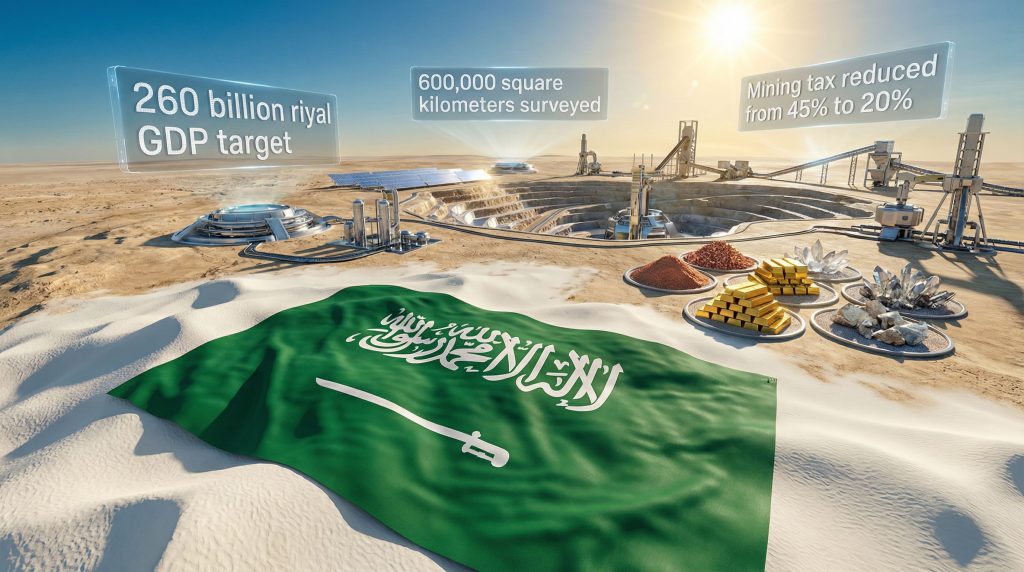
The Kingdom's ambitious transformation from oil dependence to diversified economic growth reflects the broader global shift toward Saudi Arabia mining initiatives that prioritise sustainable resource development. Nations worldwide recognise the strategic value of mineral wealth as technological advancement and renewable energy expansion drive unprecedented demand for critical materials. Furthermore, the convergence of geological potential, advanced infrastructure, and international partnerships creates unique opportunities for resource-rich regions to establish leadership positions in global mining markets.
The significance of this transformation extends beyond economic diversification to encompass supply chain security, geopolitical influence, and technological innovation. Moreover, understanding the mineral exploration importance becomes crucial as nations compete for strategic advantage in an increasingly interconnected global economy.
What Makes Saudi Arabia's Mining Vision 2030 a Global Game-Changer?
The Kingdom's mining transformation represents a fundamental shift from hydrocarbon dependence toward mineral wealth utilisation. This strategic pivot involves comprehensive geological assessment across vast territories, coupled with aggressive infrastructure development timelines that challenge conventional mining sector approaches. Additionally, the critical minerals energy transition amplifies the strategic importance of developing domestic mineral resources.
The Economic Diversification Imperative Beyond Oil
Saudi Arabia's economic restructuring targets mineral sector contribution as a cornerstone of non-oil GDP expansion. The Vision 2030 framework positions mining development alongside manufacturing, tourism, and renewable energy as primary diversification pillars. However, this approach differs significantly from traditional resource economies that typically develop mining as secondary revenue streams.
The geological foundation supporting this ambition centres on the Arabian-Nubian Shield, a formation containing diverse mineral deposits spanning precious metals, base metals, and industrial minerals. Consequently, unlike established mining jurisdictions developed over centuries, Saudi Arabia's strategy involves simultaneous development of multiple commodity sectors within compressed timeframes.
International mining executives attending the Future Minerals Forum 2026 in Riyadh witnessed unprecedented government commitment to sector development. The event attracted 21,500 global participants, including investment leaders and mining company executives, resulting in 132 agreements worth SAR 100 billion. These commitments encompass exploration, mining operations, financing mechanisms, research initiatives, sustainability programmes, and supply chain development.
Unlocking the Arabian-Nubian Shield's Untapped Wealth
The Arabian-Nubian Shield geological formation extends across significant portions of Saudi Arabia, containing mineral deposits that remain largely unexplored using modern techniques. This geological province hosts precious metals, copper, zinc, lead, and various industrial minerals in configurations suggesting substantial economic potential.
Recent exploration acceleration demonstrates the Kingdom's commitment to comprehensive resource assessment. Activity levels increased dramatically, with exploration projects expanding from limited historical efforts to systematic territorial coverage. In addition, this expansion involves both domestic and international partnerships, bringing advanced exploration technologies and expertise to previously inaccessible or under-evaluated areas.
The strategic significance of these resources extends beyond domestic economic impact. Global supply chain diversification pressures create premium valuations for new supply sources, particularly for critical minerals essential to renewable energy, electric vehicles, and advanced manufacturing. Furthermore, Saudi Arabia's geographic position enables efficient export access to Asian, European, and African markets, enhancing the economic viability of mining operations.
When big ASX news breaks, our subscribers know first
How Are Infrastructure Investments Accelerating Mine Development Timelines?
Traditional mining development cycles average approximately 18 years from initial exploration through production commencement. This extended timeline reflects infrastructure constraints, regulatory processes, financing challenges, and technical complexities. However, Saudi Arabia's infrastructure-first approach represents a paradigm shift designed to compress these development cycles significantly.
The Mining Infrastructure Enablement Initiative Breakdown
The Mining Infrastructure Enablement Initiative, developed in partnership with the Saudi Authority for Industrial Cities and Technology Zones (MODON), provides pre-developed infrastructure to mining projects. This approach eliminates individual project infrastructure requirements that typically consume years of development time and substantial capital investment.
The initiative's flagship project involves a 75-kilometre treated water pipeline serving the Jabal Sayed area, identified as one of the Kingdom's most prospective mining regions. This infrastructure provides multiple benefits:
• Cost reduction: Mine developers experience approximately 60% reduction in water supply costs
• Environmental impact: Eliminates 11 million barrels of oil equivalent over project lifetimes by reducing diesel-powered water transportation
• Development acceleration: Removes infrastructure development from individual project timelines
• Shared capacity: Enables multiple mining operations to utilise common infrastructure
• Community benefits: Provides additional water capacity for local communities and agricultural activities
The water pipeline specifically targets grey water supply for mining operations, addressing both operational requirements and environmental considerations in arid environments. Consequently, this technical approach demonstrates sophisticated understanding of regional mining challenges and appropriate technological solutions.
Project Development Timeline Revolution
Infrastructure pre-development fundamentally alters mining project economics and development sequences. Traditional models require mining companies to develop power generation, water supply, transportation access, and waste management systems as integral project components. These requirements extend timelines, increase capital requirements, and create technical risks unrelated to core mining operations.
Saudi Arabia's infrastructure-first model provides these services as available utilities, similar to industrial development zones in other sectors. This approach enables mining companies to focus resources and expertise on exploration, extraction, and processing activities while utilising professionally developed and maintained infrastructure systems.
The Jabal Sayed area exemplifies this model's potential impact. The region contains multiple mineral prospects suitable for future development, with shared infrastructure capacity supporting expanded operations as projects advance through development phases. Furthermore, this scalable approach provides flexibility for mining companies while maximising infrastructure utilisation efficiency.
Which Strategic Partnerships Are Driving Saudi Mining Expansion?
International partnerships form the foundation of Saudi Arabia's mining sector acceleration, bringing technical expertise, operational experience, and capital resources to domestic development initiatives. These collaborations span the complete mining value chain from exploration through processing and export operations. Moreover, the growth in mining joint venture activity demonstrates the increasing importance of strategic partnerships in modern mining development.
Ma'aden's Joint Venture Portfolio Analysis
Ma'aden, Saudi Arabia's national mining company, serves as the primary vehicle for international partnership development. The company's joint venture strategy focuses on partnerships with established global mining operators, combining international expertise with domestic resource access and government support.
Key partnership structures include operational collaborations where international partners provide technical management and Saudi entities contribute resource access and local market knowledge. These arrangements facilitate technology transfer, skills development, and operational best practices implementation while maintaining domestic control of strategic assets.
The joint venture approach extends beyond individual project development to encompass sector-wide capability building. International partners contribute expertise in exploration techniques, mining engineering, environmental management, and processing technologies that enhance overall sector competitiveness.
International Capital Deployment Strategies
Financial partnerships complement operational collaborations through specialised funding mechanisms designed for mining sector requirements. The "Gateway to Finance" initiative, developed in partnership with Bank of Montreal, provides structured access to international capital markets for mining projects meeting specified criteria.
This financial infrastructure addresses a critical constraint in mining development: the significant capital requirements and extended payback periods that characterise large-scale mining operations. By providing established financing pathways, Saudi Arabia reduces investment uncertainty and accelerates project development decisions.
The presence of South African mining service providers demonstrates another dimension of international engagement. These partnerships bring operational expertise from established mining jurisdictions while creating opportunities for technology transfer and skills development. Furthermore, the market remains open for additional service providers, indicating continued expansion of international supplier participation.
What Investment Incentives Are Reshaping the Sector's Appeal?
Investment incentive frameworks combine fiscal modifications, regulatory streamlining, and institutional support mechanisms to enhance mining sector attractiveness. These comprehensive approaches address multiple investment decision factors simultaneously rather than relying solely on tax policy modifications. Additionally, understanding effective investment strategy components helps investors navigate complex mining sector opportunities.
Tax Reform Impact Assessment
Fiscal incentive structures influence mining investment decisions through their impact on project economics and competitive positioning relative to other jurisdictions. Mining operations typically involve substantial initial capital investments, extended development periods, and commodity price volatility that affects long-term profitability projections.
Comparative analysis with established mining jurisdictions reveals the importance of comprehensive incentive packages rather than isolated tax modifications. Successful mining development requires favourable treatment across multiple policy areas including exploration licensing, environmental permitting, infrastructure access, and export procedures.
The Kingdom's approach emphasises systematic removal of investment barriers while providing positive incentives for sector participation. This balanced strategy addresses both cost considerations and operational efficiency factors that influence investment attractiveness.
Exploration Activity Surge Metrics
Institutional support mechanisms extend beyond fiscal incentives to encompass education, innovation, and business development programmes. The Mineral Investment Journey provides systematic guidance for investors navigating regulatory requirements and operational considerations. Moreover, MinGen workshops specifically address youth and women participation in mining sector opportunities, expanding the domestic talent base.
The MinValley Tech and Innovation platform connects emerging technologies with operational requirements, fostering innovation adoption throughout the mining value chain. The Start-Up Derby initiative provides direct investor access to technology innovators, facilitating capital deployment to promising technological solutions.
These comprehensive support mechanisms address multiple stakeholder needs simultaneously: investor education, regulatory guidance, technological advancement, and human capital development. Consequently, this systemic approach creates supportive ecosystem conditions that enhance overall sector competitiveness.
How Will Saudi Arabia's Metals Exchange Transform Regional Markets?
Financial market infrastructure development creates essential mechanisms for price discovery, risk management, and capital allocation in expanding mining sectors. A dedicated metals exchange provides regional market makers, processors, and end-users with efficient trading platforms while attracting international market participation.
Financial Infrastructure Development Strategy
Commodity exchange development requires sophisticated technological infrastructure, regulatory frameworks, and market maker participation to achieve adequate liquidity and price discovery efficiency. Saudi Arabia's approach involves establishing comprehensive trading platforms that serve both domestic and regional market participants.
The exchange infrastructure enables regional mineral processors and manufacturers to access competitively priced raw materials while providing mining companies with efficient marketing channels. This integration reduces transaction costs, improves price transparency, and facilitates risk management through derivative instruments.
International connectivity ensures the regional exchange integrates effectively with global commodity markets, providing arbitrage opportunities and preventing price isolation. This connectivity also attracts international trading participation, enhancing market liquidity and price discovery efficiency.
Supply Chain Integration Opportunities
Processing hub development represents a strategic extension of mining operations that captures additional value within the domestic economy. Rather than exporting raw materials for processing elsewhere, Saudi Arabia's strategy emphasises value-added manufacturing that utilises locally extracted minerals as inputs.
This approach creates industrial clusters where mining operations, processing facilities, and manufacturing companies operate in integrated supply chains. Such clusters reduce transportation costs, improve quality control, and enable rapid response to market demand changes.
The geographic positioning provides strategic advantages for serving Asian, European, and African markets through efficient export corridors. Furthermore, this positioning enables Saudi Arabia to compete effectively with established processing centres while offering reduced transportation costs and delivery times for regional customers.
What Are the Long-Term Implications for Global Resource Security?
Global mineral supply chain diversification addresses geopolitical risk concentration and supply security concerns that have intensified due to trade tensions and resource nationalism. New supply sources reduce dependency on existing producers while providing market stability through increased competition. According to Resource Governance Institute analysis, "Saudi Arabia's mining ambitions represent a significant shift in global resource governance that could reshape international mineral markets."
Critical Minerals Supply Chain Diversification
Current global mineral supply chains exhibit significant geographic concentration in specific regions, creating vulnerability to political instability, policy changes, and natural disasters. The development of alternative supply sources enhances global supply security while providing competitive pressure that moderates pricing volatility.
Saudi Arabia's mineral development contributes to this diversification by providing new sources of copper, gold, zinc, and other essential minerals. The Kingdom's political stability, strategic location, and infrastructure development capabilities position it as a reliable long-term supplier for international markets.
Strategic mineral reserves development enables countries to maintain adequate supplies during market disruptions while supporting domestic manufacturing industries. These reserves provide economic security comparable to strategic petroleum reserves but focused on minerals essential for modern technology and infrastructure.
Employment and Economic Multiplier Effects
Mining sector development creates direct employment in exploration, extraction, processing, and transportation activities. However, the broader economic impact extends through supplier networks, service providers, and induced consumption effects that multiply initial employment creation.
The sector's technical requirements drive skills development in geology, mining engineering, metallurgy, and equipment operation. These skills create valuable human capital that supports continued sector expansion while providing expertise applicable to other industrial activities.
Regional economic development accelerates through mining sector expansion as operations require local supplier networks, transportation infrastructure, and community services. This development creates sustainable economic foundations that persist beyond individual mining operations.
The next major ASX story will hit our subscribers first
Which Challenges Could Derail Saudi Mining Ambitions?
Complex technical, operational, and market challenges characterise mining sector development in any jurisdiction. Saudi Arabia's specific circumstances present unique combinations of opportunities and constraints that require careful management to ensure successful outcomes.
What Technical and Operational Risks Must Be Managed?
Water resource management represents a fundamental challenge in arid environments where mining operations require substantial water supplies for processing and dust control. The grey water pipeline initiative addresses this challenge through innovative infrastructure solutions, but expanded operations will require continued water resource development.
Skilled workforce availability constrains rapid sector expansion as mining operations require specialised technical expertise not widely available domestically. International partnerships facilitate technology transfer and training, but developing adequate domestic capabilities requires sustained educational and training investments.
Infrastructure coordination becomes increasingly complex as multiple mining operations develop simultaneously across extensive geographic areas. Effective coordination requires sophisticated planning and management capabilities to prevent conflicts and ensure efficient resource utilisation.
Market and Regulatory Considerations
Global commodity price volatility exposes mining operations to revenue uncertainty that affects project economics and investment decisions. Long-term development strategies must account for price cycle impacts while maintaining operational flexibility to adapt to changing market conditions.
Environmental compliance frameworks require continuous development as mining operations expand and environmental standards evolve. Maintaining international best practices while accommodating rapid expansion requires sophisticated regulatory development and enforcement capabilities.
International mining standards alignment ensures Saudi Arabian operations maintain market access and investment attractiveness. These standards encompass environmental performance, safety protocols, and social responsibility practices that require ongoing compliance verification. As reported by the Saudi Press Agency, the government has implemented comprehensive regulatory frameworks to ensure sustainable mining development.
How Should Investors Position for Saudi Mining Opportunities?
Investment strategies must account for the unique characteristics of Saudi Arabia's mining sector development while considering risk tolerance, investment horizons, and capital allocation objectives. Multiple pathway options provide flexibility for different investor profiles and strategic objectives.
Direct Investment Pathways
Ma'aden equity participation provides direct exposure to Saudi Arabia's national mining company and its expanding operations portfolio. This approach offers comprehensive sector exposure while benefiting from government support and strategic resource access.
Joint venture participation enables investors to combine international expertise with domestic resource access through structured partnerships. These arrangements typically involve operational responsibilities, technology transfer commitments, and shared investment requirements that suit experienced mining companies.
Exploration licensing participation provides early-stage exposure to potential resource discoveries through systematic exploration programmes. This approach requires substantial geological expertise and risk tolerance but offers significant upside potential for successful discoveries.
Indirect Exposure Strategies
Mining services and equipment suppliers benefit from sector expansion without direct commodity exposure. These companies provide specialised services, equipment, and technologies essential for mining operations while maintaining diversified customer bases.
Infrastructure development contractors participate in the substantial infrastructure investments supporting mining sector expansion. These opportunities span transportation, power generation, water supply, and processing facility construction across multiple project phases.
Technology and innovation providers supply specialised solutions for exploration, extraction, processing, and environmental management challenges. The emphasis on innovation adoption creates opportunities for companies developing advanced mining technologies.
What Does Success Look Like by 2030?
Success metrics encompass quantitative performance indicators and qualitative transformation measures that demonstrate effective mining sector development. These benchmarks provide accountability frameworks while guiding strategic decision-making and resource allocation priorities.
Key Performance Indicators and Milestones
GDP contribution measurement frameworks track the mining sector's economic impact through direct output, employment creation, and multiplier effects across related industries. These measurements require sophisticated economic modelling to capture both immediate and indirect contributions accurately.
Production capacity targets establish specific output goals for different commodity categories while maintaining quality and environmental standards. Achievement requires coordinated development across exploration, extraction, processing, and export capabilities.
Export revenue generation projections provide external validation of sector competitiveness while demonstrating international market acceptance. These revenues contribute to economic diversification objectives while supporting continued investment in sector expansion.
Regional and Global Impact Assessment
Middle East mining sector transformation extends beyond Saudi Arabia to encompass regional supply chain development, technological advancement, and institutional capability building. Success creates demonstration effects that encourage similar development initiatives throughout the region.
Global supply chain rebalancing effects provide strategic benefits through reduced geographic concentration and enhanced supply security. These changes influence international commodity markets while supporting geopolitical stability through economic diversification.
Sustainable development outcomes measurement ensures environmental and social considerations receive appropriate attention alongside economic objectives. These measurements encompass environmental protection, community development, and worker safety standards that maintain international compliance.
The convergence of geological endowments, strategic infrastructure investments, international partnerships, and comprehensive policy frameworks positions Saudi Arabia for significant mining sector transformation. Success depends on continued execution of coordinated development strategies while adapting to evolving market conditions and technological advancement opportunities.
Disclaimer: This analysis contains forward-looking statements and projections based on current available information. Mining investments involve substantial risks including commodity price volatility, technical challenges, regulatory changes, and market uncertainties. Past performance and stated objectives do not guarantee future results. Potential investors should conduct thorough due diligence and consult with qualified professionals before making investment decisions.
Ready to Capitalise on the Next Major Mining Breakthrough?
Discovery Alert's proprietary Discovery IQ model delivers real-time notifications on significant ASX mineral discoveries, instantly empowering subscribers to identify actionable opportunities ahead of the broader market. Understand why historic discoveries can generate substantial returns by exploring Discovery Alert's dedicated discoveries page, showcasing exceptional outcomes from major mineral finds, and begin your 30-day free trial today to position yourself ahead of the market.