May 23, 2026
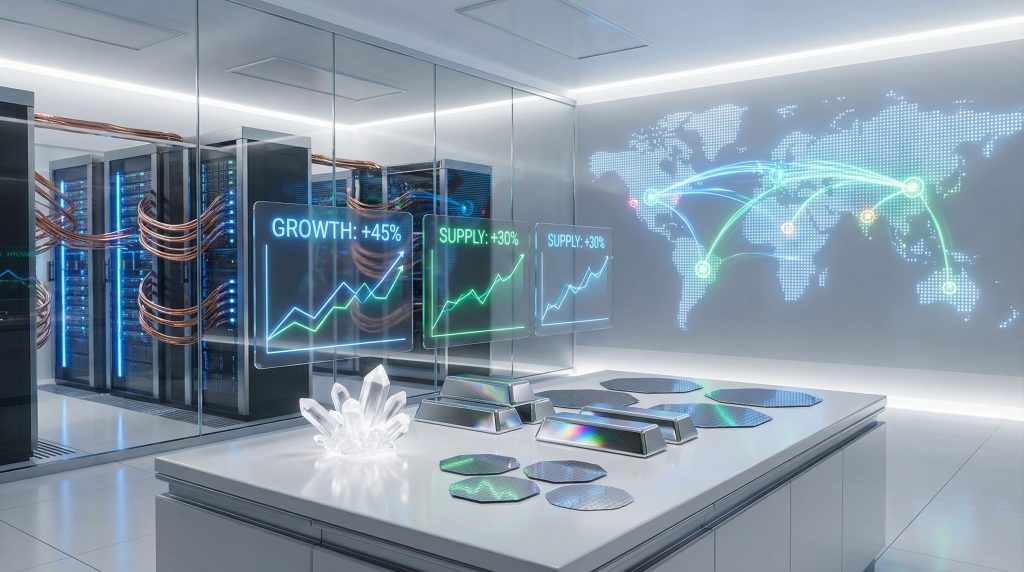
Securing resources for the high-tech economy has become one of the most pressing challenges facing modern technological advancement, as global computing architecture creates unprecedented dependencies on specific mineral extraction and processing capabilities. Modern technological advancement now operates within the constraints of geological availability and geopolitical control, fundamentally altering how industries approach innovation timelines and strategic planning.
This intersection between earth sciences and digital transformation represents more than traditional supply chain management. The minerals required for artificial intelligence infrastructure, electric vehicle production, and advanced defense systems exist in finite quantities and concentrated geographic locations, creating strategic vulnerabilities that extend beyond conventional business risk assessment.
Understanding Critical Mineral Classification Systems
The definition of strategic resources has evolved beyond simple scarcity metrics to encompass technological criticality, substitution possibilities, and supply chain concentration factors. Furthermore, modern classification frameworks assess materials based on their irreplaceable role in emerging technologies rather than traditional economic value alone. The critical minerals pivot has fundamentally reshaped how governments and industries approach resource security planning.
Essential Elements for High-Technology Applications
Current technology sectors demonstrate varying dependency patterns on specific mineral resources, with artificial intelligence and electric vehicle industries showing the highest concentration of critical material requirements. The relationship between critical minerals & energy transition has become increasingly complex as demand patterns evolve.
Technology Sector Resource Dependencies:
| Sector | Primary Materials | Supply Concentration Risk | Substitution Potential |
|---|---|---|---|
| AI Computing Infrastructure | Copper, rare earth elements, silicon | High | Limited |
| Electric Vehicle Systems | Lithium, nickel, cobalt, graphite | Critical | Developing |
| Defense Technologies | Titanium, tungsten, gallium | Extreme | Minimal |
| Renewable Energy | Silver, indium, tellurium | Moderate | Variable |
The geographic distribution of these materials reveals concerning concentration patterns. According to the U.S. Geological Survey's 2024 Mineral Commodity Summaries, China controls approximately 60% of global lithium processing capacity and 85-90% of rare earth element refining operations, creating single points of failure in critical technology supply chains.
Processing Versus Extraction Vulnerabilities
Understanding the distinction between mineral extraction and processing capacity reveals the true nature of supply chain vulnerabilities. However, while lithium reserves exist across multiple continents, the specialised processing required to convert raw lithium into battery-grade materials remains concentrated in a small number of facilities. Consequently, the development of domestic critical reserves has become a national security priority for many countries.
"Supply Chain Reality: Even countries with significant mineral reserves may lack the processing infrastructure necessary to convert raw materials into technology-ready components, creating dependencies that extend beyond geological availability."
When big ASX news breaks, our subscribers know first
Technology Infrastructure Mineral Requirements
The infrastructure supporting artificial intelligence and advanced computing systems requires specific materials in quantities that scale exponentially with processing capacity. In addition, data centre construction and operation create sustained demand patterns that differ significantly from traditional manufacturing sectors.
Computing Infrastructure Material Intensity
Advanced data centres represent some of the most mineral-intensive infrastructure projects in modern construction, requiring substantial quantities of copper for electrical systems, rare earth elements for server components, and specialised materials for cooling and power management systems. The implementation of data-driven mining operations has become essential for meeting these increasing demands efficiently.
The International Energy Agency's 2024 data centre analysis indicates that facilities supporting AI workloads require 40-60% more mineral inputs than traditional computing infrastructure due to increased power density and specialised cooling requirements.
Key Infrastructure Components and Material Requirements:
- Electrical systems: Extensive copper wiring and connections for high-power applications
- Processing units: Rare earth elements and precious metals for semiconductor manufacturing
- Power management: Lithium-ion battery systems for uninterruptible power supply
- Cooling systems: Specialised alloys and heat-transfer materials
Battery Technology Evolution and Material Implications
Electric vehicle battery chemistry development continues to drive changing demand patterns for specific minerals, with next-generation technologies requiring different material compositions than current lithium-ion systems. Furthermore, lithium refinery developments are playing a crucial role in expanding global processing capacity.
Solid-state battery development by manufacturers including Toyota and Samsung represents a significant shift in material requirements, potentially reducing cobalt dependency while increasing demand for lithium and specialised electrolyte materials.
The International Energy Agency's Global EV Outlook 2024 projects that battery chemistry evolution will create substantial shifts in mineral demand patterns, with some materials experiencing decreased demand while others see exponential growth.
Supply Chain Concentration and Vulnerability Assessment
Critical mineral supply chains exhibit dangerous concentration patterns that create systemic risks across multiple technology sectors simultaneously. These vulnerabilities operate at different levels of the supply chain, from raw material extraction through final component manufacturing. Moreover, these concentration patterns have significant implications for global technological sovereignty.
Geographic Concentration Analysis
Current supply chain analysis reveals that key processing capabilities remain concentrated in specific geographic regions, creating potential bottlenecks that could affect global technology production.
Critical Processing Concentration Points:
- Lithium processing: Major facilities concentrated in China and Chile
- Rare earth separation: Approximately 90% of global capacity located in China
- Semiconductor-grade silicon: Production concentrated in China, Russia, and Norway
- Battery-grade nickel: Refining capacity primarily in Indonesia, Russia, and Philippines
These concentration patterns create cascading risk scenarios where disruptions at single facilities can affect global production across multiple technology sectors.
Historical Disruption Case Studies
The 2011 earthquake and tsunami in Japan demonstrated how natural disasters can disrupt global technology supply chains through impacts on specialised material processing facilities. Consequently, rare earth supply disruptions during this period affected electronics manufacturing worldwide for over 18 months.
More recently, geopolitical tensions have highlighted the vulnerability of mineral supply chains to policy decisions and trade restrictions, with nickel supply disruptions affecting battery production timelines across multiple manufacturers.
What Strategic Approaches Ensure Resource Security?
Organisations seeking to mitigate supply chain risks are implementing multi-tiered strategies that combine diversification, alternative material development, and strategic inventory management to reduce dependency on concentrated supply sources. The high-tech economy requires sophisticated planning frameworks to address these challenges effectively.
Diversification and Alternative Sourcing Strategies
Successful resource security strategies require understanding both current supply chain structures and potential alternative pathways for securing critical materials.
Multi-tier Security Framework:
- Primary supplier diversification across multiple geographic regions
- Alternative material research for substitution possibilities
- Recycling and circular economy integration for material recovery
- Strategic partnership development with processing facilities
Technology-Enabled Resource Optimisation
Advanced analytics and artificial intelligence applications in resource management are enabling more efficient utilisation of available materials while reducing waste throughout the supply chain. Furthermore, manufacturing waste reduction through predictive analytics has demonstrated significant efficiency gains.
Some implementations achieve 20-30% reductions in material waste through optimised production scheduling and quality control systems.
Investment Implications and Market Dynamics
The intersection of technological advancement and resource constraints creates specific investment opportunities and risks that require specialised analysis frameworks beyond traditional financial metrics. However, securing resources for the high-tech economy requires substantial capital allocation across multiple sectors.
Alternative Technology Investment Opportunities
Venture capital investment in alternative material technologies has increased substantially, with particular focus on battery chemistry alternatives, recycling technology advancement, and synthetic mineral production methods.
Emerging Investment Areas:
- Sodium-ion battery technology: Reducing lithium dependency for grid storage applications
- Urban mining operations: Extracting valuable materials from electronic waste
- Synthetic rare earth production: Laboratory-scale production of critical elements
- Advanced recycling systems: Closed-loop manufacturing for technology components
Regulatory Environment and Policy Implications
Environmental and social governance requirements continue to reshape mining operations globally, with new standards potentially affecting available supply while increasing production costs across most mineral categories.
The U.S. Department of Commerce's 2023 report on securing supply chains for electric vehicle batteries and clean energy technologies outlines specific policy initiatives designed to establish domestic processing capacity and reduce dependency on foreign sources.
Risk Assessment and Scenario Planning
Comprehensive risk assessment for technology-dependent organisations requires understanding multiple potential disruption scenarios and their cascading effects across interconnected supply chains. In addition, effective planning must consider the increasing complexity of securing resources for the high-tech economy.
Multi-variable Risk Modelling
Effective scenario planning incorporates geological, geopolitical, technological, and economic variables to assess potential supply chain disruptions and their business implications.
Key Risk Variables:
- Geological factors: Reserve depletion rates and ore grade degradation
- Processing capacity: Facility maintenance schedules and expansion timelines
- Geopolitical stability: Policy changes and trade relationship evolution
- Technological substitution: Alternative material development timelines
Contingency Planning Frameworks
Organisations implementing comprehensive resource security strategies typically allocate 15-20% of research and development budgets toward supply chain resilience initiatives, including alternative material research and strategic inventory management systems.
The next major ASX story will hit our subscribers first
Future Outlook for Resource-Technology Integration
The continued expansion of artificial intelligence, electric vehicle adoption, and renewable energy infrastructure will create sustained pressure on critical mineral supply chains, requiring innovative approaches to resource security and efficiency. Furthermore, next-generation technologies will introduce unprecedented challenges for securing resources for the high-tech economy.
Emerging Technology Demands
Next-generation technologies including quantum computing, advanced energy storage, and space-based infrastructure will introduce new mineral requirements while intensifying demand for currently critical materials.
The World Bank's analysis of mineral requirements for low-carbon transition projects substantial increases in demand for most critical minerals through 2030, with some materials experiencing demand growth exceeding 500% compared to current levels.
Strategic Resource Planning for Technological Leadership
Success in securing resources for the high-tech economy requires moving beyond reactive procurement toward strategic resource partnerships that align with long-term technological development roadmaps and evolving geopolitical realities.
Organisations that develop comprehensive understanding of resource-technology interdependencies and implement proactive security strategies will be best positioned to maintain competitive advantage while navigating the complex intersection of geological constraints and technological innovation.
The future of technology development increasingly depends on sophisticated resource management strategies that balance innovation timelines with supply chain realities, creating new frameworks for strategic planning that integrate geological, technological, and geopolitical considerations into unified decision-making processes.
Want to Invest in the Companies Driving This Resource Revolution?
Discovery Alert's proprietary Discovery IQ model delivers real-time notifications on significant ASX mineral discoveries, instantly empowering investors to identify actionable opportunities ahead of the broader market. Understand why major mineral discoveries can lead to substantial market returns by exploring Discovery Alert's dedicated discoveries page, showcasing historic examples of exceptional outcomes, and begin your 30-day free trial today to position yourself ahead of the market.