May 23, 2026
Understanding Selective Catalytic Reduction Technology in Modern Diesel Operations
The complexity of modern diesel emission control systems represents one of the most sophisticated engineering challenges in contemporary transportation and industrial equipment. These systems must balance stringent environmental compliance requirements with operational reliability across millions of commercial vehicles, construction equipment, and agricultural machinery operating in diverse conditions worldwide.
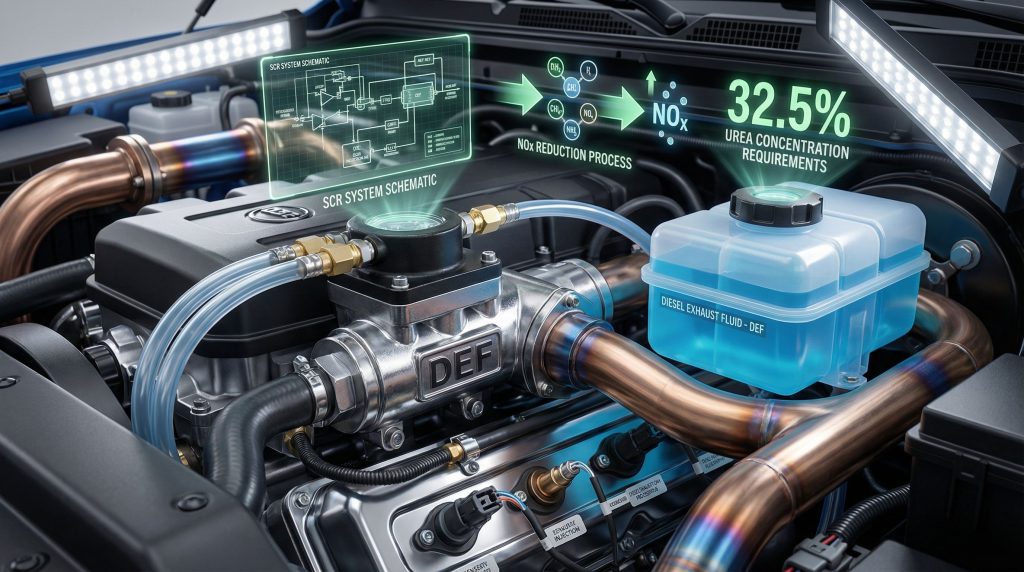
Selective Catalytic Reduction (SCR) technology fundamentally transforms how diesel engines manage nitrogen oxide emissions through precisely controlled chemical reactions. The system operates by injecting diesel exhaust fluid into the exhaust stream, where it undergoes thermal decomposition to produce ammonia that reacts with nitrogen oxides across a specialized catalyst substrate.
When big ASX news breaks, our subscribers know first
The Role of Selective Catalytic Reduction Technology
SCR systems function through a carefully orchestrated sequence of chemical and mechanical processes designed to reduce nitrogen oxide emissions by up to 95 percent under optimal operating conditions. The core mechanism involves urea-based diesel exhaust fluid being injected into the exhaust stream at temperatures exceeding 300 degrees Celsius, where it decomposes into ammonia and carbon dioxide.
The 32.5 percent urea concentration in diesel exhaust fluid represents a precisely engineered specification that balances chemical effectiveness with operational considerations including freeze protection, storage stability, and injection system compatibility. This concentration provides optimal ammonia generation while preventing crystallisation deposits that could obstruct injection nozzles or catalyst surfaces.
Engine management systems integrate SCR operation with broader powertrain control through sophisticated algorithms that monitor exhaust temperature, flow rates, and chemical composition. These systems must coordinate urea injection timing with engine load conditions, ambient temperature variations, and exhaust gas recirculation strategies to maintain both emission compliance and fuel efficiency.
Current Sensor Technologies and Their Operational Challenges
The evolution of SCR monitoring technologies reflects ongoing tensions between regulatory precision requirements and real-world system durability. Urea quality sensors were implemented starting with model year 2016 road engines and model year 2017 non-road equipment to provide enhanced detection capabilities for DEF concentration and contamination levels.
Industry data indicates that urea quality sensors experience significantly higher failure rates compared to alternative monitoring approaches, creating operational disruptions that often outweigh their detection advantages. These failures typically manifest through false positive readings that trigger unnecessary engine power reductions, forcing operators to carry additional DEF supplies and schedule unplanned maintenance interventions.
Furthermore, the mining evolution trends show how technological advancement in emission control systems has become critical for equipment reliability across industrial sectors.
| Sensor Type | Detection Capability | Typical Failure Mode | Operational Impact |
|---|---|---|---|
| Urea Quality Sensors | Concentration + contamination | False positive readings | Engine derating events |
| NOx Sensors | Exhaust gas composition | Gradual drift over time | Reduced detection sensitivity |
| Temperature Sensors | Exhaust thermal conditions | Open circuit failures | System shutdown protection |
| Pressure Sensors | DEF injection system | Clogged line detection | Injection timing errors |
NOx sensors, which served as the primary monitoring technology prior to the UQS implementation, demonstrate different operational characteristics with generally improved long-term reliability. These sensors measure actual nitrogen oxide concentrations in exhaust gases rather than inferring system performance through DEF quality assessment, providing direct feedback on emission control effectiveness.
Technical Implications of EPA's New Guidance Framework
The regulatory shift away from mandatory urea quality sensors represents a fundamental recalibration of emission control system priorities, emphasising operational reliability over prescriptive hardware requirements. This transition acknowledges that system-level performance may be better served through alternative monitoring architectures that reduce false failure incidents.
Software Update Pathways for Existing Fleets
Original equipment manufacturers can implement sensor modifications through software updates that reconfigure engine control unit parameters without requiring physical hardware changes. These updates modify the algorithms that interpret sensor data and determine when emission control system faults should trigger operational responses.
The EPA approves DEF sensor removal through software modifications rather than physical component elimination, maintaining emission control functionality while reducing problematic sensor dependencies. This approach allows fleet operators to address reliability issues without compromising regulatory compliance or voiding manufacturer warranties.
Software deployment typically requires connection to manufacturer diagnostic systems that can verify current system configuration, install updated control logic, and validate proper operation across various operating conditions. The process involves downloading new calibration files that alter how the engine management system responds to sensor inputs and fault conditions.
Operational Impact Assessment for Fleet Management
Critical Consideration: Fleet operators implementing sensor modifications may experience reduced DEF consumption patterns, but this benefit comes with trade-offs in emission control precision monitoring capabilities.
The elimination of engine derating events triggered by faulty urea quality sensors provides measurable operational advantages for commercial fleet management. Operators previously required to maintain backup DEF supplies specifically to prevent unexpected power reductions can now optimise inventory management and reduce associated logistics costs.
DEF consumption patterns may shift toward lower average volumes as the modified systems can tolerate broader concentration variations without triggering fault codes. This operational change reflects the regulatory acknowledgment that strict 32.5 percent concentration requirements may be less critical than maintaining consistent system operation across diverse operating environments.
Fleet maintenance protocols must be adjusted to accommodate the modified monitoring approach, with increased emphasis on periodic NOx sensor calibration and exhaust system performance verification. Technical personnel require training updates to understand the operational differences between UQS-based and NOx sensor-based monitoring systems.
In addition, modern data-driven operations are becoming essential for managing these complex systems across large fleets.
Vehicle Categories Affected by Regulatory Changes
Road vs Non-Road Equipment Implementation Protocols
The regulatory framework establishes distinct implementation pathways reflecting the different operational environments and compliance structures governing road vehicles versus non-road equipment. Road engines from model year 2016 and newer face different modification protocols compared to non-road equipment from model year 2017 and newer, acknowledging the varied technical architectures across these application categories.
Road vehicles typically operate under more standardised conditions with regular maintenance intervals and consistent fuel quality, allowing for more predictable sensor performance characteristics. Non-road equipment encounters more extreme operating environments including high dust exposure, temperature variations, and extended operational periods between service intervals.
| Equipment Category | Model Year Coverage | Operating Environment | Maintenance Intervals |
|---|---|---|---|
| Road Transportation | 2016+ | Standardised conditions | Regular scheduled service |
| Construction Equipment | 2017+ | High dust, extreme temps | Extended service intervals |
| Agricultural Machinery | 2017+ | Seasonal operation cycles | Harvest season priorities |
| Industrial Generators | 2017+ | Continuous operation | Load-based maintenance |
Manufacturer Response Strategies Across Equipment Types
Different original equipment manufacturers approach sensor modifications based on their specific market segments and technical architectures. Heavy-duty truck manufacturers prioritise minimising fleet downtime through rapid software deployment, while construction equipment manufacturers focus on maintaining reliability in harsh operating conditions.
Implementation timelines vary significantly across manufacturer capabilities and market priorities. Some companies have developed automated software update systems that can be deployed through telematics connections, while others require physical service centre visits for proper calibration and validation.
Quality assurance protocols must account for the diverse operating conditions across different equipment categories. Road vehicle modifications can rely on standardised testing procedures, while non-road equipment requires validation across multiple operational scenarios including varying load patterns, environmental conditions, and duty cycles.
Long-Term Industry Implications and Market Evolution
Supply Chain Effects on DEF Markets and Urea Demand
The regulatory changes create potential structural shifts in diesel exhaust fluid consumption patterns that could affect broader urea supply chains and pricing dynamics. Reduced DEF consumption resulting from allowable concentration variations represents a departure from previous market assumptions about steady demand growth aligned with diesel equipment populations.
Regional market variations become more pronounced as different areas implement sensor modifications at different rates, creating temporary demand disparities that affect distribution logistics and inventory management. Suppliers must adapt to potentially lower average consumption rates while maintaining distribution networks capable of serving equipment that has not yet received software updates.
The relationship between DEF markets and agricultural fertiliser urea becomes more complex as industrial demand patterns shift. Lower DEF consumption could theoretically increase urea availability for fertiliser applications, though the scale of this effect remains limited compared to broader agricultural demand cycles and international trade patterns.
Moreover, the growing focus on sustainability transformation across industries will influence how these regulatory changes are implemented alongside environmental responsibility initiatives.
Technology Evolution Pathways and Alternative Monitoring
The EPA's encouragement for manufacturers to develop alternative monitoring technologies signals regulatory openness to continued technological innovation beyond current sensor architectures. Next-generation systems under development include advanced spectroscopic sensors that can provide real-time chemical analysis of exhaust composition with improved reliability characteristics.
Integration opportunities with connected vehicle platforms create possibilities for remote monitoring and predictive maintenance approaches that could fundamentally change how emission control systems are managed. These systems could provide continuous performance data that enables proactive maintenance scheduling and early detection of degrading performance before operational failures occur.
Model year 2027 and newer requirements may incorporate substantially different monitoring approaches as manufacturers develop more robust sensor technologies and regulatory frameworks evolve to accommodate technological advances. This timeline provides sufficient development cycles for comprehensive system redesigns rather than incremental modifications to existing architectures.
The next major ASX story will hit our subscribers first
Fleet Implementation Strategies and Best Practices
Evaluation Processes for Sensor Modification Decisions
Fleet operators must conduct systematic assessments to determine optimal timing and sequencing for sensor modification implementation across their vehicle populations. This evaluation should consider current equipment utilisation patterns, maintenance scheduling, and operational priorities that affect downtime tolerance.
Step-by-step evaluation framework:
• Inventory current equipment by model year and manufacturer
• Assess historical DEF consumption and sensor failure patterns
• Evaluate operational impact of engine derating incidents
• Coordinate with maintenance scheduling and seasonal demands
• Verify software update availability from original equipment manufacturers
• Plan implementation sequencing to minimise operational disruption
Risk assessment methodologies should account for the operational continuity implications of modified sensor systems, including changes in maintenance requirements and potential effects on equipment resale values. Fleet managers must balance immediate operational benefits against long-term strategic considerations.
However, implementing effective waste management solutions alongside emission control modifications can provide comprehensive environmental and operational benefits.
Strategic Planning Considerations for Long-Term Operations
Vehicle replacement timing decisions become more complex as sensor modifications may extend the viable operational life of existing equipment while reducing the urgency for upgrading to newer model years. This dynamic affects capital planning cycles and equipment depreciation strategies.
Training requirements for technical personnel extend beyond simple software update procedures to encompass understanding the operational differences between monitoring systems and appropriate diagnostic approaches. Maintenance staff must be prepared to work with both modified and unmodified systems during transition periods.
Documentation protocols must be established to track which vehicles have received software updates and ensure compliance records are maintained for regulatory inspections. This tracking becomes particularly important for mixed fleets operating across different regulatory jurisdictions.
Additionally, developments in mining transportation innovations are creating new paradigms for fleet management that must be considered alongside emission control modifications.
Compliance Requirements and Legal Framework Boundaries
Legal Distinctions Between Approved Modifications and Prohibited Tampering
The regulatory guidance establishes clear categorical boundaries that distinguish between approved software modifications and prohibited tampering activities that could violate Clean Air Act provisions. Approved modifications maintain emission control system functionality while addressing specific reliability issues identified through industry data.
Clean Air Act enforcement authority remains fully in effect for modifications that exceed approved parameters or attempt to circumvent emission controls entirely. This legal framework protects fleet operators from inadvertent violations while maintaining regulatory oversight of system modifications that could compromise environmental compliance.
The February 2026 prior guidance explicitly confirmed that approved NOx sensor software updates installed by owner operators do not constitute tampering under federal law, providing legal certainty for fleet implementation decisions. This clarification removes previous ambiguity about whether sensor modifications could trigger enforcement actions.
Documentation and Regulatory Compliance Protocols
Record-keeping requirements for modified systems must demonstrate that software updates were performed by authorised personnel using approved procedures and legitimate manufacturer software. This documentation serves as protection against enforcement actions and provides audit trails for compliance verification.
Required compliance documentation includes:
• Original equipment manufacturer software version records
• Installation date and authorised technician certification
• Pre- and post-modification system performance validation
• Ongoing maintenance records demonstrating continued compliance
• Any subsequent software updates or system modifications
Inspection preparation protocols must account for the modified monitoring approach while demonstrating continued emission control effectiveness. Fleet operators should be prepared to explain the technical rationale for sensor modifications and provide evidence of ongoing system performance.
Future Technology Development and Regulatory Evolution
Next-Generation Monitoring Systems and Advanced Technologies
Emerging sensor technologies under development incorporate advanced materials and detection principles that could address the reliability limitations of current systems while providing enhanced monitoring capabilities. These include laser-based spectroscopic sensors that can analyse exhaust composition in real-time with minimal drift characteristics.
Connected vehicle integration opportunities create pathways for remote monitoring systems that could provide continuous performance data and enable predictive maintenance approaches. These systems would allow fleet managers to monitor emission control performance across entire vehicle populations and identify emerging issues before they cause operational disruptions.
Machine learning applications in emission control system management could optimise DEF injection strategies based on real-time operating conditions and historical performance data. These systems could reduce DEF consumption while maintaining optimal emission reduction effectiveness across varying operational scenarios.
International Regulatory Alignment and Standards Harmonisation
The regulatory approaches adopted by the EPA may influence international standards development as other jurisdictions evaluate similar reliability challenges with urea quality sensors. European, Chinese, and Japanese regulators face comparable technical issues that could benefit from coordinated approaches to sensor technology requirements.
Technology transfer opportunities exist for manufacturers developing alternative monitoring systems that could meet multiple regulatory frameworks simultaneously. This harmonisation could reduce development costs and accelerate deployment of improved emission control technologies across global markets.
Regulatory timeline considerations for future model years:
• 2027 model year: Potential integration of alternative monitoring technologies
• 2028-2030: Possible harmonisation with international emission standards
• 2030+: Next-generation SCR system architectures with integrated connectivity
The evolution toward more robust emission control monitoring reflects broader industry trends toward predictive maintenance and connected equipment management. These developments may ultimately provide superior environmental compliance while reducing the operational disruptions that prompted the current regulatory guidance.
Furthermore, the EPA's comprehensive approach to diesel emission regulations demonstrates ongoing commitment to balancing environmental protection with operational practicality.
Disclaimer: This analysis is based on regulatory guidance and industry information available at the time of publication. Fleet operators should consult with qualified technicians and regulatory compliance specialists before implementing sensor modifications. Future regulatory changes may affect the applicability of current guidance, and operational results may vary based on specific equipment configurations and operating conditions.
Wondering How Environmental Regulations Impact Your Mining Equipment Investments?
Discovery Alert's proprietary Discovery IQ model monitors mining companies navigating regulatory changes like SCR technology modifications, instantly identifying those positioned to benefit from operational cost savings and improved equipment reliability. Stay ahead of regulatory developments affecting mining operations by exploring Discovery Alert's discoveries page to see how equipment-related announcements can create significant market opportunities.