
June 10, 2026
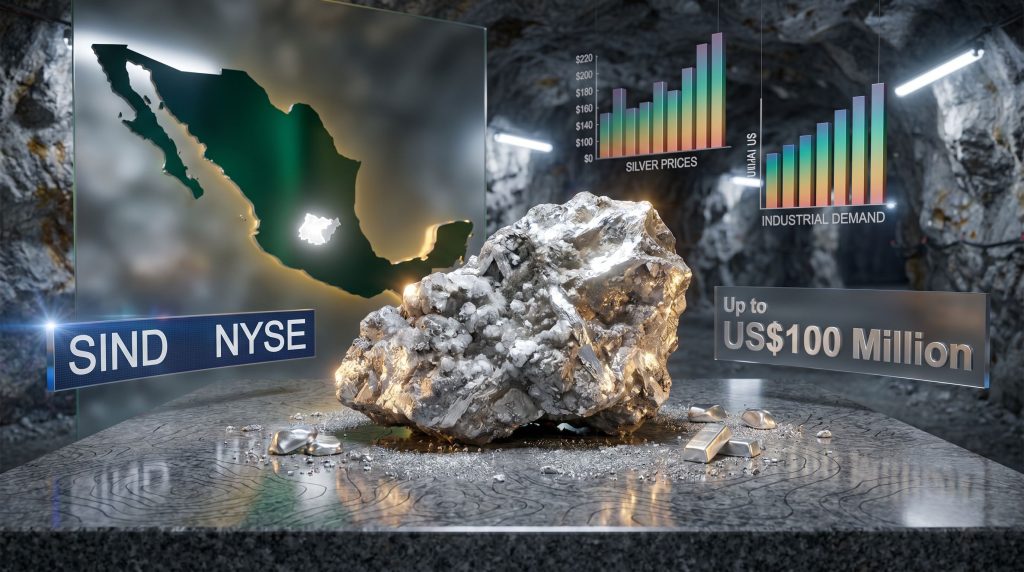
Silver's Next Big Bet: Inside the Sinda NYSE IPO for the Guanajuato Silver Project
The global silver market is undergoing a structural transformation that has little to do with jewellery or photography. Industrial consumption, driven by solar panel manufacturing, electric vehicles, and semiconductor production, now accounts for the majority of annual silver demand. This shift has fundamentally repriced the risk-reward calculus for exploration-stage silver miners, drawing institutional capital back toward assets that were once considered too early-stage for serious portfolio allocation. Against that backdrop, the Sinda NYSE IPO for the Guanajuato silver project represents one of the most closely watched precious metals listings to emerge from Latin America in years.
When big ASX news breaks, our subscribers know first
Key Facts at a Glance: Sinda's NYSE IPO Filing
Before examining the investment thesis in depth, it is worth anchoring the discussion with the core parameters of the transaction.
| Detail | Information |
|---|---|
| IPO Filing Date | June 5, 2026 |
| Exchange | New York Stock Exchange (NYSE) |
| Ticker Symbol | SIND |
| Target Raise | Up to US$100 million |
| Project Location | Guanajuato State, Mexico |
| Concession Area | ~6,232 hectares (five contiguous concessions) |
| Mineralized Strike Length | ~182 km identified |
| Employees at Filing | 84 |
| Stage | Pre-production (exploration) |
| Bookrunners | Morgan Stanley, Scotiabank, BMO Capital Markets |
The choice of bookrunners is itself telling. Morgan Stanley, Scotiabank, and BMO Capital Markets collectively represent deep coverage of both US institutional equities and the North American mining finance ecosystem, signalling that the offering is designed to attract a sophisticated blend of generalist fund managers and specialist resource investors.
The Guanajuato Silver Belt: Geological Significance and Competitive Context
Why Mexico Remains the World's Premier Silver Address
Mexico produces approximately 20% of total global mined silver output, a share that has persisted across multiple commodity cycles and that reflects the country's extraordinary endowment of epithermal silver-gold systems. The Guanajuato belt in particular is one of the hemisphere's most storied precious metals corridors, hosting centuries of mining history alongside several active modern operations. Furthermore, ongoing silver supply constraints in the broader market have made consolidated district positions like Sinda's even more strategically valuable.
Epithermal deposits, the geological category that describes Guanajuato-style mineralisation, form when hydrothermal fluids carrying dissolved metals rise through fracture systems and precipitate their cargo at relatively shallow crustal depths. These systems can concentrate extraordinary quantities of silver and gold in relatively narrow but laterally extensive vein networks, which is precisely what makes the 182-kilometre identified mineralized strike length at Sinda's project so geologically compelling.
What the Scale of Sinda's Concessions Actually Means
The five contiguous mining concessions covering approximately 6,232 hectares near San Miguel de Allende represent an unusually large, consolidated land position for a single exploration-stage company in a mature district. In most established mining belts, land positions of this scale have already been fragmented by historical claim staking, meaning that assembling a contiguous block requires either early entry or patient consolidation over many years.
For investors evaluating the Sinda NYSE IPO for the Guanajuato silver project, the sheer scale of the strike corridor warrants careful interpretation. A 182-kilometre mineralised system does not imply uniform grade distribution across its entire length. Epithermal systems typically exhibit bonanza-grade zones of high-grade mineralisation separated by lower-grade intervals, meaning that the economic heart of the project may be concentrated in a subset of the total strike. This is precisely why the IPO proceeds are being directed toward infill drilling rather than simply expansion drilling. Investors interested in interpreting drill results should note that infill programs at this scale can take several years to complete.
How Sinda Compares to Active Operators in the District
| Company | Stage | Operations | 2026 Activity |
|---|---|---|---|
| Sinda Ltd. (SIND) | Pre-production / Exploration | 5 concessions, greenfield | IPO filing; drilling and underground development planned |
| Guanajuato Silver (GSVR) | Producing | 5 underground mines across Guanajuato and Durango | Record 75,000m drill program announced |
| Vizsla Silver | Exploration/Development | Panuco district, Sinaloa | Active resource expansion |
Guanajuato Silver's decision to launch a record 75,000-metre drill program for 2026 across its Bolanitos, El Cubo Mines Complex, Valenciana Mines Complex, San Ignacio, and Topia operations reflects a broader industry conviction that the district's resource base remains materially underexplored despite its long operational history. James Anderson, Chairman and CEO of Guanajuato Silver, indicated in February 2026 that the expanded program was designed to shift the company's strategic focus toward long-term growth, combining exploration drilling to identify new mineralisation with infill drilling to convert existing targets into defined resources.
Capital Allocation: How the US$100 Million Will Be Deployed
Three Strategic Pillars of the IPO Spend
Sinda has structured its planned capital deployment around three interrelated workstreams, each addressing a different layer of project risk:
- Infill and exploration drilling across the 182km strike corridor to systematically define the geometry and grade distribution of known mineralisation zones and identify new targets within the land package.
- Underground access development, including portal construction and decline advancement, which enables drilling from below surface to test deeper extensions of the mineralised system and provides the operational infrastructure required for any future mine.
- Economic and technical studies, encompassing the scoping, pre-feasibility, and feasibility work that transforms a geological dataset into a bankable mine plan capable of attracting project finance.
This three-stage capital deployment sequence follows the standard de-risking pathway for pre-production precious metals projects. The critical insight for investors is that underground development, even at the access stage, is irreversible capital expenditure. Once portals and declines are established, the project has crossed a threshold that commits future capital to a particular mining method and extraction geometry.
The Financial Profile Investors Need to Understand
Investor Caution: Sinda has generated no revenue since its founding in 2012 and has operated entirely on sponsor-provided capital. The company recorded a net loss of US$18.7 million for the full year 2025 and US$11.6 million in Q1 2026 alone, compared to US$2.6 million in Q1 2025. This acceleration in losses reflects increasing exploration expenditure in the lead-up to the listing and is not, in itself, a negative signal for a company at this stage. However, it does establish the burn rate that will inform how far the US$100 million raise actually extends.
The year-over-year increase in quarterly losses from US$2.6 million to US$11.6 million is particularly instructive. It suggests that Sinda materially accelerated its exploration program in the twelve months before filing, likely to generate a richer dataset to present to prospective IPO investors. This is a common pre-IPO strategy in the exploration sector and should be interpreted in that context rather than as a sign of operational deterioration.
The Electrum Group Strategy: Coordinated Public Market Monetisation
Thomas Kaplan's Precious Metals Blueprint
The timing of the Sinda NYSE IPO for the Guanajuato silver project cannot be understood in isolation. The filing arrived one day after Sunshine Silver Mining, another Electrum Group portfolio company, completed its own NYSE listing. Thomas Kaplan, founder and chairman of The Electrum Group, has spent more than two decades building concentrated positions in precious metals assets with the explicit intention of transitioning them through the public markets at optimal points in the commodity cycle.
This back-to-back listing approach creates several strategic advantages that are not immediately obvious to generalist investors:
- Sequential listings allow each company to benefit from institutional investor familiarity built during the preceding roadshow, reducing the educational burden on management.
- A cluster of Electrum Group listings signals sponsor confidence in the current market window, which can function as a positive endorsement signal for all related companies.
- Separate listings preserve the optionality to optimise each company's capital structure independently, rather than bundling assets into a single vehicle that would force investors to accept exposure to multiple geological risk profiles simultaneously.
The broader context matters too. CopperTech Metals filed for a New York listing in the same week, confirming that the mining sector broadly viewed the mid-2026 window as favourable for capital raises. US IPO market activity rose sharply across multiple sectors in 2026, with technology and AI listings generating the headline momentum that loosened institutional allocation appetite across asset classes. In addition, Sunshine Silver Mining raised $270 million in its own NYSE IPO, demonstrating that institutional appetite for precious metals listings in this window was substantial.
Silver Price Dynamics and the Industrial Demand Revolution
Where Silver Prices Stand and Where Analysts See Them Going
Silver was trading at approximately US$67.50 per ounce in early June 2026, representing a pullback of roughly 15% from prior highs. For exploration-stage companies like Sinda, short-term price volatility matters far less than the medium-term price environment that will be in place when the project eventually reaches production, a timeline measured in years rather than months.
The institutional forecasts underpinning the investment case are materially constructive:
| Institution | Price Forecast | Primary Driver |
|---|---|---|
| JPMorgan Chase | US$81/oz average through 2026 | Tight supply, industrial demand growth |
| Commerzbank | Potential US$90/oz by year-end 2026 | Demand-supply imbalance |
| CPM Group | 17% industrial demand growth by 2032 | Solar, electronics, EV applications |
The Structural Silver Demand Story Most Investors Underappreciate
Industrial applications accounted for approximately 58% of total silver demand in 2025, a share that has been growing consistently and is projected to continue expanding. Silver's industrial demand is driven by several converging forces that are largely independent of macroeconomic cycles:
- Solar photovoltaic panels require silver paste as a conductor in their cell architecture. As global solar installation capacity expands, silver demand from this sector scales proportionally.
- Electric vehicles use silver in their electrical systems, battery management circuits, and charging infrastructure at significantly higher intensities than conventional internal combustion vehicles.
- Semiconductor manufacturing relies on silver in bonding wires and contact surfaces, tying demand to the broader electronics production cycle.
CPM Group's projection of 17% industrial demand growth through 2032 implies a structural floor under silver prices that is independent of investment demand, monetary hedging, or jewellery consumption. For a pre-production company like Sinda, this demand trajectory is arguably more important than the spot price at any given moment, because it establishes the economic environment into which the project would eventually deliver production. Consequently, a thorough precious metals market analysis is essential before forming any view on the project's long-term economics.
The next major ASX story will hit our subscribers first
Mexico's Regulatory Landscape: Progress and Persistent Constraints
The May 2026 Administrative Reform and What It Actually Changes
Mexico's Ministry of Economy published a significant administrative reform on May 11, 2026, signed by Minister Marcelo Ebrard. The reform consolidated 25 separate mining administrative procedures into unified processes under the General Directorate of Mines. The key operational changes include:
- Nullity and rights-lapse request processing times reduced from 180 calendar days to 60 business days
- Appraisal reconsideration timelines cut from 90 calendar days to 30 business days
- Elimination of redundant documentation requirements across concession management, easement applications, technical reports, and Public Mining Registry filings
CAMIMEX and the General Directorate of Mines have characterised this as the most operationally significant modification to mining procedures since the 2023 Mining Law reform. For companies already holding concessions, the reform meaningfully reduces the administrative friction associated with maintaining and developing existing rights.
The Structural Constraints That Remain
Important Context: Administrative streamlining and structural reform are not the same thing. The May 2026 measures address procedural efficiency but leave the deeper structural constraints in the Mexican mining sector entirely intact.
Exploration-stage operators navigating the Mexican regulatory environment in 2026 still face:
- A continuing freeze on the granting of new mining concessions, which limits the ability to expand land positions through new applications
- 66 stalled projects that remain unresolved within the regulatory pipeline, creating uncertainty about precedent and timeline for similar situations
- The full regulatory framework derived from the 2023 Mining Law reform has not yet been published, leaving key implementation details undefined
For Sinda specifically, these constraints are most relevant as the Guanajuato project advances toward permitting for underground development. The company's existing concession package positions it to work within the current framework. However, the absence of clarity on the post-2023 regulatory architecture represents a genuine risk factor that institutional investors in the Sinda NYSE IPO for the Guanajuato silver project will need to price appropriately. Furthermore, ongoing silver supply deficits globally mean that any regulatory delay in Mexico carries heightened commercial consequences.
What Institutional Investors Will Focus On
The Due Diligence Checklist for Pre-Production Silver IPOs
Experienced mining investors approaching this offering will likely concentrate their analysis on the following considerations:
- Absence of a formal mine plan or production timeline: Without a pre-feasibility study, investors cannot independently model production scenarios or net present value estimates. The project's valuation is effectively based on geological prospectivity alone.
- Escalating net losses: The progression from US$2.6 million in Q1 2025 to US$11.6 million in Q1 2026 establishes a burn rate trajectory that defines how long the IPO proceeds will sustain operations before a further capital raise becomes necessary.
- Full reliance on sponsor funding since 2012: Fourteen years of sponsor-funded exploration without a prior public market test means there is no established market price discovery for the asset prior to the IPO.
- Mexican regulatory environment uncertainty: The interplay between existing concession rights and the evolving post-2023 legal framework creates permitting risk that is difficult to quantify with precision.
- Silver price sensitivity: A pre-revenue company's implied valuation is highly sensitive to long-term silver price assumptions. The difference between a US$75/oz and US$90/oz long-term price deck can dramatically alter the economics of an unbuilt mine.
Frequently Asked Questions
What is the Sinda NYSE IPO for the Guanajuato silver project?
Sinda Ltd. is a Mexico-based silver exploration company backed by The Electrum Group. Its NYSE IPO, filed June 5, 2026, seeks to raise up to US$100 million to advance a silver-gold project across five contiguous concessions in the Guanajuato silver belt. The company trades under the ticker SIND.
Is Sinda currently generating revenue?
No. Sinda is a pre-production exploration company with no revenue since its founding in 2012. It recorded a net loss of US$18.7 million in 2025 and US$11.6 million in Q1 2026.
What will the IPO proceeds fund?
Capital is earmarked for infill and exploration drilling across the 182km mineralised strike corridor, underground access development to enable definition drilling from below surface, and economic and technical studies needed to advance toward a future mine plan.
Who else is active in the Guanajuato silver district?
Guanajuato Silver operates five producing underground mines across Guanajuato and Durango states and announced a record 75,000-metre drill program for 2026. Vizsla Silver is also active in Mexico's broader silver exploration landscape.
What are the main risks for investors in the Sinda IPO?
Key risks include the absence of a formal mine plan, escalating losses ahead of production, full dependence on sponsor funding, Mexico's ongoing regulatory uncertainty following the 2023 Mining Law reform, and silver price sensitivity at the pre-revenue stage.
Key Takeaways for Investors
- The Sinda NYSE IPO for the Guanajuato silver project is one of the most significant exploration-stage silver listings from Latin America in recent years, targeting US$100 million with backing from The Electrum Group.
- The project's 182km mineralised strike length and 6,232-hectare consolidated land position represent genuine geological scale, though the economic case depends critically on infill drilling outcomes not yet available to investors.
- Industrial silver demand, projected to grow 17% by 2032 according to CPM Group, provides a structural tailwind that underpins the medium-term price forecasts from JPMorgan (US$81/oz) and Commerzbank (potential US$90/oz).
- Mexico's May 2026 administrative mining reforms reduce procedural friction but leave deeper structural constraints, including the concession grant freeze and 66 unresolved pipeline projects, entirely unaddressed.
- Investors should weigh the project's geological promise against the pre-revenue financial profile, accelerating quarterly losses, and Mexico's evolving regulatory architecture before forming a position.
This article is intended for informational purposes only and does not constitute financial advice. Exploration-stage mining investments carry significant risks, including the possibility of total loss. Readers should conduct independent due diligence and consult a qualified financial adviser before making any investment decisions. Forward-looking statements, price forecasts, and production scenarios referenced herein are based on third-party analyst projections and are inherently speculative.
Want to Stay Ahead of the Next Major Mineral Discovery Before the Broader Market Catches On?
Discovery Alert's proprietary Discovery IQ model delivers real-time alerts on significant ASX mineral discoveries, cutting through complex geological and market data to surface actionable opportunities the moment they are announced — explore the historic returns major discoveries have generated to understand the potential at stake, then begin your 14-day free trial at Discovery Alert to position yourself ahead of the market.