May 24, 2026
The Architecture of a Chokepoint: Why Hormuz Controls Global Energy Fate
Every few decades, a single geographic feature becomes the hinge point of global economic stability. The Strait of Hormuz has occupied that role for the better part of the modern oil era, yet the full weight of its strategic significance rarely receives the analytical depth it deserves. When diplomats discuss a potential US-Iran deal to reopen Strait of Hormuz access, they are not merely negotiating shipping rights. They are negotiating the pressure valve for the entire global energy system.
Understanding why this particular passage commands such outsized influence requires examining the intersection of physical geography, geopolitical history, and the structural dependencies that decades of petroleum trade have created across every major importing economy.
When big ASX news breaks, our subscribers know first
Why No Other Waterway Compares
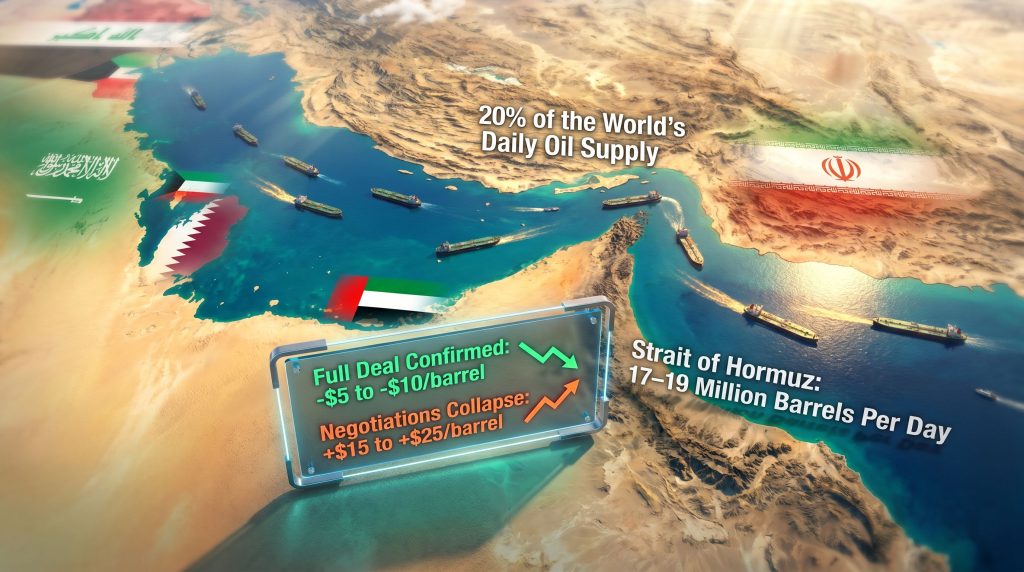
The strait connecting the Persian Gulf to the Gulf of Oman measures roughly 33 kilometres at its narrowest navigable point. Through this corridor, approximately 20 to 21 percent of the world's daily petroleum liquids transit, encompassing crude oil, condensates, and liquefied natural gas. In raw volume terms, that translates to an estimated 17 to 19 million barrels of crude oil per day under normal operating conditions.
The nations whose export economics depend almost entirely on unobstructed Hormuz access form a who's who of global oil production:
- Saudi Arabia, the world's largest oil exporter by conventional measures
- Iraq, whose post-2003 reconstruction has been financed almost entirely by crude revenues requiring Gulf transit
- The UAE and Kuwait, both running export-dependent fiscal models
- Qatar, whose LNG dominance is existential in its dependency on the strait
- Iran itself, whose oil sector represents the primary engine of government revenue when sanctions permit exports
What makes Hormuz uniquely dangerous as a vulnerability is not simply the volume it handles, but the absence of adequate alternatives. The Suez Canal and the Cape of Good Hope routing add weeks of transit time and substantially higher shipping costs. Saudi Arabia's East-West Pipeline offers partial relief for its own crude, but carries nowhere near sufficient capacity to substitute for full Hormuz throughput. Furthermore, the implications for global LNG supply are particularly acute, as Qatar has no meaningful pipeline alternative for its LNG exports whatsoever.
Nations without substantial strategic petroleum reserves face acute supply disruption within 30 to 60 days of a sustained Hormuz closure, according to energy security analysts who study chokepoint vulnerability.
Historical precedent confirms the price sensitivity. During periods of elevated Hormuz tension, benchmark crude prices have registered spikes of 10 to 40 percent within days, reflecting the market's acute awareness of how little redundancy exists in the global supply chain at this single point.
How the Current Crisis Escalated Beyond Historical Norms
What distinguishes the present Hormuz situation from previous episodes of tension is the nature of the physical interventions employed. Iran's deployment of naval mines within the strait represents one of the most aggressive direct actions in the waterway's modern history. Equally unprecedented is the imposition of toll demands on passing commercial vessels, a mechanism with no basis in recognised international maritime law under the United Nations Convention on the Law of the Sea.
The escalation followed a progressive cycle driven by the reimposition and intensification of US sanctions on Iranian oil exports after the collapse of the 2015 Joint Comprehensive Plan of Action (JCPOA). As Iranian crude revenues fell sharply, Tehran's strategic calculus shifted toward using physical control of the strait as a pressure instrument rather than relying solely on diplomatic channels.
The result has been a crisis qualitatively different from earlier Hormuz tensions: not merely elevated rhetoric and naval posturing, but actual physical barriers to safe commercial transit, with war risk insurance premiums and naval escort requirements adding material costs to every tanker movement through Gulf waters. The broader geopolitical risk landscape surrounding this region has consequently become a central concern for commodity markets globally.
The Reported Deal: Structure, Commitments, and Uncertainties
According to reporting by Axios, citing a US official as referenced by Reuters, the proposed framework contains several distinct components spanning maritime, trade, and nuclear dimensions.
| Deal Component | US Side | Iranian Side |
|---|---|---|
| Strait of Hormuz Access | Lift port blockade; issue sanctions waivers | Remove deployed mines; allow toll-free passage |
| Oil Trade | Allow Iran to freely export crude oil during ceasefire | Cooperate with shipping safety protocols |
| Nuclear Programme | Negotiate broader sanctions relief; unfreeze Iranian funds | Pause enrichment; relinquish highly enriched uranium stockpile |
| Timeline Structure | 60-day ceasefire extension framework | Verbal assurances via mediators on nuclear concessions |
A critical nuance that the headline narrative frequently obscures is the distinction between what has been described and what has been confirmed. Iran has publicly disputed the US characterisation of how complete the agreement is, creating a significant messaging gap between the two parties. The White House did not immediately provide formal confirmation of specific terms when approached for comment.
This should be treated as a preliminary diplomatic signal, not a confirmed policy shift, until both parties formally ratify the terms. The divergence in public statements from Washington and Tehran introduces material uncertainty that markets and analysts must weigh carefully.
The 60-day ceasefire window as a structural mechanism deserves particular attention. Time-limited frameworks of this type serve a specific diplomatic function: they create a negotiating corridor that allows both parties to extract near-term benefits without making permanent concessions. For Washington, it provides domestic political flexibility. For Tehran, it delivers immediate economic relief through sanctions waivers and restored port access while preserving long-term leverage on the nuclear file.
How Credible Are the Current Signals?
Trump's statements on the Iran deal have indicated closeness to an agreement, yet Iran has continued to publicly disagree on the specifics. This persistent messaging asymmetry between the two parties is itself a significant indicator of the fragility of the current framework.
The Nuclear Dimension: Why Enrichment Matters Beyond Energy Markets
Embedded within what appears on the surface to be an energy and shipping dispute is a nuclear non-proliferation question of the highest order. Iran's uranium enrichment programme has been the central fault line in US-Iran relations since the JCPOA's effective collapse.
The proposed deal would ask Iran to commit to not pursuing nuclear weapons, enter formal negotiations on suspending enrichment activities, and relinquish its existing stockpile of highly enriched uranium. Iran reportedly conveyed verbal assurances through intermediary mediators regarding the extent of concessions it may be willing to make, though no written commitment has been confirmed.
Non-proliferation specialists note that the relinquishment of highly enriched uranium stockpiles is particularly significant because it directly extends Iran's nuclear breakout timeline, meaning the time required to produce sufficient fissile material for a weapons device. The difference between a breakout timeline measured in weeks versus months is the difference between a theoretical threat and an imminent one in the calculus of regional security planners.
Oil Market Scenarios: What Traders and Analysts Are Pricing
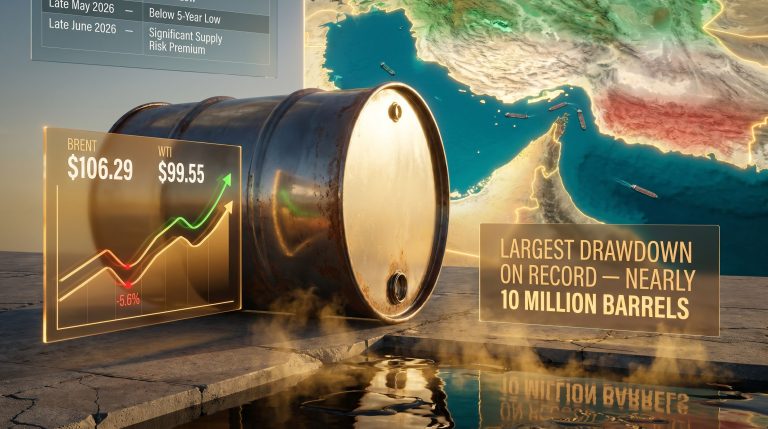
The global oil market has been absorbing a significant supply risk premium since Hormuz access became genuinely constrained. The resolution scenarios carry asymmetric price implications worth examining in structured form.
| Scenario | Near-Term Assessment | Estimated Price Response |
|---|---|---|
| Full deal confirmed, Hormuz reopens | Contingent on both parties ratifying terms | Bearish pressure; potential -$5 to -$10/barrel correction |
| MOU holds but final deal delayed | Most likely near-term outcome | Modest softening; markets remain cautious |
| Negotiations collapse; Iran maintains closure | Tail risk scenario | Bullish spike; potential +$15 to +$25/barrel surge |
| Partial reopening with ongoing restrictions | Plausible transitional state | Elevated volatility; freight rates remain elevated |
Beyond crude pricing, the secondary market effects would be rapid and material across several asset classes:
- LNG pricing: Qatar's export economics normalise immediately upon confirmed reopening, reducing the Asian LNG spot premium
- Tanker freight rates: War risk premiums currently embedded in Gulf voyage calculations would compress sharply, benefiting import-dependent economies
- Refinery margins: Asian refiners in India, China, South Korea, and Japan carry the heaviest exposure to Hormuz disruption and would see the most direct margin relief
- Inflation dynamics: Sustained elevated energy costs have contributed to persistent inflationary pressure in import-dependent economies; a confirmed reopening could provide a meaningful disinflationary impulse
How Does This Connect to Broader Energy Market Pressures?
The oil price shock dynamics already weighing on energy executives mean that a confirmed deal could provide much-needed relief across the supply chain. However, OPEC's market influence adds a further layer of complexity, as any surge in Iranian exports would need to be absorbed within an already carefully managed production framework.
The next major ASX story will hit our subscribers first
Regional Winners, Losers, and Strategic Complications
A confirmed US-Iran deal to reopen Strait of Hormuz access would redistribute strategic advantage unevenly across the region. The beneficiaries and those facing complications are not symmetrical.
Nations with the most to gain:
- India stands out as perhaps the most direct beneficiary, having historically been one of Iran's largest crude customers before sanctions curtailed those flows. Restored access means both supply diversification and reduced freight premiums on Gulf imports generally.
- China has maintained informal Iranian crude import channels but would see formalisation and potential expansion of those flows under a sanctions waiver framework.
- Qatar faces perhaps the most existential dependence on the strait among any nation, given LNG's share of total export revenue.
Interests facing strategic complications:
- Israel views any diplomatic framework that reduces pressure on Iran's nuclear programme without verifiable physical dismantlement as a deterioration of its security environment, regardless of the energy market benefits.
- Saudi Arabia faces a structural market complication: a rehabilitated Iran re-entering global crude markets at scale adds supply competition within an already managed OPEC's market influence framework, potentially undermining price discipline.
- Gulf Cooperation Council partners broadly may experience friction as the diplomatic recalibration required to reach a US-Iran accommodation creates implicit tension with the maximum-pressure posture they have historically supported.
The Risk Architecture: What Could Derail This Agreement?
The gap between a reported memorandum of understanding and a binding, implemented agreement is historically where Middle Eastern diplomacy has most often broken down. The structural vulnerabilities in the current framework are numerous:
- Verification deficit: No confirmed independent mechanism exists to validate Iranian commitments on mine removal, enrichment suspension, or uranium relinquishment. Unverifiable commitments are diplomatically fragile.
- Messaging asymmetry: When the parties to an agreement publicly contradict each other on its fundamental status, the consensus underpinning the deal is demonstrably thin.
- Domestic political constraints: US congressional opposition and Iran's hardline political factions each retain the institutional capacity to obstruct ratification and implementation.
- Third-party spoiler risk: Regional actors opposed to US-Iran normalisation, including non-state armed groups, have both the motivation and historical track record to conduct provocations calibrated to derail negotiations at critical junctures.
- Nuclear definitional gaps: If Iranian and American interpretations of what constitutes an acceptable enrichment suspension diverge materially, the nuclear pillar of the deal could collapse before the 60-day window expires.
It is also worth noting that US Secretary of State Marco Rubio publicly acknowledged the need for contingency planning if Iran refuses to reopen the strait. Furthermore, Iran's reported offer to reopen the strait whilst delaying nuclear talks suggests Tehran may be seeking to decouple the two issues entirely, which would fundamentally alter the deal's architecture. This signals that Washington is simultaneously pursuing diplomatic and coercive tracks rather than treating the deal as a foregone conclusion.
What This Moment Reveals About 21st-Century Energy Diplomacy
Stepping back from the immediate deal mechanics, the US-Iran deal to reopen Strait of Hormuz and its attempted resolution carry broader lessons for how energy infrastructure functions as a geopolitical instrument in the modern era. In addition, the global trade war impacts already reshaping supply chains mean that a Hormuz disruption compounds existing vulnerabilities across interconnected global markets.
The episode demonstrates that maritime chokepoints are not passive geographic features. They are active strategic assets that state actors are increasingly willing to weaponise, whether through mine deployment, toll imposition, or threatened closure. The Hormuz situation has effectively shown that a sufficiently motivated actor can use control of a single geographic corridor to hold a disproportionate share of global economic activity as negotiating leverage.
For energy security planners and investors alike, this reinforces a structural truth: supply chain concentration through single corridors creates systemic vulnerability that no amount of demand-side management fully mitigates. Consequently, the strategic case for supply route diversification, domestic strategic petroleum reserve depth, and alternative energy infrastructure investment strengthens with every Hormuz disruption episode.
Disclaimer: This article is for informational purposes only and does not constitute financial or investment advice. All price scenarios and probability assessments represent analytical frameworks based on available reporting and should not be relied upon for trading or investment decisions. Diplomatic situations are inherently fluid, and outcomes may differ materially from any scenario described.
Want To Stay Ahead of the Next Major Market-Moving Discovery?
While geopolitical chokepoints like Hormuz dominate headlines and reshape commodity markets overnight, Discovery Alert's proprietary Discovery IQ model scans ASX announcements in real time, instantly alerting subscribers to significant mineral discoveries before the broader market reacts — explore historic examples of discovery-driven returns or begin your 14-day free trial today to position yourself ahead of the next major opportunity.