May 22, 2026
Understanding China's Three-Standards System Audit Framework
Modern critical minerals supply chains operate within an increasingly complex web of quality assurance, environmental stewardship, and occupational safety requirements. This convergence has created opportunities for integrated management approaches that address multiple compliance domains simultaneously, particularly within China's rare earth processing sector where operational excellence directly impacts global supply chain stability.
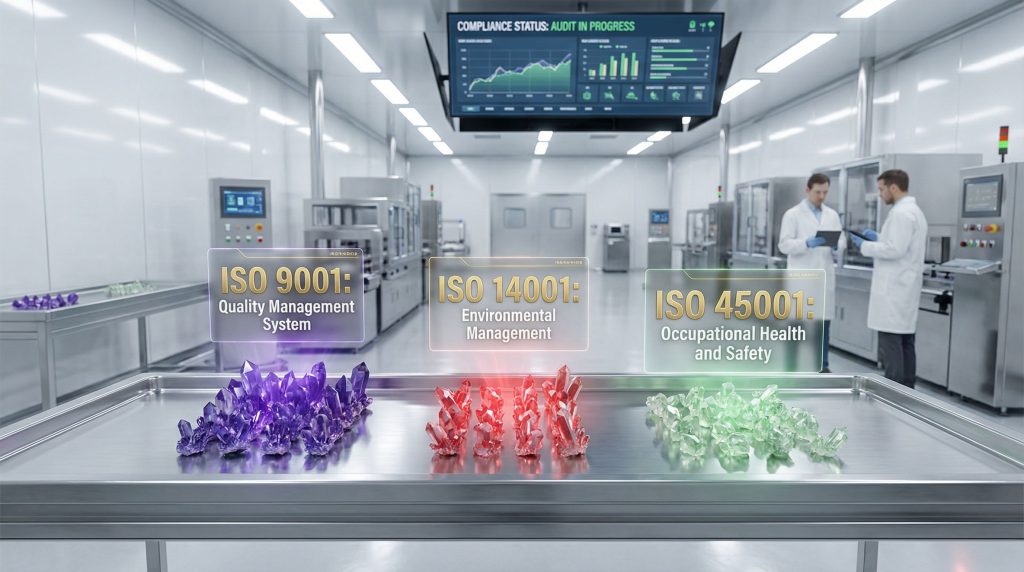
The three-standards system audit rare earth operations utilise represents a comprehensive evaluation methodology that simultaneously assesses quality management (ISO 9001), environmental management (ISO 14001), and occupational health and safety (ISO 45001) protocols. This integrated framework creates unified compliance verification that addresses the industry's most critical operational risks whilst establishing measurable performance benchmarks across interconnected management domains.
Core Components of the Integrated Framework
The three-standards system integrates internationally recognised management system requirements into a single assessment process:
ISO 9001:2015 Quality Management Systems encompass organisational capacity to deliver products and services meeting customer and regulatory requirements. Within rare earth processing, this includes production consistency protocols, material purity verification systems, process control documentation, customer satisfaction metrics, and continuous improvement methodologies.
ISO 14001:2015 Environmental Management Systems establish requirements for environmental management practices, addressing waste reduction strategies, emissions monitoring protocols, resource conservation measures, environmental impact assessments, and regulatory compliance tracking.
ISO 45001:2018 Occupational Health and Safety Management Systems provide requirements for workplace safety protocols, covering worker protection procedures, hazard identification systems, emergency response protocols, training and competency requirements, and incident reporting mechanisms.
Global adoption metrics demonstrate substantial uptake across industries. ISO 9001 maintains approximately 1.1 million active certifications worldwide, whilst ISO 14001 certifications exceed 400,000 globally with significant adoption in extractive industries. ISO 45001, representing the successor to OHSAS 18001, has been adopted by over 150,000 organisations globally since its 2018 introduction.
Assessment Scope and Technical Integration
The simultaneous assessment of quality, environmental, and occupational health and safety standards within rare earth operations reflects international best practice for addressing interconnected operational risks. Furthermore, this integrated approach enables organisations to identify synergistic opportunities where quality improvements simultaneously enhance environmental outcomes and worker safety.
| Standard | Assessment Focus | Operational Integration |
|---|---|---|
| ISO 9001 | Production consistency, material specifications, process documentation | Supply chain reliability, product traceability |
| ISO 14001 | Waste stream management, emissions quantification, regulatory compliance | Environmental reporting, stakeholder engagement |
| ISO 45001 | Hazard identification, control hierarchies, training competency verification | Workforce retention, operational continuity |
When big ASX news breaks, our subscribers know first
Implementation Methodology and Audit Processes
The audit process typically involves comprehensive on-site evaluations conducted by certified third-party organisations accredited by recognised national accreditation bodies. In China's case, the China National Accreditation Service for Conformity Assessment (CNAS) provides accreditation oversight, ensuring auditor competency and assessment reliability.
Multi-Phase Assessment Approach
Documentation Review Requirements involve auditor scrutiny of management system documentation, including policy statements, procedure manuals, training records, incident reports, and performance data. This verification ensures documented systems align with actual operational practices and regulatory requirements.
Operational Observation Protocols enable direct assessment of production processes, safety procedures, and environmental controls. In addition, this practical evaluation identifies gaps between theoretical compliance and operational reality, providing evidence-based verification of system effectiveness.
Performance Monitoring Assessment examines data collection systems, trending analysis capabilities, and management review processes that demonstrate continuous improvement and regulatory compliance maintenance.
Audit duration specifications vary based on organisation size, complexity, number of locations, and historical audit findings. ISO 19011:2018 Guidelines for auditing management systems provide framework methodologies but do not prescribe fixed durations, allowing flexibility for comprehensive assessment based on operational scope.
Auditor Certification Requirements
Third-party auditors conducting three-standards system audit rare earth facility assessments must typically maintain:
• Accreditation from recognised national accreditation bodies
• ISO 9001, 14001, and 45001 lead auditor certifications
• Sector-specific knowledge for rare earth operations
• Competency demonstration per ISO/IEC 17021-1:2015 requirements
Typical audit documentation review encompasses policy and procedure manuals, training records, incident reports, performance metrics, and regulatory compliance records. Finding classification follows ISO audit methodologies, categorising results as major non-conformities (requirement failures), minor non-conformities (isolated issues), or observations and recommendations for best practice enhancement.
Strategic Supply Chain Reliability Implications
The integration of three-standards auditing within China's rare earth sector addresses growing environmental, social, and governance (ESG) requirements from downstream customers, particularly automotive manufacturers and electronics producers seeking verifiable sustainability credentials from their critical materials suppliers.
ESG Compliance and Market Access
As of 2024, assets under management globally with ESG integration mandates exceed $35 trillion USD, with rare earth and critical minerals sectors experiencing elevated ESG screening scrutiny compared to commodity averages. This trend creates compelling business cases for comprehensive management system certification, particularly as industry innovation trends continue shaping market requirements.
Recent regulatory developments reinforce three-standards relevance:
• EU Critical Raw Materials Act (2024) establishes supply chain resilience requirements for critical minerals processing, including quality assurance and environmental compliance documentation
• U.S. CHIPS and Science Act (2022) creates precedent for government-mandated supply chain auditing requirements
• Automotive OEM survey data indicates 87% of major manufacturers now require environmental and safety compliance documentation from critical materials suppliers
Risk Mitigation and Competitive Positioning
Three-standards certification provides documented evidence of operational controls addressing the rare earth sector's primary risk vectors: production consistency, environmental remediation capacity, and workforce safety during hazardous processing operations. However, this integrated risk profile corresponds with downstream customer risk tolerance thresholds.
The rare earth extraction and processing sector presents elevated risks requiring integrated management approaches:
| Risk Category | Specific Hazard | Standard Addressed |
|---|---|---|
| Quality Control | REE element separation purity; contamination prevention | ISO 9001 |
| Environmental | Acid/solvent waste streams; radioactive byproduct management | ISO 14001 |
| Occupational Safety | Chemical exposure; radiation monitoring; equipment hazards | ISO 45001 |
China processes approximately 80-90% of global rare earth elements destined for industrial applications, making processing reliability a critical supply chain bottleneck. Quality inconsistencies, environmental incidents, or safety disruptions at Chinese processing facilities directly impact downstream magnet producers, automotive manufacturers, and electronics producers globally.
Market Dynamics and Global Competition
Three-standards system audit rare earth certification creates verifiable differentiation in markets characterised by product commodity dynamics. Since rare earth elements are chemically identical regardless of origin, quality management and process control certifications become primary competitive distinction mechanisms alongside pricing considerations.
Technology Integration and Digital Transformation
Modern three-standards compliance often requires sophisticated monitoring systems, data-driven operations platforms, and digital documentation tools, driving technology adoption and operational modernisation across the rare earth sector. Consequently, this technological integration enables real-time performance monitoring and predictive maintenance capabilities.
Competitive Advantages for Certified Operations:
• Long-term contract eligibility through quality assurance demonstration
• Market access to jurisdictions with stringent environmental standards
• Reduced customer liability exposure and insurance optimisation
• Real-time performance monitoring capability for supply chain predictability
International Regulatory Harmonisation
The adoption of ISO-based management systems by Chinese rare earth processors creates de facto regulatory convergence, allowing single compliance frameworks to satisfy diverse downstream jurisdictional requirements. For instance, this represents significant operational efficiency advantages for international market participation.
Major automotive manufacturers including Tesla, BMW, and Volkswagen have established supply chain ESG requirements embedding three-standards equivalence expectations for critical materials suppliers, demonstrating market momentum toward integrated compliance frameworks.
Investment Decision Integration and Financial Impact
Institutional investors increasingly incorporate management system certifications as screening mechanisms within due diligence protocols, reducing assessment costs through reliance on third-party verification rather than conducting independent operational audits.
ESG Investment Screening Evolution
Environmental and operational risk premiums in mining and processing investment models typically range from 2-8% depending on jurisdiction and commodity type. Three-standards certification may reduce these premiums through demonstrated compliance, though specific quantified adjustments require further research validation.
Investment Decision Factors Enhanced by Three-Standards Certification:
• Due diligence process efficiency through third-party verification
• Operational risk reduction documentation
• Market access capability verification
• Regulatory compliance assurance
• Technology integration evidence
The integration of three-standards requirements into supply chain contracts demonstrates market recognition of certification value, with electronics industry ESG procurement requirements expanding from an estimated 35% of major manufacturers in 2020 to approximately 72% in 2024.
Implementation Challenges and Strategic Solutions
Successful three-standards implementation requires significant organisational culture shifts, emphasising continuous improvement, data-driven decision making, and cross-functional collaboration rather than traditional siloed operational approaches.
Resource Allocation and Timeline Considerations
| Challenge Area | Implementation Cost | Timeline | Success Factors |
|---|---|---|---|
| Documentation Development | Moderate | 6-12 months | Executive commitment |
| Staff Training Programmes | High | 12-18 months | Competency frameworks |
| System Integration | High | 18-24 months | Technology partnerships |
| Ongoing Compliance | Moderate | Continuous | Performance monitoring |
Critical Implementation Elements:
• Technology infrastructure upgrades for integrated monitoring
• Cross-functional team development and training
• Process standardisation across operational units
• Performance measurement system establishment
• Continuous improvement culture development
Many operations require substantial technology investments to support integrated monitoring, reporting, and compliance tracking across quality, environmental, and safety domains simultaneously. Furthermore, this technological integration often drives broader digital transformation initiatives within certified organisations, connecting to AI in mining technology advancement efforts.
The next major ASX story will hit our subscribers first
Alternative Framework Comparisons
Traditional single-standard approaches focusing exclusively on quality, environmental management, or safety create compliance gaps and miss synergistic opportunities for integrated risk management and operational optimisation.
Blockchain and Digital Verification Integration
Emerging technologies including blockchain-based traceability systems complement rather than replace three-standards audits, providing additional verification layers for supply chain transparency. However, these digital solutions enhance rather than substitute for fundamental management system requirements.
Industry-specific certifications within the rare earth sector often lack the international recognition and cross-sector applicability of the three-standards framework, limiting their utility for global supply chain integration.
Framework Comparison Analysis:
• Single-Standard Certification: Limited scope; misses integration opportunities
• Industry-Specific Alternatives: Narrow applicability; reduced international recognition
• Blockchain Verification: Complementary technology; requires underlying management systems
• Three-Standards Integration: Comprehensive coverage; international recognition; operational synergies
Future Development Trajectories
Governments worldwide are likely to incorporate three-standards requirements into rare earth industry regulations, making voluntary certification increasingly mandatory for market participation as supply chain transparency requirements intensify.
Regulatory Evolution and Technology Integration
Future three-standards frameworks will likely incorporate artificial intelligence, IoT sensors, and predictive analytics to enable continuous monitoring rather than periodic audit-based verification. Consequently, this technological evolution will enhance real-time compliance demonstration and operational optimisation capabilities whilst supporting sustainability transformation initiatives.
Anticipated Development Areas:
• Automated compliance monitoring through IoT integration
• Predictive analytics for risk identification and mitigation
• Real-time performance dashboards for stakeholder transparency
• Blockchain integration for supply chain traceability
• AI-enhanced audit processes and finding prioritisation
Downstream customers will likely demand more frequent audits, real-time compliance monitoring, and expanded scope coverage as supply chain transparency requirements continue evolving. In addition, this trend will drive further technology integration and operational sophistication within certified facilities whilst providing valuable green transition insights for market participants.
Strategic Implications for Market Participants
The three-standards system audit represents a fundamental shift toward integrated risk management in rare earth operations. Companies pursuing this certification gain competitive advantages through enhanced customer confidence, reduced operational risks, and improved market access capabilities.
For investors and supply chain partners, three-standards certification provides valuable due diligence tools and risk assessment frameworks. However, the emphasis on continuous improvement and measurable performance creates transparency benefiting all stakeholders whilst supporting long-term industry sustainability.
Key Strategic Considerations:
• Operational Excellence: Integrated management systems create synergistic improvements across quality, environmental, and safety domains
• Market Positioning: Certification provides competitive differentiation in commodity markets
• Supply Chain Integration: Third-party verification reduces customer due diligence costs and procurement risks
• Technology Advancement: Implementation drives digital transformation and operational modernisation
• Investment Appeal: ESG compliance enhancement attracts institutional capital and reduces risk premiums
The framework's emphasis on continuous improvement and international standards alignment positions certified operations advantageously for evolving regulatory requirements and customer expectations. Nevertheless, successful implementation requires sustained resource commitment, cultural transformation, and technology investment to realise full strategic benefits.
Disclaimer: This analysis is for educational purposes and should not be considered investment advice. Market conditions, regulatory requirements, and industry dynamics are subject to change. Readers should conduct independent research and consult qualified professionals before making investment or business decisions related to rare earth operations or supply chain management.
Ready to Capitalise on Critical Minerals Market Opportunities?
Discovery Alert's proprietary Discovery IQ model delivers real-time alerts on significant ASX mineral discoveries, instantly empowering subscribers to identify actionable opportunities ahead of the broader market. Begin your 30-day free trial today and secure your market-leading advantage in the evolving critical minerals landscape.