May 23, 2026
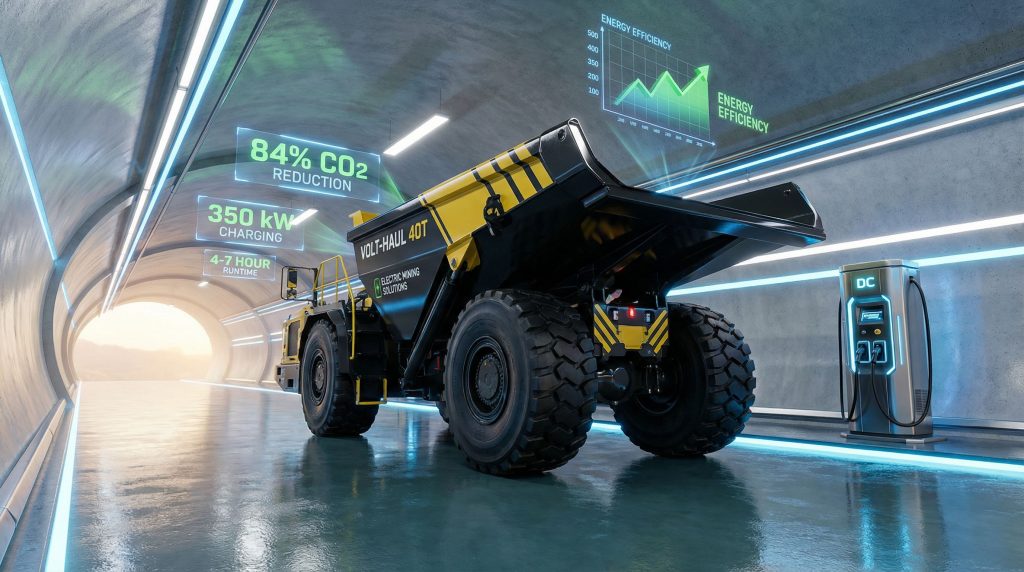
Articulated hauler technology represents one of the most significant paradigms in heavy-duty mining equipment, where the integration of electric powertrains fundamentally alters operational dynamics across quarrying, surface mining, and material transport applications. Volvo electric articulated haulers are setting new benchmarks for efficiency, environmental compliance, and operational cost structures through instantaneous torque delivery that mining operations must comprehensively evaluate. Furthermore, these innovations align with broader electric vehicles transforming mining initiatives across the industry.
Understanding Electric Articulated Hauler Technology
Power System Architecture and Performance Characteristics
Electric articulated haulers fundamentally differentiate themselves from diesel counterparts through instantaneous torque availability from zero RPM, eliminating the power curve limitations inherent in internal combustion engines. This characteristic enables superior pulling power during initial loading phases and climbing steep grades under maximum payload conditions. The elimination of transmission systems in many electric configurations reduces mechanical complexity while providing smoother power delivery across all operating speeds.
Key Operational Advantages:
- Instantaneous maximum torque delivery without engine speed buildup requirements
- Elimination of clutch engagement delays during direction changes
- Reduced mechanical vibration transmission to operator compartments
- Simplified drivetrain architecture with fewer moving components requiring maintenance
Maintenance intervals for Volvo electric articulated haulers extend significantly beyond diesel equivalents due to the elimination of oil changes, fuel system cleaning, air filter replacements, and exhaust system maintenance. Electric motor systems typically require only bearing lubrication and cooling system maintenance, reducing scheduled downtime by an estimated 60-70% compared to conventional diesel haulers.
Noise reduction represents another critical advantage, with electric haulers operating at significantly lower decibel levels during material transport cycles. This characteristic proves particularly valuable in quarry operations near residential areas or mining sites with strict noise ordinances during specific operational hours.
Battery System Engineering for Mining Applications
Modern lithium-ion battery systems in electric articulated haulers must withstand extreme operational conditions including high ambient temperatures, rapid charging cycles, and continuous heavy-load applications. Battery thermal management systems employ sophisticated cooling circuits to maintain optimal operating temperatures between 15-35°C, ensuring consistent performance across diverse climatic conditions.
Energy density considerations directly impact payload capacity, as battery weight must be balanced against regulatory axle load limits. Current lithium-ion technology achieves approximately 250-350 Wh/kg at the cell level, though pack-level density typically decreases by 20-30% due to thermal management systems, battery management systems (BMS), and protective housing requirements.
Critical Battery Performance Factors:
- Operating temperature ranges affecting capacity retention
- Charge cycle longevity under rapid charging protocols
- Energy recovery efficiency during regenerative braking operations
- State-of-charge management for optimal battery life extension
Volvo electric articulated haulers incorporate advanced battery management systems that continuously monitor cell temperatures, voltage levels, and current flow to prevent thermal runaway conditions while maximizing energy recovery during descent operations. These systems enable energy recovery rates of 10-30% depending on topographical characteristics and operational cycle design, supporting broader renewable energy mining solutions initiatives.
When big ASX news breaks, our subscribers know first
Operational Performance Analysis of Electric Articulated Haulers
Runtime Optimization and Energy Management
Electric hauler runtime varies significantly based on operational cycles, with optimal configurations achieving extended operating periods through strategic energy recovery. Downhill loaded operations followed by uphill empty returns create favorable energy balance scenarios where regenerative braking systems recover substantial kinetic energy during controlled descents.
Variable factors affecting battery performance include payload distribution, ambient temperature fluctuations, terrain gradients, and operator driving patterns. Cold weather conditions can reduce battery capacity by 15-25%, requiring operational adjustments during winter months or high-altitude mining operations.
| Operating Scenario | Energy Consumption Pattern | Recovery Potential |
|---|---|---|
| Flat terrain cycles | Consistent discharge rate | Minimal recovery |
| Downhill loaded operations | High initial consumption with significant recovery | 20-30% energy return |
| Uphill loaded transport | Maximum energy consumption | Limited recovery opportunity |
| Mixed terrain operations | Variable consumption with moderate recovery | 10-20% average recovery |
Regenerative braking systems in electric haulers provide controlled descent capabilities without traditional friction brake wear, extending overall component life while contributing energy back to battery systems. However, these advances require sophisticated AI-powered mining efficiency systems to optimise performance across diverse operational conditions.
Payload Capacity and Weight Distribution Analysis
Payload specifications for electric articulated haulers must account for battery system weight while maintaining comparable material transport capacity to diesel equivalents. The A30 Electric model targets similar payload ranges to diesel A30G variants, though exact weight distribution requires careful engineering to comply with axle load regulations across different jurisdictions.
Material density considerations affect operational efficiency, with iron ore transport (bulk density ~2.5 tonnes/m³) reaching payload limits before volume capacity, while coal transport (bulk density ~1.3 tonnes/m³) typically reaches volume limits before weight restrictions. This characteristic influences cycle efficiency and energy consumption patterns for different mining applications.
Payload Optimisation Strategies:
- Material type density matching to hauler specifications
- Route planning to maximise energy recovery opportunities
- Load distribution optimisation for stability and battery protection
- Cycle timing coordination with charging infrastructure availability
Weight distribution engineering becomes critical in electric haulers due to battery placement requirements and centre-of-gravity considerations affecting stability during loaded operations on uneven terrain. Moreover, these considerations form part of comprehensive mining industry evolution trends that are reshaping equipment design standards.
Charging Infrastructure and Energy Management
High-Power Charging Systems and Grid Integration
DC fast-charging infrastructure requirements for mining fleet operations necessitate substantial electrical infrastructure investments, particularly for remote mining sites lacking existing high-capacity grid connections. Multiple electric haulers charging simultaneously can create peak demand loads exceeding 1.75 MW when operating five 350 kW charging stations concurrently.
Charging time optimisation depends on battery thermal management capabilities, with charging curves typically following logarithmic patterns where charging rates decrease as batteries approach 80% capacity to prevent thermal stress and extend battery life.
Grid Integration Considerations:
- Peak demand management strategies for fleet charging coordination
- Utility infrastructure upgrade requirements for mining site electrification
- Demand response programmes to optimise charging during off-peak grid periods
- Energy storage systems to buffer charging loads and provide grid stability
Renewable energy integration offers mining operations opportunities to reduce operational costs while enhancing environmental performance. Solar photovoltaic systems combined with battery storage can provide daytime charging capabilities, while wind power offers variable but potentially abundant energy in suitable locations.
Remote mining locations often require hybrid energy systems combining renewable generation, energy storage, and backup generation to ensure reliable charging infrastructure operation across all weather conditions and seasonal variations.
Total Cost of Ownership Modelling and Financial Analysis
Comprehensive total cost of ownership analysis for electric haulers requires detailed evaluation of capital costs, operational expenses, infrastructure investments, and residual values over 5-10 year operational periods. Initial capital investment premiums for electric models must be offset by reduced fuel costs, lower maintenance requirements, and potential carbon credit revenues.
Operating cost reductions stem primarily from electricity versus diesel fuel pricing differentials, which vary significantly by geographic region and energy market conditions. Mining operations with access to low-cost renewable energy or favourable industrial electricity rates achieve the most substantial operational savings.
TCO Analysis Components:
- Initial purchase price premiums compared to diesel equivalents
- Annual electricity costs based on regional utility rates and consumption patterns
- Maintenance cost reductions from simplified drivetrain systems
- Infrastructure investment requirements for charging stations and electrical upgrades
- Residual value projections accounting for battery degradation and technology evolution
Financing models for electric mining equipment increasingly include battery leasing options, separating vehicle ownership from energy storage ownership to reduce initial capital requirements and transfer battery performance risk to specialised leasing companies. Notably, Volvo CE starts the world's first serial production of electric articulated haulers, marking a significant milestone in commercial availability.
Environmental Impact and Emissions Reduction
Lifecycle Carbon Analysis and Environmental Benefits
Volvo electric articulated haulers eliminate direct emissions at mining sites, providing immediate air quality improvements in operational areas. Lifecycle carbon reduction achievements depend heavily on electricity grid carbon intensity, with renewable-heavy grids enabling 80-90% CO2 reduction compared to diesel equivalents.
Regional variations in grid carbon intensity significantly impact environmental benefits, with coal-heavy electrical grids potentially limiting carbon reduction advantages to 40-60% compared to direct diesel combustion. Mining operations investing in on-site renewable generation can achieve near-zero operational emissions regardless of grid composition.
Volvo electric articulated haulers achieve substantial lifecycle emissions reductions when powered by renewable electricity sources, with performance improvements tied directly to regional energy grid composition and operational efficiency optimisation.
Particulate matter elimination represents another significant environmental benefit, particularly for underground mining applications where air quality directly affects worker health and ventilation system requirements. Electric haulers eliminate diesel particulate filter maintenance while reducing overall mine ventilation energy consumption.
Noise pollution reduction benefits extend beyond regulatory compliance, improving working conditions for equipment operators and reducing community impact for mining operations near populated areas. Electric hauler operation typically reduces ambient noise levels by 15-20 decibels compared to diesel equivalents during material transport cycles, contributing to mining sustainability transformation initiatives.
Mining Application Scenarios
Optimal Operating Environments for Electric Haulers
Underground mining applications represent ideal environments for electric articulated haulers due to zero-emission requirements and confined space considerations. Ventilation system energy consumption decreases significantly when eliminating diesel exhaust extraction requirements, providing secondary operational cost benefits beyond direct fuel savings.
Quarry operations benefit from noise reduction capabilities when operating near residential areas or during restricted hours. Environmental compliance requirements increasingly favour electric equipment adoption, particularly in jurisdictions implementing stringent emissions regulations for mining operations.
Primary Application Scenarios:
- Underground mines requiring zero-emission material transport
- Surface operations with noise restriction requirements
- Quarries located near populated areas with community relations considerations
- Mining sites pursuing carbon neutrality or emissions reduction targets
Short-haul transport cycles optimise electric hauler efficiency by maximising regenerative braking opportunities while minimising continuous high-power consumption periods. Operations with 1-3 kilometre transport distances typically achieve optimal energy efficiency and battery life.
Operational Challenge Management and Fleet Integration
Fleet transition planning requires phased implementation strategies to manage capital expenditure while developing operator expertise and maintenance capabilities. Mining operations typically begin with pilot programmes using 1-2 electric haulers before expanding to larger fleet percentages.
Operator training requirements focus on electric system safety protocols, charging procedures, and energy-efficient driving techniques. High-voltage safety training becomes mandatory for maintenance personnel working on electric hauler systems.
Implementation Considerations:
- Maintenance facility electrical system upgrades for high-voltage equipment servicing
- Emergency response procedure development for battery-related incidents
- Charging infrastructure staging to support gradual fleet electrification
- Performance monitoring system integration for energy consumption optimisation
Battery thermal event management requires specialised emergency response equipment and training, including high-voltage electrical isolation procedures and thermal runaway suppression systems.
Technology Integration and Fleet Management
Digital Systems and Performance Monitoring
Electric haulers integrate advanced telematics systems providing real-time battery status monitoring, energy consumption analysis, and predictive maintenance alerts. Fleet management software optimises charging schedules based on operational demand and electricity pricing structures.
Performance monitoring systems track energy consumption patterns by operator, route, and material type to identify optimisation opportunities and ensure consistent fleet efficiency. Battery health monitoring enables proactive replacement scheduling to maintain operational availability.
Digital Integration Features:
- Real-time battery state-of-charge and health monitoring
- Energy consumption optimisation through route and timing analysis
- Predictive maintenance alerts for electrical system components
- Integration with autonomous mining system platforms
Autonomous operation compatibility positions electric haulers advantageously for future mining automation initiatives, with electric powertrains offering precise speed control and simplified integration with autonomous navigation systems. Furthermore, the A30 Electric articulated hauler showcases advanced technological integration capabilities.
Safety Systems and Risk Management
High-voltage safety systems incorporate automatic disconnection protocols during collision detection or system malfunction events. Ground fault protection systems prevent electrical hazards in wet mining conditions while maintaining operational capability.
Thermal management safety features include battery temperature monitoring with automatic charging rate reduction and emergency cooling activation during extreme temperature events. Fire suppression systems specifically designed for lithium-ion battery applications provide rapid response capabilities for thermal incidents.
Emergency shutdown procedures enable immediate system isolation while maintaining essential functions for safe equipment evacuation. Training programmes for mining personnel cover electrical safety protocols and emergency response procedures specific to electric vehicle technologies.
The next major ASX story will hit our subscribers first
Market Adoption and Industry Trends
Industry Response and Implementation Strategies
Mining industry adoption of electric articulated haulers accelerates as operational data demonstrates performance parity with diesel equivalents while achieving substantial operational cost reductions. Early adopter mining companies provide valuable performance benchmarks and best practice development for broader industry implementation.
Manufacturer production scaling for Volvo electric articulated haulers represents a significant milestone in heavy equipment electrification, with serial production capabilities enabling broader market availability and competitive pricing development.
Market Development Factors:
- Proven operational performance data from early adopter mining operations
- Competitive total cost of ownership compared to diesel alternatives
- Regulatory incentives for emissions reduction in mining operations
- Corporate sustainability commitments driving equipment electrification
Regional adoption patterns vary significantly based on electricity costs, environmental regulations, and mining industry characteristics. European and North American markets typically lead adoption due to stringent emissions regulations and favourable renewable energy availability.
Investment trends indicate substantial capital allocation toward electric mining equipment development and deployment, with mining companies increasingly prioritising fleet electrification in long-term strategic planning and capital expenditure budgets.
Future Development and Innovation Pathways
Technological Advancement Trajectories
Battery technology improvements focus on energy density increases, faster charging capabilities, and enhanced thermal performance for mining applications. Next-generation lithium-ion technologies and solid-state battery development promise significant performance improvements within the next 5-7 years.
Autonomous operation integration represents a major development pathway, with electric haulers offering superior integration capabilities compared to diesel equivalents due to precise electronic control systems and reduced mechanical complexity.
Innovation Focus Areas:
- Battery energy density improvements enabling longer operational cycles
- Wireless charging technology for continuous operation without manual intervention
- Hydrogen fuel cell hybrid systems for extended range applications
- Advanced energy recovery systems maximising regenerative braking efficiency
Wireless charging technology development could eliminate manual charging requirements while enabling continuous operation through strategically placed charging zones along primary haul routes.
Industry Structure Evolution and Market Dynamics
Equipment financing models evolve to accommodate electric vehicle characteristics, including battery leasing programmes and energy-as-a-service arrangements that separate vehicle ownership from energy storage ownership. These models reduce initial capital requirements while transferring technology risk to specialised financial providers.
Service industry evolution includes development of specialised electric vehicle maintenance providers and high-voltage electrical system certification programmes for mining equipment technicians. Supply chain implications encompass battery material sourcing, recycling infrastructure development, and charging equipment manufacturing capability expansion.
Competitive landscape shifts favour manufacturers with comprehensive electric vehicle expertise and charging infrastructure partnership capabilities. Traditional heavy equipment manufacturers must develop new competencies in battery systems, power electronics, and charging infrastructure integration to maintain market position.
Disclaimer: This analysis contains forward-looking statements regarding technology development, market adoption, and performance projections that are subject to uncertainty. Actual results may vary significantly based on technological advancement rates, regulatory changes, and market conditions. Investment decisions should consider comprehensive risk assessment and professional financial advice.
Are You Considering Investing in the Next Generation of Mining Equipment Companies?
Discovery Alert's proprietary Discovery IQ model delivers real-time alerts on significant mineral discoveries across the ASX, empowering subscribers to identify actionable opportunities in mining technology and equipment companies ahead of the broader market. Begin your 14-day free trial today at Discovery Alert to position yourself ahead of the market and capitalise on the rapidly evolving mining equipment sector.