May 22, 2026
Understanding the Complex Web of Water Rights in Western Australian Mining Operations
Water allocation systems across Western Australia have evolved into intricate regulatory frameworks that attempt to reconcile the competing demands of resource extraction and agricultural sustainability. The state's approach to managing these competing interests reveals fundamental tensions between industrial development and long-established farming communities that have depended on consistent water access for generations. Furthermore, farmer water issues South32 bauxite mine operations exemplify these broader challenges facing the sector.
Mining operators seeking to extract bauxite must navigate mining approval processes administered by the Department of Water and Environmental Regulation, which evaluates applications based on available water resources, environmental impacts, and existing usage patterns. These regulatory mechanisms create a complex hierarchy of water rights that often places agricultural users in direct competition with large-scale industrial operations.
When big ASX news breaks, our subscribers know first
Hydrological Disruption From Large-Scale Bauxite Operations
The extraction of bauxite ore fundamentally alters local water systems through multiple interconnected pathways that extend far beyond the immediate mining footprint. When operations clear extensive areas of native vegetation to access ore deposits, they eliminate deep-rooted plant communities that previously facilitated natural groundwater recharge processes.
Primary Water Impact Mechanisms:
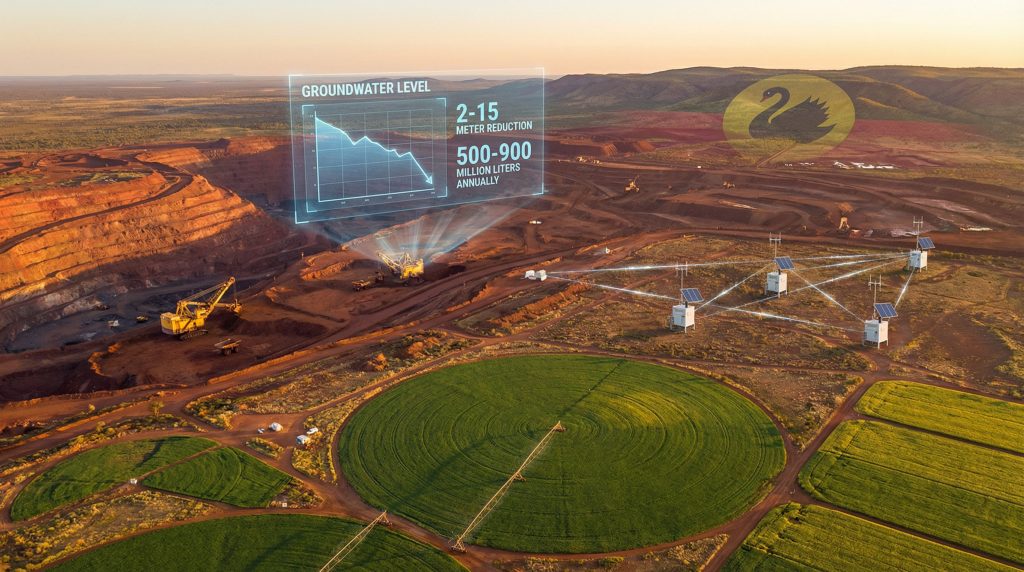
• Aquifer drawdown effects – Mining operations typically require dewatering activities that can lower groundwater levels by 5-15 meters within a 2-kilometer radius
• Surface water flow disruption – Stream flows may experience 30-60% reductions during active mining phases
• Salinity mobilisation – Disturbance of soil profiles can increase Total Dissolved Solids concentrations from baseline levels of 300-500 mg/L to 1,200-2,000 mg/L
• Recharge pattern alteration – Removal of vegetation reduces annual groundwater recharge by an estimated 20-40% in affected catchments
The cumulative effect of these changes creates what hydrogeologists describe as a "cone of depression" around active mining areas. Consequently, water tables drop significantly and may not recover to pre-mining levels for decades following operation cessation.
Table: Documented Water Quality Changes in Mining-Adjacent Areas
| Parameter | Pre-Mining Baseline | During Operations | Post-Mining Recovery |
|---|---|---|---|
| Groundwater Level | Reference depth | 5-15m decline | Partial recovery over 10-20 years |
| TDS Concentration | 300-500 mg/L | 1,200-2,000 mg/L | Stabilises at 800-1,200 mg/L |
| Bore Productivity | 100% capacity | 40-70% decline | 60-80% of original capacity |
| Surface Flow | Seasonal variation | 30-60% reduction | May not fully recover |
Current Regulatory Response Mechanisms and Their Limitations
Western Australia's regulatory framework requires mining companies to demonstrate that their operations will not cause what officials term "unacceptable impacts" on neighbouring water users. However, the practical implementation of these requirements often reveals significant gaps between regulatory intent and real-world outcomes.
Environmental Impact Assessment Requirements:
Mining proponents must submit Water Management Plans that include:
• Baseline hydrogeological assessments spanning minimum two-year monitoring periods
• Groundwater flow modelling using industry-standard software packages
• Risk assessment matrices identifying potential impacts on existing water users
• Monitoring and trigger-level protocols for operational oversight
• Proposed mitigation measures for identified water-related risks
Despite these comprehensive requirements, regulatory enforcement faces practical challenges when mining operations exceed predicted impact thresholds. The Department of Water and Environmental Regulation operates with limited field inspection resources, often relying on company-submitted monitoring data rather than independent verification.
"The current regulatory system places significant reliance on predictive modelling rather than real-time impact assessment, creating situations where agricultural water users experience declining supply before regulatory intervention mechanisms activate."
Economic Consequences for Agricultural Operations
When mining activities compromise established agricultural water supplies, farming operations face immediate and long-term economic pressures that can fundamentally alter their viability. The costs associated with alternative water sourcing often exceed the economic margins of many agricultural enterprises. Additionally, the broader WA resources sector impact demonstrates how these conflicts affect regional development.
Direct Financial Impact Categories:
Infrastructure Replacement Costs:
• Bore deepening or relocation: $25,000-$75,000 per installation depending on aquifer depth and geological conditions
• Water storage expansion: $50-$150 per kilolitre of additional storage capacity
• Pipeline extensions: $200-$500 per metre for high-pressure water transport systems
• Desalination equipment: $200,000-$800,000 for farm-scale reverse osmosis systems
Operational Cost Increases:
• Emergency water cartage: $3-$8 per kilolitre delivered during critical periods
• Increased pumping costs: 50-200% higher electricity consumption from deeper bores
• Soil amendment requirements: $300-$800 per hectare for managing increased salinity levels
Agricultural economists estimate that farms experiencing 30% reductions in water availability typically face 15-25% decreases in gross revenue. However, they maintain 80-90% of their fixed operating costs, creating significant financial strain.
Industry Justification for Increased Water Extraction
Mining companies defending expanded water use typically present arguments centred on regulatory compliance, operational safety, and economic necessity. These justifications reveal the complex regulatory environment that governs industrial water allocation in Western Australia.
Operational Water Requirements:
Bauxite extraction operations require substantial water volumes for multiple purposes:
• Dust suppression activities – Mining companies must maintain ambient dust levels below 50 micrograms per cubic metre to comply with occupational health standards
• Ore washing and processing – Bauxite beneficiation requires 2-4 cubic metres of water per tonne of processed ore
• Equipment cooling and maintenance – Heavy machinery operations in high-temperature environments demand consistent water access
• Fire suppression systems – Safety regulations mandate readily available water supplies for emergency response
Companies often argue that proposed increases from 500 million to 900 million litres annually represent essential operational requirements rather than discretionary consumption. For instance, projects like the Julimar West bauxite project demonstrate how these volumes support operations employing 800-1,200 workers and generating $200-$400 million in annual economic activity.
Technical Recovery Arguments
Mining operators frequently characterise water-related impacts as temporary phenomena that will resolve through natural hydrological recovery processes. Company-sponsored studies typically project 5-20 year recovery timelines based on regional precipitation patterns and aquifer characteristics.
However, independent hydrogeological assessments often challenge these optimistic projections, citing:
• Permanent vegetation loss affecting long-term recharge patterns
• Soil compaction reducing infiltration rates by 30-50%
• Altered drainage patterns preventing historical flow restoration
Potential Regulatory Reform Pathways
The limitations of current regulatory frameworks have prompted calls for enhanced protection mechanisms that better balance mining development with agricultural water security. Proposed reforms focus on strengthening pre-approval assessments, improving monitoring systems, and establishing more robust compensation mechanisms.
Enhanced Pre-Approval Requirements:
Water Security Bonding Systems:
Mining companies could be required to establish financial guarantees covering:
• Alternative water supply provision for affected agricultural users
• Infrastructure replacement costs including bore deepening and pipeline extensions
• Compensation for crop losses during water availability transitions
• Long-term monitoring and remediation extending 10-20 years post-mining
Independent Impact Assessment:
Reform proposals suggest requiring third-party hydrogeological assessments conducted by consultants with no financial relationship to mining proponents. These independent reviews would:
• Verify company modelling assumptions using alternative analytical approaches
• Assess cumulative impacts from multiple concurrent mining operations
• Establish more conservative trigger levels for operational restrictions
Real-Time Monitoring Networks
Advanced monitoring systems could provide continuous data sharing between mining operations, regulatory agencies, and affected agricultural users. Moreover, data-driven monitoring advancements offer unprecedented opportunities for real-time impact assessment.
Key features would include:
• Automated telemetry systems updating water level and quality data every 4-6 hours
• Public data access portals allowing farmers to monitor nearby mining impacts
• Early warning protocols triggering notifications when pre-defined thresholds are exceeded
• Rapid response mechanisms enabling immediate operational adjustments
The next major ASX story will hit our subscribers first
International Comparative Analysis of Water Protection Standards
Examining water protection frameworks in other mining jurisdictions reveals alternative approaches that could inform Western Australian regulatory reform efforts. International experiences demonstrate varying strategies for balancing resource development with agricultural water security.
Table: Comparative Water Protection Standards
| Jurisdiction | Bond Requirements | Monitoring Standards | Compensation Mechanisms | Recovery Obligations |
|---|---|---|---|---|
| Alberta, Canada | $5-15M water replacement bonds | Monthly automated reporting | Guaranteed alternative supply | 25-year post-mining monitoring |
| Queensland, Australia | Project-specific assessments | Quarterly manual sampling | Negotiated farmer agreements | 10-year rehabilitation period |
| Nevada, USA | $10-50M environmental bonds | Real-time telemetry networks | Court-ordered compensation | Perpetual water level maintenance |
| Chile | State-guaranteed water rights | Government-operated monitoring | National water fund contributions | Indefinite aquifer protection |
Alberta's Water Replacement Model
Canada's Alberta province requires mining companies to provide guaranteed alternative water supplies to affected users before receiving operational permits. This system has resulted in:
• Zero documented cases of permanent agricultural water loss from mining activities
• Average replacement costs of $2-5 million per affected farming operation
• 95% farmer satisfaction rates with replacement water quality and reliability
Nevada's Perpetual Monitoring Approach
United States mining operations in Nevada must maintain indefinite responsibility for groundwater level protection. This creates strong incentives for minimal-impact extraction methods and has produced:
• 60% reduction in water-related mining conflicts over 15-year implementation period
• Average aquifer recovery to 85-95% of pre-mining levels within 5-10 years
• Sustained agricultural productivity in 80% of mining-adjacent areas
Emerging Technologies and Future Management Strategies
Technological advances in water management and extraction efficiency offer potential pathways for reducing competition between mining and agricultural water demands. Furthermore, these innovations maintain the economic viability of both sectors while addressing farmer water issues South32 bauxite mine operations present.
Advanced Water Recycling Systems:
Modern mining operations increasingly incorporate closed-loop water systems that can reduce freshwater consumption by 60-80%. Key technologies include:
• Membrane bioreactors processing mining wastewater to potable standards
• Atmospheric water generation producing 5,000-15,000 litres daily from ambient humidity
• Smart irrigation systems reducing agricultural water consumption by 20-40% through precision application
Innovative Monitoring Technologies
Emerging monitoring systems provide unprecedented insight into groundwater behaviour:
• Satellite-based interferometry detecting millimetre-scale land subsidence from aquifer drawdown
• Fibre-optic sensing networks providing continuous temperature and pressure monitoring along kilometre-scale transects
• Artificial intelligence modelling predicting water level changes with 85-95% accuracy up to 12 months in advance
Policy Integration Trends
International regulatory development trends indicate movement toward:
• Integrated watershed management considering cumulative impacts across multiple land uses
• Adaptive management frameworks enabling real-time operational adjustments based on monitoring data
• Stakeholder participation requirements ensuring affected communities have meaningful input into approval processes
• Climate change considerations incorporating projected precipitation and temperature changes into long-term water planning
Case Study: Recent Conflicts and Their Resolution
Recent water quality concerns near major bauxite operations highlight the urgent need for regulatory reform. These cases demonstrate how farmer water issues South32 bauxite mine operations create have evolved into broader conflicts requiring systematic solutions.
The situation illustrates how groundwater quality issues can escalate when monitoring systems fail to detect problems early enough for preventive action. Consequently, affected farmers face immediate threats to their operational viability while regulatory agencies struggle to implement effective responses.
Lessons from Recent Conflicts
These recent cases highlight several critical gaps in current regulatory approaches:
• Insufficient baseline monitoring periods that fail to capture natural variability in groundwater systems
• Delayed response mechanisms that activate only after significant impacts have occurred
• Limited compensation frameworks that inadequately address the full scope of agricultural losses
• Inadequate cumulative impact assessment when multiple mining operations affect the same catchment
Toward Sustainable Resource Management Solutions
The challenge of balancing bauxite extraction with agricultural water security requires regulatory frameworks that acknowledge the legitimate needs of both sectors. However, these frameworks must protect the long-term sustainability of regional water resources through enhanced impact assessment requirements, improved monitoring systems, and stronger financial mechanisms.
Effective solutions will likely emerge from mine reclamation innovations that prioritise water system restoration alongside traditional rehabilitation activities. These approaches ensure mining development contributes to rather than compromises agricultural sustainability.
Recent developments in Western Australian mining-agricultural water conflicts, including farmer water issues South32 bauxite mine operations present, highlight the urgent need for regulatory reform. This reform must prevent rather than merely respond to water security problems. The experiences of international jurisdictions demonstrate that proactive protection mechanisms can successfully maintain both mining productivity and agricultural viability when properly implemented and enforced.
Disclaimer: This analysis is based on available public information and regulatory frameworks current as of late 2024. Water rights, mining regulations, and compensation mechanisms may vary significantly based on specific local conditions, existing agreements, and evolving policy frameworks. Readers should consult current regulatory guidance and qualified professionals before making decisions based on this information.
Ready to Invest in the Next Major Mineral Discovery?
Discovery Alert instantly alerts investors to significant ASX mineral discoveries using its proprietary Discovery IQ model, turning complex mineral data into actionable insights. Begin your 30-day free trial today and position yourself ahead of the market whilst major developments like these water management challenges create new opportunities in Western Australian mining operations.